“I was a literary figure, a brand, a problem, a joke. I was famous. I was a mess.”
— Bret's self-reflection on his status and personal life.

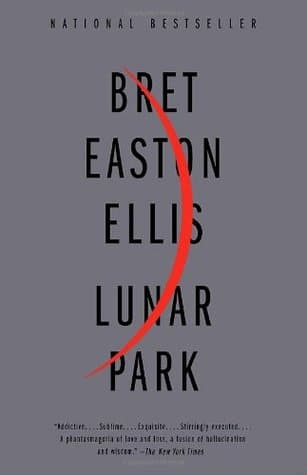
Bret Easton Ellis (2005)
Genre
Thriller / Mystery
Reading Time
540 min
Key Themes
See below
Sign in to track this book
A famous author, Bret Ellis, is haunted by his past and the specter of his own fictional creations. He descends into a terrifying reality where his new family and his sanity are threatened by murders that mirror his darkest novels.
The novel opens with a fictionalized Bret Easton Ellis, a famous and troubled writer known for his past hedonism, moving into a large, expensive house in a New England suburb with his wife, actress Jayne Dennis, and her ten-year-old son, Robby. Ellis tries to embrace a more stable, domestic life after years of drug abuse and professional stagnation. He also teaches creative writing at the local college. The move is meant to symbolize a break from his past, particularly his difficult relationship with his deceased, abusive father. However, the house immediately feels unsettling, and Ellis struggles to connect with Robby, who resents his presence.
Soon after moving in, inexplicable events begin. Objects go missing, only to reappear in odd places. Doors slam shut on their own, and strange noises echo through the house. Ellis first dismisses these events as stress-induced hallucinations or pranks, but they become more frequent and unsettling. Robby, in particular, seems affected, claiming to see things and becoming more withdrawn. Ellis's attempts to bond with Robby often meet resistance, and the strange occurrences worsen the family tension, making Ellis question his sanity and the reality of his new environment.
One of Ellis's creative writing students, a young man named Ryan, disappears without a trace. The circumstances are similar to the disappearance of a character in Ellis's novel, *Less Than Zero*. This coincidence deeply disturbs Ellis, who begins to suspect a connection between the real-life events and his fictional work. The police investigation yields no immediate answers, and Ellis feels a growing dread, believing that his past, particularly the themes and characters from his novels, is somehow invading his present reality. This event marks a turning point, as the strange occurrences move beyond the domestic sphere.
Ellis and Jayne host a large Halloween party, a last effort to normalize their new life. The party is a chaotic mix of college students, suburban neighbors, and Ellis's Hollywood acquaintances. Amidst the revelry, the unsettling phenomena escalate. Robby is agitated, and Ellis feels disoriented. The party culminates in a horrifying discovery: a severed head is found in the swimming pool. The police arrive, and the house becomes a crime scene, shattering any illusion of normalcy for the Ellis family. The event further blurs the lines between reality and the dark themes of Ellis's fiction.
After the Halloween party, Robby's behavior becomes disturbed and violent. He shows signs of possession or extreme psychological distress, speaking in strange voices and making threats. Ellis also begins to see a large, prehistoric bird-like creature, which he identifies as a Teratorn, lurking around the property. This creature seems to be a manifestation of his deepest fears and guilt. Jayne, while concerned, struggles to understand the extent of Ellis's terror, often attributing his distress to his past drug use or his writer's imagination. The Teratorn's presence signals a growing loss of control over his own reality.
The disappearances continue, targeting young children from the neighborhood. These events resemble the plot of *Less Than Zero*, where privileged, detached teenagers engage in disturbing activities. The police, led by Detective Miller, begin to suspect Ellis, given the thematic parallels to his writing and his history of drug abuse. Ellis, consumed by fear and guilt, feels isolated and targeted. He struggles to convince anyone that something supernatural or deeply personal is at play, rather than just a serial killer, further blurring the lines between his fiction and his life.
A doppelgänger, an impostor Bret Easton Ellis, begins to appear, interacting with people Ellis knows and committing disturbing acts. This impostor seems to represent the unchecked hedonism and destructive tendencies of Ellis's past, haunting him and further destabilizing his reality. The impostor's actions further implicate Ellis in the disappearances and murders, making him question his own memories and sanity. This figure represents Ellis's unresolved guilt and the public persona he created, which now seems to have taken on a life of its own, threatening to destroy him.
Driven by a desperate need for answers, Ellis returns to his childhood home, which he believes is the source of the malevolent energy now invading his life. He confronts the ghost of his abusive father, a figure who has haunted him psychologically throughout his life and career. This confrontation is a key moment, as Ellis grapples with the deep-seated trauma and resentment from his upbringing. He realizes that the supernatural occurrences are intertwined with his unresolved past, particularly his relationship with his father, and how he processed this trauma through his writing.
Ellis finally uncovers the truth: the disappearances and murders are orchestrated by a disturbed young man, a former student named Patrick, who is obsessed with Ellis's work and life. Patrick believes he is embodying the characters and themes of Ellis's novels, particularly *Less Than Zero*, to punish Ellis for his perceived transgressions and to force him to confront his past. The climax involves a confrontation between Ellis and Patrick, where Ellis must save Robby and come to terms with the destructive power of his own art and the responsibility he holds for its interpretation. He saves Robby and confronts his own demons.
After the terrifying events, Ellis processes the trauma and the blurred lines between his life and his fiction. While the immediate threat is neutralized, the experience leaves a lasting mark. He gains a deeper understanding of his relationship with his father, his wife, and most importantly, Robby. The novel concludes with Ellis finding a fragile sense of peace and a commitment to his family. He recognizes the destructive potential of his past and the importance of confronting his personal demons, finding a path toward a more authentic and responsible existence as a father and a husband, rather than just a controversial writer.
The Protagonist
Ellis begins as a detached, self-absorbed writer struggling with addiction and past trauma, but through the terrifying events, he learns to embrace responsibility, love, and confront his deepest fears.
The Supporting
Jayne maintains her pragmatic nature but is forced to confront the disturbing reality that surrounds her husband, strengthening her resolve to protect her family.
The Supporting
Robby transforms from a quiet, distant child into a focal point of the supernatural threat, ultimately being saved by Ellis, solidifying their bond.
The Antagonist/Mentioned
The father's influence is a constant, oppressive force that Ellis must ultimately confront and symbolically overcome to achieve personal peace.
The Supporting
Miller's initial professional skepticism evolves into a focused suspicion of Ellis, though he ultimately remains an outsider to the true nature of the horror.
The Antagonist
Patrick starts as a seemingly innocuous student and is revealed to be the orchestrator of the horrors, a direct consequence of Ellis's literary influence.
The Mentioned
Ryan's initial disappearance serves as a plot device to initiate the unraveling of Ellis's reality.
The Antagonist
The Teratorn's appearances escalate as Ellis's mental state deteriorates, serving as a constant, terrifying reminder of his internal and external threats.
The novel constantly blurs the lines between Bret Easton Ellis's real life (as a fictionalized character) and the worlds he creates in his novels. Events from *Less Than Zero* appear in his suburban life, with students disappearing and murders occurring in ways that directly echo his fiction. Ellis frequently questions whether he is experiencing genuine horror, a drug-induced hallucination, or if his own literary creations are somehow coming to life. This theme is central to the mystery and the psychological horror, making the reader question what is real alongside the protagonist, as seen when the student Ryan disappears in a manner mirroring a character from Ellis's own book.
“What if the fiction I'd created was no longer just fiction? What if it had leaked, bled, into the world, into my life?”
Ellis is haunted by his past, including his drug abuse, his youthful hedonism, and most significantly, the trauma of his abusive father. These unresolved issues appear in various ways, from the appearance of his father's ghost to the sense that his past destructive behavior has somehow returned to plague him. The novel explores how one's past, particularly unaddressed trauma and moral failings, can influence the present. The entire narrative is driven by Ellis's struggle to escape or reconcile with his previous self and experiences, symbolized by the impostor Bret Easton Ellis who embodies his darker past.
“You can never really escape the past. It just finds new ways to haunt you.”
A core theme is the complex and often destructive nature of father-son relationships. Ellis's relationship with his deceased, abusive father is a central trauma that shapes his entire life and career. He struggles to be a good stepfather to Robby, partly due to his own unresolved paternal issues. The appearance of his father's ghost and the eventual confrontation with him are key moments, forcing Ellis to confront the cycle of abuse and the psychological scars left by his upbringing. This theme is also explored through the dynamic between Ellis and Robby, as Ellis tries to break the cycle of paternal neglect and protect his stepson.
“I was haunted by him, by the ghost of a man I could never please, a man who had warped me.”
The novel examines the responsibility of an artist for their work's impact. Ellis's controversial novels, particularly *Less Than Zero*, inspire a disturbed student, Patrick, to commit real-life atrocities, believing he is embodying the fictional world. This raises questions about the ethical implications of creating dark or violent art and the potential for it to be misinterpreted or misused. Ellis is forced to confront the idea that his own creations, intended as commentary, could be twisted into a blueprint for destruction, highlighting the influence an artist can have over their audience.
“My books... they were supposed to be a warning, not a blueprint.”
Ellis's perspective is constantly clouded by his past drug use, paranoia, and the blurring of reality.
The entire narrative is filtered through the consciousness of Bret Easton Ellis, a character known for his past drug abuse, mental instability, and a tendency to blur the lines between reality and fiction in his own mind. This makes it difficult for the reader to discern what is actually happening versus what might be a hallucination, a delusion, or a manifestation of his psychological distress. The unreliability deepens the mystery and psychological horror, forcing the reader to constantly question the events alongside the protagonist, particularly regarding the Teratorn and the impostor Bret.
The author himself is the protagonist, blurring the lines between the real Bret Easton Ellis and his fictional counterpart.
The novel uses metafiction by featuring a character named Bret Easton Ellis who is a famous author, known for writing books like *Less Than Zero* – which are real books by the actual author. This device creates a unique blend of memoir and fiction, commenting on the author's public persona, the nature of celebrity, and the relationship between an author and their work. It challenges the reader's perception of reality within the text, as the 'fictional' Ellis grapples with the consequences of the 'real' Ellis's literary output, making the story intensely personal and self-referential.
Unexplained phenomena, ghosts, and monstrous entities invade Ellis's reality.
Beyond psychological thriller elements, the novel incorporates overt supernatural horror. This includes the haunting of Ellis's house, the appearance of his father's ghost, the monstrous Teratorn, and Robby's apparent possession. These elements are not easily explained away by Ellis's mental state alone, suggesting a genuine malevolent force at play. This device elevates the stakes and the sense of dread, moving the narrative beyond simple psychological breakdown into a terrifying confrontation with forces beyond human comprehension, making the horror tangible and inescapable.
An impostor Bret Easton Ellis appears, embodying his darker, past self.
The appearance of an impostor Bret Easton Ellis, who interacts with his acquaintances and commits disturbing acts, serves as a powerful doppelgänger motif. This figure represents Ellis's past hedonistic, destructive self, which he has tried to outrun. The doppelgänger not only further implicates Ellis in the crimes but also forces him to confront the parts of himself he despises and fears. It blurs his identity, making him question his own memories and actions, and symbolizes the inescapable burden of his public persona and past reputation.
“I was a literary figure, a brand, a problem, a joke. I was famous. I was a mess.”
— Bret's self-reflection on his status and personal life.
“My life had become a series of disappearing acts, and I was the one doing the disappearing.”
— Bret's feeling of losing control and presence in his own life.
“The past is never dead. It's not even past.”
— A general reflection on the inescapable nature of one's past.
“We are all products of our environment, and the environment of my childhood was one of extreme privilege and extreme neglect.”
— Bret reflecting on his upbringing and its impact.
“Sometimes I think I made it all up. The books, the fame, the family, the house, the fear.”
— Bret questioning the reality of his own existence and experiences.
“The greatest trick the devil ever pulled was convincing the world he didn't exist.”
— A popular quote used to describe the insidious nature of evil, hinting at a hidden antagonist.
“The house was alive. It breathed. It watched.”
— Bret's growing paranoia about his new home.
“I was a character in my own novel, and I didn't like the ending.”
— Bret feeling trapped within a narrative he cannot control.
“There are no happy endings, only beginnings that stop.”
— A cynical view on the nature of narrative and life.
“The line between reality and fiction was blurring, and I was losing my grip on both.”
— Bret's increasing confusion and mental instability.
“Fear is a powerful motivator. It can make you do things you never thought you were capable of.”
— A general observation on the influence of fear.
“Every family has its secrets, and ours was no exception. We just had more of them, and they were darker.”
— Bret's reflection on his dysfunctional family life.
“I was a ghost in my own life, haunting the spaces I once occupied.”
— Bret's feeling of detachment and unreality.
“The past is a foreign country; they do things differently there.”
— Another reflection on the distinct and often unsettling nature of the past.
“You can never truly escape your past, no matter how far you run or how many lives you try to invent for yourself.”
— A recurring theme about the inescapability of one's history.
Ready to see how well you understood this book? Take our interactive quiz with 10 questions.
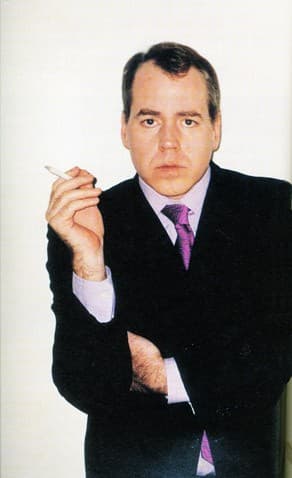
Bret Easton Ellis is a provocative American novelist known for his unflinching explorations of consumerism, celebrity, and violence in contemporary culture. His most famous works include "Less Than Zero" and the controversial bestseller "American Psycho," which was adapted into a film. Ellis's writing is characterized by its sharp social commentary and often transgressive subject matter.







