“Every child is your child.”
— Helen Hoover Boyle's mantra, reflecting her maternal instincts and the danger of the lullaby.

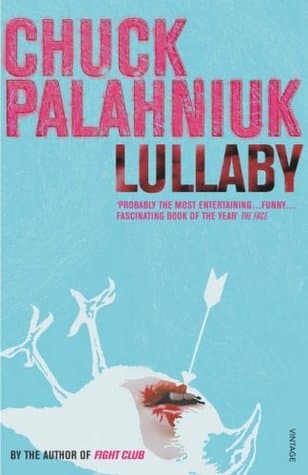
Chuck Palahniuk (2002)
Genre
Thriller / Mystery
Reading Time
260 min
Key Themes
See below
Sign in to track this book
A reporter investigating SIDS uncovers a deadly lullaby that kills anyone who hears it, forcing him to team up with an accidental sorceress to destroy every copy before they succumb to its power or the urge to use it on every rude person they meet.
Carl Streator, a freelance reporter, is assigned to cover Sudden Infant Death Syndrome (SIDS) for a local newspaper. He accompanies paramedics on several calls, observing the tragic scenes. A disturbing pattern emerges: in each household, he finds a specific anthology of poems, *Poems and Rhymes from Around the World*, open to a poem titled 'Culling Song'. This poem, an ancient African lullaby, seems to be the last thing read to the infants before their deaths. Carl's investigation deepens as he realizes the poem acts as a lethal spell, instantly stopping the heart of anyone who hears it. The discovery sparks a terrifying realization about the true nature of the seemingly natural deaths.
Driven by his horrific discovery, Carl researches the 'Culling Song' and its origins. He learns it is an ancient spell for euthanasia. His investigation leads him to Helen Hoover Boyle, a successful real estate agent who, like the parents of the SIDS victims, read the 'Culling Song' to her own child. Helen confesses that she accidentally killed her baby with the poem, believing it was a simple lullaby. She has since become obsessed with finding and destroying all copies of the book containing the poem, driven by guilt and a desire to prevent further tragedies. Their shared experience forms an unsettling bond between them.
As Carl and Helen learn more about the Culling Song's history and its insidious power, Carl experiences a chilling epiphany. He remembers a traumatic event from twenty years prior: the sudden, inexplicable deaths of his wife and child. He had read them a lullaby from a book before they died, a book he now realizes was *Poems and Rhymes from Around the World*, and the lullaby was the 'Culling Song'. The delayed realization that he inadvertently murdered his own family with the very poem he is now investigating shatters his already fragile psyche, adding a personal tragedy and urgency to his quest.
United by their shared trauma and the terrifying power of the 'Culling Song', Carl and Helen decide to embark on a cross-country mission. Their goal is to locate and destroy every single copy of *Poems and Rhymes from Around the World* that contains the deadly poem. They begin by targeting public libraries, using Carl's reporting skills and Helen's resourcefulness to track down the specific edition. This journey becomes a morbid road trip, fraught with tension, dark humor, and the constant threat of accidentally using the poem on unsuspecting individuals who annoy them.
During their quest, Carl and Helen meet Mona Sabbat, a gothic, self-proclaimed witch who has also discovered the Culling Song's power. Unlike them, Mona uses the poem deliberately, often for petty revenge or to manipulate situations. She is accompanied by a silent, imposing individual named Oyster, a necrophiliac who is drawn to the poem's victims. Mona, recognizing their shared interest in the song, proposes an alliance, suggesting they could use its power for greater, more ambitious ends than mere destruction. This encounter introduces a new dynamic and moral dilemma to Carl and Helen's mission.
Mona Sabbat reveals a startling secret: the Culling Song's power is not limited to being spoken aloud. She demonstrates a ritualistic method for imbuing objects, particularly paper, with the poem's lethal energy. This means that merely *reading* a piece of paper imbued with the song can be fatal. This discovery amplifies the danger and potential misuse of the Culling Song exponentially. Carl and Helen are horrified by the implications, while Mona sees it as an opportunity for ultimate control. They begin to experiment cautiously, realizing the immense power they now hold.
As Carl and Helen continue their journey, they find themselves inadvertently using the Culling Song in everyday situations. Annoying flight attendants, rude drivers, or simply people who irritate them become accidental victims. They start to realize they can control the song's effect, not always leading to death, but sometimes to incapacitation or even just a mild discomfort. This accidental mastery brings with it a terrifying ethical quandary: how much is too much? The line between self-defense, convenience, and outright murder becomes increasingly blurred as they navigate their new, deadly abilities.
Mona reveals that the original, 'master' copy of the Culling Song, the source from which all other copies derive their power, is held in a secure, private collection. She believes that destroying this original will neutralize the power of all other copies, or at least significantly diminish them. The group, now including Mona and Oyster, plans an elaborate heist to infiltrate the heavily guarded location and retrieve the master copy. This daring plan puts them in direct conflict with powerful, shadowy forces who also covet or protect the song's power, escalating the stakes dramatically.
During the heist, tensions within the group escalate. Mona's manipulative nature comes to the forefront, and it becomes clear her motives are not entirely aligned with Carl and Helen's. She seeks to control the song's power rather than destroy it. A confrontation ensues, revealing betrayals and conflicting agendas. Oyster's loyalty is tested, and Carl and Helen find themselves in a precarious position, not only against the facility's security but also against their supposed ally. The heist transforms into a desperate struggle for survival and control over the Culling Song's ultimate fate.
The heist ends in a chaotic struggle. While the ultimate fate of the master copy is ambiguous—perhaps destroyed, perhaps merely relocated—the immediate threat is resolved. However, the experience leaves Carl and Helen profoundly changed. They have wielded immense power, and the Culling Song's influence is now deeply ingrained within them. Even without the physical copies of the book, they find they can still invoke the song's power, a terrifying permanent consequence of their journey. They are left to grapple with the ethical implications of their actions and the inescapable presence of death at their fingertips.
The Protagonist
Carl transforms from a passive observer to an active participant in a deadly quest, grappling with his past and the terrifying power he wields.
The Supporting
Helen seeks atonement for her past actions, evolving from a solitary seeker to Carl's partner in a destructive mission.
The Antagonist/Supporting
Mona actively seeks to expand her control over the Culling Song, becoming a dangerous rival to Carl and Helen.
The Supporting
Oyster remains a largely static character, serving as a physical manifestation of the song's morbid allure and Mona's darker impulses.
The Protagonist
The narrator's voice evolves from detached observation to a more engaged, yet still cynical, perspective as Carl's personal involvement deepens.
The Mentioned
Her death is a static, foundational event that drives Carl's character arc.
The Mentioned
The child's death is a static, foundational event that drives Carl's character arc.
The 'Culling Song' grants immense, immediate power over life and death. The novel explores how this power corrupts its users, even those with initially good intentions. Carl and Helen, initially horrified, slowly succumb to using the song for convenience or petty revenge, showing the slippery slope of wielding such ultimate control. Mona Sabbat fully embraces this corruption, using the song for manipulation and self-aggrandizement. The ease with which characters justify their use of the song highlights humanity's capacity for moral compromise when given unchecked power, as seen when Carl considers using it on an annoying flight attendant.
“Once you know the song, it's always there. A solution to every problem. A way to silence every critic. It's a terrible, beautiful thing.”
Palahniuk shows how horrific acts can become mundane or even humorous when committed without direct malice. The 'Culling Song' is not wielded by supervillains, but by ordinary people like Carl, Helen, and even the parents of the SIDS victims, often accidentally or for trivial reasons. The casual way Carl and Helen discuss using the song on irritating strangers, or the dark comedy from their road trip, underscores how easily death can be integrated into everyday life when stripped of its immediate consequence or personal connection. This theme suggests that evil is not always grand and monstrous, but often arises from indifference, convenience, or simple annoyance.
“Nobody wants to die. That's the one thing we all have in common. And then, we all want to die. The thing we all have in common. Every last one of us, every last thing in nature, wants to die. We just don't want to be told when and how. So we fight to keep it a secret.”
At its core, the novel is driven by Carl and Helen's profound, delayed grief and guilt. Helen's mission to destroy the books is an act of atonement for accidentally killing her child. Carl's realization about his own family's death plunges him into a deep, agonizing guilt that fuels his participation in the quest. The characters constantly grapple with the weight of their past actions and and the desire to prevent future tragedies, even as they fall prey to the song's corrupting influence. Their journey is a dark exploration of how individuals cope with unimaginable loss and the desperate measures they take to find peace or redemption.
“The worst part of guilt is the way it makes you want to do it again. Just to make sure it wasn't a fluke.”
The central premise is a poem—a form of language—that holds lethal power. This highlights the idea that words are not merely symbols but can possess tangible, even destructive, force. The novel explores how narratives, whether a simple lullaby or the stories we tell ourselves, shape reality and have profound consequences. The act of speaking or even reading the 'Culling Song' is a magical act, showing the inherent power embedded within human communication. It suggests that language, when imbued with intent or ancient resonance, can alter the fabric of existence, for better or, in this case, for worse.
“A word, a phrase, a rhythm. That's all it takes to stop a heart. We write our own doom.”
A lethal, ancient African lullaby that instantly kills anyone who hears or reads it.
The Culling Song is the central plot device, functioning as a magical, instant death spell. Its power is initially limited to spoken word, but later extends to written form and even imbued objects. It drives the entire plot, from Carl's initial discovery to the characters' quest to destroy it. The song serves as a catalyst for all major conflicts and character developments, embodying the themes of power, corruption, and the banality of evil. Its ambiguous origins and the way its power evolves keep the narrative unpredictable and terrifying.
A cross-country journey that facilitates character interaction and episodic encounters.
The road trip structure allows Carl and Helen to encounter various characters (like Mona Sabbat) and face different challenges, providing a dynamic backdrop for their evolving relationship and moral compromises. It creates a sense of urgency and progression as they systematically eliminate copies of the book. The confined space of their vehicle and the constant travel also intensify their interactions, forcing them to confront their shared trauma and the escalating ethical dilemmas posed by the Culling Song.
The story is told entirely from Carl Streator's cynical and philosophical perspective.
The first-person narrative allows for deep insight into Carl's internal struggles, his dark humor, and his philosophical musings on life, death, and human nature. This perspective shapes the novel's cynical and often detached tone, even when describing horrific events. It also creates dramatic irony, as Carl initially recounts events without realizing his own tragic connection to the Culling Song, building suspense until his shocking epiphany. The narrator's voice is distinctively Palahniuk's, blending the macabre with the mundane.
A seemingly innocuous lullaby introduced early that later becomes the story's central weapon.
The 'Culling Song' is introduced early in the story as a simple, albeit disturbing, poem found in children's books. Its true, lethal power is gradually revealed and then consistently utilized throughout the narrative. This fulfills Chekhov's Gun principle, where an element introduced early in the story proves to be crucial later on. The poem isn't just a background detail; it is the engine of the plot, escalating from an accidental killer to a tool of deliberate power, and its presence is felt in every major development.
“Every child is your child.”
— Helen Hoover Boyle's mantra, reflecting her maternal instincts and the danger of the lullaby.
“The one thing you don't do is you don't give up.”
— Oyster's advice to Carl, emphasizing perseverance.
“You can only be in one place at one time, unless you're a thought.”
— A reflection on the nature of existence and the power of ideas.
“Everything is a copy of a copy of a copy.”
— A thematic statement about the loss of originality and the proliferation of reproductions.
“If you want to be free, you have to be free.”
— Helen's simple, yet profound, statement on the active choice required for liberation.
“The world is a vampire.”
— A cynical view of the world's tendency to drain life and energy.
“We're all just making it up as we go along.”
— A commentary on the lack of a grand plan or inherent meaning in life.
“The first step toward wisdom is knowing when to shut up.”
— A pragmatic piece of advice about listening and self-restraint.
“You never really know a man until you've seen him naked.”
— A dark humorous take on true intimacy and vulnerability.
“What if the whole world is just a dream?”
— Carl's philosophical musing on the nature of reality.
“Sometimes the only way to save something is to let it go.”
— A bittersweet realization about sacrifice and preservation.
“The greatest trick the Devil ever pulled was convincing the world he didn't exist.”
— A classic line, used in the context of the lullaby's hidden power and insidious nature.
“You can't kill an idea.”
— A statement about the enduring power of concepts, even when their originators are gone.
“We are all just stories in the end.”
— A reflection on legacy, memory, and how we are remembered.
Ready to see how well you understood this book? Take our interactive quiz with 10 questions.
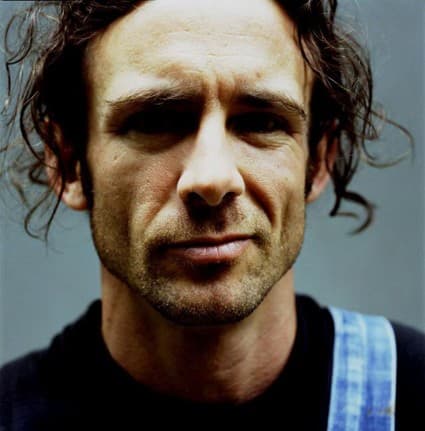
Chuck Palahniuk is a highly influential contemporary author, best known for his debut novel "Fight Club." His works, including "Haunted" and "Guts," are characterized by their transgressive themes, dark humor, and often shocking narratives. Palahniuk's distinctive style has earned him a significant cult following and cemented his reputation as a master of postmodern fiction.







