“Maybe love isn't just one thing. Maybe there are all sorts of different kinds of love, and we just need to find the ones that are right for us.”
— Georgia reflects on the nature of love after realizing she is aromantic.

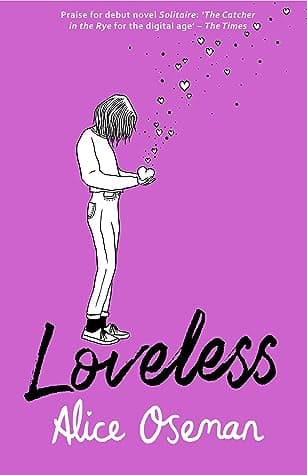
Alice Oseman (2020)
Genre
Young Adult / Romance
Reading Time
360 min
Key Themes
See below
Sign in to track this book
A fanfic-obsessed romantic starts university determined to find love. She then embarks on a journey of self-discovery, realizing she might be asexual and aromantic, which challenges her ideas of romance and identity.
Georgia Warr, a fanfic-obsessed romantic, arrives at Durham University with her best friends, Pip and Jason. She believes this is where she will finally experience her 'teenage dream' of falling in love. She has never had a crush or kissed anyone, but she is determined to find a romantic partner. Her new roommate, Rooney, quickly befriends her and suggests she join the Shakespeare Society. Georgia, Pip, and Jason navigate freshers' week, but Georgia feels more and more out of place as her friends easily connect with others and start new romantic pursuits. She struggles to understand why romance seems natural to everyone else and why she feels a distinct lack of attraction.
Rooney encourages Georgia, who auditions for the Shakespeare Society's production of 'A Midsummer Night's Dream' and gets a part. She also meets Sunil, a charming student who seems interested in her. She decides he is a good choice for her first romance. Despite feeling no real spark, Georgia tries to convince herself she likes him. At a party, under pressure and expecting a romantic moment, Georgia kisses Sunil. The experience is underwhelming and even unpleasant for her, confirming her confusion about why she does not feel what others describe about kissing and attraction.
Georgia continues to push for a romantic connection with Sunil, even though she feels nothing. Her focus on finding a boyfriend leads her to neglect Pip and Jason, who are dealing with their own complicated feelings. Pip is secretly in love with Jason, who seems to be developing feelings for Rooney. Georgia's self-focused pursuit of romance, along with her inability to understand her friends' emotions, creates friction. A big argument happens when Pip confronts Georgia about her insensitivity and her constant talk about 'finding love' while ignoring the real relationships and feelings around her, especially Pip's unrequited love for Jason.
After the fight with Pip and Jason, Georgia feels low. Rooney, noticing Georgia's distress and confusion about romance, suggests she look into asexuality. Georgia researches online and discovers the terms 'asexual' and 'aromantic.' The descriptions match her experiences, explaining her lifelong lack of crushes, her indifference to kissing, and her inability to feel romantic or sexual attraction. This discovery is a moment of self-recognition for Georgia, giving her a way to understand her past experiences and feelings, or lack of them, about romance.
With her new understanding, Georgia tells Rooney she is asexual and aromantic. To Georgia's surprise and relief, Rooney not only understands but reveals that she is also aromantic and asexual. This shared identity deepens their friendship, as they finally have someone who truly understands their experiences. Rooney introduces Georgia to the university's LGBTQ+ society, giving Georgia a sense of community and belonging she did not realize she was missing. There, she meets other aro-ace individuals, including a new friend named Viki.
With Rooney's support and her clearer sense of self, Georgia begins the process of apologizing to Pip and Jason and explaining her identity. The talks are hard, especially with Pip, who is still hurt. Georgia also decides to come out to her parents. Her mother is at first confused and dismissive, struggling to understand what asexuality and aromanticism mean for Georgia's future. Her father is more accepting, offering quiet support. This time is emotionally difficult, as Georgia deals with the reactions of those closest to her while solidifying her own understanding and acceptance of her identity.
As the Shakespeare Society gets ready for its play, Georgia, Rooney, and Viki become more involved in advocating for inclusivity. They realize that the society, despite its potential, often feels focused on straight people and excludes LGBTQ+ students. They suggest ideas to make the society more welcoming, especially for aro-ace individuals, by showing the diversity of love and relationships. This initiative becomes a passion project for them, allowing Georgia to put her energy into something meaningful and communal, rather than her previous solo pursuit of romance.
The Shakespeare Society's production of 'A Midsummer Night's Dream' is an important event. Georgia, Rooney, and Viki's efforts to make the society more inclusive succeed, creating a welcoming atmosphere. Backstage, during the performance, Georgia and Pip have a heartfelt conversation. Pip expresses her hurt but also her understanding and love for Georgia. They reconcile, acknowledging mistakes made by both. This moment marks a turning point in their friendship, showing the healing of the rift and a renewed commitment to their bond, now based on a deeper understanding of each other's identities.
By the end of the academic year, Georgia has fully accepted her aro-ace identity. She feels a peace and self-acceptance she never experienced when she tried to force herself into romantic relationships. Her friendships with Pip, Jason, and especially Rooney and Viki, are stronger than ever. She realizes the 'love' she was looking for was not romantic love, but the deep connections of platonic friendship and community. She understands that her life can be full of love and joy without romance, redefining what a fulfilling life looks like for her.
As the first year ends, Georgia thinks about her journey. She has found her identity and a supportive community that understands and celebrates her. She no longer feels 'loveless' but rather full of a different kind of love – the strong bonds of friendship and the self-love that comes with acceptance. She is excited for her future at university, knowing she has a place where she belongs and friends who truly see her. The novel ends with Georgia feeling optimistic and content, ready to navigate the world as her authentic self, surrounded by her chosen family.
The Protagonist
Georgia transforms from a confused and lonely young woman trying to force romantic feelings into a confident individual who embraces her aro-ace identity and finds deep fulfillment in platonic love and community.
The Supporting
Rooney reveals her own aro-ace identity, solidifying her bond with Georgia and becoming a key mentor and friend in Georgia's self-discovery.
The Supporting
Pip navigates the pain of unrequited love and eventually reconciles with Georgia, deepening their friendship through honest communication.
The Supporting
Jason navigates a brief romantic interest in Rooney and ultimately helps to mend the friendships, supporting Georgia in her identity.
The Mentioned
Sunil serves as a plot device for Georgia's first romantic experiment, which ultimately confirms her lack of romantic attraction.
The Supporting
Viki helps Georgia feel more accepted and understood within the aro-ace community, contributing to her self-acceptance.
The Supporting
Georgia's mother moves from confusion and mild skepticism about her daughter's identity to a place of greater understanding and acceptance.
The Supporting
Georgia's father consistently provides quiet, unwavering support for Georgia, contributing to her sense of security.
The main theme is Georgia's journey to understand and accept her aromantic and asexual identity. At first, she tries to fit into society's expectations of romance, which causes confusion and distress. Her research and Rooney's guidance help her find the words for her experiences, leading to a sense of self-acceptance. The book explores the internal struggle of feeling 'different' and the freedom that comes with finding a label that fits. Georgia embraces her true self. This theme is shown through her initial longing for a 'teenage dream' and her eventual realization that her version of love is valid.
“It was all sinking in. I’d never had a crush on anyone. No boys, no girls, not a single person I had ever met. What did that mean?”
The novel challenges society's focus on romantic love as the ultimate goal. Through Georgia's aro-ace journey, it supports the importance of platonic love, family love, and self-love. Georgia's friendships with Pip, Jason, and later Rooney and Viki, become the most fulfilling relationships in her life. The book shows that a life without romantic or sexual attraction can still be rich, meaningful, and full of deep connections. It redefines what it means to be 'loveless' and celebrates the range of human affection. The Shakespeare Society's efforts to make their productions more inclusive also show this theme.
“True love isn’t limited to romance. There are so many kinds of love in this world. And I was lucky enough to have a lot of them.”
Friendship is a main part of the story. The relationships between Georgia, Pip, and Jason, and later the bond with Rooney and Viki, show the complexities and strength of platonic relationships. The novel explores how friendships can be strained by misunderstandings and changing identities but can grow stronger through honest communication and support. The LGBTQ+ society gives Georgia a sense of community, showing the power of shared experience and belonging. These friendships become Georgia's 'found family' and her main source of love and happiness.
“I wasn’t loveless. I was surrounded by love. It was just a different kind of love.”
The setting of Durham University shows the challenges of becoming an adult. Georgia, Pip, and Jason deal with independence, new social circles, and the pressure to find their place. The novel captures the anxieties of freshers' week, forming new friendships, and the academic demands of university life. This theme connects Georgia's personal journey to a relatable coming-of-age experience, where self-discovery often happens alongside the broader challenges of growing up and finding one's path away from home.
“University was supposed to be the start of everything. My teenage dream. My big romance.”
Provides intimate access to Georgia's internal struggles and self-discovery.
The story is told entirely from Georgia's perspective, allowing readers direct access to her thoughts, confusion, and emotional journey. This device is crucial for conveying the deeply personal nature of her self-discovery, particularly her internal struggles with understanding her lack of attraction and her eventual relief upon finding the terms 'aromantic' and 'asexual.' It builds empathy and allows the reader to experience her isolation and subsequent liberation alongside her.
Highlights Georgia's initial idealized view of romance and its contrast with her reality.
Georgia's obsession with fanfiction, particularly those featuring romantic storylines, serves as a powerful contrast to her own experiences. It establishes her preconceived notions of what love 'should' look like, creating an ironic tension as she fails to experience these tropes in her own life. This device underscores her initial confusion and the societal pressure to conform to romantic ideals, making her eventual acceptance of her aro-ace identity a more significant act of self-redefinition.
Mirrors the chaotic and confused nature of love, both romantic and platonic.
The Shakespeare Society's production of 'A Midsummer Night's Dream' acts as a symbolic backdrop. The play, with its themes of confused love, misdirected affections, and the magical chaos of relationships, directly parallels the romantic and platonic entanglements within Georgia's friend group. It serves as a narrative device to both highlight Georgia's initial romantic aspirations and later, through the efforts of Georgia, Rooney, and Viki, to showcase how traditional narratives can be reinterpreted to be more inclusive of diverse forms of love.
Serves as a catalyst for Georgia's self-discovery and source of support.
The internet, specifically online forums and articles, becomes a crucial plot device when Rooney suggests Georgia research asexuality. This leads Georgia to discover the terms 'aromantic' and 'asexual,' which are pivotal to her understanding of herself. The subsequent introduction to the university's LGBTQ+ society further emphasizes the importance of community and shared experience in self-acceptance, providing Georgia with a tangible support network and a sense of belonging she previously lacked.
“Maybe love isn't just one thing. Maybe there are all sorts of different kinds of love, and we just need to find the ones that are right for us.”
— Georgia reflects on the nature of love after realizing she is aromantic.
“I'm not broken. I'm just… different. And that's okay.”
— Georgia's internal monologue as she comes to terms with her asexuality and aromanticism.
“Friendship is just as valid and important as romantic love. It's not a consolation prize.”
— Georgia and Rooney discuss the value of platonic relationships.
“It's like everyone else has a manual for how to be a person, and I missed that day at school.”
— Georgia expresses her feelings of confusion about social norms and relationships.
“Sometimes, the hardest part of being yourself is realizing that not everyone will understand it.”
— Georgia grapples with how to explain her identity to friends and family.
“You don't have to experience romantic love to be whole. You can be whole on your own terms.”
— A supportive message Georgia receives, reinforcing her self-worth.
“Queerplatonic relationships are real, and they're valid, and they're amazing.”
— Georgia learns about different types of relationships beyond the romantic.
“The world tries to tell you there's only one way to be happy, but that's a lie.”
— Georgia's realization about societal pressures regarding happiness and relationships.
“It's okay to not know. It's okay to be figuring things out.”
— A comforting thought as Georgia navigates her journey of self-discovery.
“You can love people so much without wanting to kiss them or marry them.”
— Georgia explains her feelings about her friends and family.
“Being different doesn't make you less. It just makes you you.”
— A moment of self-acceptance for Georgia.
“Sometimes the best kind of love is the one you build yourself, with the people who truly see you.”
— Georgia's understanding of her chosen family and strong friendships.
“My heart doesn't flutter for romance, but it absolutely soars for my friends.”
— Georgia describes her emotional experiences, highlighting the intensity of her platonic affections.
Ready to see how well you understood this book? Take our interactive quiz with 10 questions.

Alice Oseman is a celebrated author of young adult fiction, widely recognized for her heartwarming and relatable stories. She is the creator of the immensely popular graphic novel series *Heartstopper*, which has been adapted into an award-winning television show. Oseman's other notable works include novels such as *Solitaire*, *I Was Born for This*, and *Loveless*, exploring themes of identity, romance, and mental health with authenticity and charm.