“I'll love you forever, I'll like you for always, As long as I'm living, my baby you'll be.”
— The mother sings this lullaby to her newborn son, and continues to sing it as he grows.

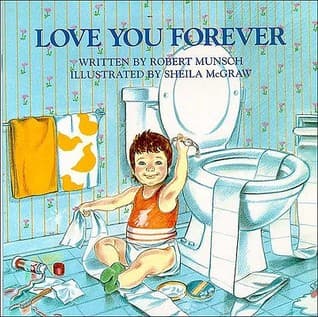
Robert Munsch (1985)
Genre
Children's
Reading Time
5 min
Key Themes
See below
Sign in to track this book
A mother's enduring love for her son, from cradling him as a baby to rocking him as an old man, is tenderly chronicled in this timeless tale.
The story begins with a new mother holding her newborn baby boy. She looks at him and thinks, 'I'll love you forever, I'll like you for always, as long as I'm living, my baby you'll be.' This refrain is the central motif of their relationship. The baby grows, and as he does, he becomes increasingly rambunctious and challenging, constantly testing his mother's patience. Despite his wild behavior, the mother remains steadfast in her affection, always returning to his room at night, no matter how old he gets, to gently pick him up and sing her special song to him as he sleeps.
As the boy grows into a toddler, his behavior is typical childhood mischief. He refuses to go to sleep, hides in the bathroom, and creates general mayhem. His mother often finds herself exasperated by his antics, sometimes even declaring that she's going to sell him to the zoo. However, despite her frustrations, her deep love for him always shows. Every night, after he has finally fallen asleep, she quietly creeps into his room, picks him up, and sings her tender lullaby, reaffirming her unending devotion to her sleeping child.
The boy continues to grow, and his childhood is marked by even more boisterous behavior. He refuses to eat his mashed potatoes, throws food, and makes a mess, showing the typical challenges of raising a spirited child. His mother, while often tired and worn out by his energy, never stops her nightly ritual. After he is asleep, she still sneaks into his room, gently lifts him from his bed, and sings the same comforting lullaby, 'I'll love you forever, I'll like you for always, as long as I'm living, my baby you'll be,' cementing the bond between them.
The boy transitions into his teenage years, a period often characterized by rebellion and a desire for independence. He listens to loud music, has strange friends, and generally acts in ways that challenge his mother's patience. She sometimes feels like he's 'driving her crazy.' Despite the growing distance and typical teenage angst, the mother's nightly ritual persists. She still creeps into his room, now a bit older and stiffer, carefully picks up her sleeping teenage son, and sings her special song, a quiet sign of her unwavering love through all phases of his life.
The boy eventually grows into a man and moves out of his childhood home, establishing his own life in another part of the city. His mother, now much older and more frail, still feels compelled to visit him. She drives across the city, sometimes struggling to get into his house, to continue her cherished nightly ritual. She creeps into his adult son's room, carefully picks him up (now a grown man, making it more difficult), and sings the familiar lullaby. This act shows the enduring nature of her maternal love, transcending physical distance and the passage of time.
As the mother ages further, her health declines. There comes a night when she tries to get out of bed to go sing to her son, but she is too old and too sick to move. She calls her son, telling him, 'You'd better come see me, because I'm very old and sick.' Her son, now a grown man, rushes to her side. When he arrives, she tries to sing her song to him one last time, but she can only get out the first few words, 'I'll love you forever, I'll like you for always...' before her strength gives out, signifying the end of her ability to physically perform their ritual.
Seeing his mother so frail, the grown son takes her into his arms. He rocks her back and forth and, for the very first time, sings the lullaby back to her: 'I'll love you forever, I'll like you for always, as long as I'm living, my mommy you'll be.' After his mother dies, the son returns home. He goes into his own baby daughter's room, picks her up, and gently sings the same song his mother sang to him, perpetuating the cycle of unconditional love and showing how love can be passed down through generations.
The Protagonist
She begins as a young, doting mother and ages gracefully, her love remaining constant until her final breath, effectively passing on the legacy of love to her son.
The Protagonist/Recipient of love
He evolves from a demanding child to a rebellious teenager, then to an independent adult, ultimately maturing to understand and reciprocate his mother's love, carrying it forward to the next generation.
The Mentioned
As a newborn, she is at the very beginning of the cycle of receiving unconditional love.
The most prominent theme is the mother's unwavering affection for her son through all stages of his life. Despite his challenging behavior as a child and teenager, and the physical distance as an adult, her love never falters. The nightly ritual of singing the lullaby is a consistent sign of this enduring love, showing that a parent's love is not contingent on behavior or circumstance, but exists 'forever.'
“I'll love you forever, I'll like you for always, as long as I'm living, my baby you'll be.”
The book clearly shows the progression of time, from the son's birth to his adulthood, and the mother's journey from youth to old age. This theme is shown through the changing illustrations of the characters' appearances and the mother's increasing physical struggle to perform her nightly ritual. It highlights how relationships endure and evolve over decades, and how the roles within those relationships can shift as individuals age, ultimately leading to the son caring for his elderly mother.
“But the mother was getting older. And she got older and older and older.”
This theme explores how love, especially parental love, is passed down from one generation to the next. The book ends with the son, after experiencing his mother's lifelong love and reciprocating it in her final moments, then singing the same lullaby to his own newborn daughter. This act closes the loop, showing that love is a continuous force that transcends individual lives and forms a perpetual chain through families.
“Then he went over to the cradle, and he picked up his baby girl in his arms. And as he rocked her back and forth, he sang: 'I'll love you forever, I'll like you for always, as long as I'm living, my baby you'll be.'”
A recurring refrain symbolizing enduring love.
The lullaby—'I'll love you forever, I'll like you for always, as long as I'm living, my baby you'll be'—serves as the central motif and a powerful symbol of unconditional love. It is repeated consistently throughout the book, marking the passage of time and the unchanging nature of the mother's affection. Its repetition reinforces the core message and creates a comforting, familiar rhythm for the reader. The transfer of the song from mother to son, and then to granddaughter, underscores the generational theme.
Narrative pattern highlighting consistency and change over time.
The story employs a highly repetitive structure, particularly in the sequence of the son growing older, being mischievous, and the mother's nightly ritual of singing the lullaby. This repetition emphasizes the constancy of the mother's love against the backdrop of her son's changing behavior and appearance. Each iteration shows a subtle progression in age and the mother's increasing physical effort, making the eventual reversal of roles and the son singing to his mother more poignant and impactful.
Visual cues depicting the passage of time and aging.
The illustrations are crucial in depicting the passage of time and the aging process for both the mother and the son. We see the son transform from a tiny baby to a rambunctious child, a rebellious teenager, and finally a grown man. Simultaneously, the mother's appearance visibly ages, her hair greys, and her posture stiffens, culminating in her frailty. These visual cues are essential in conveying the story's themes of enduring love and the life cycle without explicit narrative exposition on aging.
“I'll love you forever, I'll like you for always, As long as I'm living, my baby you'll be.”
— The mother sings this lullaby to her newborn son, and continues to sing it as he grows.
“The baby grew. He grew and he grew and he grew. He grew until he was two years old, and he ran all around the house, pulling all the books off the shelves, and pulling all the food out of the refrigerator.”
— Describing the energetic and mischievous toddler phase of the son.
“Sometimes the mother would open the door, and she would crawl across the floor.”
— The mother's persistent effort to retrieve her sleeping teenage son from his room.
“She opened the door to his room, crawled across the floor, looked up over the side of his bed, and sang: I'll love you forever, I'll like you for always, As long as I'm living, my baby you'll be.”
— The mother continues her tradition of singing the lullaby to her sleeping teenage son.
“Sometimes the mother would get so angry with her boy she would feel like screaming.”
— Illustrating the frustrations of parenting, even with deep love.
“But when she looked at him asleep, she would go to his room, open the door, crawl across the floor, and look up over the side of his bed.”
— Despite moments of frustration, the mother's love always brings her back to her son's bedside.
“She sang it even when he was a grown-up man.”
— Emphasizing the enduring nature of the mother's love and tradition as her son matures.
“She drove to his house, opened the front door, crawled across the floor, looked up over the side of his bed, and sang: I'll love you forever, I'll like you for always, As long as I'm living, my baby you'll be.”
— The aging mother continues her ritual, visiting her adult son's home to sing to him.
“One day the mother was very old. She could not get out of bed.”
— Signaling the mother's decline and the changing dynamic of their relationship.
“He picked her up and rocked her back and forth and back and forth and back and forth. And he sang this song:”
— The son, now an adult, cradles his frail, dying mother and sings her the lullaby.
“I'll love you forever, I'll like you for always, As long as I'm living, my mommy you'll be.”
— The son adapts the lullaby to sing to his dying mother, a poignant moment of role reversal.
“When he got home, he opened the door to his baby daughter's room, went to her bed, and very gently picked her up.”
— The son, after his mother's death, goes to his own daughter, continuing the cycle of love.
“As long as I'm living, my baby you'll be.”
— The son sings the lullaby to his own daughter, passing on the tradition of love.
“He rocked her back and forth and back and forth and back and forth. And he sang:”
— The final scene, where the son rocks his daughter, mirroring his mother's actions.
Ready to see how well you understood this book? Take our interactive quiz with 10 questions.

Biography coming soon.

Dan Gemeinhart
4.5

Kate O'Hearn
4.4

Jeanne Birdsall
4.4

Jen Wang
4.4
Wendelin Van Draanen
4.3

John Marsden
4.3

Chris Van Allsburg
4.3
Jennifer A. Nielsen
4.2