“Love is divine only and difficult always.”
— Opening line of the novel, setting the thematic tone.


Toni Morrison (1999)
Genre
Literary Fiction
Reading Time
360 min
Key Themes
See below
Sign in to track this book
In a fading beach town, the ghost of the charismatic Bill Cosey continues to ignite a furious, multi-generational battle among the women who loved, hated, and were forever bound by his complicated legacy.
The novel opens with Junior Viviane, a young, troubled woman, arriving at the Cosey house. Christine, one of the Cosey women, sent her to work as a housekeeper. The house is a decaying mansion, once a grand hotel and resort owned by Bill Cosey. Now it holds his widow, Heed, and his granddaughter, Christine. The two women, once childhood friends, are now bitter enemies, sharing the house in a tense, silent war. Junior's presence immediately changes their already volatile relationship, as she becomes an unwitting pawn in their long-standing feud. The house itself is a character, holding memories of Bill Cosey and the complex relationships he created.
The narrative shifts between the present and various past timelines, revealing Bill Cosey's history and his influence on the women around him. Cosey, a charming and powerful Black businessman, owned the Cosey Hotel, a popular resort that was a center for Black leisure and community. After his death, his will, which leaves the property to 'his wife,' becomes a point of contention. Heed, his legal widow, and Christine, his granddaughter and the daughter of his first wife, have been fighting over the inheritance and his memory for decades. Their animosity comes from a complex history of love, betrayal, and perceived wrongs, all centered around Bill Cosey.
Flashbacks show that Heed and Christine were once close childhood friends, growing up together at the Cosey Hotel. Christine was Bill Cosey's beloved granddaughter, and Heed was a poor girl he took in. Their bond was deep and full of mutual affection and protection. This friendship broke when Bill Cosey, in a controversial move, married the pre-pubescent Heed. This act, seen by many as scandalous and exploitative, changed the girls' relationship. It turned Christine's love into bitter resentment and Heed's innocence into a complex mix of guilt and entitlement, ending their childhood and their friendship.
The narrative looks at the life of May, Bill Cosey's long-time mistress and the hotel's cook. May represents the sensual, independent spirit that thrived during the Cosey Hotel's best years. She was a skilled chef and a woman of strong character, devoted to Cosey despite his marriage to Heed. Her story shows the various forms of 'love' that Cosey inspired and received, and the communal life of the resort. May also observes the dramas within the Cosey family, offering an outside perspective on the dynamics between Cosey, Christine, and Heed, and the broader social context of the time.
Bill Cosey is a magnetic and complex figure, a man who commanded immense loyalty and affection, but also caused deep pain and confusion. He was a successful entrepreneur, a generous benefactor, and a sensual man who affected every woman he met. His reasons for marrying Heed remain somewhat unclear. The reader must consider if it was an act of love, control, or a misguided attempt at protection. His presence, even after death, controls the lives of the women in the house, shaping their identities, their relationships, and their understanding of love itself. The novel carefully builds his character through the fragmented memories and perspectives of those who loved and hated him.
Ragan, Christine's daughter, is a younger generation somewhat removed from the intense emotional drama of the Cosey house. She lives away from the family and sees their quarrels with a mix of exasperation and detached curiosity. Her perspective helps frame the historical context of the family's struggles, showing how the past continues to affect later generations. Ragan's character also highlights societal changes since the Cosey Hotel's prime, contrasting the past Black community with the more fragmented present. She often hears Christine's complaints and tries to understand the deep-seated animosity.
As Junior continues her work in the Cosey house, she becomes more involved in the lives of Heed and Christine. She observes their routines, overhears their arguments, and begins to piece together the family's fragmented history. Junior, with her own troubled past, is drawn to the drama and seeks a sense of belonging. Her presence acts as a catalyst, prompting the women to confront parts of their past they have long suppressed. Through her interactions, the reader gains more insight into the complex relationships and the secrets that have been guarded for decades, especially concerning Cosey's intentions.
Celestial, a woman who knew Bill Cosey and the hotel well, offers another outside perspective on the Cosey family story. She represents the wider community affected by Cosey's presence and the decline of his resort. Her memories and insights add to the mosaic of perspectives, deepening the understanding of Cosey's character and the societal context in which he operated. Celestial's observations often show the differing interpretations of Cosey's actions and the lasting effects of his choices on the lives of those around him, especially the women who loved him.
A key revelation in the novel concerns the actual wording and intent of Bill Cosey's will. It is discovered that Cosey did not explicitly leave the property to 'his wife' in a way that would solely benefit Heed. Instead, the will's language is more ambiguous, suggesting a desire to protect and provide for all the women he cared for, or perhaps to simply leave a lasting, if complicated, legacy. This discovery redefines the decades-long feud between Heed and Christine. It shows their animosity was fueled by misinterpretation and deeply ingrained emotional wounds rather than a clear legal directive. The will's ambiguity reflects the ambiguity of Cosey's 'love.'
Towards the end of the novel, spurred by Junior's actions and the slow unraveling of truths, Heed and Christine begin a tentative reconciliation. They slowly start to communicate, recalling shared memories of their childhood friendship and Bill Cosey. This difficult process involves confronting past hurts, misunderstandings, and the ways Cosey's actions shaped their lives. While a full healing of their deep wounds is not easy, there is a glimmer of understanding and a partial restoration of their bond. This suggests that even after decades of hatred, love and shared history can still connect them, though with lasting scars.
The Central Figure
His arc is primarily revealed through flashbacks and the perspectives of others, showing his rise, his controversial actions, and his enduring, complicated legacy.
The Protagonist/Antagonist
From an innocent child bride to a bitter, isolated widow, she slowly begins to confront her past and tentatively reconcile with Christine.
The Protagonist/Antagonist
From a beloved granddaughter to a resentful, embittered woman, she gradually uncovers truths and begins a difficult process of reconciliation with Heed.
The Supporting
From a rootless, troubled young woman, she finds a temporary home and plays a crucial role in uncovering family truths, leading to a degree of stability for herself.
The Supporting
Her story is told primarily through flashbacks, showing her life as a respected, independent woman who found her own form of love and belonging outside conventional marriage.
The Supporting
L's arc is not personal development, but rather the act of weaving together disparate narratives into a cohesive understanding of the past and present.
The Supporting
Her arc is one of gradual understanding of her family's complex history, moving from exasperation to a more nuanced empathy.
The Supporting
Her arc is not personal, but rather her contribution to the collective memory and understanding of the Cosey family.
The Mentioned
Her story is told through the memories and interpretations of others, primarily Christine, shaping the family's historical narrative.
Morrison explores 'love' in many forms: romantic, familial, platonic, possessive, destructive, and redemptive. Bill Cosey embodies a complex, almost predatory, kind of love that binds and breaks the women around him. Heed and Christine's relationship, once a pure childhood love, becomes bitter hatred, yet threads of their original affection remain. May's love for Cosey is independent and sensual, while L's love is a watchful, communal affection. The novel questions whether Cosey's actions came from genuine care or a desire for control, leaving the reader to consider the title's true meaning.
“What is 'love'? A thing that never dies, but changes shape and color. A thing that can be pure venom or pure balm.”
The novel is built from fragmented memories, shifting timelines, and multiple subjective perspectives. Each character offers their version of events, especially about Bill Cosey and his hotel's decline. The narrative itself is a process of assembling a collective history, showing how individual memories can differ, contradict, and yet together form a more complete, though still ambiguous, truth. Storytelling, particularly through L's narration, is central to understanding the past and its lasting impact on the present. Memory's unreliable nature is a key element.
“Memory, whether it's a blessing or a curse, is the only thing that proves we've lived.”
Betrayal is a central theme, especially from Bill Cosey's marriage to Heed. Christine feels deeply betrayed by her grandfather and by Heed, leading to decades of simmering resentment. This resentment poisons not only their relationship but also their individual lives, trapping them in a cycle of bitterness. The novel explores the lasting psychological and emotional damage from perceived betrayals and how difficult it is to move past such wounds, even when initial circumstances might be misunderstood. The feud between Heed and Christine shows this theme.
“A betrayal of childhood is a wound that never truly heals, only scars over.”
Set in a Black community, the novel explores issues of race and class within that community. Bill Cosey's success as a Black entrepreneur and the Cosey Hotel as a place for Black leisure show a specific historical context. The differences between Cosey's family (Christine) and the poorer Heed highlight class differences, even within the same racial group. The changing fortunes of the hotel reflect broader societal shifts for African Americans. Morrison subtly weaves in the complexities of identity and status within a segregated society, and how these factors shape relationships and opportunities.
“In that town, Cosey's name was currency, and his hotel, a kingdom where colored folk could be kings and queens.”
The past in 'Love' is not just background; it is a living entity that dictates the characters' present lives. The entire narrative is driven by Bill Cosey's life and choices. The feud between Heed and Christine, the decay of the Cosey house, and the women's emotional states are all direct results of events that happened decades ago. The novel shows how unresolved conflicts, unspoken truths, and deeply ingrained memories continue to shape identities, relationships, and the very structure of a family and community. It is impossible to truly escape one's history.
“The past is not dead. It's not even past. It lives in the breath of us, in the walls of our homes.”
The story is told through shifting timelines and multiple character perspectives.
Morrison employs a highly non-linear narrative, constantly shifting between the present-day feud in the Cosey house and various points in the past, from the hotel's heyday to the childhood of Heed and Christine. This fragmentation mirrors the fractured memories and perspectives of the characters, requiring the reader to piece together the full story. It also emphasizes how the past is never truly over, but continually informs and complicates the present, creating a sense of timelessness and the enduring power of history on individual lives. The reader experiences the story as a mosaic rather than a straight line.
Events are recounted through the subjective viewpoints of different characters, often contradicting each other.
The novel is told through the eyes and memories of several characters—Heed, Christine, May, Junior, and particularly the omniscient yet personally involved 'L.' Each character offers a subjective, often biased, account of Bill Cosey and the events surrounding his life and death. This device highlights the subjective nature of truth and memory, and how personal emotions and experiences shape one's understanding of history. The contradictions between accounts force the reader to critically evaluate each perspective and construct their own understanding of the 'truth,' underscoring the novel's theme of the elusive nature of 'love' and intent.
A wise, knowing voice that guides the reader through the complex narrative.
The character of 'L' functions as an omniscient, yet distinctly voiced, narrator. L knew Bill Cosey and many of the women personally, giving her a unique vantage point to weave together the disparate threads of the story. Her voice is imbued with wisdom, a deep understanding of human nature, and a lyrical quality that is characteristic of Morrison's prose. L not only recounts events but also offers philosophical insights and emotional commentary, helping to contextualize the characters' actions and feelings, and providing a cohesive, if sometimes subtly biased, framework for the fragmented narrative.
The decaying mansion symbolizes the fading legacy and unresolved conflicts of the family.
The Cosey Hotel, once a vibrant hub of Black life and Bill Cosey's empire, slowly decays into the Cosey house, a dilapidated mansion inhabited by feuding women. This physical decay mirrors the decline of Cosey's legacy, the erosion of the community it once served, and the psychological deterioration of the characters trapped within its walls. The house becomes a symbol of the unresolved past, the lingering resentments, and the way in which characters are haunted by memory. Its former grandeur contrasts sharply with its present state, emphasizing loss and the destructive power of unaddressed conflict.
Bill Cosey's will serves as a central plot device, fueling conflict and revealing character.
Bill Cosey's will, which leaves his property to 'his wife,' is a key plot device that drives the central conflict between Heed and Christine. Its ambiguous wording is initially interpreted by each woman in a way that fuels their individual claims and decades of animosity. The eventual revelation of its true, more nuanced intent serves as a turning point, not only in the plot but also in the characters' understanding of Cosey and their own relationship. The will symbolizes the lasting power of Cosey's influence and the way his actions, even seemingly simple ones, had profound and complex repercussions.
“Love is divine only and difficult always.”
— Opening line of the novel, setting the thematic tone.
“Loving small or in moderation was not in her.”
— Describing the character Heed the Night Johnson's intense nature.
“She is a friend of my mind. She gather me, man. The pieces I am, she gather them and give them back to me in all the right order.”
— A character reflecting on a deep, platonic bond.
“You can't own a human being. You can't lose what you don't own. Suppose you did own him. Could you really love somebody you owned?”
— A philosophical reflection on love and possession.
“Love is never any better than the lover.”
— A character musing on the flaws and limitations of love.
“I don't think he ever knew what he had in me. I don't think he knew I was a person.”
— A character expressing feelings of invisibility in a relationship.
“She taught me the real meaning of love. The kind you have to earn, the kind that is a decision.”
— Reflecting on learned, deliberate love rather than mere emotion.
“Hate does that. Burns off everything but itself, so whatever your grievance is, your face looks just like your enemy's.”
— Commentary on how hatred consumes and transforms.
“We were girls together. That counts for something.”
— A character emphasizing the enduring bond of shared youth.
“You don't have to love me, but you damn well have to respect me.”
— A demand for dignity in a strained relationship.
“Love is or it ain't. Thin love ain't love at all.”
— A dismissal of superficial or conditional affection.
“The past is an old armchair in the attic, the present an ominous tick, and the future is anybody's guess.”
— A metaphorical reflection on time and uncertainty.
“She is a liar, and she knows too much to lie.”
— Describing a character's complex relationship with truth.
“What's the world for if you can't make it up the way you want it?”
— A character asserting the power of imagination and desire.
Ready to see how well you understood this book? Take our interactive quiz with 10 questions.
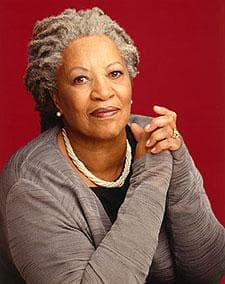
Chloe Anthony Wofford Morrison, known as Toni Morrison, was an American novelist. Her first novel, The Bluest Eye, was published in 1970. The critically acclaimed Song of Solomon (1977) brought her national attention and won the National Book Critics Circle Award. In 1988, Morrison won the Pulitzer Prize for Beloved (1987); she was awarded the Nobel Prize in Literature in 1993.







