“The dole, for all its inadequacy, was a cushion against the ultimate fall, but it was also a cage.”
— Reflecting on the nature of unemployment benefits during the Depression.

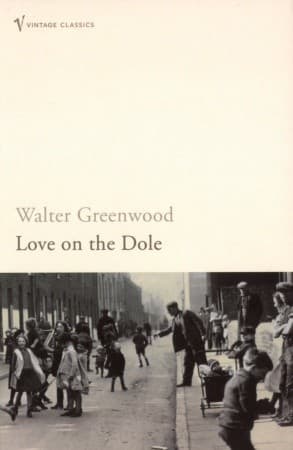
Walter Greenwood (1933)
Genre
Literary Fiction / Historical Fiction
Reading Time
360 min
Key Themes
See below
Sign in to track this book
In 1930s Salford, the Hardcastle siblings navigate poverty, where love is a luxury and the fight for survival threatens to shatter their dreams and morals.
The novel opens in Hanky Park, a working-class district of Salford, England, during the Great Depression. We meet the Hardcastle family: Harry, the eldest son, just out of school and looking for work; Sally, his younger sister, still at school but soon to enter the workforce; Mrs. Hardcastle, their long-suffering mother; and Mr. Hardcastle, their often-unemployed father. Their lives are shaped by the constant struggle against poverty, the threat of unemployment, and the indignities of the 'dole' system. Harry's initial optimism about finding a job quickly dissolves as he faces widespread unemployment, a common fate for young men in their community.
Harry Hardcastle eventually gets a job as an apprentice in a local engineering works, a rare stroke of luck in Hanky Park. During this time, he becomes romantically involved with Helen, a local girl. Their relationship, however, is casual. The young couple spends their meager earnings on fleeting pleasures, trying to escape the dreariness of their daily lives. Harry's initial relief at having employment is soon overshadowed by the complexities of his personal life, setting the stage for future troubles that will impact his family.
As the family's financial situation remains uncertain, Sally Hardcastle leaves school and begins working in the local cotton mill. The mill is noisy, dirty, and dangerous. Sally quickly experiences the exhausting physical labor and low wages typical for young female workers. Despite the hardship, Sally maintains some resilience and hope, finding companionship among her fellow workers. Her entry into the industrial workforce highlights the limited opportunities available to young women in Hanky Park and the cyclical nature of poverty that traps families.
Sally Hardcastle meets Larry Meath, a thoughtful and self-educated young man who works as a fitter. Larry is a committed socialist and a voracious reader. He introduces Sally to new ideas and a different perspective on their socio-economic plight. Their relationship deepens. Sally is drawn to Larry's intelligence and idealism, a stark contrast to the often-bleak outlook of others in Hanky Park. Larry's influence begins to subtly challenge Sally's acceptance of her circumstances, offering a glimpse of a world beyond mere survival and sparking a political awareness within her.
Harry's casual relationship with Helen results in her pregnancy. Under societal pressure, Harry is forced into a shotgun marriage. This event brings shame and financial strain upon the Hardcastle family, leading to a rift between Harry and his parents. Shortly after his marriage, Harry loses his job at the engineering works, plunging him into the 'dole queue.' Unemployed and with a family to support, Harry's desperation grows, pushing him towards risky and illicit means of survival, further alienating him from his family and community.
Larry Meath, Sally's beloved, begins to suffer from a serious lung illness, likely tuberculosis, worsened by the poor living and working conditions in Hanky Park. His health rapidly declines, causing immense worry for Sally. Meanwhile, the Hardcastle family's financial situation becomes dire, especially with Harry out of work. The 'Means Test,' a humiliating government assessment of a family's income, threatens to reduce their already meager dole payments. Sally feels the weight of her family's poverty and Larry's illness pressing down on her.
Driven by unemployment and the inability to provide for his wife and child, Harry Hardcastle joins a group involved in petty crime, primarily bookmaking. He sees this as the only way to escape poverty and maintain some dignity. This descent into crime further isolates Harry from his family, who disapprove of his choices but cannot stop him. His involvement in the criminal underworld highlights the extreme measures people took to survive during the Depression.
Despite Sally's hopes and the efforts of his friends, Larry Meath's illness takes a fatal turn. He dies, leaving Sally heartbroken and disillusioned. Larry's death not only robs Sally of the man she loves but also extinguishes the hope and intellectual engagement he had brought into her life. His passing symbolizes the tragic loss of potential and the devastating impact of poverty and inadequate healthcare on individuals in working-class communities. Sally is left to navigate her grief amidst the ongoing struggle for survival.
After Larry's death, the Hardcastle family's financial situation reaches a critical point. With Harry still unemployed and Sally's wages barely enough, they face eviction and destitution. In this moment of extreme vulnerability, Sam Grundy, a wealthy and unscrupulous local bookmaker, approaches Sally with an offer: he will provide financial support for her family, including a house and regular income, if Sally becomes his mistress. This proposition presents Sally with a moral dilemma, forcing her to choose between her dignity and her family's survival.
After much internal struggle, Sally Hardcastle makes the heartbreaking decision to accept Sam Grundy's offer. She sacrifices her personal integrity and happiness to secure her family's financial well-being, knowing it is the only way to prevent them from falling into destitution. This choice marks a turning point for Sally, symbolizing the ultimate price exacted by poverty and the societal pressures placed upon young women in such circumstances. The novel ends with Sally's somber acceptance of her fate, highlighting the bleak realities of 'love on the dole.'
The Protagonist
Sally transforms from an innocent, hopeful girl into a weary young woman who makes the ultimate sacrifice for her family's survival, losing her personal dignity in the process.
The Supporting
Harry's arc is a downward spiral from hopeful apprentice to desperate criminal, alienated from his family by his choices and circumstances.
The Supporting
Larry's arc is cut short by illness, serving as a tragic symbol of unfulfilled potential and the brutal realities of the time.
The Supporting
Mrs. Hardcastle endures hardship, her arc defined by her unwavering struggle to maintain her family's fragile existence.
The Supporting
Mr. Hardcastle's arc is one of declining dignity and increasing resignation, mirroring the fate of many unemployed men.
The Antagonist
Grundy remains static in his role as an exploitative figure, serving as a catalyst for Sally's ultimate sacrifice.
The Supporting
Helen's arc is tied to Harry's, becoming a mother and a wife under difficult circumstances, her future bound to his struggles.
The Supporting
Ned's arc remains largely static, serving as a representative figure of the working-class struggle and its minor triumphs and defeats.
Poverty controls every aspect of life in Hanky Park. It is not just a lack of money but a systemic oppression that strips characters of dignity, hope, and choice. The Hardcastle family's constant struggle for food, rent, and basic necessities is central. Scenes like the family discussing pawning items, the 'Means Test' officer's intrusive visits, and Sally's grueling work at the mill all show how poverty harms physical health, mental well-being, and social standing. It forces Harry into crime and ultimately compels Sally to make an unthinkable sacrifice, demonstrating its destructive power.
“Poverty was not a thing to be ashamed of; it was a thing to be endured, and fought.”
The novel shows the loss of innocence and dignity, especially in Sally and Harry. Sally begins as a hopeful schoolgirl but is quickly thrust into the harsh realities of the mill, her dreams gradually replaced by grim determination. Her ultimate sacrifice to Sam Grundy is the most poignant example of lost dignity, where her body becomes a commodity to save her family. Harry's descent into petty crime after losing his job also shows a loss of dignity, as he forsakes honest work for illicit means of survival. The 'Means Test' itself directly attacks the dignity of the unemployed, forcing them to expose their private lives to intrusive officials.
“What was the good of being honest if honesty was a luxury?”
Greenwood vividly portrays the social injustices and class inequalities in 1930s Britain. The working class of Hanky Park is trapped in poverty, exploited by landlords, pawnbrokers, and unscrupulous figures like Sam Grundy, while the wealthy remain largely unaffected. The government's 'dole' system and the 'Means Test' are shown as dehumanizing and inadequate, offering minimal relief while stripping individuals of their self-respect. Larry Meath's socialist ideals provide a brief intellectual counterpoint, highlighting the systemic nature of their suffering and the need for change, though his death shows how difficult it is to achieve.
“The dole was a living death. It meant slow starvation for the body and festering decay for the soul.”
The novel examines the specific burdens faced by working-class women during the Depression. Sally and Mrs. Hardcastle show this. Mrs. Hardcastle constantly juggles meager resources, stretching pennies and maintaining order amidst chaos. Sally is forced into the mill at a young age, enduring harsh conditions. Later, she faces the ultimate sacrifice of selling herself to Sam Grundy to save her family. Her decision shows the lack of agency and the impossible choices women often had to make when conventional support failed, highlighting their vulnerable position as both economic contributors and moral guardians of the family.
“A woman's place was in the home, but not if there was no home.”
A literal and symbolic representation of unemployment and state dependency.
The dole queue is a recurring motif and a significant plot device. It is where Harry spends his days, representing his loss of purpose and dignity. It's a place of communal suffering, where men gather, share news, and experience the dehumanizing process of receiving meager state benefits. Symbolically, it underscores the widespread unemployment and the government's inadequate response to the Depression, emphasizing the characters' dependency and lack of control over their lives. It's a constant reminder of their precarious existence and the societal failure to provide meaningful work.
A government policy that intrusively assesses family income, intensifying hardship and humiliation.
The Means Test is a critical plot device that drives much of the Hardcastle family's anxiety and conflict. This intrusive government assessment of a household's total income and assets determines eligibility for unemployment benefits, often leading to reduced or denied payments if any family member had earnings. It forces families to make impossible choices, like Sally's wages potentially reducing her parents' dole. The Test is depicted as humiliating and arbitrary, fostering resentment and suspicion within communities, and highlighting the state's punitive approach to poverty rather than offering genuine support.
The fictional working-class district that shapes the characters' destinies.
Hanky Park functions almost as a character itself, a bleak and oppressive force that dictates the lives of its inhabitants. Its cramped streets, pawnshops, mills, and dole queues are not just backdrops but active elements shaping the characters' choices and limiting their horizons. The pervasive poverty, poor housing, and lack of opportunity within Hanky Park create an inescapable environment that traps families like the Hardcastles, fostering a sense of fatalism. Its grim reality constantly reminds the reader of the systemic nature of the characters' struggles.
A tragic event that symbolizes the fragility of hope and the devastating impact of poverty.
Larry Meath's progressive lung illness and eventual death serve as a potent plot device. On a personal level, it shatters Sally's hopes for a better future and pushes her closer to desperation. Symbolically, Larry's death, caused by poor living conditions and lack of adequate medical care, represents the crushing of idealism and the tragic loss of potential within the working class. It underscores the brutal realities of poverty that can extinguish even the brightest sparks of hope and intellectual aspiration, reinforcing the novel's bleak outlook on social mobility and justice.
“The dole, for all its inadequacy, was a cushion against the ultimate fall, but it was also a cage.”
— Reflecting on the nature of unemployment benefits during the Depression.
“Life on the dole was a slow, grinding process of attrition, not a sudden catastrophe.”
— Describing the prolonged suffering of the unemployed.
“You couldn't eat pride, nor could you warm yourself with it.”
— Sally Hardcastle's pragmatic view on survival over dignity.
“Hope was a luxury they could ill afford, yet it was the one thing they clung to.”
— The paradox of maintaining hope in dire circumstances.
“The mills were silent, monuments to a prosperity that had vanished like smoke.”
— Describing the desolate industrial landscape of Salford.
“Money was the breath of life, and they were suffocating.”
— Highlighting the absolute necessity of money for survival.
“To be young and without work was to be like a bird with clipped wings.”
— Contemplating the wasted potential of the unemployed youth.
“They were not lazy; they were redundant, a far more cruel fate.”
— Correcting the common misconception about the unemployed.
“Love, in their world, was often just another burden, another mouth to feed.”
— The harsh reality of love and relationships amidst extreme poverty.
“The streets of Hanky Park knew more about hunger than any textbook ever could.”
— Emphasizing the lived experience of poverty in a specific slum area.
“Every penny counted, every crust was precious, every moment of warmth a blessing.”
— Illustrating the extreme scarcity and appreciation for basic necessities.
“The casual cruelty of officialdom was often harder to bear than the hunger itself.”
— Critiquing the bureaucratic and dehumanizing treatment of the poor.
“They sought not charity, but a chance, a right to earn their keep.”
— Expressing the desire for work and self-sufficiency rather than handouts.
“The silence of the factories was a dirge for the living, a lament for lost livelihoods.”
— The symbolic impact of closed factories on the community.
Ready to see how well you understood this book? Take our interactive quiz with 10 questions.

Biography coming soon.







