“It’s not enough to love someone. You have to love them the right way.”
— Early reflection on the complexities of love beyond simple affection.

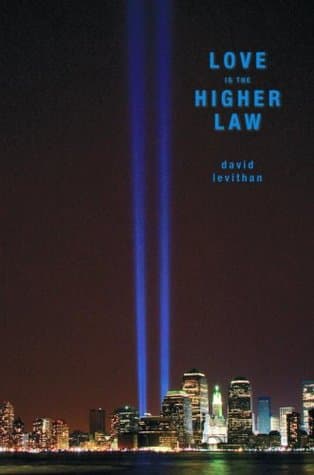
David Levithan (2009)
Genre
Historical Fiction / Young Adult / Romance
Reading Time
150 min
Key Themes
See below
Sign in to track this book
After the 9/11 attacks, three New York teens—Claire, Jasper, and Peter—find their lives entwined, forming unexpected bonds amid the city's recovery and their own developing grief and strength.
On the morning of September 11, 2001, New York City experiences chaos. Claire, a high school junior, is in English class when the first plane hits the World Trade Center. She worries about her younger brother, Ethan, who is in elementary school. She navigates the confusion and fear to find him, seeing the tragedy firsthand. Meanwhile, Jasper, a college sophomore in Brooklyn, wakes to frantic calls from his parents in Korea, confirming his safety. He watches the towers fall from his window, filled with disbelief and horror. Peter, a classmate of Claire's, is on his way to school when the events begin, forcing him to face the disaster on the city streets, changing his view of home forever.
In the days after 9/11, the city is covered in dust, smoke, and grief. Claire struggles to process the trauma, staying close to her family and finding comfort in daily routines that now feel important. The air is heavy with the smell of burning and the constant sound of sirens, a reminder of the tragedy. Jasper, feeling disconnected from his distant parents and college friends, walks the city, observing the collective mourning and the strength of New Yorkers. He is drawn to the makeshift memorials and strangers' stories. Peter, like many, feels deeply confused. His familiar city has changed, and he deals with survivor's guilt and the fear that lingers.
As weeks turn into months, Claire, Jasper, and Peter's lives begin to cross, often subtly. They visit the same parks, coffee shops, and memorial sites, drawn by an unspoken understanding of the city's wounds. Claire, seeking an outlet for her complex feelings, volunteers at a soup kitchen, where she sometimes sees Peter, who is also trying to understand the new world. Jasper, a photographer, captures images of the city's recovery and its people, often in the same places as Claire and Peter, though they do not connect yet. The city itself brings together those who have experienced the same loss.
Claire and Peter, initially classmates who barely knew each other, start a friendship based on their shared experience of 9/11. They find comfort in talking about their feelings, the fear, and the lasting sense of loss. Their conversations often focus on books, a shared interest. Peter introduces Claire to new authors, and they discuss how literature can offer perspective and comfort during crises. This shared intellectual space helps them connect deeply, providing a sense of normalcy and understanding amid the lingering grief. Their bond shows the human need for connection in hard times.
Jasper, feeling lost after the attacks, uses his energy for photography, documenting the changing city and its people. He starts new friendships, especially with a group of college students also dealing with the aftermath. These new connections give him a sense of community and purpose he had lacked. He spends his days walking the streets, observing, and capturing moments of sorrow and strength. This creative outlet becomes a key part of his healing, allowing him to express some of the complex emotions he struggles to put into words, and helping him find his place in New York's altered landscape.
Months after 9/11, the city holds various memorial events. Claire, Peter, and Jasper, independently and sometimes unknowingly, attend some of the same gatherings. At one memorial site, they are all present, reflecting on the lives lost and the profound impact on their city. While they may not interact directly at this moment, there is an unspoken recognition of their shared experience, a silent acknowledgment of the collective grief and the spirit of New York. The memorial brings together diverse individuals united by a common tragedy, reinforcing that they are all part of a larger story of loss and recovery.
Claire, Peter, and Jasper finally meet directly at a poetry reading in a small Greenwich Village bookstore. Peter, having encouraged Claire to attend, introduces her to Jasper, who is also there. There is an immediate, subtle connection between them, a sense of shared understanding. They discuss the poetry, their experiences of the past year, and their hopes for the future. This meeting marks the official start of their intertwined lives, moving beyond shared spaces to active engagement. Their conversations are hesitant at first but quickly deepen as they discover commonalities and a mutual desire to navigate the 'After' together.
As their friendship grows, Claire, Peter, and Jasper become an important support system for each other. They share meals, attend events, and simply exist in each other's company, finding comfort in their collective presence. They discuss the ongoing impact of 9/11 on their lives, their families, and the city. They help each other understand the 'new normal,' a world where security alerts are common and the skyline is forever changed. Their friendship provides a safe space to express their fears, hopes, and worries, allowing them to process their individual grief within a supportive community. They learn to find moments of joy and normalcy amid the lingering shadows.
Amid their evolving friendship, a deeper romantic connection forms between Claire and Peter. Their shared love for books and their mutual understanding of the 9/11 experience draw them closer. Their relationship is gentle and understanding, built on shared vulnerability and strength. Jasper, while not romantically involved with Claire or Peter, finds his own form of love and connection through his photography and his expanding social circle. He embraces his identity as an artist and a New Yorker, finding purpose in documenting the city's ongoing story. The trio, though on different romantic paths, remains a cohesive unit, showing that love, in its various forms, can grow even after great loss.
By the end of the story, Claire, Peter, and Jasper have found ways to move forward, not forgetting the past but incorporating it into their present and future. Claire and Peter's relationship deepens, offering them strength and hope. Jasper continues his passion for photography, his work showing both the scars and beauty of his city. They understand that 9/11 changed them, but it did not break them. They have learned that love, friendship, and connection are essential for healing and strength. The book ends with cautious optimism, suggesting that even after immense tragedy, life continues, and new beginnings are always possible.
The Protagonist
Claire evolves from a fearful and disoriented teen to a more grounded and hopeful young woman, finding love and purpose in the aftermath.
The Protagonist
Jasper transforms from a disoriented and isolated individual into a purposeful artist who finds belonging and connection through his craft and new relationships.
The Protagonist
Peter moves from a state of quiet grief and disorientation to finding solace, purpose, and love through deep connections with others.
The Supporting
Ethan's arc is less developed, serving more as a symbolic presence of the younger generation's experience of the tragedy and its aftermath.
The Supporting
Their arc is largely static, representing the anchor of family support during a crisis.
The Mentioned
Their arc is not developed, serving as a plot device to illustrate Jasper's initial isolation.
The novel explores the lasting psychological impact of a catastrophic event like 9/11. Each character experiences grief differently: Claire through a need for connection, Jasper through art and a search for belonging, and Peter through quiet thought. The city's 'dust' and 'smell' are constant reminders of physical and emotional scars. The story shows that healing means learning to live with a changed life and environment, as seen in the characters' adaptation to New York's 'new normal.'
“There is a Before, and then there is an After.”
After a great tragedy, the novel shows how human connection helps healing and strength. The initial isolation felt by each character slowly gives way to shared experiences and developing friendships. Claire, Peter, and Jasper, though strangers at first, find comfort and strength in their mutual understanding and support. Their intertwined lives show how a shared trauma can create unexpected bonds, forming a new community where individuals can process grief and find hope together. This is clear in their shared attendance at memorial sites and their eventual direct interactions.
“We were all part of something, whether we wanted to be or not.”
Despite the loss and despair, 'Love Is the Higher Law' ultimately conveys a message of hope and human strength. The characters' journeys show that even after trauma, life continues, and new beginnings are possible. Claire and Peter find love, Jasper discovers his artistic purpose, and all three learn to navigate their changed world with cautious optimism. The novel suggests that while the 'Before' is gone, the 'After' can still hold beauty, connection, and the promise of a future, though one always marked by the past.
“Love is the higher law. It is the only thing that can redeem us.”
The novel highlights how creative expression and reading can be important coping mechanisms and ways to understand. Peter and Claire bond over their shared love for books, using stories and poetry to express emotions that are otherwise hard to put into words. Jasper channels his experiences and observations into photography, turning his trauma into art that documents the city's pain and recovery. These creative outlets not only provide comfort and escape but also help the characters process their grief, find meaning, and connect with others more deeply.
“Sometimes the only way to make sense of things is to read someone else's sense.”
A structural device highlighting the irreversible shift caused by 9/11.
The novel explicitly divides its narrative into 'Before' and 'After,' a fundamental structural device that immediately establishes the profound, irreversible impact of 9/11. This framework underscores the idea that the world, and the lives of the characters, were irrevocably altered by the event. It emphasizes the sense of a clear demarcation in time, allowing the narrative to explore the contrast between pre-9/11 innocence and post-9/11 reality. This device effectively communicates the pervasive feeling among New Yorkers that life would never be the same, making the tragedy a historical and personal watershed moment.
Narrating the event and its aftermath through the eyes of three distinct characters.
The use of multiple, alternating first-person perspectives (Claire, Jasper, and Peter) is a key plot device. This allows the author to present a multifaceted view of the 9/11 experience, showcasing how the same event can be perceived and processed differently based on individual circumstances, backgrounds, and personalities. It provides a richer, more comprehensive emotional landscape of the tragedy and its aftermath, demonstrating the universality of grief while also highlighting unique coping mechanisms. This approach fosters empathy and allows readers to connect with each character's distinct journey of healing and discovery.
New York City serves as a dynamic, living entity that shapes and reflects the characters' experiences.
New York City is not merely a setting but a dynamic character in the novel. Its physical and emotional state mirrors the characters' internal journeys. The imagery of the dust, the altered skyline, the makeshift memorials, and the collective spirit of its inhabitants all contribute to this. The city's resilience, its wounds, and its slow process of healing are intrinsically linked to the protagonists' personal arcs. Walking the streets, observing the people, and documenting the changes become central to the characters' coping mechanisms, making the city an active participant in their narrative of loss and recovery.
Unplanned meetings in public spaces subtly weave the characters' lives together.
The recurring motif of shared public spaces and coincidental encounters (parks, coffee shops, memorials, the soup kitchen, the bookstore) acts as a subtle but powerful plot device. Before their formal introduction, Claire, Jasper, and Peter frequently occupy the same physical spaces, creating an unspoken connection and foreshadowing their eventual bond. These encounters underscore the collective nature of the tragedy and how it brought disparate individuals together. It highlights the idea that even in a vast city, shared trauma can create invisible threads between people, guiding them towards each other for support and understanding.
“It’s not enough to love someone. You have to love them the right way.”
— Early reflection on the complexities of love beyond simple affection.
“The thing about love is that it’s not a static thing. It doesn’t just sit there. It’s like a plant that needs to be watered and nurtured, or it will wither and die.”
— A metaphor for the ongoing effort required in maintaining love.
“Sometimes the hardest part about love is not finding it, but keeping it.”
— Contemplation on the challenges of sustained love.
“When you truly love someone, you want to make them happy, even if it means sacrificing your own happiness.”
— A character grappling with selfless love.
“Love isn't always easy. Sometimes it's messy and complicated, but that doesn't make it any less real.”
— Acknowledging the imperfect nature of love.
“The greatest gift you can give someone is your time, your attention, your love, your concern.”
— A character reflecting on the true value of presence and care.
“It’s amazing how much you can change, and how much you can stay the same, all at once, when you’re in love.”
— An observation about personal transformation within a loving relationship.
“There are a million ways to love someone, and every single one of them is valid.”
— Emphasizing the diversity and acceptance of different forms of love.
“Grief is love with nowhere to go.”
— A poignant definition of grief often associated with loss in love.
“To be loved is to be seen. To be truly seen, with all your flaws and your strengths.”
— A character's understanding of profound acceptance in love.
“You don't just fall in love once. You fall in love over and over again with the same person, in different ways, as they change and you change.”
— A dynamic view of long-term love and evolving relationships.
“Love isn't about possession. It's about appreciation.”
— Distinguishing between ownership and admiration in love.
“Sometimes the bravest thing you can do is to love someone, knowing that it might break your heart.”
— Highlighting the courage involved in opening oneself to love.
Ready to see how well you understood this book? Take our interactive quiz with 10 questions.

David Levithan is a celebrated author of young adult fiction, known for his lyrical prose and exploration of complex emotional themes. His notable works include the bestselling novel "Every Day," which was adapted into a film, and "Love Is the Higher Law." Levithan also co-authored "Will Grayson, Will Grayson" with John Green.







