BookBrief
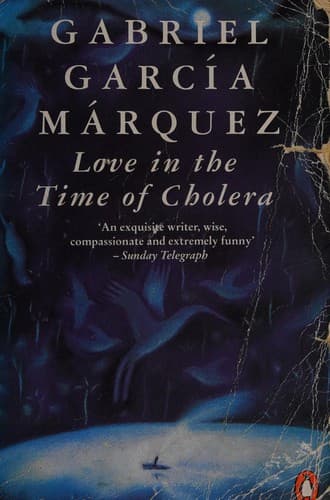
Love in the Time of Cholera cover
Archivist's Choice

Love in the Time of Cholera

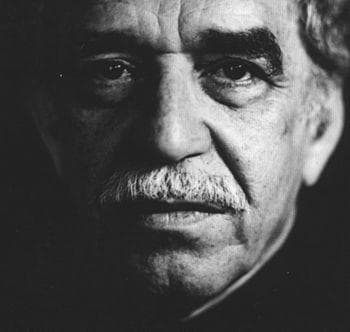
Gabriel García Márquez (2014)

Genre

Literary Fiction / Historical Fiction / Romance

Reading Time

360 min

Key Themes

See below

Track Your Reading

Sign in to track this book

A lifelong romantic, devoted for half a century across countless lovers, finds his chance to rekindle love in his beloved's final years, proving true love always finds its way back.

Synopsis

On the day Dr. Juvenal Urbino, a respected doctor, dies after falling from a ladder while getting his pet parrot, Florentino Ariza, a rich shipping magnate, immediately tells Urbino's widow, Fermina Daza, that he still loves her. This brings back a love story that began over fifty years earlier. As young people, Florentino and Fermina had a passionate, secret relationship through letters and hidden meetings. Fermina ended it suddenly, realizing her love was an 'illusion.' She then married the ambitious Dr. Urbino, starting a long, respected, but sometimes difficult life together, raising children and living in their Caribbean city. Meanwhile, Florentino, heartbroken but determined to stay true to Fermina, spent his life getting rich and having many brief love affairs with hundreds of women. He kept careful records of each one, all while waiting for Dr. Urbino to die. After Urbino's death, Florentino pursued Fermina again, at first facing her anger. But through constant letters and shared memories of their youth, he slowly reconnected with her. In their old age, they took a river trip together on one of Florentino's steamboats, discovering a deep, unusual love that went against what society expected. They chose to stay on an endless, quarantined journey, using the cholera flag as a symbol, to keep their new closeness.
Reading time
360 min
Difficulty
Medium
Pacing
Moderate
Mood
Romantic, Melancholy, Philosophical, Humorous, Reflective
✓ Read this if...
You enjoy epic, unconventional love stories that span decades, exploring themes of aging, passion, and the many forms of love and obsession.
✗ Skip this if...
You prefer fast-paced plots or are uncomfortable with detailed descriptions of infidelity and the complexities of human desire.

Plot Summary

Dr. Urbino's Demise

On Pentecost Sunday, Dr. Juvenal Urbino, a respected physician in a Caribbean port city, tries to get his pet parrot from a mango tree. The parrot had flown into the tree to escape a dog. Dr. Urbino, old and weak, falls from the ladder and dies from a head injury. His wife, Fermina Daza, and their children, América Vicuña and Marco Aurelio, see him fall. The city mourns its public figure, known for his work against cholera and his efforts to modernize the city. His funeral is a large event, attended by many, including Florentino Ariza, who had waited over fifty years for this moment.

Florentino's Declaration

After Dr. Urbino's funeral, while Fermina Daza is still grieving, Florentino Ariza arrives at her home. He means to keep the promise he made decades ago: to tell her he loves her the moment her husband died. He approaches her and, with a shaky voice, repeats his eternal devotion, saying, "Fermina, I have waited for this opportunity for fifty-one years, nine months, and four days. I have loved you since the first moment I saw you and I will love you until I die." Fermina is shocked and angry at his lack of sensitivity, calling him a 'ghost' and a 'senile old man,' and ordering him to leave.

The First Love Affair

The story goes back to young Fermina Daza, a beautiful and lively girl living with her father, Lorenzo Daza, who was indulgent but watchful. Florentino Ariza, a telegraph operator, sees her one day and is instantly smitten. He begins to pursue her tirelessly, sending her countless passionate letters, often delivered by Fermina's aunt, Escolástica. Their letters turn into an intense, secret love affair, full of promises of eternal devotion and plans for their future. Fermina, at first hesitant, eventually gives in to his charm and poetic words, believing he is her true love. They promise to marry and spend their lives together.

Lorenzo Daza's Intervention

Lorenzo Daza, a practical and ambitious man, finds out about his daughter's secret letters with Florentino Ariza. He thinks Florentino is beneath their social class and not a good match for Fermina. Angry, he confronts Fermina and forbids her from seeing or writing to Florentino. To separate them and make Fermina forget her young love, Lorenzo takes her on a long trip to the country, visiting relatives and showing her new experiences and potential husbands, hoping she will broaden her views and forget Florentino.

The 'Revelation' and Betrayal

After her long trip, Fermina Daza returns to the city, seemingly more mature and changed. She meets Florentino Ariza in the marketplace. At that moment, seeing him in person after their idealized romance through letters, she suddenly realizes: the love she felt for him was an illusion, a childish fantasy. She is put off by his looks and declares, "No, please. Forget it." This sudden rejection, said in one sentence, crushes Florentino, who had been waiting faithfully for her return, sure their love would last through their separation. This scene marks the abrupt end of their youthful romance.

Fermina's Marriage to Dr. Urbino

Soon after rejecting Florentino, Fermina Daza meets Dr. Juvenal Urbino, a brilliant, sophisticated, and well-traveled doctor who had recently returned from studying in Paris. He is admired for his intelligence, social standing, and modern ideas, especially his work in public health. Dr. Urbino is persistent and charming in his courtship, offering Fermina a life of stability, respect, and social importance that Florentino could not. Despite some early doubts and a wish for independence, Fermina eventually accepts Dr. Urbino's proposal, marries him, and they start a long, outwardly successful marriage, raising two children and becoming important members of their community.

Florentino's Life of Love and Lust

Crushed by Fermina's rejection, Florentino Ariza dedicates his life to two things: his career at the River Company of the Caribbean, where he eventually becomes president, and a relentless search for love, or rather, desire. He has countless affairs, carefully recording each one in a ledger, totaling 622 different lovers throughout his life. These relationships range from brief encounters to long-term ones, including with the Widow Nazaret, his landlady, and Leona Cassiani, his loyal assistant. Despite this extensive romantic and sexual history, Florentino never truly loves anyone but Fermina, keeping her memory as the main force in his life.

The Waiting Game

For over fifty years, Florentino Ariza lives a life marked by his unwavering, though obsessive, devotion to Fermina Daza. He watches her from afar, tracks her life, and patiently waits for the day Dr. Urbino will die, believing their love is meant to be rekindled. He builds his fortune and reputation at the River Company, improving his social standing, not for himself, but to be worthy of Fermina. He improves his poetic skills and holds onto a romantic ideal of their future together, even as he has many physical relationships. His life shows the lasting power of a singular, unrequited love.

Fermina's Grief and Reassessment

After Dr. Urbino's death, Fermina Daza goes through a period of deep grief and adjustment to being a widow. At first, she is outraged by Florentino's insensitive declaration. She thinks about her long marriage to Dr. Urbino, acknowledging its comforts, stability, and mutual respect, but also its occasional difficulties and the compromises she made. She finds comfort in her family, especially her daughter América Vicuña, and deals with the loneliness of old age. During this time, she receives a series of persistent, but more polite, letters from Florentino, expressing his condolences and his lasting love, which she first ignores but eventually starts to read.

The Resumption of Correspondence

After months of Florentino's persistent, and now more respectful, letters, Fermina Daza, still mourning, finds herself drawn to his words. She first replies with formal acknowledgments, but slowly, their letters become deeper. Florentino, now a successful and influential businessman, uses his poetic writing to express his lasting love, reminding her of their youth. Fermina, feeling a new loneliness and a desire for connection, starts to open up. Their letters become a bridge across the decades, allowing them to reconnect emotionally and intellectually, recalling shared memories and finding new aspects of each other's personalities.

The First Meeting

After a year of renewed letters, Florentino Ariza and Fermina Daza arrange to meet in person. Their first meeting is awkward, with two elderly people trying to match their youthful memories with their current selves. Florentino is nervous, and Fermina is careful, still wary of his intensity. However, as they talk, they find a comfortable rhythm, sharing stories and thoughts about their lives. The initial shock of seeing each other after so long gives way to a sense of familiarity and a rekindled emotional closeness, showing that their connection, though inactive, was not completely gone.

The River Journey

To escape society's prying eyes and fully embrace their rediscovered love, Florentino Ariza, now president of the River Company, arranges a private riverboat trip up the Magdalena River. He makes sure the boat is set up for their comfort and privacy. Fermina Daza, despite her children's disapproval and society's judgment, agrees to join him. This journey becomes their safe place, where they can truly be themselves, free from the rules of their past lives. On the river, they fully express their love, physically and emotionally, experiencing a deep and gentle intimacy in their old age.

The Cholera Flag

As their river journey nears its end, Florentino Ariza and Fermina Daza realize they cannot return to a world that would judge their unusual love. Florentino, with a smart idea, orders the captain to raise the yellow flag of cholera, a sign that the ship is infected and cannot dock. This act effectively quarantines them indefinitely on the river, letting them continue their journey upstream, away from society. The flag, once a sign of disease and death, becomes for them a sign of freedom, eternal love, and a chosen isolation, allowing them to live out their remaining days together, always moving.

Principal Figures

Florentino Ariza

The Protagonist

Florentino transforms from a sickly, poetic youth into a successful, yet still deeply romantic, old man who finally achieves his lifelong desire for Fermina, finding a different kind of love than he initially envisioned.

Fermina Daza

The Protagonist

Fermina evolves from a romantic idealist to a pragmatic wife and mother, and finally, into a woman who embraces a passionate, unconventional love in her twilight years, challenging societal expectations.

Dr. Juvenal Urbino

The Supporting Character / Catalyst

Dr. Urbino's arc is largely complete before the main narrative, establishing him as a successful and respected figure whose death opens the door for the central romance.

Lorenzo Daza

The Supporting Character / Antagonist

Lorenzo Daza's influence wanes as Fermina matures and makes her own choices, though his initial actions profoundly shape her life.

Tránsito Ariza

The Supporting Character

Tránsito Ariza remains a constant source of support for Florentino, her character's arc is less about personal change and more about her enduring role in her son's life.

Leona Cassiani

The Supporting Character

Leona Cassiani's arc shows her growing from an employee to a trusted confidante and lover, demonstrating strength and quiet devotion despite her unreciprocated romantic ideals.

América Vicuña

The Supporting Character

América Vicuña's arc is brief and tragic, ending in suicide after being abandoned by Florentino and failing her exams, highlighting the collateral damage of his singular obsession.

Aunt Escolástica

The Supporting Character

Aunt Escolástica's role is primarily confined to the flashback sequences, her character serving as a catalyst for the young lovers' connection.

Themes & Insights

The Enduring Nature of Love and Obsession

The novel shows Florentino Ariza's extraordinary persistence in loving Fermina Daza, which lasts over fifty years. This is not just love, but a deep obsession that guides his entire life, from his career to his many sexual encounters, which are only distractions from his main goal. The theme appears in Florentino's careful records of his affairs and his steady belief that Fermina will one day be his. It questions usual ideas of romantic love by showing it as a force that can last through time, social expectations, and even loyalty, finally finding fulfillment in old age.

He had learned to be solitary by force of will, and by then he was used to it. But he still loved her, and he still waited for her.

Narrator about Florentino Ariza

Love in Different Forms

García Márquez explores different kinds of love: the idealized, passionate, and somewhat naive love of youth (Florentino and young Fermina); the practical, respectful, and comfortable love of a long marriage (Fermina and Dr. Urbino); and the physical, almost clinical love of Florentino's many affairs. Ultimately, the novel ends with a mature, tender, and unusual love between two elderly people who have lived full lives apart. The riverboat journey, where they finally find comfort and closeness, symbolizes this unique, late-blooming connection, free from social judgment and youthful fantasies.

It was the time of their lives when they loved each other best, without either of them having to confess it.

Narrator about Florentino and Fermina in old age

Aging and Mortality

The novel clearly shows the realities of aging, decay, and death. Dr. Urbino's death, caused by a fall, highlights how fragile life is. Fermina and Florentino's physical decline is described in detail, contrasting with their lasting emotional and spiritual energy. Their eventual love affair, starting in their seventies, goes against the social idea that love and passion belong only to youth. The theme explores how people come to terms with dying, find meaning in their later years, and how love can offer great comfort and defiance against the inevitable.

He knew that in the end, love was more important than anything else.

Narrator about Florentino Ariza

Social Class and Hypocrisy

The novel subtly criticizes the strict social structures and expectations of Caribbean society. Lorenzo Daza's disapproval of Florentino comes from class differences, and Fermina's marriage to Dr. Urbino raises her social standing. Florentino's rise in the River Company is partly driven by a wish to be 'worthy' of Fermina in social terms. The town's gossip and judgment about Florentino's many affairs, and later, the elderly couple's unusual relationship, show the hypocrisy and limits placed on individuals by public opinion. The final act of flying the cholera flag is a deliberate rejection of these social judgments.

He had always believed that the only way to be happy was to be married, but he had also learned that the only way to be married was to be in love.

Narrator about Florentino Ariza

The Power of Memory and Nostalgia

Memory plays a key part in shaping the characters' thoughts and actions. Florentino's love for Fermina is kept alive by an idealized memory of their youthful romance, which he carefully holds onto. Fermina, too, revisits her memories of both Florentino and Urbino after her husband's death, rethinking her past choices. The novel often moves between present and past, blurring the lines of time and showing how the past constantly affects the present. Nostalgia is both a driving force and a possible trap, as characters sometimes struggle to match their idealized past with their current realities.

She had always thought that love was a disease, but she had never known that it was a disease that could be cured.

Narrator about Fermina Daza

Plot Devices & Literary Techniques

Epistolary Romance

The use of letters as a primary means of communication and expression of love.

Letters are central to the novel's depiction of love. The youthful romance between Florentino and Fermina flourishes almost entirely through passionate correspondence, allowing for an idealized, poetic expression of their feelings. Later, Florentino's persistent letters to the widowed Fermina rekindle their connection, bridging decades of separation. This device highlights the power of written words to convey deep emotions, build intimacy, and sustain hope over vast stretches of time, often contrasting with the more mundane realities of face-to-face interaction.

Foreshadowing (The Scent of Bitter Almonds)

The recurring scent of bitter almonds, linked to unrequited love and death.

The novel opens with Dr. Urbino's investigation into the suicide of a man who died from ingesting cyanide, which smells of bitter almonds. This scent becomes a powerful, recurring motif, immediately linking unrequited love and death. The narrator explicitly states, 'It was inevitable: the scent of bitter almonds always reminded him of the fate of unrequited love.' This foreshadows the intensity of Florentino's lifelong devotion and the near-fatal despair he experiences after Fermina's initial rejection, setting a melancholic and dramatic tone for the story of his enduring, obsessive love.

Circular Narrative / Flashback Structure

Beginning with the end of a life and then recounting the past to explain the present.

The novel begins with Dr. Urbino's death, which immediately propels Florentino's renewed pursuit of Fermina. It then extensively flashbacks to their youth and the intervening fifty years, gradually revealing the full scope of their individual lives and the context of their enduring connection. This structure allows the reader to understand the profound weight of Florentino's wait and Fermina's choices, making their eventual reunion in old age all the more poignant and earned. It emphasizes the cyclical nature of time and love, with the end of one chapter creating the beginning of another.

Symbolism of the Magdalena River

The river as a metaphor for life's journey, escape, and eternal love.

The Magdalena River is more than just a setting; it is a profound symbol throughout the novel. Initially, it represents Florentino's professional success as he rises in the River Company. More importantly, it becomes the ultimate sanctuary for Florentino and Fermina's rekindled love. The final riverboat journey, with the cholera flag flying, symbolizes their escape from societal judgment, their chosen isolation, and their indefinite, eternal voyage together. The river's constant flow mirrors the relentless passage of time and the enduring, ever-changing nature of their love, carrying them towards an unknown, but shared, future.

Critical analysis

Notable Quotes

It was the time when they both loved each other with a frantic love and no matter how much they tried to hide it, their eyes, their hands, their breath, their very presence betrayed them.

Describing Florentino Ariza and Fermina Daza's early, secret romance.

He discovered that his childhood sweetheart, who was so beautiful, was now a woman with the bones of an old woman, with the skin of an old woman, with the smell of an old woman.

Florentino Ariza's disillusioning first sight of Fermina Daza after her return from her trip.

He learned to perfection the art of waiting, of observing, of listening, of being invisible.

Florentino Ariza's long game of patience in pursuing Fermina Daza.

She had never stopped loving him, not really. She had simply buried it, like a dead dog, and forgotten it.

Fermina Daza's reflection on her past feelings for Florentino Ariza much later in life.

The only thing that hurt him was that he could not die of love.

Florentino Ariza's intense suffering during his prolonged unrequited love for Fermina.

It is the triumph of life over death, of love over time, of the will to live over the will to die.

Reflecting on the enduring nature of love despite challenges and age.

He was still too young to know that the heart's memory eliminates the bad and magnifies the good, and that thanks to this artifice we manage to endure the burden of the past.

Florentino Ariza's youthful perspective on memory and past relationships.

She refused to surrender to the evidence of her senses, which insisted that he was a man like any other, with a bald spot and a paunch and the smell of mothballs.

Fermina Daza trying to reconcile her idealized image of Florentino with his aged reality.

But a woman's heart is a wretched thing, and it can be broken by a single word.

General observation on the fragility of a woman's emotions, often used in the context of Fermina's decisions.

He repeated to himself that he would not die of love, but that he would die of rage, of the desire to possess her, of the impossibility of possessing her.

Florentino Ariza's internal struggle and emotional turmoil over Fermina.

She knew that her husband was a good man, but she also knew that he was a man who did not know how to love.

Fermina Daza's assessment of her husband, Dr. Juvenal Urbino, despite his virtues.

He knew that the most difficult thing was not to love, but to know how to love.

Florentino Ariza's evolving understanding of love and its complexities.

It was as if they had been waiting for each other for a lifetime, and now they had found each other again, in the last years of their lives, when they were both old and tired and full of memories.

Describing Florentino and Fermina's reunion and rekindled romance in old age.

The greatest glory of love is to conquer death.

A thematic statement reflecting the novel's central message about enduring love.

Human beings are not born once and for all on the day their mothers give birth to them, but that life obliges them over and over again to give birth to themselves.

A philosophical insight into personal growth and self-reinvention throughout life.

Quiz

Test Your Knowledge

Ready to see how well you understood this book? Take our interactive quiz with 10 questions.

10
Questions
~5
Minutes
?
Best Score

Key Questions (FAQ)

The novel revolves around Florentino Ariza's unwavering, lifelong love for Fermina Daza, who initially rejects him to marry Dr. Juvenal Urbino. After Urbino's death fifty-one years later, Florentino resurfaces to declare his enduring devotion, hoping to rekindle their romance in their old age.

About the author

Gabriel García Márquez

Gabriel José de la Concordia García Márquez was a Colombian novelist, short-story writer, screenwriter, and journalist, known affectionately as Gabo or Gabito throughout Latin America. Considered one of the most significant authors of the 20th century, particularly in the Spanish language, he was awarded the 1972 Neustadt International Prize for Literature and the 1982 Nobel Prize in Literature. He pursued a self-directed education that resulted in leaving law school for a career in journalism. From early on he showed no inhibitions in his criticism of Colombian and foreign politics. In 1958, he married Mercedes Barcha Pardo; they had two sons, Rodrigo and Gonzalo.