“When you have a secret it is a part of you, and you are not whole without it.”
— Ellie Gault reflects on the nature of secrets.

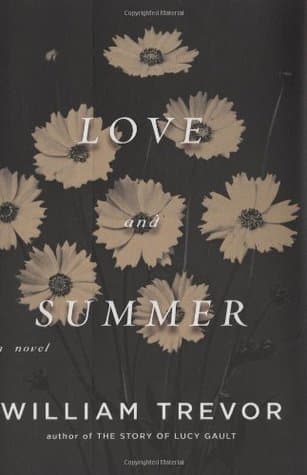
William Trevor (2009)
Genre
Literary Fiction / Historical Fiction / Romance
Reading Time
240 min
Key Themes
See below
Sign in to track this book
In a quiet Irish town, a young farmer's wife, Ellie, finds her life changed by a mysterious photographer, Florian, sparking a passionate summer affair against the backdrop of watchful villagers.
The summer of 1950 in the quiet Irish town of Rathmoye is changed by the arrival of Florian Kilderry, a young man with a camera. He first goes to the burnt-out cinema, planning to photograph its ruins. However, his attention turns to a funeral procession for Mrs. Connulty, a notable local. Florian, an outsider, begins to photograph the mourners, unaware of the social rules or the Connulty family's influence. His presence is noticed by several townspeople, including Father Gogarty and the observant Miss Clancy, who quickly realize he is not from Rathmoye and wonder about his purpose.
A few miles outside Rathmoye, Ellie lives a quiet, often lonely life as the young wife of Dillahan, an older, kind farmer. She was a former convent girl who came to work for him after his first wife died and later married him. Her days are filled with household tasks, and she often finds herself alone while Dillahan works on the farm. Despite Dillahan's gentle nature and the security he provides, Ellie feels isolated and longs for something more, a feeling she struggles to name. Her past in the convent and her sudden move to married life on the farm have left her with unfulfilled emotions.
Ellie goes into Rathmoye for supplies, a rare break from her farm routine. While there, she meets Florian Kilderry, who is still in town. Their meeting is short but important; there is an immediate sense of mutual curiosity and attraction. Florian is drawn to Ellie's quiet beauty and reserved manner. Ellie, in turn, finds herself intrigued by the handsome, mysterious stranger, a sharp contrast to her predictable life. This first interaction plants the seed of a forbidden connection, disturbing her peaceful existence and Florian's plans to soon leave Ireland.
After their first meeting, Florian actively seeks out Ellie. He learns her routine and finds ways to meet her secretly, away from Rathmoye's watchful eyes. Their hidden encounters quickly become a passionate affair. They meet in secluded places, often in the woods or by the river, where they can avoid the community's gaze. Ellie, despite her guilt and knowing she is betraying Dillahan, feels drawn to Florian's intensity and the excitement he brings to her life, which had lacked such passion. Florian, for his part, becomes deeply involved in the affair, putting off his plans to leave Ireland.
Dillahan, dedicated to his farm and his young wife, remains completely unaware of Ellie's secret relationship with Florian. He continues to treat her with unwavering kindness and affection, giving her a stable and comfortable home. His gentle nature and trust in Ellie highlight the painful irony of her betrayal. Dillahan's thoughts often focus on farm tasks and his hopes for their future together, including the possibility of children. His innocence and good heart make Ellie's guilt and internal conflict even stronger, making her secret meetings with Florian feel more wrong.
The small, close-knit community of Rathmoye, especially figures like Miss Clancy and Father Gogarty, closely observe any unusual behavior. Florian's continued presence in town, long after he supposedly finished photographing the cinema, begins to raise suspicions. While they do not immediately connect him to Ellie, his lingering and his unusual habits become a topic of quiet conversation and speculation. The townspeople's collective watchfulness creates an atmosphere of impending discovery, adding tension to Ellie and Florian's secret meetings and showing the difficulty of keeping an affair hidden in such an environment.
During their secret meetings, Florian tells Ellie about his past. He reveals a difficult upbringing, a feeling of aimlessness, and a desire to escape Ireland and start over, perhaps in England or further away. He sees photography as a way to achieve this independence. His plans to leave are initially firm, but his growing attachment to Ellie complicates his resolve. He struggles between his desire for a fresh start and the strong, unexpected connection he has formed with her, creating an internal conflict that mirrors Ellie's own divided loyalties.
Ellie is torn between her genuine affection and gratitude for Dillahan, who has given her security and kindness, and the intense passion and excitement she experiences with Florian. She feels immense guilt for betraying her husband, yet she cannot bring herself to end the affair. Her past, marked by the strictness of the convent and the sudden move into marriage, has left her unprepared to handle such complex emotions. She longs for the intensity Florian offers but dreads the inevitable results of her choices, feeling trapped between two very different lives and desires.
As summer nears its end, Florian's departure becomes certain. He urges Ellie to leave her life with Dillahan and run away with him to England, promising her a new beginning and a life of passion and freedom. This proposal forces Ellie to face the reality of her situation and make an impossible choice. The weight of her decision—leaving the good, kind man who offered her a home for an uncertain future with a temporary lover—becomes too much. The pressure from Florian, combined with her own conflicted desires, pushes her to her limit.
In a powerful, emotional encounter, Ellie ultimately decides not to leave with Florian. Despite her deep feelings for him, her sense of duty, guilt, and the practicalities of abandoning her life with Dillahan win. Florian, heartbroken but accepting, leaves Rathmoye as he had originally planned, leaving Ellie behind. The summer ends, and with it, the intense, fleeting affair. Ellie returns to her life with Dillahan, but she is forever changed by the experience. The quiet town of Rathmoye returns to its rhythm, but the summer's events leave a subtle, lasting mark on everyone involved, especially Ellie.
The Protagonist
Ellie transforms from an innocent, somewhat passive convent girl into a woman who experiences intense passion and makes a difficult, life-altering choice, leading to a quiet but profound inner change.
The Supporting/Love Interest
Florian arrives with clear plans for departure but becomes deeply entangled in an affair, revealing his capacity for passionate attachment before ultimately resuming his original path, leaving him with both experience and heartbreak.
The Supporting
Dillahan remains largely unchanged throughout the narrative, serving as a pillar of stability and goodness, though his world is subtly affected by Ellie's internal journey.
The Supporting/Observer
Miss Clancy remains a static character, serving as the town's watchful eye, whose observations contribute to the narrative's tension.
The Supporting/Observer
Father Gogarty's character remains consistent, embodying the moral conscience and observant nature of the community.
The novel explores different kinds of love, contrasting Dillahan's quiet, reliable affection with the intense, forbidden passion Ellie feels with Florian. It looks at the complexities of desire, showing how Ellie, despite her gratitude for her husband, longs for a different kind of emotional fulfillment. Betrayal is a central theme, examining Ellie's guilt and the moral impact of her choices, especially in a conservative rural Irish setting. The affair highlights the destructive power of uncontrolled desire and its deep effect on individuals and their relationships, as seen in Ellie's internal struggle and Dillahan's unknowing suffering.
“She was Dillahan's wife, and had chosen to be so. The fact of that choice, the act of love she had made, had been obliterated by what had come into being since. The love that was Dillahan's was a different kind of love.”
Both Ellie and Florian experience deep feelings of isolation, though for different reasons. Ellie, despite being married, feels isolated on Dillahan's farm, a former convent girl new to a different life. Florian is an outsider, a temporary figure with no deep roots in Rathmoye. The affair, for a time, gives them a sense of belonging to each other, a shared secret world away from the town's prying eyes. However, this belonging is ultimately temporary, showing the fleeting nature of their connection and the lasting isolation that awaits them once summer ends. The town itself, while close-knit, also creates a sense of isolation for those who do not follow its norms.
“He was a stranger, and she was lonely.”
The past greatly shapes the characters' present and future. Ellie's convent upbringing and sudden marriage influence her innocence and her longing for an unknown experience. Florian's difficult background and his desire to escape Ireland drive his transient lifestyle and his search for a new beginning. The burnt-out cinema in Rathmoye, a reminder of a past tragedy, represents memory and decay. The novel suggests that while characters may wish for a fresh start or to escape their pasts, these histories inevitably influence their choices and experiences, often leading to a repetition of patterns or a return to their original circumstances, though changed.
“He wanted to be rid of the past, to begin again, to be a different person in a different place.”
Rathmoye itself acts almost as a character, with its watchful residents, gossip, and established social norms. The small, isolated nature of the town means that any deviation from the usual, especially the arrival of a stranger like Florian, is immediately noticed and scrutinized. Figures like Miss Clancy and Father Gogarty represent the community's collective gaze and moral standards. This constant observation creates tension and makes Ellie and Florian's affair even more risky, showing the difficulty of keeping privacy and secrets in such an environment. The town's quiet rhythm serves as a background for the intense, hidden drama.
“In a town like Rathmoye, little went unnoticed.”
Hints and clues that suggest future events or outcomes.
Foreshadowing is subtly employed throughout the novel to build tension and hint at the fleeting nature of the affair. Florian's initial intention to leave Ireland, the symbolism of the burnt-out cinema, and the watchful eyes of the townspeople all suggest that the affair cannot last. The very title, 'Love and Summer,' implies a seasonal, temporary romance. These hints create a sense of impending doom and make Ellie's eventual decision feel both inevitable and tragic, rather than a sudden surprise.
The ruined cinema represents lost dreams, past events, and the transient nature of life.
The burnt-out cinema in Rathmoye serves as a powerful symbol. It represents a past event, a dramatic loss, and perhaps the faded glamour of dreams unfulfilled. For Florian, it's an object of photographic interest, a subject for his art that reflects his own sense of being somewhat broken and in transition. For the town, it's a permanent scar, a reminder of what once was. Its decay contrasts with the vibrant, but equally transient, passion of Ellie and Florian's summer affair, hinting that even intense emotions can leave behind only ruins or memories.
A narrative perspective that allows insight into multiple characters' thoughts and feelings.
William Trevor employs a third-person omniscient narrator, which provides deep insight into the inner lives of Ellie, Florian, and even Dillahan, as well as the observations of secondary characters like Miss Clancy and Father Gogarty. This perspective allows the reader to understand the conflicting emotions that drive Ellie, the motivations behind Florian's actions, and Dillahan's unwitting kindness. It also provides a broader view of the Rathmoye community and its unspoken rules, enriching the themes of isolation, betrayal, and the complexities of human relationships.
“When you have a secret it is a part of you, and you are not whole without it.”
— Ellie Gault reflects on the nature of secrets.
“The past was always there, a kind of shadow, sometimes faint, sometimes dark.”
— The narrator's observation on the lingering presence of past events.
“People loved each other, and then they didn't. It was as simple and as complicated as that.”
— Ellie contemplates the transient nature of love and relationships.
“There was a loneliness that came with knowing too much, and a loneliness that came with knowing too little.”
— A reflection on different forms of isolation.
“Summer was a time for things to happen, for beginnings and sometimes for endings.”
— The seasonal setting as a backdrop for significant events.
“What was lost could never truly be found, only remembered.”
— A character's realization about the permanence of loss.
“The truth was a peculiar thing, often unwelcome, always persistent.”
— An observation about the nature of truth.
“Life went on, even when it shouldn't, even when it felt wrong to do so.”
— A character grappling with the relentless march of time after tragedy.
“There were moments when silence said more than any words ever could.”
— Describing the power of unspoken communication.
“Memory was a kind of betrayal, always altering, always shaping what had been.”
— A nuanced view of how memory functions.
“The weight of unspoken words could be heavier than any spoken ones.”
— Highlighting the burden of secrets and unexpressed feelings.
“Every life had its shadows, and some were longer than others.”
— A general reflection on the darker aspects of human existence.
“Love, when it came, was a disruption, a rearrangement of all that was known.”
— Describing the transformative and unsettling nature of love.
“The future was a landscape of possibilities, both thrilling and terrifying.”
— A character contemplating what lies ahead.
Ready to see how well you understood this book? Take our interactive quiz with 10 questions.







