“The ocean is a monster, but it is also a mother.”
— A central theme of the mermaids' relationship with the sea.

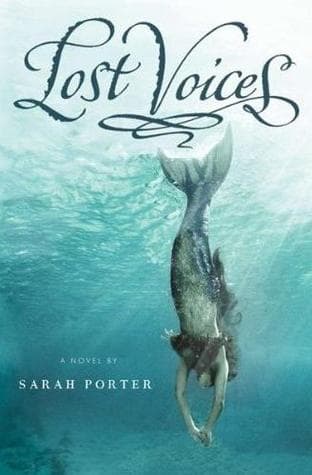
Sarah Porter (2011)
Genre
Fantasy / Young Adult / Romance
Reading Time
6-8 hours
Key Themes
See below
Sign in to track this book
After a desperate fall makes her a mermaid, a lost girl must navigate a dangerous world of siren songs and murder, fighting to keep her humanity against vengeful sisters and a cunning queen.
Fourteen-year-old Luce lives a desolate life in a remote, gray Alaskan fishing village. Her father, a fisherman, vanished at sea during a storm, leaving her an orphan. She lives with her alcoholic uncle, who is abusive and neglectful. Luce is deeply unhappy and feels invisible, a 'lost girl' in every sense. She often seeks comfort by the sea, the only place where she feels a connection to her lost father. The village offers little comfort, filled with hard, unsympathetic people, and Luce struggles to find any warmth or kindness in her daily life. Her uncle's increasing cruelty pushes her to a breaking point, making her question her will to live.
One night, Luce's uncle crosses an unforgivable line, physically and emotionally traumatizing her. In her deepest despair, feeling utterly broken and abandoned, Luce flees to the cliffs overlooking the churning ocean. With no hope left, she decides to end her suffering, believing death is her only escape. She throws herself into the icy, turbulent waves below, expecting to drown. This act is not a traditional suicide, but a surrender to the overwhelming pain and a belief that she has no other choice, a final, desperate cry for release from her torment.
Against all odds, Luce does not die. Instead, as she sinks into the cold, dark water, she undergoes a miraculous and terrifying change. Her legs fuse into a powerful, shimmering tail, and she gains the ability to breathe underwater. She is no longer human but a mermaid. Disoriented and overwhelmed, she is soon discovered by a tribe of mermaids. They are all beautiful, ethereal beings, and they welcome her, explaining that they, too, were once 'lost girls' who changed at their lowest points. Luce finds herself in a new world, surrounded by others who understand her pain.
Luce is initially enchanted by her new life. She is free from her past, beautiful, and powerful. The mermaids teach her to navigate the ocean, to sing with an otherworldly clarity, and to enjoy their ageless forms. She befriends the other mermaids, especially the kind-hearted Ylva. However, the initial happiness soon gives way to unease as Luce discovers the dark truth about her new tribe. The mermaids are driven by an uncontrollable, ancient urge to lure human seafarers to their deaths, using their enchanting voices to cause shipwrecks and drown sailors. This revelation deeply disturbs Luce, as it clashes with her remaining human morality.
The tribe is led by the powerful and elegant Queen Catarina, a mermaid of immense power and ancient wisdom. Catarina is both a protector and a stern ruler, embodying the mermaids' predatory nature. Luce's own voice, enhanced by her transformation, proves to be exceptionally beautiful and potent, catching Catarina's attention. Catarina sees great potential in Luce and begins to mentor her, pushing her to embrace her power and her role within the tribe. Luce feels a strange mix of fear and admiration for Catarina, recognizing the queen's strength but also fearing her ruthlessness and the dark path she expects Luce to follow.
As Luce's voice grows stronger, she is increasingly pressured to join the other mermaids in their hunts, using her siren song to lure ships to their doom. She witnesses the gruesome reality of their actions, the terror of the sailors, and the cold satisfaction of her new sisters. This creates a deep internal conflict for Luce. While she has been granted a new life and freedom, she cannot reconcile the mermaids' murderous nature with her own lingering humanity. She resists participating fully, often finding ways to avoid directly causing harm, which puts her at odds with some of the more zealous mermaids and, subtly, with Catarina.
The delicate balance within the tribe is disrupted by the arrival of a new mermaid named Mara. Unlike the other mermaids who transformed out of despair, Mara seems to possess a cunning and malevolent spirit from the outset. She is exceptionally beautiful and charismatic, but also deeply manipulative and ambitious. Mara quickly begins to cause discord among the mermaids, openly challenging Catarina's authority and questioning her methods. Her presence creates a clear tension within the tribe, as she seeks to gain power and influence, threatening to destabilize the very existence of their community and its established hierarchy.
Mara's ambition is not merely to challenge Catarina but to completely take her place. She begins to actively undermine Catarina's leadership, spreading dissent and advocating for more extreme and reckless actions against humans. Mara's plans are far more destructive and less strategic than Catarina's, threatening to expose the mermaids to human retribution and ultimately endanger the entire tribe. Luce observes Mara's actions with growing alarm, realizing that Mara's cruelty is different, more calculated and self-serving, than the mermaids' instinctual need to drown. She recognizes Mara as a truly dangerous force.
As Mara's influence grows and her schemes become more perilous, Luce faces a difficult choice. To remain silent is to allow Mara to destroy the tribe and lead them to ruin. To speak out is to risk everything: her new home, her friends, and potentially her life, as Mara is ruthless. Luce, who once felt utterly voiceless, must now find the courage to challenge a powerful and manipulative adversary. This decision forces her to confront her own fears of abandonment and rejection, reminding her of her past as a lost girl, but also highlighting how much she has grown.
Drawing upon newfound strength and the support of loyal mermaids like Ylva, Luce confronts Mara. This confrontation is not just a physical struggle but a battle of wills and voices, as Luce uses her unique singing ability to counter Mara's manipulation. Through her actions, Luce proves her loyalty to the tribe and demonstrates a leadership quality that respects life, even human life, more than Mara's destructive ambition. The conflict ends in Mara's defeat, solidifying Catarina's rightful place as queen and re-establishing a more stable, though still dangerous, order within the mermaid community. Luce's bravery helps her find her true voice and place.
After the conflict, Luce begins to come to terms with her past and her new identity. She learns to forgive herself for her despair and to understand the complexities of her transformation. While she remains a mermaid, she finds a balance between her human empathy and her new, powerful nature. She also finds a form of peace with her past, realizing that her transformation, though born of tragedy, ultimately gave her strength and a voice she never had as a human. This reconciliation allows her to fully embrace her new life without entirely losing her humanity.
The Protagonist
Luce transforms from a voiceless, despairing victim into a courageous leader who finds her true voice and purpose.
The Supporting/Antagonist (initially)
Catarina maintains her leadership but learns to respect Luce's unique perspective and strength, ultimately relying on her to protect the tribe.
The Antagonist
Mara attempts to seize power and destroy the established order but is ultimately defeated, reinforcing the tribe's values.
The Supporting
Ylva remains a loyal friend and supports Luce in her struggle against Mara, reinforcing themes of friendship.
The Mentioned/Catalyst
He serves as the instigator of Luce's change, his role ending with her transformation.
This theme is central to Luce's journey. As a human, she is voiceless, ignored and abused. Her transformation into a mermaid gives her not only an enchanting voice but also the courage to use it. She struggles to define who she is – human or mermaid – and ultimately finds an identity that integrates both. This shows when she refuses to participate in the mermaids' hunts, using her voice to assert her morality, and culminates in her confrontation with Mara, where she verbally challenges the antagonist, speaking up for the tribe's true survival and her own values.
““I was a lost girl, and then I was found by other lost girls, and we made a home in the sea. But I couldn't be like them, not entirely. Not if it meant losing the last piece of myself.””
Luce's interactions with other mermaids, particularly Ylva, highlight the comfort and strength found in companionship. The mermaids, all having suffered similar human traumas, form a unique bond. Ylva's unwavering support helps Luce navigate the challenges of her new life and resist the darker aspects of the mermaid existence. This friendship gives Luce the emotional grounding she needs to confront Mara and stand up for what she believes in. It shows that even in a predatory world, connection and loyalty can offer healing and empowerment.
““You don't have to carry it alone, Luce. We're sisters, aren't we? We help each other.””
This theme explores the fine line between human empathy and monstrous instinct. The mermaids are beautiful and free, but also driven by an uncontrollable urge to drown humans. Luce constantly battles to keep her human morality and compassion, refusing to succumb entirely to the siren's call. Her struggle contrasts with the other mermaids, who have largely embraced their predatory nature, and especially with Mara, who embodies a more calculated, malevolent monstrosity. Luce's journey questions what it truly means to be human, even when transformed into something else, and whether compassion can coexist with primal urges.
““They called it 'the hunger,' but I knew it was more than just a need. It was a choice, one I wasn't sure I could ever make.””
While not explicitly about forgiving her abusers, the theme of forgiveness shows in Luce's journey to forgive herself for her past despair and to accept her new self. She must reconcile her trauma with her transformation, finding a way to move forward without being consumed by bitterness or guilt. Her choice to protect the tribe from Mara, even risking her own safety, is a form of redemption, proving that her past suffering has forged her into a compassionate and courageous leader. This theme emphasizes moving beyond past wounds to embrace a hopeful future.
““The pain of my old life was a part of me, but it didn't have to define me anymore. I could be more than just a lost girl.””
Luce's metamorphosis into a mermaid, triggered by extreme despair.
The central plot device is Luce's transformation into a mermaid. This magical event serves as the ultimate escape from her human suffering and the catalyst for the entire story. It allows her to shed her 'lost girl' identity, granting her power, beauty, and a new community. However, it also introduces a new set of moral dilemmas, as her new form comes with a predatory instinct. The transformation functions as a symbolic rebirth, but one that forces Luce to confront what it means to be human and what it means to be a monster.
Mermaids' ability to lure humans with their captivating songs.
The mermaids' enchanted voices are a key plot device, serving as both a source of power and a moral burden. Their songs are irresistibly beautiful to humans, compelling them to sail towards dangerous rocks and inevitable doom. For Luce, her developing vocal talent is a double-edged sword: it marks her as special within the tribe and gives her influence, but it also ties her directly to the mermaids' murderous purpose. It becomes a symbol of her internal conflict, as she must learn to control and utilize this power without succumbing to its destructive potential, ultimately using it to save rather than destroy.
The shared backstory of the mermaids, all having been abandoned or abused as humans.
The shared origin story of the mermaid tribe – that they were all 'lost girls' who transformed at their lowest point of human despair – is a significant plot device. It creates a deep bond and understanding among the mermaids, explaining their collective trauma and their fierce loyalty to each other. This shared past allows Luce to feel a sense of belonging she never experienced as a human. It also provides a thematic foundation for understanding the mermaids' complex nature, as their predatory instincts can be seen as a twisted response to their past suffering, a form of revenge against the human world that failed them.
“The ocean is a monster, but it is also a mother.”
— A central theme of the mermaids' relationship with the sea.
“We are not just pretty faces and pretty songs. We are the storm.”
— One of the mermaids asserting their power and danger.
“Love is a dangerous thing, especially when you're made of salt and longing.”
— A mermaid reflecting on the perils of human emotions for their kind.
“Every wave is a whisper, every tide a memory.”
— Describing the ancient connection mermaids have to the sea's history.
“Our voices are our power, our curse, and our only truth.”
— Referring to the siren-like nature of the mermaids' voices.
“To be human is to be broken and beautiful all at once.”
— A mermaid's observation of humanity.
“There are some things the sea will never give back.”
— A somber reflection on loss and the ocean's unforgiving nature.
“He saw the monster in me, and he loved her anyway.”
— A mermaid's perspective on being loved despite her true nature.
“The shore is a lie. The deep is where we truly belong.”
— Emphasizing the mermaids' inherent connection to the deep ocean.
“Silence is a weapon, but a song can be a war.”
— Highlighting the destructive potential of the mermaids' voices.
“We are the echoes of drowned sailors, the nightmares of the living.”
— Describing the mermaids' fearsome reputation and origin.
“To live is to be pulled by conflicting tides.”
— A metaphorical statement about the struggles and choices in life.
“Some secrets are meant to stay buried, even in the deepest trenches.”
— Referring to the hidden truths and dark pasts within the mermaid community.
“He tasted of salt and longing, like the sea itself.”
— A mermaid's sensory description of a human she encounters.
Ready to see how well you understood this book? Take our interactive quiz with 10 questions.

Biography coming soon.







