“There are things in this world that are not for us to understand. But they are for us to experience.”
— Often spoken by the character of Nothing, reflecting on the supernatural.

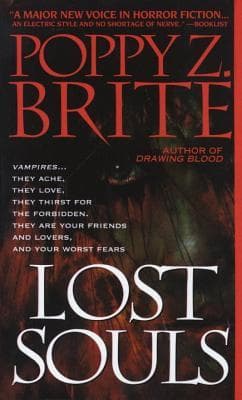
Poppy Z. Brite (1992)
Genre
Thriller / Fantasy / Mystery / Science Fiction
Reading Time
500 min
Key Themes
See below
Sign in to track this book
In the goth clubs of Missing Mile and the shadowy streets of New Orleans, young outcasts meet ancient vampires, beginning a violent road trip where love, hunger, and fate collide.
In the small town of Missing Mile, North Carolina, a Goth club is a refuge for outcasts. Ghost, a sensitive young man with developing psychic abilities, watches the scene. Ann, a lonely girl, is a regular. Nothing, quiet and thoughtful, feels drawn to the club and a growing power within himself. Their lives change when three ancient, charismatic vampires arrive: Molochai, Twig, and the captivating Zillah, whose green eyes are dangerous. The vampires, looking for new thrills, quickly target Nothing and Ann, disturbing the club's melancholic peace.
Zillah, Molochai, and Twig manipulate Nothing and Ann, drawing them away from the club. Nothing, already feeling a strange pull toward the vampires, gives in first. Zillah, with a seductive bite, turns Nothing into a young vampire. Ann, at first hesitant, is also pulled in by the vampires' charm and the promise of belonging. She also changes, but less completely than Nothing, leaving her in an in-between state. This starts their journey with the ancient trio, as they embrace a new, dangerous life outside humanity.
The new group—Molochai, Twig, Zillah, Nothing, and Ann—leaves Missing Mile and heads south on a wild road trip to New Orleans. Their journey involves reckless acts, including feeding on victims and engaging in forbidden pleasures. Nothing, dealing with his new vampiric nature, struggles to control his thirst and the overwhelming feelings of immortality. Ann, still in shock and fascinated, watches the chaos, her morals wavering. The vampires, enjoying their ancient freedom, push their limits, leaving destruction behind them.
Back in Missing Mile, Ghost is worried about Ann and Nothing's disappearance. His psychic abilities, always present, grow stronger, giving him visions about where they are and the dark nature of their new companions. Driven by a need to save Ann, whom he cares for, and a sense of destiny, Ghost starts his own journey. He follows the psychic trail left by the vampires and his friends, slowly learning the truth about their transformations. His pursuit is dangerous, forcing him to face his own powers and the terrifying reality of the supernatural world.
The vampires, with Ann, finally reach New Orleans, a city that fits their ancient, shadowed existence. The French Quarter's vibrant, macabre atmosphere is a perfect setting for their continued indulgences. They find temporary shelter and more chances for their predatory life. Nothing, growing more distant from his humanity, feels a strange belonging in the city's decay and night energy. Ann, however, starts to feel the weight of her situation, as the initial appeal of immortality fades when she sees her companions' true depravity. The city becomes a test for their changing identities and coming conflicts.
As they settle in New Orleans, Nothing has a significant realization. Through visions and the ancient vampires' subtle guidance, he learns his true lineage: he is not just a new vampire, but the son of an incredibly powerful, ancient vampire. This discovery unlocks dormant powers, making him much stronger and more dangerous than Molochai, Twig, or Zillah. He struggles with this inherited power, torn between embracing his dark destiny and the lingering memories of his human past. This discovery changes the group's power dynamics, making Nothing a force to be reckoned with, and a potential threat to his new 'family.'
Guided by a stronger psychic connection, Ghost finally finds the vampires and Ann in New Orleans. He confronts them, his resolve fueled by his love for Ann and his growing understanding of the evil they represent. The confrontation is tense, as Ghost, still human, faces the power of Molochai, Twig, and Zillah, and the newly awakened Nothing. Ann is caught in the middle, torn between her fear of the vampires and her connection to Ghost. This scene is a turning point, as good and evil, humanity and the supernatural, finally clash in the French Quarter's shadowy streets.
The confrontation turns into a desperate fight. Ghost uses his growing psychic abilities to protect Ann and try to break the vampires' hold over her. The ancient vampires, especially Zillah, enjoy the manipulation, but Nothing's loyalty starts to waver. As Ghost risks everything, Nothing must face his vampirism and his choices. He sees his companions' cruelty through Ann's terror and Ghost's courage. This inner conflict within Nothing is as important as the physical fight, as he battles the darkness inside himself.
In the climax, a sacrifice is made, changing everything. This selfless act, likely by Ghost, deeply affects Nothing, forcing him to see the vampires' monstrousness and the true cost of his new life. Faced with the results of his choices and the difference between human compassion and vampiric indifference, Nothing finally decides his future. He must choose between fully embracing the predatory path of Molochai, Twig, and Zillah, or making his own, more conflicted path, perhaps connecting with his remaining humanity.
After the intense confrontation, the survivors pick up the pieces of their lives. Ann, changed by her experience with the vampires, must heal and come to terms with the darkness she saw and briefly shared. Nothing, having made his choice, starts a new, solitary life, dealing with his vampiric nature and memories of his past. The ancient vampires, if they survive, continue their nomadic, predatory existence, perhaps looking for new victims. The events in New Orleans leave a lasting mark on everyone, forcing them to confront their identities and the limits of life and death, humanity and monstrosity.
The Protagonist
Ghost evolves from a passive observer to an active, powerful psychic, embracing his destiny to fight ancient evil.
The Supporting
Ann is initially a victim, but her experience forces her to confront the darkness and ultimately choose humanity.
The Protagonist/Antagonist
Nothing transforms from an unassuming human into a powerful ancient vampire, ultimately making a choice about his moral alignment.
The Antagonist
Zillah remains a static force of ancient evil, a constant source of temptation and danger.
The Antagonist
Molochai remains a consistent force of brutal, unthinking vampiric hunger.
The Antagonist
Twig remains a detached, ancient observer, a silent participant in the trio's depredations.
The Mentioned/Supporting
Christian remains a background character, unaffected by the main supernatural conflict.
The novel explores the allure of eternal life and the moral decay that often comes with it. The vampires, especially Zillah, offer Ann and Nothing a way out of ordinary life and the promise of endless pleasure and power. But this immortality has a terrible cost, turning them into predators without empathy. Nothing's struggle with his vampiric nature shows this conflict, as he deals with the hunger and cruelty of his new life versus his lingering human conscience. The road trip to New Orleans shows the hedonistic and destructive life that immortality can lead to, where human lives are just food.
“''We are the lost souls, the children of the night, and we will live forever, even if we must destroy the world to do it.''”
A main theme is the radical change of identity, both chosen and forced. Nothing's journey from a quiet human to a powerful ancient vampire is the clearest example, as he deals with his true lineage and the darkness within him. Ann's partial change forces her to confront her own desires and fears, blurring the lines between victim and participant. Even Ghost, with his developing psychic abilities, changes from a passive observer to an active, powerful force. The novel questions what truly defines a person when their nature changes because of supernatural forces or self-discovery.
“''I was Nothing. Now I am everything.''”
Beneath the horror, the novel explores deep human emotions like the longing for love and the pain of loss. Ann's loneliness makes her open to the vampires' false promise of belonging. Ghost's strong love and protection for Ann drive his dangerous pursuit, showing the lasting power of human connection against evil. Nothing's struggle with his new identity is partly a search for belonging, whether with his vampire 'family' or his human past. The loss of humanity, innocence, and life are constant themes, highlighting the value of what the vampires easily discard.
“''He loved her with the aching, hopeless love of a boy for a girl who was already gone.''”
The book explores different kinds of evil. The ancient vampires represent a primal, almost natural evil—a force driven by hunger and instinct, without human morality. Their casual cruelty and hedonism are chilling because they come from a basic difference in being, not from malice. Nothing's struggle, however, introduces a more complex evil: the possibility for a human to embrace or resist that darkness. The novel suggests that evil can be both an ancient, outside force and an internal choice, exploring the seductive power of giving in to one's darkest impulses.
“''There was no good or evil, only hunger and its satisfaction.''”
Ghost's ability to see and feel events beyond normal perception.
Ghost's nascent and developing psychic abilities serve as a crucial plot device. His visions and intuitions allow him to track Ann and Nothing, providing clues to their whereabouts and the sinister nature of their new companions. This device not only propels his pursuit but also provides the reader with glimpses into the vampires' dark world, building suspense and foreshadowing key events. It also establishes Ghost as a unique protagonist, capable of confronting the supernatural on a different plane than mere physical strength.
A journey across geographical and moral landscapes.
The road trip from Missing Mile to New Orleans is more than just a change of scenery; it's a symbolic journey. As the characters travel south, they descend further into depravity and the supernatural world. The changing landscapes mirror the internal transformations of Nothing and Ann, and the increasing darkness of their experiences. The confined space of the car also intensifies the interactions between the vampires and their new charges, allowing for character development and the slow corruption of Ann and Nothing.
Nothing's discovery of his powerful, inherited vampiric ancestry.
The revelation of Nothing's ancient vampiric lineage is a pivotal plot device. It elevates him from a mere newly turned vampire to a figure of immense power, shifting the dynamics within the group and providing a direct link to the deeper, more ancient lore of the vampire world. This device creates internal conflict for Nothing, as he grapples with inherited destiny versus personal choice, and raises the stakes for the final confrontation, making him a formidable, unpredictable force.
A subculture hub that acts as a gateway to the supernatural.
The Goth club in Missing Mile functions as more than just a backdrop; it's a liminal space where outcasts gather, making them susceptible to the vampires' allure. It establishes a specific atmosphere of melancholy, alienation, and a fascination with darkness that prefigures the supernatural events. This setting acts as the initial point of contact between the human and vampire worlds, providing a plausible context for Ann and Nothing to encounter Molochai, Twig, and Zillah, blurring the lines between subculture and genuine monstrosity.
“There are things in this world that are not for us to understand. But they are for us to experience.”
— Often spoken by the character of Nothing, reflecting on the supernatural.
“New Orleans was a city that lived and breathed in its own unique rhythm, a place where the veil between worlds felt thinner.”
— Narration describing the atmospheric setting of the story.
“Some people are just born to be broken. It's not a curse, it's a calling.”
— A character reflecting on the nature of certain individuals within the vampire subculture.
“Love, even the darkest kind, still leaves a mark.”
— Pondering the lasting impact of intense, often destructive, relationships.
“The night was a living thing in New Orleans, full of secrets and hungry whispers.”
— Describing the nocturnal ambiance and sense of hidden danger.
“Every addiction is a search for something lost, something you can't quite name.”
— A character's introspection on the root causes of their destructive habits.
“We are all just lost souls, wandering through the darkness, looking for a light that might not even exist.”
— A central theme of the book, often voiced by the more introspective characters.
“To truly live, you have to embrace the shadows as much as the light.”
— A philosophical statement about accepting all aspects of life, including the dark.
“The past isn't dead. It's not even past. It's breathing down your neck.”
— Highlighting the inescapable nature of one's history and its influence.
“Sometimes the only way out is through the most terrifying door.”
— A character facing a daunting choice or challenge.
“Music was the only language that truly understood the human heart, especially the broken ones.”
— Reflecting on the power and comfort of music for the characters.
“There's a hunger in some people that can never be filled, no matter what they consume.”
— Describing the insatiable desires of certain characters, often vampires.
“The greatest monsters are often the ones who look the most human.”
— A commentary on the deceptive appearance of evil.
“Even in the deepest despair, there's always a flicker, a tiny spark of something defiant.”
— A moment of resilience or hope amidst overwhelming darkness.
Ready to see how well you understood this book? Take our interactive quiz with 10 questions.

Biography coming soon.







