“Perhaps all the good things that happen in the world are the result of some divine accident.”
— The narrator reflecting on the nature of good fortune.

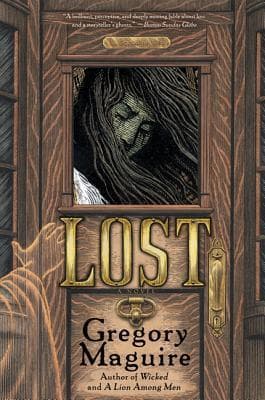
Gregory Maguire (2001)
Genre
Fantasy / Children's / Mystery / Young Adult
Reading Time
7-8 hours
Key Themes
See below
Sign in to track this book
A struggling writer, haunted by her past and a missing stepcousin, plunges into a Dickensian London rowhouse where a spectral presence, possibly Jack the Ripper or a family ghost, unravels a chilling mystery.
Winifred 'Winnie' Rudge, a writer known for a successful astrology book, arrives in London from the United States. She plans to write a new novel about a woman haunted by Jack the Ripper. She goes to Weatherall Walk, a nineteenth-century rowhouse her great-great-grandfather once owned, where her stepcousin and old friend, John Comestor, lives. She expects to stay with him but finds his flat empty, stripped of furniture, and smelling unsettling. Unconnected wires hang from the walls, and the space feels abandoned. There is no sign of John, and Winnie immediately feels an unnerving presence, hinting at a deeper mystery.
As Winnie tries to settle into John's desolate flat, strange things happen. Objects move on their own, cold spots appear, and she feels watched. She blames some of it on the old house, but cannot ignore the strong feeling of a ghost. This presence makes her wonder if John simply left or if something worse happened. The house itself seems to resist her, adding to her growing dread and the mystery of John's whereabouts and Weatherall Walk's history.
Winnie contacts Allegra, John's former girlfriend, hoping for information about his disappearance. Allegra is defensive, evasive, and clearly holds a grudge against John. She offers no useful details about his whereabouts or recent activities, instead showing resentment over their breakup. Her unhelpfulness deepens Winnie's suspicion that John's vanishing is not simple, and that Allegra might be hiding information, whether intentionally or due to her own feelings about John.
Winnie meets Mrs. Maddingly, the cat-obsessed downstairs neighbor, who first seems eccentric but harmless. As Winnie continues her investigation, Mrs. Maddingly's behavior becomes more bizarre. She makes cryptic remarks, seems overly protective of her many cats, and shows a strange interest in the house's history and its past residents. Her growing oddity suggests she might know more about John's disappearance or the ghostly activity, or perhaps she herself is affected by the house's atmosphere.
While researching her family's history, Winnie discovers a long-held legend: her great-great-grandfather, who owned Weatherall Walk, supposedly inspired Charles Dickens's Ebenezer Scrooge as a child. This adds another layer of history and potential ghostly meaning to the house. The idea that such a spirit might linger makes Winnie wonder if the ghost she feels is this ancestor, or something older and more tied to the building's past.
In John's flat, Winnie finds fragments of a manuscript he was writing. To her surprise, it also concerns Jack the Ripper, exploring similar themes of haunting and unsolved mysteries, eerily like her own planned novel. This overlap feels more than coincidental, suggesting a deeper link between John's disappearance, the house's history, and the serial killer. It makes Winnie wonder if John's research led him to a dangerous truth or if the Ripper's spirit is involved in the haunting.
As Winnie investigates, the ghostly presence intensifies, bringing vivid nightmares and unsettling waking visions. She sees fleeting figures, hears disembodied voices, and feels chilling sensations that make her question her sanity. These manifestations are not just frightening; they seem to convey fragmented messages or clues, drawing her further into the house's secrets. The line blurs between her imagination, her past traumas, and the real supernatural activity, making her question what is real.
Through her experiences, Winnie begins to understand that Weatherall Walk is not just haunted by spirits, but that the house itself is a sentient, malevolent entity. It feeds on the emotions, memories, and unresolved conflicts of its residents, past and present. The building seems to manipulate perceptions, amplify fears, and manifest its own dark will. This realization shifts Winnie's focus from finding John to understanding and confronting the insidious nature of the house, which appears to be the true antagonist, trapping and consuming those within its walls.
By piecing together John's research, deciphering clues from the house, and confronting Mrs. Maddingly, Winnie uncovers the tragic truth of John's disappearance. John, driven by his obsessions and the house's influence, succumbed to its power. He did not just leave; he became absorbed by the house, his spirit trapped within its fabric, a victim of its hunger for life and memory. This discovery is a devastating blow, confirming Winnie's worst fears and solidifying the house's malevolent nature.
As the house's influence peaks, Winnie must confront not only the ghosts of Weatherall Walk but also her own past. The house, sensing her weaknesses, brings up personal traumas and unresolved issues, showing them in terrifying ways. Her experiences with the house become a mirror, forcing her to face her fears, guilt, and her own 'lost' self. This internal struggle becomes as important as the external mystery, as she realizes that to overcome the house's hold, she must first confront her own psychological demons.
Knowing John's fate and the house's malevolent nature, Winnie fights for her own freedom. This is not a physical fight, but a psychological and spiritual one, where she must assert her will against the house's influence. She tries to break free from its manipulative illusions and emotional drains, refusing to become another victim. This struggle is about reclaiming her agency and identity, ensuring she does not suffer John's fate, and finding a way to liberate herself from the house's power.
Winnie escapes Weatherall Walk, but she is changed. She has faced deep personal fears and seen the terrifying reality of a sentient, parasitic house. While she physically leaves, the experience leaves a lasting mark, and the house's power is not truly defeated, only avoided. She achieves an uncertain resolution, understanding that some mysteries remain unsolved and some evils endure. The ending suggests that while she survived, the house continues its dark work, and Winnie carries the echoes of her experience, forever altered by the spectral drama she encountered.
The Protagonist
Winnie transforms from a detached observer to an active participant in a supernatural mystery, confronting both external specters and her own inner demons to reclaim her sense of self.
The Supporting/Mentioned
John's arc is revealed retrospectively; he succumbs to the house's influence, becoming a tragic example of its destructive power.
The Supporting
Allegra remains largely static, serving as an initial red herring and a reflection of John's complicated personal life.
The Supporting
Mrs. Maddingly's eccentricity escalates into a more profound connection with the house's malevolence, revealing her as deeply entangled in its secrets.
The Mentioned
His arc is entirely historical, influencing the present through his legacy and potential spectral presence in the house.
The Antagonist
The house's 'arc' is its continuous perpetuation of its parasitic existence, consuming its inhabitants over time.
The theme of being 'lost' appears in many ways: Winnie's feeling lost in her career and identity, John's literal disappearance into the house, and the ghosts lost between worlds. The house feeds on these feelings, amplifying them to consume its victims. For example, John's obsession with the Ripper and his internal struggles make him vulnerable to becoming 'lost' within Weatherall Walk. Winnie avoids this by confronting her own 'lost' self. The book explores being lost physically, spiritually, and psychologically.
“At the flat in Weatherall Walk there was no milk in the fridge, no ice in the tiny freezer unit.... Unconnected wiring threaded from walls, and a smell of lazy drains, something rotting, unfurled from the sewer all the way up to this flat.”
The novel explores how historical events and past lives continue to affect the present. The family legend of Winnie's great-great-grandfather inspiring Scrooge, the ghost of Jack the Ripper, and the age of Weatherall Walk all suggest the past is never truly gone. The house acts as a center for these historical echoes, blurring the lines between past and present. Winnie's own past traumas are also drawn into this, showing how personal history, like collective history, shapes current experiences and fears, making the haunting both personal and historical.
“Could it be the ghostly remains of Jack the Ripper? Or a phantasm derived from a more arcane and insidious origin?”
As a writer, Winnie's profession and imagination are central. Her novel idea about a woman haunted by Jack the Ripper ironically mirrors her reality, suggesting the powerful, almost prophetic, nature of storytelling. The novel questions whether the supernatural elements are entirely external or partly products of Winnie's mind, amplified by the house. This theme shows how narratives—family legends, historical accounts, and personal stories—shape perception and can even create reality, blurring the lines between fiction and fact within the haunting. Her ability to create stories is both her strength and a weakness.
“Gripped by inspiration and desperation alike, Winnie finds herself the unwilling audience for a drama of specters and shades, some from her family's peculiar history and some from her own unvanquished past.”
Isolation is a common theme, making characters vulnerable and increasing the house's power. Winnie arrives in London alone, John disappears without a trace, and Mrs. Maddingly lives a solitary life with her cats. This isolation makes them susceptible to the house's manipulations, as they have fewer external connections to reality. The house thrives on separating its residents from the outside world, making them more dependent on its influence. This theme emphasizes how a lack of connection can lead to psychological fragility, making individuals easier prey for malevolent forces, whether supernatural or internal.
“Winnie wrenched open a window. But no sign of John?”
Weatherall Walk as a living, malevolent entity.
The house, Weatherall Walk, functions as a sentient antagonist, rather than merely a haunted location. It actively draws characters in, feeds on their emotions and memories, and traps them within its walls, making them 'lost.' This device allows the setting to become a character with its own motives and will, blurring the lines between the environment and the supernatural forces at play. It elevates the conflict beyond a simple ghost story, creating a pervasive, inescapable sense of dread.
Winnie's subjective experiences blur reality and imagination.
Winnie's experiences in Weatherall Walk are often presented through her subjective perception, making it difficult to discern what is truly supernatural versus what might be her imagination or psychological distress. Her background as a writer, prone to flights of fancy, contributes to this ambiguity. This device keeps the reader questioning the nature of the haunting and Winnie's sanity, heightening the suspense and emphasizing the psychological impact of the events. It also forces the reader to consider the power of the mind in shaping reality.
References to literary works and historical figures enrich the narrative.
The novel employs intertextuality through its explicit references to Charles Dickens's 'A Christmas Carol' (via the Scrooge family legend) and the historical figure of Jack the Ripper. These allusions not only ground the story in a recognizable cultural context but also add layers of thematic depth, linking the narrative to established tales of haunting, morality, and unsolved mysteries. This device enriches the story by inviting readers to draw parallels and contrasts with these well-known narratives, deepening the sense of historical and literary resonance within the haunting.
Winnie's novel mirroring John's research and her own reality.
The uncanny resemblance between Winnie's planned novel (a woman haunted by Jack the Ripper) and John's unfinished manuscript on the same subject, alongside the actual haunting Winnie experiences, creates a powerful doppelgänger motif. This device suggests a mirroring of fates or obsessions, indicating that Winnie might be treading a dangerously similar path to John. It heightens the stakes for Winnie, as she sees her own potential 'lost' future reflected in John's disappearance, pushing her to confront the mystery more directly.
“Perhaps all the good things that happen in the world are the result of some divine accident.”
— The narrator reflecting on the nature of good fortune.
“The past is a foreign country; they do things differently there.”
— A general observation on the disconnect between present and past, a recurring theme.
“It's never too late to have a happy childhood.”
— A hopeful sentiment offered to the protagonist facing personal struggles.
“One cannot simply walk into Mordor, nor can one simply walk out of a bad dream.”
— A humorous and self-aware comparison made by the protagonist about his predicament.
“Sometimes the only way to find yourself is to get a little lost.”
— A paradoxical piece of advice given to the main character.
“The world is full of magic things, patiently waiting for our senses to grow sharper.”
— A character encouraging another to see the wonder in everyday life.
“Fear makes strangers of people who would be friends.”
— An observation on how fear isolates individuals.
“Every journey begins with a single step, but sometimes that step is into a very deep hole.”
— A cynical but realistic take on the start of an adventure.
“Truth is a stubborn beast. It might hide, but it rarely disappears entirely.”
— The protagonist's musing on the persistence of truth.
“Home is not a place, it's a feeling. And sometimes, you have to build that feeling yourself.”
— A character defining the concept of home for someone who feels displaced.
“The greatest stories are often the ones we tell ourselves, even if they aren't entirely true.”
— A reflection on the power of personal narrative and self-deception.
“Even the smallest creature can change the course of the future.”
— A nod to the butterfly effect and the impact of seemingly insignificant acts.
“One doesn't have to be a hero to do heroic things. Just brave enough to try.”
— An encouraging statement about courage and everyday heroism.
“The world keeps turning, whether you're ready for it or not.”
— A simple but profound statement about the unstoppable march of time and events.
Ready to see how well you understood this book? Take our interactive quiz with 10 questions.

Biography coming soon.







