“Loser is just a word. It's not who you are.”
— A reflection on the book's central theme about identity and labels.

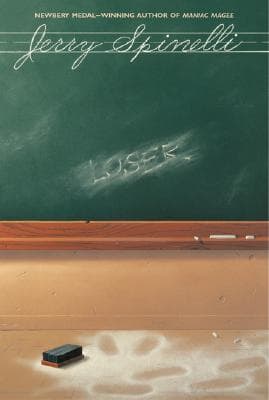
Jerry Spinelli (2002)
Genre
Children's / Young Adult
Reading Time
218 min
Key Themes
See below
Sign in to track this book
Donald Zinkoff, a boy who doesn't notice his own quirks, shows that genuine individuality and a joyful spirit can make an ordinary 'loser' into an unexpected hero.
Donald Zinkoff starts first grade very excited about school, unlike most other kids. He likes everything about it, from the classroom smell to the bell. However, his excitement often shows in unusual ways. He often raises his hand with wrong answers, trips, and finds things funny that others don't, like the word 'Jabip.' His teacher, Miss Meeks, sees his unique spirit but also his difficulties. Zinkoff's first-grade year shows his genuine joy and a growing sense that he is different from other children, though he doesn't fully understand it. He sees every day as an adventure, not noticing the subtle social signals and judgments forming around him.
In second grade, Zinkoff's lack of social awareness becomes clearer when he brings a bar of soap to school and eats it, thinking it will help him spell 'soap.' This strange act makes him stand out more. Despite this, he briefly connects with Andrew, a boy he admires for being smart and quiet. Zinkoff also becomes friends with Hector Binns, a boy who collects earwax. Their shared unusual traits create a bond for a while. During this time, the children around Zinkoff start calling him a 'loser,' a word he hears but doesn't fully grasp. His innocence protects him from the full effect of their meanness, and he continues to approach life openly and with optimism.
Field Day in third grade is an important event for Zinkoff, where his physical awkwardness and lack of competitive spirit are on full display. During the four-hundred-meter relay race, Zinkoff is the last runner for his team. He tries his best, but he trips, falls, and struggles to finish, coming in long after everyone else. His team loses badly, and he becomes the target of jokes and chants of 'loser!' from the other children. This public embarrassment doesn't completely break his spirit. He still finds joy in small things, like the taste of the dirt he fell on, showing his resilience and unique perspective, even when many people scorn him.
In fourth grade, a new student named Claudia arrives, and Zinkoff immediately connects with her. Claudia, like Zinkoff, is somewhat of an outsider, but for different reasons. She is shy at first, but Zinkoff's genuine kindness and lack of judgment help her open up. Wanting to send a message to the world, Zinkoff decides to tie a message to a balloon and release it, hoping it will travel far. He carefully writes his message and, with Claudia's help, launches the balloon. This act shows his lasting hope and his belief in grand, though impractical, gestures, further making him seem odd to his peers.
Every year, Zinkoff starts a personal tradition of waiting for the first snow of winter. He focuses on this anticipation, believing that if he waits carefully enough, the snow will come. He sits by the window, watches the sky, and mentally wishes for snowflakes to fall. This yearly tradition shows his deep hope and his ability to find meaning in simple, everyday things. While other children might wish for snow days, Zinkoff's approach is almost spiritual, showing his innocent wonder that continues even as he gets older and faces more social rejection. His father, a mailman, understands and quietly supports his son's unique view.
As Zinkoff goes through fifth and sixth grade, the 'loser' label stays with him. His classmates avoid him, make fun of his clothes, his clumsiness, and his unusual behaviors. They invent games about his misfortunes and openly mock him. Despite the increasing meanness, Zinkoff's inner world mostly stays the same. He still sees good in people and finds joy in his unique interests. He doesn't take the negative labels to heart, often not even noticing the bad intentions behind them. His resilience comes from an almost happy ignorance and a real inability to see himself as anything other than a person trying his best.
One winter night, a young neighborhood girl named Polly, about four years old, goes missing in a bad snowstorm. The whole community searches for her. Zinkoff, hearing the news, feels a strong sense of urgency and empathy. He joins the search without hesitation, despite the dangerous weather and the fact that most other children are inside. He walks through the blizzard, calling Polly's name, wanting only to help. This selfless act shows his goodness and his willingness to step up when others need help, even if his methods are unusual and adults coordinating the search largely don't notice him.
Zinkoff continues his search for Polly through the night, long after many adults have given up or gone inside because of exhaustion and the worsening storm. He looks in alleys, empty lots, and snowdrifts, calling the girl's name with steady determination. The severe cold and physical effort begin to wear him down. He gets confused, his body numb, and he eventually collapses in the snow, close to hypothermia. His single-minded focus on finding Polly outweighs any thought of his own safety, showing his deep compassion and his unique, almost heroic, stubbornness in a difficult situation. A search party eventually finds him, barely conscious.
Polly is eventually found safe by another searcher, huddled in a shed. The community is happy, but Zinkoff's long and dangerous efforts are mostly unnoticed. The adults involved in the search don't know how long or how far he went into the blizzard. The focus is on Polly's safe return and the organized efforts of the rescue teams. Zinkoff, being himself, doesn't look for recognition. He is simply relieved that Polly is safe, finding his reward in the outcome itself. This event slightly changes how some adults see Zinkoff, though his 'loser' label among his peers remains.
As Zinkoff moves to middle school, he is still the same unique person. He continues to raise his hand with 'wrong' answers, trip, and find joy in everyday things. The 'loser' label, though perhaps less openly said, still follows him. However, the experience of searching for Polly, while not making him a hero to his classmates, has subtly changed something in him and for a few others. He continues to write his name on his shoes, a symbol of his identity. The book ends with Zinkoff still following his own path, suggesting that his genuine self, despite problems, is ultimately his greatest strength, and perhaps, his way to a good life.
The Protagonist
Zinkoff remains largely unchanged internally, his arc defined by his enduring authenticity despite external pressures and the gradual, subtle impact he has on a few individuals.
The Supporting
Remains a steady, supportive presence, his quiet understanding growing deeper as Zinkoff faces more challenges.
The Supporting
Her arc involves accepting Donald's unique path, moving from worry to a deeper appreciation of his inherent goodness.
The Supporting
Initially withdrawn, she opens up through her friendship with Zinkoff, finding connection and acceptance.
The Supporting
Starts as an eccentric friend, but eventually conforms to social pressures, distancing himself from Zinkoff.
The Supporting
A consistent, empathetic observer of Zinkoff's unique nature during his formative school years.
The Antagonist/Supporting
Remains a consistent source of antagonism, embodying the unchanging social judgment Zinkoff faces.
The Mentioned
Her disappearance and safe return serve as a catalyst for Zinkoff's most heroic act.
The main idea of 'Loser' explores the struggle between being yourself and the pressure to fit in. Zinkoff shows strong individuality, always doing things his own way even though his peers call him a 'loser.' His inability or refusal to conform, whether by giving wrong answers, eating soap, or his unique way of waiting for snow, makes him different. The book compares Zinkoff's real joy and unique perspective with the often shallow judgments and desire for acceptance that drive his classmates. In the end, it celebrates the power of being different.
“He didn't know he was not like everyone else. He didn't know he was a loser.”
Spinelli questions common ideas of success and failure through Zinkoff's experiences. Zinkoff often 'fails' by usual standards: he does poorly in school, is bad at sports, and lacks social skills. Yet, he finds joy and meaning in life. His 'failures' often come from his genuine excitement or unique view, not from a lack of effort. The book suggests that true success is not about outside approval or achievement, but about keeping one's honesty, compassion, and unique spirit, even when facing ridicule. His 'failure' at Field Day, for example, is contrasted with his selfless act during the search for Polly.
“He knew it. He was a loser. But the word did not sting. It was just a word. He was still Zinkoff.”
Even though he is bullied, Zinkoff has a great capacity for empathy and compassion. His most important moment, searching tirelessly for the missing girl Polly in a blizzard, shows his selfless concern for others. Even when he is an outcast, Zinkoff often sees the good in people and wants to help. This idea shows that real heroism and human connection often come from an open heart, not from social popularity or common strengths. The book encourages readers to look past superficial judgments and see the worth and kindness in every person.
“He was just a boy, small and ordinary, lost in a blizzard, but he was a boy with a purpose: to find Polly, to save her.”
The novel shows the world through Zinkoff's innocent and often naive view. He often misunderstands social cues, doesn't grasp the meanness behind his classmates' taunts, and finds wonder in things others see as ordinary or silly. This innocence acts as both a shield, protecting him from rejection, and a lens, letting him experience life with pure joy. The book compares Zinkoff's unspoiled view with the more cynical, conforming views of his peers, suggesting that there is beauty and truth in keeping a childlike wonder and an open heart, even as one gets older.
“He loved school. He loved the smell of the classroom, the sound of the bell, the sight of his teacher.”
A recurring epithet that defines Zinkoff's social standing.
The repeated use of the word 'loser' by Zinkoff's classmates functions as a central plot device. It highlights the social ostracism and bullying he faces, acting as a constant external pressure. However, it also serves to underscore Zinkoff's resilience and unique internal world, as he rarely internalizes the label. The word, initially meant to diminish him, ultimately emphasizes his individuality and the book's message about self-acceptance. Its persistence throughout his early school years showcases the enduring nature of childhood labels and their impact on social dynamics.
A symbolic item representing Zinkoff's individuality and comfort.
Zinkoff's distinctive yellow hat is a recurring symbol throughout the book. It's a personal item that he wears frequently, often out of season, and it sets him apart visually. The hat represents his comfort in his own eccentricities and his disregard for social norms. It becomes a visual marker of his individuality, a small, consistent detail that reinforces his unique character. In the climactic search for Polly, the hat serves as a practical item of warmth but also a symbolic beacon of his persistent, if unconventional, presence.
A symbolic act of communication and hope.
Zinkoff's decision to send a message attached to a balloon into the sky is a symbolic act. It represents his desire to connect with the world, to share his thoughts and hopes, even if the recipient is unknown. It's a grand, optimistic gesture that, like many of Zinkoff's actions, is both naive and deeply heartfelt. This device emphasizes his imaginative spirit and his belief in the power of simple acts, contrasting with the cynicism of his peers. It reinforces the theme of hope and the individual's attempt to make a mark on the world.
A recurring ritual symbolizing Zinkoff's unwavering hope and wonder.
Zinkoff's annual ritual of waiting for the first snow of winter is a powerful recurring motif. It symbolizes his capacity for sustained hope, his connection to the natural world, and his ability to find profound meaning in simple, everyday occurrences. This personal tradition highlights his unique inner life and his unshakeable optimism, even as he grows older. It serves as a reminder that Zinkoff's happiness is self-generated, not dependent on external approval or conventional successes, and underscores his enduring childlike wonder.
A plot catalyst that reveals Zinkoff's inherent heroism.
The disappearance of the young girl, Polly, serves as a critical plot catalyst. This event provides the ultimate test of Zinkoff's character, moving him from a 'loser' in the eyes of his peers to an unacknowledged hero. It allows his compassion, perseverance, and selflessness to shine through in a tangible, impactful way. This device challenges the superficial judgments of the community and demonstrates that true worth can emerge in unexpected circumstances, forcing a re-evaluation of Zinkoff's perceived 'failures' against his genuine human qualities.
“Loser is just a word. It's not who you are.”
— A reflection on the book's central theme about identity and labels.
“Zinkoff is not like other kids. He's different, and that's okay.”
— Description of the protagonist Donald Zinkoff's unique personality.
“Sometimes the biggest winners are the ones who don't care about winning.”
— Commentary on Zinkoff's perspective on competition and success.
“He doesn't see the world the way everyone else does, and that's his superpower.”
— Highlighting Zinkoff's innocent and optimistic view of life.
“Labels stick, but they don't have to define you.”
— A lesson about overcoming the negative labels given by others.
“In a race to be the best, Zinkoff is just happy to be part of the run.”
— Illustrating Zinkoff's joy in participation rather than winning.
“The world tries to squeeze you into a box, but Zinkoff refuses to fit.”
— Emphasizing Zinkoff's resistance to societal expectations.
“Kindness doesn't need a reason; it just is.”
— Reflecting on Zinkoff's naturally kind and generous nature.
“Being called a loser says more about the caller than the called.”
— A critical insight into the dynamics of bullying and judgment.
“Zinkoff's laughter is a language all its own, understood by those who listen.”
— Describing Zinkoff's infectious and genuine laughter.
“In the game of life, Zinkoff plays by his own rules, and he's winning at being himself.”
— Celebrating Zinkoff's authenticity and self-acceptance.
“The measure of a person isn't in trophies, but in the hearts they touch.”
— A moral about true success being based on impact, not awards.
“Zinkoff doesn't just see people; he sees possibilities.”
— Highlighting Zinkoff's hopeful and imaginative outlook on others.
“Sometimes, the quietest voices have the loudest truths.”
— Acknowledging the wisdom in Zinkoff's unassuming demeanor.
Ready to see how well you understood this book? Take our interactive quiz with 10 questions.

Biography coming soon.

Dan Gemeinhart
4.5

Kate O'Hearn
4.4

Jeanne Birdsall
4.4

Jen Wang
4.4
Wendelin Van Draanen
4.3

John Marsden
4.3

Chris Van Allsburg
4.3
Jennifer A. Nielsen
4.2