“Maybe there is a beast... maybe it's only us.”
— Simon suggests the true nature of the beast during a meeting.

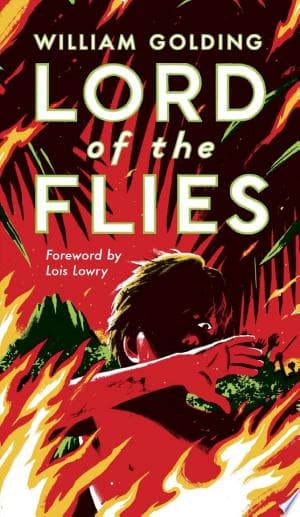
William Golding (2016)
Genre
Young Adult
Reading Time
420 min
Key Themes
See below
Sign in to track this book
Stranded on an island, British schoolboys become savage, showing the darkness within people without civilization.
After a plane crash leaves British schoolboys stranded on a deserted tropical island, Ralph and Piggy meet. Piggy, smart but physically weak, finds a conch shell, which Ralph uses to call all the other survivors. They hold an assembly, and Ralph is elected leader over Jack Merridew, the head chorister, who instead leads the hunters. They make rules, including that the conch allows the speaker to talk. The boys are excited about their freedom, but a younger boy mentions seeing a 'snake-thing' or 'beastie,' which introduces the first hint of fear.
Ralph, Jack, and Simon explore the island, confirming it is uninhabited and has plenty of fruit. They are amazed by its beauty and the possibility of adventure. When they return, Ralph stresses the need for rescue, suggesting a signal fire on the mountain peak. The boys, full of enthusiasm, use Piggy's spectacles to light a huge, uncontrolled fire. It quickly burns out of control, destroying a large part of the forest and, sadly, a younger boy who was playing near the flames. This chaotic event is the first major failure of their new society.
Weeks pass, and the initial order begins to break down. Ralph struggles to keep the signal fire going and build shelters. He is often frustrated by the boys' lack of help, especially Jack's. Jack and his choir, now hunters, become more focused on tracking and killing pigs. Their first successful hunt, though providing meat, causes them to neglect the signal fire, which goes out just as a ship passes. Ralph angrily confronts Jack about the missed rescue opportunity. Piggy openly criticizes Jack, leading Jack to hit him and break one of his spectacle lenses, increasing tension.
The fear of the 'beastie' returns and grows, especially among the younger boys. During an assembly, Ralph tries to calm them, but Jack uses their fears, saying his hunters will protect them. Piggy logically dismisses the beast, while Simon mysteriously suggests the beast might be 'only us.' A dead parachutist, moved by the wind, lands on the mountain and gets caught in trees, looking like a shadowy figure. Samneric, on fire duty, mistake the dead pilot for the beast. They run back to camp in terror and confirm its presence to the other boys, further fueling their fears.
Driven by fear, Ralph leads a search party, including Jack, to the unexplored castle rock, thinking the beast lives there. They find no beast but discover a defensible cave. Ralph insists on returning to the mountain to relight the signal fire, but Jack wants to hunt the beast. Back at the beach, Jack calls an assembly, openly challenging Ralph's leadership and calling him a coward. When the boys do not vote Ralph out, Jack, embarrassed, says he is leaving the group to start his own tribe, inviting anyone who wants to hunt with him. Several older boys, drawn by the promise of meat and freedom from rules, join Jack.
Jack's tribe settles at Castle Rock, painting their faces with clay and living a more primitive, savage life focused on hunting. They kill a sow brutally, putting its head on a sharpened stick as an offering to the 'beast.' Simon sees this gruesome act and hallucinates the pig's head speaking to him, calling itself the 'Lord of the Flies.' This encounter shows Simon the beast's true nature: not an outside monster, but the evil and savagery inside people. Simon collapses, overwhelmed by this discovery.
After recovering, Simon climbs the mountain and finds the 'beast' is the dead parachutist. He realizes the boys' fear is wrong and rushes down to the beach to tell them. Meanwhile, Ralph, Piggy, and Samneric, the last of Ralph's group, attend a feast hosted by Jack. During a violent storm, Jack's tribe, fueled by their painted faces, the feast, and a frantic dance, chant and act out the pig hunt. When Simon stumbles out of the jungle, meaning to share his news, the boys, mistaking him for the beast in their hysteria, brutally beat and stab him to death.
After Simon's murder, Ralph and Piggy struggle to understand the horror, losing hope. Jack's tribe, now completely savage, raids Ralph's camp to steal Piggy's spectacles, which are needed for making fire. Ralph, Piggy, and Samneric confront Jack at Castle Rock, demanding the glasses back and trying to appeal to reason and the conch's power. Jack's tribe refuses. In the chaos, Roger, Jack's cruel enforcer, rolls a large boulder down the cliff, hitting Piggy, who falls to his death on the rocks below. The conch, the symbol of order, is shattered at the same time.
With Piggy dead and the conch destroyed, Ralph is alone, a target for Jack's tribe. He hides in the jungle, watching the increasingly savage rituals of the painted boys. Samneric, captured and tortured by Jack's tribe, are forced to reveal Ralph's hiding place. Jack orders the entire island to be set on fire to force Ralph out. Ralph, desperate, avoids his pursuers, fighting for his life as the island burns around him. This fire symbolizes the complete breakdown of order and the victory of primal instincts.
As the island burns and Ralph is driven to the beach, exhausted and cornered, he collapses. He looks up to see a British naval officer standing over him. The officer, having seen the smoke from the burning island, has come to investigate. The sudden appearance of an adult, representing the civilized world, breaks the illusion of the boys' isolated savagery. Ralph, overwhelmed with emotion and the reality of what happened, begins to weep for the loss of innocence, the darkness in people, and the death of Piggy. The other boys, now looking like dirty, tear-stained children, also begin to cry, their painted faces stark against their sudden return to reality.
The Protagonist
From optimistic leader striving for rescue and order to a hunted, disillusioned survivor weeping for the loss of innocence.
The Antagonist
Transforms from a disciplined choir boy into a barbaric, dictatorial tribal chief.
The Supporting
Remains constant in his commitment to reason and rules, ultimately dying for it.
The Supporting
Develops a profound spiritual insight into human evil, leading to his prophetic but tragic death.
The Supporting
Transitions from a merely mischievous boy to a brutal, unfeeling torturer and murderer.
The Supporting
Struggles to maintain loyalty to Ralph but is ultimately overcome by fear and forced to betray him.
The Supporting
Remain largely static, embodying innocence and fear, until they are absorbed into Jack's tribe.
The Mentioned
Appears only at the end, serving as a deus ex machina for the boys' rescue.
This is the novel's main theme. Ralph, Piggy, and the conch represent civilization, order, and democracy, seeking rules, rescue, and reason. Jack and his hunters, with their painted faces, primitive rituals, and focus on hunting, show savagery, primal instincts, and authoritarianism. The gradual loss of Ralph's authority and the success of Jack's tribe illustrate Golding's belief that civilization is fragile. Without outside rules, people will become barbaric. The burning island at the end shows the complete destruction of any order.
“''Which is better—to have rules and agree, or to hunt and kill?'”
The boys start as innocent schoolboys, excited by adventure. However, the hard parts of survival, the fear of the beast, and the appeal of power slowly take away their innocence. Simon's death, a brutal act by almost all the boys, marks the permanent loss of their childhood and moral sense. By the end, when the naval officer arrives, the boys are no longer innocent children but traumatized individuals. They weep for 'the end of innocence, the darkness of man's heart, and the fall through the air of the true, wise friend called Piggy.' Their experiences make them face the evil within humanity.
“'Ralph wept for the end of innocence, the darkness of man's heart, and the fall through the air of the true, wise friend called Piggy.'”
Golding explores the idea that evil is a part of human nature, not something outside. This is shown by the 'beast.' At first feared as a monster, Simon's discovery that 'the beast is only us' clarifies that the real evil is inside the boys. The Lord of the Flies, the pig's head on a stick, explicitly tells Simon this. Roger's cruel tendencies and Jack's bloodlust show how easily this inherent evil can appear and take over when there are no societal structures or moral codes. The boys' fall into savagery shows the darkness within people.
“'Fancy thinking the Beast was something you could hunt and kill! You knew, didn't you? I'm part of you?'”
The novel looks at different kinds of leadership and how power can corrupt. Ralph represents democratic leadership, using rules, agreement, and the conch. Jack, however, shows authoritarianism, appealing to the boys' basic desires for immediate satisfaction, hunting, and protection from fear. His leadership is based on intimidation and charisma, not reason. The conflict between Ralph and Jack shows how easily a group can move from rational rule to a tyrannical system driven by fear and violence. Jack's rise to power shows the dangers of unchecked power and the appeal of a leader who plays on emotions.
“'I'm chief,' said Ralph, 'because you chose me. And we were going to have a signal fire, to keep us safe. And you'll all be rescued if you do what I say.'”
Symbol of democracy, order, and civilized discourse.
The conch shell is introduced early in the novel as a tool for summoning the boys and establishing order. It symbolizes democratic rule, free speech, and the power of reasoned debate. Whoever holds the conch has the right to speak, and others must listen. Its gradual loss of authority, from being respected to being mocked, and its ultimate destruction when Piggy is killed, directly parallels the boys' descent into savagery and the collapse of their civilized society. Its shattering marks the final triumph of anarchy and brutality over order.
Symbol of intellect, technology, and rational thought.
Piggy's spectacles are initially used to light the signal fire, symbolizing intellectual power, scientific knowledge, and the ability to harness nature for productive purposes (like rescue). When Jack's tribe steals them, it represents the appropriation and perversion of intellect for savage ends (lighting fires for cooking and destruction) and the triumph of brute force over reason. The breaking of one lens foreshadows the damage to their civilized society, and their complete theft signifies the complete disregard for intelligence and the ultimate blinding of reason within the group.
Symbol of hope, rescue, and connection to civilization.
The signal fire is Ralph's primary focus throughout the novel, symbolizing the boys' hope for rescue, their connection to the civilized world, and their commitment to long-term goals. Its maintenance represents their collective effort and discipline. When the fire is neglected or goes out, it signifies the boys' diminishing hope and their increasing embrace of immediate gratification and savagery. Ironically, the fire that ultimately attracts the naval officer is a destructive wildfire set by Jack's tribe to hunt Ralph, highlighting the perverse way salvation arrives amid total destruction.
Symbol of primal fear and the inherent evil within humanity.
The 'beast' begins as a vague fear among the littluns, evolving into a perceived monster on the island. Initially, it symbolizes the unknown and the boys' primal anxieties. However, Simon's realization, confirmed by the Lord of the Flies, that the 'beast' is not an external entity but the inherent savagery and evil within human nature itself, is a pivotal moment. It represents the psychological manifestation of their own fears and darker impulses, which they project onto an external enemy, ultimately leading them to commit horrific acts, including Simon's murder, in their frenzied attempts to appease or defeat it.
“Maybe there is a beast... maybe it's only us.”
— Simon suggests the true nature of the beast during a meeting.
“The thing is - fear can't hurt you any more than a dream.”
— Jack dismisses the littluns' fears early in the novel.
“We did everything adults would do. What went wrong?”
— Piggy reflects on the group's failure to maintain order.
“The rules are the only thing we've got!”
— Piggy insists on the importance of rules as chaos grows.
“Kill the pig. Cut her throat. Spill her blood.”
— Chant during the hunt, symbolizing descent into savagery.
“I'm not going to be part of Ralph's lot—”
— Jack declares his split from Ralph's group to form his own tribe.
“What are we? Humans? Or animals? Or savages?”
— Piggy questions the group's identity as they regress.
“The world, that understandable and lawful world, was slipping away.”
— Narration describing the collapse of order on the island.
“Fancy thinking the Beast was something you could hunt and kill!”
— The Lord of the Flies speaks to Simon in a hallucination.
“Ralph wept for the end of innocence, the darkness of man's heart.”
— Final lines as Ralph is rescued, reflecting on the experience.
“You're a beast and a swine and a bloody, bloody thief!”
— Ralph confronts Jack after Piggy's glasses are stolen.
“We've got to have rules and obey them. After all, we're not savages.”
— Ralph emphasizes the need for rules early in the story.
“The conch exploded into a thousand white fragments and ceased to exist.”
— The destruction of the conch symbolizes the end of order.
“Which is better—to have rules and agree, or to hunt and kill?”
— Piggy argues for civilization over savagery in a debate.
Ready to see how well you understood this book? Take our interactive quiz with 10 questions.
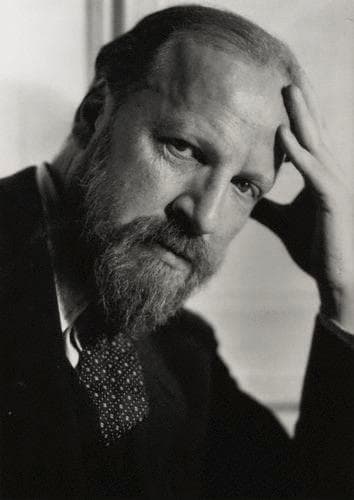
Sir William Gerald Golding was a British novelist, playwright, and poet. Best known for his debut novel Lord of the Flies (1954), he published another twelve volumes of fiction in his lifetime. In 1980, he was awarded the Booker Prize for Rites of Passage, the first novel in what became his sea trilogy, To the Ends of the Earth. He was awarded the 1983 Nobel Prize in Literature.