“The most dangerous thing in the world is a woman with a past and a future.”
— Said by Hercule Poirot, reflecting on the complexities of human nature and motive.

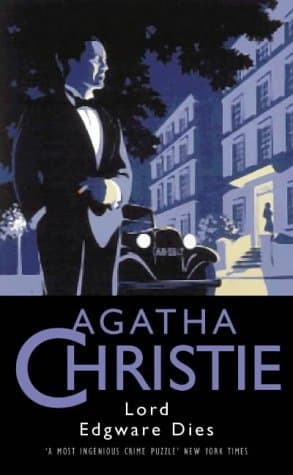
Agatha Christie (1933)
Genre
Thriller / Mystery
Reading Time
260 min
Key Themes
See below
Sign in to track this book
When a woman claims to have killed her husband, only for him to turn up dead with her having an ironclad alibi, Hercule Poirot must untangle a web of lies where nothing is as it seems.
Hercule Poirot and Captain Arthur Hastings go to a variety show where they watch the American actress Jane Wilkinson. Afterward, Jane asks Poirot to help her divorce her husband, Lord Edgware, so she can marry the Duke of Merton. She asks Poirot to speak to Lord Edgware, who has repeatedly refused her divorce requests. Poirot agrees to speak with Lord Edgware, despite his doubts about getting involved in domestic disputes. This first meeting shows Jane's determined and somewhat ruthless character and sets up the main conflict.
Poirot visits Lord Edgware at his home, Regent's Gate, expecting a difficult conversation. To his surprise, Lord Edgware readily agrees to divorce Jane Wilkinson, saying he had already sent her a letter about it. He explains that his earlier refusal was based on not giving in to her demands, but he has since changed his mind. Edgware also shares his dislike for Jane, calling her a 'fiend.' This changes the situation, as Jane's main reason for 'getting rid of' her husband seems to disappear, making her later actions more puzzling.
On the night of September 13th, Lord Edgware is found dead in his library, stabbed in the neck. The immediate suspect is his estranged wife, Jane Wilkinson, especially given her earlier public statements about wanting to 'get rid of' him. However, Jane has a solid alibi: she was at a dinner party hosted by Lady Edgware (Lord Edgware's niece) in the countryside, far from Regent's Gate. Several credible witnesses, including Bryan Martin, an actor infatuated with Jane, and Jenny Driver, another guest, confirm this alibi. The apparent impossibility of Jane being in two places at once is Poirot's main puzzle.
Poirot begins to carefully investigate Jane Wilkinson's alibi. While many witnesses confirm she was at the dinner party, Poirot notices small differences in their accounts, particularly about her arrival and departure times and the exact details of her appearance. He also learns about Jane's skill at impersonation and her acting talents. The idea of a 'double' or someone impersonating Jane at the dinner party becomes a key line of inquiry, especially after Bryan Martin mentions a strange incident involving a hat. This investigation leads Poirot to question how reliable eyewitness testimony is.
Jane Wilkinson strongly denies ever receiving Lord Edgware's letter agreeing to the divorce. This claim is important because if she truly believed he was still refusing, her motive for murder would be stronger. Poirot, however, doubts her sincerity. He discovers that the letter was indeed sent and delivered to Jane's home. The letter's disappearance, or Jane's feigned ignorance of it, suggests a deliberate attempt to mislead the investigation and keep a strong motive for the crime, further implicating her in Poirot's eyes. This detail highlights Jane's manipulative nature.
As Poirot continues his investigation, a second murder happens: Jenny Driver, one of the dinner party guests who confirmed Jane Wilkinson's alibi, is found dead from an overdose of Veronal. This sudden death immediately raises suspicions, as Jenny's testimony was important to Jane's alibi. Poirot suspects that Jenny was either silenced because she knew too much or because she was involved in the impersonation. Her death initially looks like suicide, but Poirot quickly rules this out, believing it to be a murder made to look like one, further complicating the case and pointing to a cunning killer.
During the initial investigation, a small gold box containing a valuable antique coin, which Lord Edgware always carried, is reported missing from him. This box becomes an important clue. Later, it is found with Donald Ross, a young man who had met Jane Wilkinson earlier and was infatuated with her. Ross claims Jane gave him the box as a keepsake. The discovery of the box with Ross, and his interaction with Jane, links him directly to the murder weapon's potential transfer and raises questions about Jane's intentions in giving it away, especially if it was connected to the murder.
Donald Ross, the young man who had the gold box, is found dead in his apartment, having apparently committed suicide by shooting himself. A note is found near him, confessing to the murders of Lord Edgware and Jenny Driver, and expressing remorse. This seems to resolve all the loose ends, offering a convenient solution to the police. However, Poirot immediately suspects foul play. The 'suicide' note feels too perfect and the timing too convenient. Poirot believes Ross was murdered to silence him and to provide a scapegoat for the true killer, reinforcing the idea of a highly intelligent and ruthless individual behind the crimes.
Poirot carefully re-examines all the evidence, focusing on the inconsistencies in the witnesses' descriptions of Jane Wilkinson at the dinner party and the strange details about the missing gold box. He realizes that the 'impersonation' was not Jane being impersonated by someone else, but rather Jane herself impersonating someone else *after* committing the murder. The key is that Jane *did* leave the dinner party early, committed the murder, and then returned, but was briefly impersonated by her maid, Carlotta Adams, during her absence. The true nature of the alibi begins to unravel, revealing Jane's carefully planned deception.
Poirot gathers all the suspects and reveals his solution. He explains that Jane Wilkinson was the murderer of Lord Edgware. She used her maid, Carlotta Adams – a skilled impersonator – to briefly take her place at the dinner party after Jane left to commit the murder. Jane then returned to the dinner party, resuming her identity. Jenny Driver was murdered because she was the only one who noticed a small difference in Jane's appearance upon her return, and Donald Ross was killed because he had the gold box, which Jane had given him after it was used to retrieve the dagger, implicating her. Jane's motive was her desire to marry the Duke of Merton, which Lord Edgware's death would enable, despite the divorce being granted.
Poirot explains that Carlotta Adams, Jane Wilkinson's maid and a talented impersonator, was forced or manipulated into impersonating Jane for a short time during the dinner party. Carlotta was initially unaware of Jane's murderous intentions. However, once Carlotta realized the true purpose of her impersonation, Jane murdered her to silence her and eliminate any witness to her deception. Carlotta's death was made to look like a suicide, just like Donald Ross's. This revelation adds more premeditation and ruthlessness to Jane Wilkinson's character, showing her willingness to eliminate anyone who could expose her.
The Duke of Merton, a devout Catholic, told Jane Wilkinson that he would only marry her if she were a widow, not a divorcee. This detail gives Jane a strong motive for murder, even after Lord Edgware agreed to a divorce. Jane did not want to be a divorcee; she wanted to be a widow. The Duke's religious beliefs, though not directly leading him to commit any crime, indirectly fueled Jane's murderous plot. He remains unaware of Jane's true nature and her crimes until Poirot's final revelation, highlighting her cunning manipulation.
The Protagonist
Poirot's character remains consistent, serving as the brilliant solver of the mystery, reaffirming his deductive prowess.
The Antagonist
Jane's true ruthless and murderous nature is slowly revealed, contrasting with her initial charming facade.
The Victim
Lord Edgware is murdered early in the novel, serving as the catalyst for the mystery.
The Supporting
Hastings remains a steadfast companion and narrator, his perspective guiding the reader through Poirot's investigation.
The Supporting
Carlotta's role shifts from a seemingly minor character to a crucial, unwitting accomplice, and then a victim.
The Supporting
Jenny's role evolves from a simple witness to a crucial, if unwitting, threat to the killer's plan, leading to her death.
The Supporting
Donald's character moves from an innocent admirer to a framed suspect and then a victim.
The Supporting
Bryan remains an emotionally charged character, serving as a red herring and a source of fragmented information.
The Supporting
Geraldine serves as a reliable witness and a potential love interest for Hastings, maintaining her integrity throughout.
The Supporting
The Duke of Merton remains a somewhat distant figure, serving primarily as the catalyst for Jane's ultimate motive.
The novel explores deception, especially how outward appearances can hide sinister realities. Jane Wilkinson, a beautiful and charming actress, uses her theatrical skills to create an elaborate alibi and manipulate those around her. The entire murder plot relies on a complex act of impersonation, making witnesses doubt what they saw. Poirot repeatedly stresses the importance of looking past the surface and questioning what seems obvious, as he dissects the dinner party alibi, realizing that Jane was not just present, but actively engaged in deception.
“''It is the most difficult thing in the world to know a man by his name.''”
The theme of motive, driven by ambition, is central to the story. Jane Wilkinson's ambition to marry the Duke of Merton, combined with his religious requirement that he would only marry a widow, gives her a powerful, though twisted, reason to commit murder. This goes beyond a simple desire for divorce, showing a deeper, more ruthless drive for social advancement and personal gain. The plot shows how ambition, when unchecked by morality, can lead to extreme criminal acts, making Jane's character a study in unchecked desire.
“''People do not commit murder for reasons of sentiment, Hastings. They do it for gain.''”
Agatha Christie skillfully uses the unreliability of witness testimony as a key theme. The initial investigation is confused by seemingly credible witnesses who all claim to have seen Jane Wilkinson at the dinner party, providing her with an ironclad alibi. However, Poirot systematically shows how memory, perception, and even subtle impersonations can distort what people believe they saw. The differing accounts of Jane's hat and demeanor at the party are important in showing how easily eyewitnesses can be mistaken, even when genuinely trying to recall events.
“''The human memory, Hastings, is a most peculiar thing. It can be relied upon for certain things, but for others...''”
As in many Poirot novels, the theme of justice and retribution underlies the investigation. Poirot is driven by a moral need to uncover the truth and ensure that the guilty are held accountable, regardless of their social standing or cunning. The multiple murders – Lord Edgware, Jenny Driver, and Donald Ross – raise the stakes, making the pursuit of justice more urgent. The novel concludes with the triumphant exposure of the killer and the restoration of order, fulfilling the reader's expectation of justice being served, even in the face of elaborate deception.
“''Order and method, Hastings, that is all that is necessary.''”
A seemingly unbreakable alibi that makes the primary suspect's guilt appear impossible.
The impossible alibi is the central plot device in 'Lord Edgware Dies.' Jane Wilkinson is seen at a dinner party miles away from the murder scene at the exact time Lord Edgware is killed. This creates a seemingly unresolvable paradox, forcing Poirot to look for an alternative explanation beyond conventional means. The device relies on the reader (and the police) believing the alibi, only for Poirot to meticulously dismantle it by revealing a complex scheme of impersonation and precise timing, proving the alibi was a carefully constructed deception rather than an impossibility.
Misleading clues or suspects designed to distract the reader from the true culprit.
Agatha Christie employs several red herrings to divert suspicion. Bryan Martin, with his volatile temperament and obsession with Jane, is initially a strong suspect. Geraldine Marsh, with her dislike for her uncle and her presence in the house, is also considered. The 'suicides' of Jenny Driver and Donald Ross are designed to make it appear as though the case is solved, with Donald Ross confessing to the crimes. These misdirections keep the reader guessing and prevent them from identifying Jane Wilkinson as the true mastermind until Poirot's final revelation.
The use of a narrator or witnesses whose perceptions or memories are flawed or deliberately manipulated.
While Captain Hastings is generally reliable, his personal biases (e.g., his admiration for Jane Wilkinson) and occasional misinterpretations serve as a subtle form of unreliable narration. More prominently, the witnesses to Jane's alibi are unintentionally unreliable; their memories are either imperfect or they are subtly deceived by Jane's impersonation of herself. This device highlights how subjective perception can be and how easily it can be manipulated, forcing Poirot to rely on logic and objective facts rather than solely on eyewitness accounts.
An object that serves to drive the plot forward but is not inherently important in itself.
The gold box containing an antique coin, initially stolen from Lord Edgware, functions as a MacGuffin. Its intrinsic value or its exact contents are less important than its role in connecting Donald Ross to Jane Wilkinson and, by extension, to the murder. Jane gives the box to Ross, making him a pawn in her scheme and a convenient scapegoat. The box itself is not the murder weapon or a direct clue to the killer's identity, but its transfer and discovery are crucial for advancing the plot and leading Poirot to uncover the larger deception.
“The most dangerous thing in the world is a woman with a past and a future.”
— Said by Hercule Poirot, reflecting on the complexities of human nature and motive.
“Human nature, Mademoiselle, is a very curious thing. It is not always logical.”
— Poirot explaining the irrationality of human actions to Miss Lemon.
“Everyone is a potential murderer. Even you. Even I.”
— Poirot's cynical view on the inherent capacity for violence in all individuals.
“It is the little things, you see, that are so important. The little things that tell the story.”
— Poirot emphasizing his method of focusing on minute details in an investigation.
“Truth, Mademoiselle, is a very different matter to what one imagines.”
— Poirot discussing the elusive nature of truth in a case with Miss Lemon.
“There are times when one must choose between the truth and the happiness of others.”
— Poirot contemplating the moral dilemmas faced during an investigation.
“The human mind is capable of anything, my friend, anything.”
— Poirot expressing his wonder at the depths of human ingenuity, both good and bad.
“One does not have to be a genius to commit murder. One has only to be desperate.”
— Poirot musing on the motivations behind a crime.
“It is a dangerous thing to underestimate a woman.”
— Poirot's observation on the power and cunning of female characters in the story.
“The past is never dead. It is not even past.”
— A reflection on how past events and relationships continue to influence the present.
“One must always be prepared for the unexpected.”
— Poirot's advice on approaching any investigation or situation.
“Every secret has a shadow.”
— A metaphorical statement about the consequences and implications of hidden truths.
“The most obvious solution is often the most overlooked.”
— Poirot's commentary on how people tend to complicate matters rather than see simple truths.
“A lie can travel halfway around the world while the truth is still putting on its shoes.”
— A common adage used by Poirot to illustrate the spread of misinformation.
Ready to see how well you understood this book? Take our interactive quiz with 10 questions.
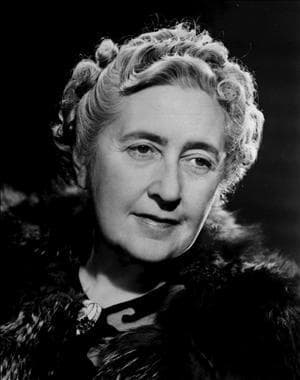
Dame Agatha Mary Clarissa Christie, Lady Mallowan, was an English writer known for her 66 detective novels and 14 short story collections, particularly those revolving around fictional detectives Hercule Poirot and Miss Marple. She also wrote the world's longest-running play, the murder mystery The Mousetrap, which has been performed in the West End since 1952. A writer during the "Golden Age of Detective Fiction", Christie has been called the "Queen of Crime". She also wrote six novels under the pseudonym Mary Westmacott. In 1971, she was made a Dame (DBE) by Queen Elizabeth II for her contributions to literature. Guinness World Records lists Christie as the best-selling fiction writer of all time, her novels having sold more than two billion copies.







