“The house was old, built of dark stone, and it seemed to crouch among the trees, as if it were afraid of the sun.”
— Megan's first impression of the house where she will be staying.

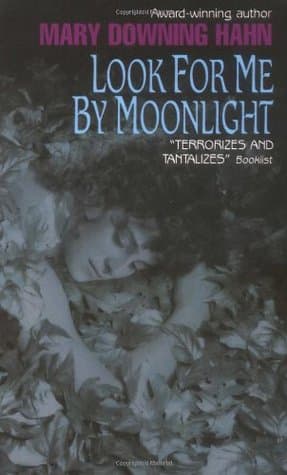
Mary Downing Hahn (1995)
Genre
Fantasy / Mystery / Young Adult / Romance
Reading Time
150 min
Key Themes
See below
Sign in to track this book
A smitten 16-year-old innkeeper's daughter falls for a charming, mysterious guest, only to discover his captivating allure hides a chilling secret and a perilous, ancient curse.
Sixteen-year-old Cynda, living a quiet life helping her father run the Black Cat Inn, finds her world changed with the arrival of a new guest, Vincent Morthanos. He is strikingly handsome, with dark hair, pale skin, and an air of elegant mystery that immediately captivates Cynda. She is drawn to his sophisticated charm and the intensity of his gaze. Vincent requests the secluded Rose Room, known for its view of the graveyard, and seems particularly interested in local history and folklore. Cynda's initial fascination quickly becomes a powerful crush, despite her father's subtle unease about the stranger.
Vincent Morthanos begins to pay Cynda a great deal of attention, treating her with a deference and admiration she has never experienced. He gives her a beautiful silver locket as a gift, which she cherishes. Their conversations often extend late into the night, where Vincent speaks of immortality, the beauty of the night, and the loneliness of a long existence. Cynda finds herself increasingly enchanted, dismissing her friend Laurie's playful warnings and her own father's quiet concern about the guest's nocturnal habits and his almost hypnotic influence on her. She feels a deep connection to Vincent, believing he understands her like no one else.
Cynda begins to notice oddities about Vincent: he avoids sunlight, has an unnatural pallor, and possesses an uncanny ability to appear silently. She overhears snippets of local gossip about an old legend concerning a vampire who once roamed the area, preying on young women. These stories, coupled with Vincent's cryptic remarks about living for centuries and his fascination with the graveyard, begin to sow seeds of unease in Cynda's mind, though her feelings for him still overpower her growing suspicion. She tries to rationalize his behavior, attributing it to his eccentricities or a romantic melancholy.
Driven by her mounting curiosity and a sense of foreboding, Cynda follows Vincent one night to the old graveyard behind the inn. She observes him standing among the tombstones, seemingly communing with the dead. The scene is both romantic and deeply unsettling. The next morning, she discovers a freshly dug, empty grave in the graveyard. This discovery, combined with Vincent's increasingly possessive behavior and his intense, penetrating gaze, heightens Cynda's fear. She struggles to reconcile the charming man she believes she loves with the disturbing clues pointing to something sinister.
Cynda's best friend, Laurie, openly expresses her distrust of Vincent, urging Cynda to be careful. Laurie's bluntness, however, only makes Cynda more defensive of Vincent. One evening, Vincent becomes intensely jealous when Cynda mentions a friendly interaction with another boy, demonstrating a possessiveness that startles her. He speaks of 'claiming' her, and his words, though couched in terms of love, carry a chilling undertone of ownership. This incident further erodes Cynda's idealized image of Vincent, forcing her to confront the darker aspects of his personality.
During a particularly intense moment, Vincent kisses Cynda with an overwhelming passion. As their embrace deepens, Cynda feels a sharp, piercing sensation on her neck. She pulls away, shaken, and later discovers two small, almost imperceptible puncture marks on her skin. Though Vincent dismisses it as a love bite, the incident leaves Cynda deeply disturbed. She tries to hide the mark, but the fear that has been building within her solidifies into a terrifying realization: Vincent Morthanos is the vampire from the legends, and she is becoming his next victim.
Terrified, Cynda finally confides in her father, revealing her suspicions about Vincent and showing him the mark on her neck. Her father, initially skeptical, becomes gravely concerned as she recounts Vincent's strange habits and the local legends. Together, they consult with Laurie, who, despite her fear, offers to help. The three of them begin to research vampire lore, looking for ways to protect Cynda and confront Vincent. They realize the immense danger they are in, as Vincent's hold over Cynda seems to be growing stronger.
Cynda, her father, and Laurie formulate a desperate plan to expose Vincent as a vampire and free Cynda from his influence. They decide to use traditional vampire repellents and confront him directly. They gather garlic, a crucifix, and a wooden stake, preparing for a dangerous encounter. Cynda, though deeply afraid, knows she must face Vincent to save herself. The plan relies on distracting Vincent and creating an opportunity to weaken him, hoping to sever the connection he has established with Cynda.
The confrontation takes place in the Rose Room. Cynda, armed with a crucifix, and her father, holding a wooden stake, confront Vincent. Vincent, initially calm and dismissive, reveals his true, monstrous nature as they press him. He attempts to reassert his control over Cynda, using his hypnotic gaze and seductive words. A struggle ensues, with Vincent displaying supernatural strength. Cynda's father bravely fights him off, trying to protect his daughter, while Cynda herself must find the courage to resist Vincent's powerful allure.
During the struggle, Cynda, empowered by her father's protection and her own will to survive, manages to use the crucifix effectively against Vincent. Her father, seizing an opportunity, drives the stake through Vincent's heart. Vincent Morthanos screams and disintegrates into dust. Cynda feels an immediate sense of release, as if a heavy weight has been lifted from her soul. The spell is broken, and she is finally free from his hypnotic and deadly influence. The Black Cat Inn, and Cynda's life, can finally return to normal, though forever marked by the terrifying encounter.
The Protagonist
Cynda transforms from a naive, lovesick girl into a resilient young woman who confronts her fears and reclaims her agency.
The Antagonist
Vincent remains static in his vampiric nature, his only 'arc' being his attempt to ensnare Cynda and his ultimate destruction.
The Supporting
He moves from subtle concern to active, courageous protection of his daughter.
The Supporting
Laurie's role shifts from a concerned friend to an active participant in confronting the supernatural threat.
The novel explores the dangerous attraction to that which is mysterious and potentially harmful. Cynda is irresistibly drawn to Vincent Morthanos, who embodies a dark, forbidden romance. His ancient nature, nocturnal habits, and cryptic pronouncements about immortality are initially thrilling to her, representing an escape from her mundane life. This theme highlights how easily innocence can be seduced by charm and the illusion of deep connection, even when warning signs are present, as seen in Cynda's dismissal of Vincent's unsettling qualities until it is almost too late.
“He was a dark, dangerous secret, and Cynda was drawn to him like a moth to a flame.”
Cynda's journey is a classic coming-of-age story centered on a brutal loss of innocence. She begins the story as a naive, romantic girl whose understanding of love is superficial and idealized. Her encounter with Vincent Morthanos shatters this innocence, forcing her to confront the reality of evil and the predatory nature that can hide beneath a beautiful facade. The physical mark Vincent leaves on her neck symbolizes this lasting loss, pushing her from girlish fantasy into a stark and terrifying reality where she must fight for her very existence.
“The bite was a brand, a mark of his ownership, and it burned with the truth of what he was.”
The book contrasts genuine love and protective affection with the dark, possessive nature of obsession. Cynda initially mistakes Vincent's intense attention and manipulative charm for love, blinded by her desire for romance. However, his 'love' is revealed to be a predatory obsession, a desire for control and sustenance. In contrast, the true love of her father and the loyal friendship of Laurie are shown as protective, selfless forces that ultimately empower Cynda to break free. This theme emphasizes the distinction between healthy connection and destructive, self-serving attachment.
“He said he loved me, but it wasn't love. It was hunger. It was a prison.”
Beneath the romantic veneer of the vampire myth, the story confronts the stark reality of evil. Vincent Morthanos is not a Byronic hero, he is a monster. The novel strips away the romanticized notions of vampires to reveal a cold, ancient predator whose charm is merely a tool for manipulation. This theme is shown by the physical and psychological terror Cynda experiences, moving from infatuation to a desperate fight for survival. It shows that evil, no matter how attractively packaged, ultimately seeks to consume and destroy.
“He was a creature of darkness, and the darkness had no heart.”
An enigmatic newcomer who disrupts the protagonist's ordinary life.
Vincent Morthanos serves as the quintessential mysterious stranger. His sudden arrival at the Black Cat Inn, his elegant demeanor, and his secretive habits immediately pique Cynda's interest and set the plot in motion. This device creates an immediate sense of intrigue and foreshadows the extraordinary events to come, drawing both the protagonist and the reader into the unfolding mystery. His unknown past and unusual behavior are central to building suspense and the gradual revelation of his true nature.
Old tales and folklore hint at the supernatural threat.
The local legends and gossip about a vampire in the area serve as a significant foreshadowing device. These stories, initially dismissed as quaint folklore, gradually align with Vincent's behavior, making Cynda (and the reader) increasingly aware of the true danger. This device builds suspense by providing clues that become more salient as the plot progresses, transforming harmless superstition into a terrifying reality and validating the characters' growing fears.
A vampire's power to control and enthrall its victims.
Vincent's hypnotic gaze is a key plot device representing his supernatural power and the insidious nature of his influence. It allows him to enthrall Cynda, making her more susceptible to his charm and less able to resist his will. This device illustrates the psychological aspect of his predation, showing how he preys on her mind as well as her body. Breaking free from this gaze is a critical step in Cynda's journey toward self-preservation and defying his control.
A physical manifestation of the vampire's claim over its victim.
The two small puncture marks Vincent leaves on Cynda's neck are a powerful plot device. They serve as concrete evidence of his true nature and his claim over her, transforming her abstract fears into a terrifying physical reality. This mark is a constant, visible reminder of her danger and the urgency of her situation, compelling her to seek help and ultimately confront her tormentor. It symbolizes her loss of innocence and the direct threat to her life.
“The house was old, built of dark stone, and it seemed to crouch among the trees, as if it were afraid of the sun.”
— Megan's first impression of the house where she will be staying.
“Sometimes, the past isn't really past at all. Sometimes it just waits, hidden, for someone to find it again.”
— A mysterious old woman gives Megan a cryptic warning.
“There are things in this world that defy explanation, Megan. Things that exist just beyond the edge of what we understand.”
— Mr. Davies, the librarian, hints at the supernatural elements.
“Love, true love, doesn't die. It just changes form, waits for another chance.”
— A central theme of the romance and the enduring nature of affection.
“The moonlight was a living thing tonight, pouring through the windows, making shadows dance and secrets whisper.”
— Megan experiences the house's magical atmosphere at night.
“History isn't just dates and names. It's people, living and breathing, making choices that echo through time.”
— Megan reflects on the personal impact of historical events.
“Fear can make you do strange things, can make you believe even stranger ones.”
— Megan considers the motivations behind past events and current fears.
“Some stories are meant to be told, no matter how sad or how long ago they happened.”
— Megan feels compelled to uncover the truth about the house's past.
“He looked at her as if he'd been waiting for her his whole life, or perhaps, for many lifetimes.”
— Megan's first significant encounter with the mysterious boy.
“The past is a river, Megan. Sometimes it flows gently, sometimes it floods, and sometimes it pulls you under.”
— Another metaphor about the inescapable nature of the past.
“She felt a connection to this place, to the people who had lived here, as if their lives were woven into her own.”
— Megan's growing sense of belonging and involvement with the house's history.
“Even in the darkest of places, a little light can find its way through.”
— A hopeful sentiment amidst the discovery of tragic events.
“To truly understand, you have to look beyond what you see, beyond what you're told.”
— Megan learns to trust her instincts and look for deeper truths.
“The heart has its own reasons, reasons that reason knows nothing of.”
— A reflection on the powerful and often irrational nature of love and emotion.
Ready to see how well you understood this book? Take our interactive quiz with 10 questions.

Biography coming soon.







