“I’m not saying it’s right. I’m not saying it’s wrong. I’m just saying it’s the rules. And the rules are the rules.”
— Will reflects on the cycle of violence and the unwritten rules of his neighborhood.

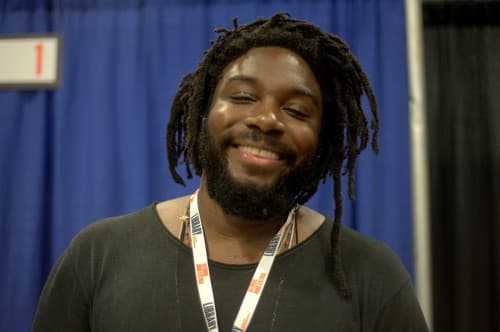
Jason Reynolds (2017)
Genre
Young Adult
Reading Time
90 min
Key Themes
See below
Sign in to track this book
In a single, tension-filled elevator ride, a teenager grapples with the ghost-ridden rules of revenge and the violence that claimed his brother, forcing him to confront whether he'll continue the deadly dance or break free.
The story opens with fifteen-year-old Will describing the immediate aftermath of his older brother, Shawn's, murder. Shawn was shot and killed while buying his mother's special soap. Will, devastated and numb, recounts the three main rules of the streets: no crying, no snitching, and revenge. He finds Shawn's gun, a .45, hidden in a dresser drawer, and decides to follow the third rule. He straps the gun into his waistband and heads for the elevator, intending to murder Riggs, the person he believes killed Shawn. Will's mind is set on this path of vengeance, fueled by grief and the ingrained code of his neighborhood.
Will enters the elevator on the seventh floor, determined. As the doors open on the sixth floor, a man named Buck steps in. Will recognizes Buck as a figure from his past, a mentor to Shawn and a father figure to many in the neighborhood, who was himself murdered years prior. Buck, appearing as a ghost, questions Will's resolve and the gun he's carrying. He asks Will to check the gun, revealing that one bullet is missing. This discovery shakes Will, as he realizes only Shawn could have fired his own gun, introducing the first crack in Will's certainty about his brother's actions and the gun's history.
On the fifth floor, the elevator doors open to reveal Dani, Will's childhood friend, who was accidentally killed by a stray bullet when they were both eight years old. Dani, a ghost, doesn't speak to Will directly about Shawn's murder but reminds him of their shared traumatic past and the pain of her own death. She asks Will what would happen if he missed his target, showing the potential for innocent lives to be caught in the crossfire, just as she was. Her presence forces Will to confront the broader, indiscriminate consequences of gun violence, shaking his conviction further.
The elevator stops on the fourth floor, and Will's Uncle Mark steps in. Mark, who was also murdered years ago, tells Will the story of how he was shot while filming a movie, a dream he was pursuing. He recounts the moment of his death, showing how sudden and unexpected it was. Mark's ghost stresses the finality of death and the dreams left unfulfilled due to violence. He also reveals that Shawn had borrowed the gun from him, connecting another piece of the weapon's complicated history to his brother and further complicating Will's understanding of Shawn's involvement with the gun.
On the third floor, Will's father, Pop, enters the elevator. Pop was murdered when Will was three years old, after he sought revenge for the killing of his brother, Mark. Pop holds the gun to Will's head, forcing Will to experience the terror and the weight of the decision he is making. Through Pop, Will learns the devastating personal cost of following the rules of revenge. Pop's actions, driven by grief for Mark, ultimately led to his own death, perpetuating the cycle and leaving Will without a father. This encounter deeply unsettles Will, as he sees the direct consequence of the path he is on.
The elevator descends to the second floor, and Shawn, Will's recently murdered brother, steps in. Shawn, appearing as a ghost, says nothing but begins to cry, a direct violation of the street rules. Will, seeing his brother's raw emotion, is deeply confused and distressed. He remembers Buck's earlier revelation about the missing bullet and connects it to Shawn's tears. It dawns on Will that the missing bullet might mean Shawn himself had used the gun, possibly to avenge Pop, or for some other violent act. Shawn's silent grief forces Will to reconsider his brother's image as an infallible protector and to question the true nature of his death and the cycle of violence.
As the elevator continues its descent, it becomes filled with all the ghosts Will has encountered: Buck, Dani, Uncle Mark, Pop, and finally, Shawn. The confined space of the elevator, now crowded with the spectral figures of his deceased loved ones, symbolizes the inescapable grip of the past and the pervasive nature of violence in their community. Each ghost represents a life cut short, a dream unfulfilled, and a link in the chain of revenge. Will is overwhelmed by their silent presence, feeling the immense weight of their collective stories and the burden of the decision he is about to make. He is forced to confront the reality that his planned act of revenge will only add another ghost to this tragic assembly.
The elevator reaches the ground floor. The doors open, and all the ghosts look at Will expectantly. Shawn, still crying, finally breaks his silence. He utters two words, the only words he speaks throughout the entire journey: 'You coming?' This question is not just an invitation but a challenge to Will's decision. It forces Will to consider whether he will step off the elevator and continue the cycle of violence, becoming another victim or perpetrator, or if he will choose a different path. The novel ends with this unresolved question, leaving Will's fate, and the fate of the cycle of violence, hanging in the balance.
The Protagonist
Will begins as a determined avenger but undergoes a profound internal struggle as he confronts the consequences of his intended actions through the stories of the deceased.
The Supporting/Catalyst
Shawn's character, through his ghostly appearance, shifts from an idealized protector to a complex figure who may have also been entangled in the cycle of violence.
The Supporting/Mentor
Buck's ghostly presence serves to question Will's naive understanding of the gun and the rules, revealing a deeper, more complicated history.
The Supporting
Dani's character reminds Will of the fragility of life and the devastating, unintended consequences of gun violence.
The Supporting
Mark's story reveals the dreams and aspirations lost to violence and the interconnectedness of the family's tragic past.
The Supporting
Pop's appearance illustrates the direct and devastating consequences of adhering to the cycle of revenge, leaving Will to confront his father's tragic legacy.
The Mentioned
Riggs serves as the initial, clear target for Will's revenge, representing the immediate focus of the cycle of violence.
The central theme of 'Long Way Down' is the pervasive and inescapable cycle of violence and revenge in Will's community. Each ghost Will encounters in the elevator — Buck, Dani, Uncle Mark, Pop, and possibly Shawn himself — is a victim or perpetrator caught in this endless loop. The novel details how one act of violence leads to another, driven by the 'rules' of the street. Will's journey highlights the futility and devastating consequences of adhering to this code, forcing him to question whether he will break the cycle or perpetuate it. The missing bullet and Shawn's tears suggest even the avenger can become a victim, and the avenged can be an avenger.
“A gun is a tool for RULE. Or, you can call it a gun.”
Grief is a driving force in Will's actions. The sudden and brutal murder of his older brother, Shawn, plunges Will into shock and sorrow. His initial decision to seek revenge is a direct manifestation of his unprocessed grief and the pressure to uphold the 'rules' in his community. The appearance of the ghosts, particularly Shawn's silent tears, forces Will to confront the raw, unexpressed grief that lies beneath the hardened exterior of revenge. The novel explores how grief, when channeled into violence, perpetuates further loss, instead of offering healing.
“No crying. No snitching. Revenge.”
Will's journey is also one of self-discovery, influenced by the expectations of masculinity and identity within his violent environment. The 'rules' dictate how a young man should respond to loss and perceived disrespect, shaping Will's sense of self and his role in the community. He grapples with what it means to be a 'man' in a world where violence is equated with strength and honor. The ghosts, particularly Buck and Pop, represent different facets of this masculine identity, challenging Will to define himself beyond the narrow confines of the street code and to consider alternative forms of strength and courage.
“I was trying to be like Shawn, trying to be a man.”
The novel illustrates the intergenerational trauma inflicted by gun violence. Each character in the elevator, living or dead, carries the scars of violence, whether as direct victims, perpetrators, or witnesses. Will himself is a product of this trauma, having lost his father at a young age and now his brother. The story shows how trauma is passed down and shapes the behaviors and beliefs of individuals and communities, creating an ingrained cycle of fear, retaliation, and loss. The confined space of the elevator symbolizes the inescapable nature of this collective trauma.
“The elevator was a box for us. A coffin. A tomb.”
'Long Way Down' explores the complexities of moral ambiguity and the elusive nature of justice in a community where official law enforcement is often distrusted. Will's initial conviction that Riggs is the killer and that revenge is justice is systematically dismantled by the revelations of the ghosts. The missing bullet, Shawn's tears, and the interconnectedness of past violent acts muddy the waters of culpability, suggesting that 'justice' through revenge only creates more victims. The novel questions whether true justice can ever be achieved through a system built on retaliation.
“I knew the rules. I knew I had to follow them. But what if the rules were wrong?”
A confined, descending space symbolizing a journey into the past and the inescapable cycle of violence.
The entire narrative unfolds within the confines of an elevator, descending from the seventh floor to the ground floor over sixty potent seconds. This setting functions as a metaphorical 'limbo' or a 'tomb' where Will is forced to confront the ghosts of his past. The confined space intensifies the psychological drama, symbolizing the inescapable nature of the cycle of violence and the internal pressure Will feels. The descent mirrors Will's journey into the depths of his family's history and his own moral dilemma, with each floor stop marking a new encounter and a deeper revelation.
Supernatural apparitions of deceased characters who challenge Will's resolve and reveal the true nature of the cycle.
As the elevator descends, Will is visited by the ghosts of people connected to him and Shawn who were victims of gun violence: Buck, Dani, Uncle Mark, Pop, and finally, Shawn himself. These ghostly encounters serve as a powerful plot device to convey exposition, backstory, and moral lessons without breaking the real-time narrative. Each ghost provides a piece of the puzzle, complicating Will's simplistic understanding of revenge and forcing him to confront the intergenerational trauma and the direct consequences of his intended actions. They represent the collective memory and ongoing impact of violence on the community.
A symbolic detail that unravels Will's certainty about Shawn's innocence and the gun's history.
The detail of the missing bullet from Shawn's gun, first pointed out by Buck, is a crucial symbol and plot device. It introduces the initial crack in Will's certainty about Shawn's role as a pure victim and the clear-cut nature of his revenge mission. The missing bullet suggests that Shawn himself may have used the gun, possibly to avenge Pop or in another act of violence, thereby perpetuating the very cycle Will is about to enter. It represents the moral ambiguity and the hidden complexities within the seemingly straightforward 'rules' of the street, forcing Will to question everything he thought he knew.
A poetic, staccato narrative style that enhances emotional intensity and immediacy.
The novel is written entirely in free verse, utilizing short, impactful lines and stanzas. This verse novel format creates a sense of immediacy, urgency, and raw emotional intensity, mirroring Will's rapid internal monologue and the ticking clock of his journey. The sparse language and fragmented structure reflect the abruptness of violence and the brokenness of the community. It allows for powerful imagery and emotional resonance without extensive prose, making the narrative accessible and deeply affecting, particularly for its young adult audience. The rhythm and pacing contribute to the feeling of a 'long way down' both physically and emotionally.
An unwritten code of conduct in the community that dictates responses to violence, driving the plot.
The 'rules' — no crying, no snitching, revenge — are an explicit plot device that dictate Will's initial actions and worldview. These unwritten codes of conduct within his community are presented as immutable laws that govern responses to violence and loss. The entire narrative is structured around Will's internal struggle to uphold these rules versus the growing realization, through the ghostly encounters, of their devastating and cyclical consequences. The rules serve as both a motivation for Will and a central conflict, as he is forced to question their validity and their role in perpetuating the violence he seeks to end.
“I’m not saying it’s right. I’m not saying it’s wrong. I’m just saying it’s the rules. And the rules are the rules.”
— Will reflects on the cycle of violence and the unwritten rules of his neighborhood.
“A gun, a gun, a gun, a gun, a gun, a gun, a gun, a gun. Eight bullets.”
— Will counts the bullets in his brother's gun, a recurring motif throughout the book.
“And the thing about a gun is, it’s not just a gun. It’s a whole lot of other things too.”
— Will contemplates the symbolic weight and implications of carrying a gun.
“You can’t be a man if you don’t avenge your brother’s death.”
— An unspoken but powerful rule that weighs heavily on Will's conscience.
“The thing about grief is that it’s a shape-shifter. It can be a rage. It can be a quiet sadness. It can be a dull ache.”
— Will considers the multifaceted nature of grief after losing his brother.
“We all got stories, Will. And some of them stories are heavy.”
— Dani, a ghost from Will's past, reminds him that everyone carries burdens.
“He said, 'You just gotta decide what kind of man you gonna be.'”
— Will recalls a conversation with his father about making difficult choices.
“Some things just don't make sense. And you just gotta live with that.”
— Shawn, Will's deceased brother, offers a stoic perspective on life's incomprehensibility.
“The elevator stopped. And the door opened. And I knew.”
— Will's realization as he encounters the first ghost on the elevator.
“A brother is a lot of things. A brother is a protector. A brother is a friend. A brother is a rival. A brother is a mirror.”
— Will reflects on the complex relationship he had with his brother, Shawn.
“It’s funny how a bullet can take a life, but it can’t take a memory.”
— Will observes the lasting impact of violence on the memories of the living.
“He said, 'You know what a trick is, Will? A trick is when you do something that seems impossible, but it ain’t.'”
— Uncle Mark explains the concept of a 'trick' in a way that applies to life's challenges.
“The thing about a dream is, it can be a nightmare too.”
— Will considers the dual nature of aspirations and their potential for disappointment.
“Another body, another brother. Another reason to get revenge.”
— Will notes the repetitive cycle of violence and its perpetuation of revenge.
Ready to see how well you understood this book? Take our interactive quiz with 10 questions.
Biography coming soon.