“The past, it seemed, was never really past. It just lay in wait, like a sleeping dog, ready to wake and bite when you least expected it.”
— Reflecting on the enduring influence of past events on the present.

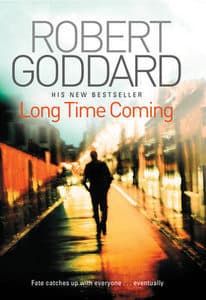
Robert Goddard (2010)
Genre
Thriller / Historical Fiction / Mystery
Reading Time
650 min
Key Themes
See below
Sign in to track this book
Decades after vanishing, a supposedly dead uncle resurfaces from an Irish prison, ensnaring his nephew and a beautiful American heiress in a perilous quest for lost Picasso paintings and the truth behind a World War II secret that powerful forces will kill to keep buried.
Stephen Swan, an ordinary Englishman, is shocked to learn his uncle, Eldritch Swan, whom the family believed died in the London Blitz, is alive. Eldritch has just been released from an Irish prison after 38 years. Eldritch, now an old man, contacts Stephen, who is initially skeptical. Eldritch explains his long imprisonment came from a false charge and begins to tell a complex story about his past in Antwerp before World War II. Stephen is drawn into his uncle's account, which hints at stolen art, secret dealings, and a hidden history Eldritch wants to uncover, or perhaps use.
Eldritch's story takes Stephen back to 1939 Antwerp, where a younger Eldritch worked for Max Lazard, a wealthy Jewish diamond merchant. Lazard, expecting the Nazi invasion, was arranging to secure his assets, including a significant collection of Picasso paintings. Eldritch describes the tension and fear in the city as war approached, and his role in Lazard's affairs, which gave him close knowledge of the family's valuables and escape plans. This historical setting establishes the initial mystery around the Picassos and sets the stage for the long-unsolved puzzle Eldritch now wants to resolve, or profit from.
As the Germans advanced, Eldritch was to help Max Lazard's family escape Antwerp and secure their valuables. Amid the chaos of the evacuation, the Picasso paintings mysteriously vanished. Eldritch claims he was betrayed and framed for the paintings' theft and Lazard's murder, leading to his arrest and decades-long imprisonment in Ireland. He maintains his innocence, portraying himself as a victim of circumstance and a conspiracy. Stephen struggles to accept this version of events, given his uncle's charming but manipulative nature, questioning Eldritch's every word.
Stephen meets Rachel Banner, a beautiful and determined American woman. Rachel reveals she is a descendant of Max Lazard and believes she is the rightful heir to the missing Picasso paintings. She has been investigating their disappearance independently and is convinced her family was wronged. Rachel seeks both the paintings' return and justice for her ancestors. Her arrival adds a new dynamic, as Stephen finds himself caught between his enigmatic uncle and this compelling woman, whose interests seem to align with Eldritch's quest, but whose motivations are clearly different.
As Stephen, Eldritch, and Rachel investigate the Picasso mystery, they quickly realize powerful and dangerous forces are still active, determined to keep the truth hidden. They face intimidation, surveillance, and direct threats, suggesting the original conspiracy went far beyond simple wartime theft. The trio finds themselves in dangerous situations, indicating the secret behind the paintings' disappearance is linked to something far more sinister than just money. This increase in danger forces Stephen to confront the reality that his uncle’s story, however exaggerated, has a dangerous core of truth.
Following Eldritch's fragmented memories and Rachel's careful research, the trio travels across Europe, visiting sites connected to Max Lazard and the wartime events. They uncover old documents, interview hesitant witnesses, and assemble a clearer picture of the 1939 events. Each discovery brings them closer to the truth but also puts them in greater danger. Stephen feels increasingly drawn to Rachel, while also growing more wary of Eldritch's changing story and manipulative ways, unsure of his uncle's ultimate goals.
The investigation uncovers a shocking truth: the Picasso paintings were not just stolen art, but a cover for a much larger, more harmful operation involving the smuggling of gold and other valuable assets by high-ranking individuals connected to the Nazi regime, aided by corrupt officials. Max Lazard, unknowingly or unwillingly, became involved in this scheme. The paintings' theft was a diversion, and Eldritch's framing was a way to silence a potential witness and protect the true perpetrators of this vast wartime criminal enterprise. This revelation changes everything, turning a simple art theft into a complex international conspiracy.
Through their dangerous journey, Stephen, Eldritch, and Rachel identify the mastermind behind the wartime conspiracy – a figure who, against all odds, is still alive and holds significant power. This individual has carefully covered their tracks for decades, ensuring the truth about the gold smuggling and Eldritch's framing remained hidden. The revelation of this person's identity is a shocking turning point, as it becomes clear their adversary is not a ghost from the past, but a real and present danger, capable of extreme measures to protect their secrets.
The pursuit ends in a tense and dangerous confrontation with the mastermind. Stephen, Eldritch, and Rachel find themselves fighting for their lives, as the conspirator and their remaining associates try to eliminate them and permanently bury the truth. The encounter is full of peril, testing their resourcefulness and courage. The long-held secrets are about to be exposed, but at a potentially deadly cost. During this confrontation, Eldritch’s true nature and motives are fully tested, revealing his ultimate loyalty, or lack thereof.
After the confrontation, the immediate danger lessens, but justice remains elusive. While some truths are exposed and certain perpetrators are identified, the full extent of the wartime conspiracy and its decades-long cover-up may never be completely resolved. The fate of the Picassos, and the gold they hid, might also remain uncertain. Stephen is left to deal with his uncle's complex legacy, the sacrifices made, and the bittersweet reality that justice, especially after so long, often involves compromises and leaves lasting scars. His relationship with Rachel is also deeply changed by the shared ordeal.
The Protagonist
Stephen transforms from a detached observer into an active participant, finding purpose and love amidst peril, and confronting the darker aspects of his family's history.
The Antagonist/Supporting
Eldritch's journey is one of revealing hidden truths and confronting his past, blurring the lines between victim and perpetrator, ultimately seeking a form of redemption or vindication.
The Supporting
Rachel evolves from an independent investigator to a trusting partner, finding both resolution for her family's past and a new future with Stephen.
The Mentioned
Not applicable, as he is a historical figure within the narrative.
The Antagonist
Their arc is one of exposure and potential downfall, as their long-held secrets are finally threatened by Stephen, Eldritch, and Rachel.
The Mentioned
Not applicable, as they are a collective entity representing a system.
The Mentioned
Not applicable, as they are historical figures within the narrative.
The novel constantly questions what 'truth' is and if true justice can ever be achieved, especially after decades. Eldritch's story is manipulative, Rachel's pursuit is driven by family legacy, and Stephen struggles to tell reality from fiction. The overall conspiracy shows that justice was deliberately blocked for powerful individuals. The resolution often feels incomplete, leaving characters and readers to understand that some wrongs can never be fully corrected, and 'justice' is often an illusion in a corrupt world, as Eldritch's long and unjust imprisonment highlights.
“But in this tale of revenge and redemption, justice is the ultimate illusion.”
The events of World War II, specifically the Nazi invasion of Belgium and the flight of refugees, cast a long, dark shadow over the present. The missing Picasso paintings and the underlying conspiracy are direct results of wartime chaos and greed. The novel shows how past atrocities and hidden secrets continue to influence lives and cause dangerous conflicts nearly forty years later. The characters constantly uncover fragments of a traumatic past that refuses to stay buried, showing how history shapes individual destinies and national stories.
“Some secrets, once buried, refuse to stay down, clawing their way back to the surface decades later.”
Deception is a central part of the story, mainly shown by Eldritch Swan, whose charming but unreliable storytelling forces Stephen and the reader to constantly question his motives and the truth of his claims. The entire plot is built on layers of deception, from Eldritch's initial framing to the elaborate cover-up of the real wartime conspiracy. Characters often manipulate one another for personal gain or to protect their secrets, creating a web of mistrust Stephen must navigate, making it hard to know who is truly trustworthy.
“Eldritch had a way of weaving a story that made you want to believe him, even when every instinct screamed otherwise.”
The characters are deeply connected to their identities and the legacies they inherit or try to reclaim. Rachel Banner is driven by her family's legacy and the desire to honor her ancestors by recovering their lost art. Eldritch's identity has been shaped by his long imprisonment and his past in Antwerp, and he seeks to reclaim his name or at least a significant part of his lost life. Stephen, too, finds his own identity challenged and redefined as he becomes involved in his uncle's dangerous past, discovering a hidden family history that changes his perception of himself and his lineage.
“He carried the weight of a past he hadn't lived, a legacy of betrayal and loss that now, inexplicably, was his own.”
Eldritch Swan's shifting and manipulative recounting of past events.
Eldritch Swan serves as a prime example of an unreliable narrator. His charm, evasiveness, and self-serving nature mean that Stephen, and by extension the reader, can never be entirely sure if he is telling the full truth, distorting facts, or outright fabricating elements of his story. This device creates suspense and forces constant re-evaluation of the plot, as new information emerges that contradicts or complicates Eldritch's earlier accounts. It highlights the theme of the elusive nature of truth and adds layers of mystery to the historical events.
The valuable Picasso paintings that drive the initial search and conceal a deeper secret.
The Picasso paintings initially function as a classic MacGuffin. While highly valuable and the ostensible focus of the search for Rachel and Eldritch, their true significance lies not in their artistic or monetary value, but in what they represent and what they conceal. They are the catalyst that brings the characters together and propels the plot, but the real stakes quickly become far greater than just the art itself. They are a cover for a much larger, darker wartime conspiracy involving hidden gold and illicit dealings, making them a crucial but ultimately secondary objective.
Eldritch's detailed recollections of his time in Antwerp during WWII.
The novel heavily relies on Eldritch's detailed, albeit potentially embellished, flashbacks to the period leading up to and during the Nazi invasion of Antwerp. These oral histories provide the historical context for the mystery, immersing the reader in the tense atmosphere of 1939 and detailing Eldritch's interactions with Max Lazard and the events surrounding the disappearance of the Picassos. This device allows the past to unfold gradually, piecing together fragments of memory and experience, often contrasted with later discovered evidence.
The sudden reappearance of Eldritch Swan, believed dead for decades.
The sudden reappearance of Eldritch Swan, after nearly four decades of being presumed dead, serves as the primary inciting incident. This device immediately injects mystery and intrigue into Stephen's life, forcing him to confront a hidden family history. It creates a powerful emotional hook and sets the stage for the unraveling of a decades-old secret, as Eldritch's return directly links the present-day characters to the historical events that drive the plot.
“The past, it seemed, was never really past. It just lay in wait, like a sleeping dog, ready to wake and bite when you least expected it.”
— Reflecting on the enduring influence of past events on the present.
“There are some secrets that refuse to stay buried, no matter how deep the grave.”
— Pondering the inevitability of hidden truths coming to light.
“He had learned long ago that the most dangerous lies were often those closest to the truth.”
— Observing the deceptive nature of carefully constructed falsehoods.
“Justice, he thought, was a fickle mistress, sometimes blind, sometimes seeing too much.”
— Considering the unpredictable and often imperfect nature of justice.
“Every decision, however small, cast a ripple across the waters of time, altering the currents in ways one could never foresee.”
— Musing on the far-reaching consequences of choices.
“The darkness within people, he knew, was often more terrifying than any shadow that fell from the sky.”
— Reflecting on human nature and the capacity for evil.
“Hope was a fragile thing, easily shattered, but sometimes, just sometimes, it was all you had left.”
— Clinging to a sense of optimism in desperate circumstances.
“History was not just a collection of facts; it was a living, breathing entity, capable of reaching out and grabbing you.”
— Emphasizing the palpable and active presence of historical events.
“He often wondered if true peace was merely the absence of immediate danger, or something far more profound.”
— Questioning the nature of peace amidst ongoing threats.
“Trust, once broken, was like a shattered mirror; you could try to piece it back together, but the cracks would always show.”
— Lamenting the irreparable damage caused by betrayal.
“The truth, like a river, always found a way to the sea, no matter how many dams were built against it.”
— Expressing confidence in the ultimate triumph of truth.
“Sometimes the greatest courage wasn't in fighting, but in enduring.”
— Reflecting on different forms of bravery and resilience.
“He had learned that the most convincing disguises were often not clothes or masks, but carefully crafted personas.”
— Observing the psychological aspects of deception and identity.
“The weight of what might have been could be heavier than the burden of what was.”
— Contemplating the psychological impact of unfulfilled possibilities.
Ready to see how well you understood this book? Take our interactive quiz with 10 questions.

Biography coming soon.







