BookBrief
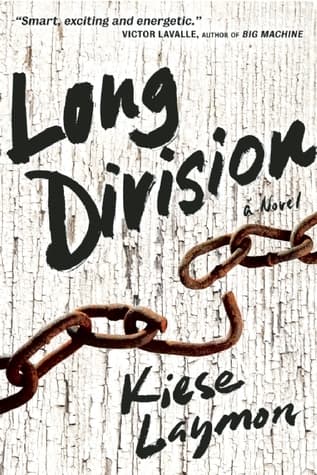
Long Division cover
Archivist's Choice

Long Division

Kiese Laymon (2013)

Genre

Fantasy / Science Fiction / Young Adult

Reading Time

9 hours 12 min

Key Themes

See below

Track Your Reading

Sign in to track this book

A YouTube-famous teen in post-Katrina Mississippi unravels a time-bending mystery involving a disappearing girl, a stolen laptop, and a cryptic book that links his present to alternate versions of himself battling the Klan in the past.

Synopsis

In 2013, 14-year-old Citoyen "City" Coldson becomes a viral sensation after a meltdown on a national quiz show. Sent to stay with his grandmother in rural Melahatchie, Mississippi, he finds himself involved in the local mystery of a missing girl, Baize Shephard. City receives a peculiar, unauthored book titled "Long Division," which mirrors his own name and situation, but is set in 1985. The book's story unfolds as a parallel: in 1985, another City Coldson and his friend Shalaya Crump discover a shed that allows them to travel through time. They meet an orphaned teenage rapper named Baize Shephard in the future, stealing her laptop and cellphone before journeying further back to 1964 to help a time-traveler protect his family from the Klan. The two interwoven stories of the 2013 City and the 1985 City, along with Baize Shephard, meet in the mysterious shed behind City's grandmother's house. This reveals the truth behind Baize's disappearance and explores identity, authorship, and the repeating nature of time and storytelling.
Reading time
9 hours 12 min
Difficulty
Medium
Pacing
Variable
Mood
Thought-provoking, Humorous, Lacerating, Wise, Surreal
✓ Read this if...
You enjoy experimental narratives, metafiction, and stories that blend coming-of-age with elements of fantasy and social commentary, particularly concerning race and history in the American South.
✗ Skip this if...
You prefer linear plots, clear-cut genre boundaries, or stories without significant ambiguity and an unreliable narrator.

Plot Summary

The Meltdown and the Book

In 2013, fourteen-year-old Citoyen 'City' Coldson has a spectacular meltdown during the nationally televised 'Can You Use That Word in a Sentence?' quiz show. His bizarre answers go viral, making him an overnight YouTube sensation. Because of his behavior, City is sent to stay with his grandmother, Lahoma, in the small, coastal Mississippi town of Melahatchie. Before he leaves, his mother gives him a peculiar, authorless book titled 'Long Division.' He soon discovers that the book's main character shares his name, 'City Coldson,' and that the story in the book is set in 1985, hinting at a connection that will unfold as he reads.

1985: Meeting Shalaya and Discovering the Shed

The 'Long Division' story, set in 1985, introduces another City Coldson. This City, along with his crush, Shalaya Crump, explores a peculiar shed in the woods of Melahatchie. This shed, described as being 'made of mismatched wood and smelling like old rain and new dirt,' can transport them. Their first trip into the shed leads them to strange objects and sensations, hinting at its true nature as a portal. They become curious and begin to experiment with the shed's temporal powers, not yet fully understanding what they have found.

The Disappearance of Baize Shephard

Upon his arrival in Melahatchie, the 2013 City learns that a local girl named Baize Shephard has recently disappeared. Her absence casts a shadow over the town, and residents frequently mention her name. This missing person case immediately connects with City's own story, as he begins to see parallels between the real-life mystery and the events in the 'Long Division' book. The town's quiet conversations and the police create tension, making City feel like he has stepped into a story even before he fully understands his role.

Stolen Tech and a Trip to the Future

Continuing their explorations in the shed, the 1985 City and Shalaya successfully travel into the future, landing in 2013. There, they meet an orphaned teenage rapper named Baize Shephard, who has advanced technology: a laptop and a cellphone. Driven by curiosity and a desire for these futuristic tools, the 1985 City and Shalaya steal the devices from Baize. This theft is a key moment, directly linking the two stories and establishing the initial interaction between the past and future versions of the characters, though Baize does not know their temporal origins.

Meeting the Time-Traveler from 1964

After their trip to 2013, the 1985 City and Shalaya use the shed again, this time traveling further into the past, to 1964. There, they meet a man named La-Shay. La-Shay reveals himself to be a fellow time-traveler, though with a more desperate mission. He explains that he needs their help to protect his family from the Ku Klux Klan, which is actively terrorizing the Black community in their region. The stolen laptop and cellphone, initially taken for personal gain, now become tools in a struggle for survival against racial violence.

The Book's Prophecies and City's Growing Unease

As the 2013 City reads 'Long Division,' he becomes increasingly disturbed by the parallels between the book's story and his own life. The characters, locations, and even specific events described in the book begin to appear in his reality in Melahatchie. This blurring of lines between fiction and reality makes City question his sanity and the nature of the book itself. He considers that the book might be more than just a story, perhaps a guide or even a premonition of his own destiny, increasing his anxiety about Baize's disappearance.

The Search for Baize and the Shed's Allure

Driven by the events in 'Long Division' and the real-life mystery of Baize Shephard's disappearance, the 2013 City feels drawn to the mysterious shed behind his grandmother's house. He senses that the shed, so central to the 1985 City's adventures, holds the key to understanding Baize's fate. He begins to investigate it, putting together clues from the book and his surroundings, convinced that the shed is not just a place but a connection point of time and information, directly connected to the missing girl.

Unraveling the Truth of Baize's Disappearance

Inside the shed, the 2013 City uncovers the truth about Baize Shephard's disappearance. He realizes that the Baize Shephard from 2013 is the same Baize Shephard who met the 1985 City and Shalaya. Baize, after having her laptop and cellphone stolen, also discovered the shed's time-traveling capabilities. Desperate to get her stolen property back, she used the shed to follow the 1985 City and Shalaya into the past, accidentally becoming trapped in a different time period. The shed, therefore, is not just a portal but a place where timelines meet and separate.

The Convergence of Timelines

The two interwoven stories of City Coldson, one in 2013 and the other in 1985 (and 1964), finally meet within the enigmatic shed. The 2013 City understands that the 'Long Division' book is not just a fictional account but a historical record, written by a future version of himself or someone connected to these events. The shed acts as the central point where the past, present, and future collide, revealing that the actions of one City directly influence the experiences of the other, creating a complex, repeating story of fate and consequence.

The Cycle of Authorship and Identity

The 2013 City realizes that the 'Long Division' book is not merely a story he is reading, but a story he is actively living and, perhaps, even writing. He understands that the authorless book is a product of the time-traveling experiences, possibly authored by a future version of himself or a collection of voices from across time. This understanding forces him to confront his own identity and destiny, acknowledging that his actions now will shape the narrative for others, mirroring the repeating nature of time and storytelling within the book.

Protecting the Future by Revisiting the Past

The ultimate goal for the time-traveling characters, including the 1985 City, Shalaya, and La-Shay, becomes the protection of marginalized communities from historical and ongoing violence. The stolen laptop and cellphone, initially objects of desire, are used to document and expose the injustices faced by Black individuals, particularly the threats posed by the Klan in 1964. This mission goes beyond personal gain, highlighting a collective effort to use information and foresight to safeguard lives and preserve history against erasure.

The Lasting Impact of Time and Storytelling

The novel concludes by emphasizing the repeating nature of history, the lasting impact of racial injustice, and the power of storytelling. The shed remains a gateway, suggesting that the journey through time is continuous and that the characters' stories are always intertwined. City Coldson, both the 2013 and 1985 versions, gains a deeper understanding of his heritage, his community, and his place within a larger history. The 'Long Division' book itself is a symbol of this ongoing, collective memory and the stories that must be told to ensure a more just future.

Principal Figures

Citoyen "City" Coldson (2013)

The Protagonist

City evolves from a bewildered bystand to an active participant in unraveling the intricate web of time travel and historical injustices, ultimately embracing his connection to the past and future.

Citoyen "City" Coldson (1985)

The Protagonist (within 'Long Division')

From a curious boy who discovers time travel to a courageous young man who actively fights against racial injustice, his journey highlights a growth in moral responsibility.

Shalaya Crump

The Supporting

Shalaya develops from a curious companion to a determined and morally conscious participant in the fight against historical injustice, demonstrating leadership and empathy.

Baize Shephard

The Supporting

Baize's arc is less about personal development and more about her function as a pivotal plot device, whose actions and fate drive the convergence of the two timelines.

Lahoma Coldson

The Supporting

Lahoma largely remains a steadfast anchor for City, providing a consistent source of comfort and a connection to his roots.

La-Shay

The Supporting

La-Shay's arc is one of determined struggle and hope, as he seeks to alter his community's tragic past through the help of future generations.

The Quiz Show Announcer

The Mentioned

N/A

Themes & Insights

The Cyclical Nature of History and Trauma

The novel shows how history, especially racial injustice and trauma, is not linear but repeats across generations. The constant movement between 1964, 1985, and 2013 demonstrates that struggles against systemic racism, violence, and the fight for liberation continue. The characters' journeys through time reveal that the past is never truly gone, and understanding it is important for shaping a different future. For example, the Klan's violence in 1964 directly leads to continued racial tensions and the need for documentation in later eras.

History ain't just the past, son. It's the future too, if you ain't careful.

Lahoma Coldson

The Power of Storytelling and Authorship

Storytelling is a central theme, explored through the 'Long Division' book itself, which blurs the lines between fiction, memoir, and prophecy. The novel questions who can tell a story, how stories are made, and their ability to shape reality. The 2013 City's realization that he is not just reading a book but possibly living and even writing it, highlights the power of narrative. Sharing and preserving stories, whether through a mysterious book or a stolen cellphone, becomes a form of resistance against historical erasure and a way to connect different experiences across time. The ambiguous authorship of 'Long Division' suggests that stories are collective and change.

A story ain't just words, City. It's a key. It can unlock things you ain't even know was locked.

Narrator

Identity and Self-Discovery

Both versions of City Coldson deal with their identities as they navigate complex realities and time shifts. The 2013 City's journey from an internet celebrity to a detective of time and history forces him to confront his place in a larger lineage. The 1985 City's transformation from a curious teenager to an active participant in the fight against injustice shapes his understanding of who he is. The shared name 'City Coldson' across different eras shows the fluidity and interconnectedness of identity, suggesting that individual selves are part of a larger, evolving story. Their experiences define their understanding of self, community, and purpose.

Sometimes you gotta get lost to find out who you really are, and who you ain't.

Citoyen "City" Coldson (1985)

Memory, Erasure, and Documentation

The novel explores the importance of memory and the dangers of historical erasure, especially concerning the experiences of Black communities. The fight against the Klan in 1964 emphasizes the need to document and remember atrocities to prevent their repetition. The stolen laptop and cellphone, initially objects of desire, become tools for recording and preserving events that might otherwise be forgotten or suppressed. Baize Shephard's rapping and the 'Long Division' book itself serve as forms of documentation, ensuring that voices from the past and present are heard and remembered, challenging narratives that try to erase marginalized histories.

They try to burn the records, but they can't burn the memory. Not if you keep telling it.

La-Shay

Plot Devices & Literary Techniques

The Time-Traveling Shed

A mysterious structure capable of transporting individuals through time.

The shed is the central magical realism element and the primary plot device driving the narrative. It functions as a literal and metaphorical portal, allowing characters to traverse different historical periods (1964, 1985, 2013). Its existence is unexplained, adding to its mystical quality. The shed's ability to transport people through time is what links the two City Coldson narratives and facilitates the convergence of past, present, and future events, making it the linchpin of the entire plot and the source of all temporal conflicts and revelations.

The 'Long Division' Book

An authorless book that mirrors and influences the protagonist's reality.

The 'Long Division' book serves as a meta-narrative device. For the 2013 City, it's a story he reads that increasingly reflects his own life, blurring the lines between fiction and reality. For the reader, it's a novel within a novel, creating two interwoven timelines. Its ambiguous authorship and prophetic qualities suggest that stories can transcend time and space, acting as both historical records and blueprints for future events. The book is the primary vehicle through which the reader (and the 2013 City) accesses the 1985 narrative.

Stolen Technology (Laptop and Cellphone)

Futuristic objects that become crucial tools for documenting and communicating across time.

The laptop and cellphone, stolen from 2013 Baize Shephard by the 1985 City and Shalaya, initially represent a clash of eras and a youthful desire for novelty. However, they quickly evolve into vital plot devices. They provide a means for characters in the past to record events, gather information, and potentially communicate or influence future outcomes, particularly in the context of fighting the Klan in 1964. These objects highlight the power of information and technology to bridge temporal gaps and serve as instruments of social justice.

The Quiz Show Meltdown

A public spectacle that launches the 2013 City into an unexpected journey.

The quiz show meltdown is the inciting incident for the 2013 City's storyline. It immediately establishes his character as unusual and sets in motion the events that lead to his exile to Melahatchie and his encounter with the 'Long Division' book. This device serves to remove City from his familiar environment, thrusting him into the unknown and allowing the central mysteries of the plot to unfold. It also acts as a commentary on celebrity, media, and the superficiality of public perception.

Critical analysis

Notable Quotes

I’m sure you know how it is, living in a place where most of the people you meet want to remind you that you’re not from there, and most of the people who are from there want to remind you that you’re not really from there either.

Main character, City, reflects on his sense of belonging (or lack thereof) in Mississippi.

The hardest thing about loving someone, I think, is that you have to love them through all their versions, and sometimes their versions don't make sense.

City contemplating the complexities of love and personal change within relationships.

We are a people who have always been trying to get home, even when we are home.

A reflection on the enduring search for true belonging and peace among Black Americans.

Time ain't really real, son. It's just a way we make sense of the things that happen to us.

An elder character imparting wisdom about the nature of time to City.

Some stories are so powerful they can bend time.

City realizing the profound impact and influence of narrative.

You can't really escape Mississippi, even when you leave it. It's in your blood, in your bones.

A character discussing the inescapable influence of one's origins, particularly the American South.

Maybe the past isn't something you escape. Maybe it's something you carry.

City grappling with his personal history and the collective past.

We all got to find our own way to live with the ghosts.

A character acknowledging the presence of past traumas and figures in one's life.

The truth is a hard thing to look at sometimes, especially when it's about yourself.

City facing difficult self-realizations and uncomfortable truths.

Ain't no such thing as being too real, only not real enough.

A character encouraging authenticity and honesty in expression.

Sometimes the only way to get where you're going is to go back to where you started.

A paradoxical statement about the journey of life and self-discovery.

Every time we tell a story, we're trying to figure out how to live.

Emphasizing the role of narrative in understanding and navigating life.

Our lives are just a bunch of stories we tell ourselves, over and over, until they become real.

A reflection on the subjective nature of reality and personal narrative.

We were always trying to build something beautiful in the middle of a mess.

A poignant observation about resilience and creativity in challenging circumstances.

Quiz

Test Your Knowledge

Ready to see how well you understood this book? Take our interactive quiz with 10 questions.

10
Questions
~5
Minutes
?
Best Score

Key Questions (FAQ)

The novel 'Long Division' follows two interwoven narratives, one in 2013 with 14-year-old Citoyen 'City' Coldson, and another in 1985 with a different City Coldson. The 2013 City reads a mysterious book, also titled 'Long Division,' which details the 1985 City's adventures in time travel. These two narratives converge as the 2013 City uncovers the truth behind Baize Shephard's disappearance, linking his present reality to the events depicted in the book.

About the author






