“Being a cop isn't about being right. It's about being effective. And sometimes the most effective thing you can do is admit you might be wrong.”
— Shane Hadl discussing police work with Chris Shane.


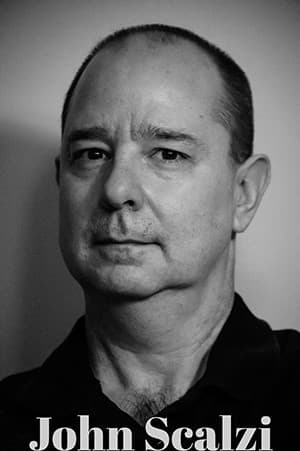
John Scalzi (2014)
Genre
Thriller / Mystery / Science Fiction
Reading Time
6-7 hours
Key Themes
See below
Sign in to track this book
In a future where a virus leaves millions 'locked in' their own bodies, an FBI agent, who is himself locked in and uses an 'integrator' body, uncovers a conspiracy larger than a single murder, exploring the dark side of a new human culture.
Rookie FBI Agent Chris Shane, a Haden who uses a Threep (a synthetic body) for work, is assigned to a murder case with veteran Agent Leslie Vann. The victim is Daniel Arquette, a wealthy Haden client who was using an Integrator named Tony Talbott at the time of his death at the Watergate Hotel. The initial investigation shows Arquette was stabbed, and Talbott, the Integrator, has no memory of the event, claiming he was 'locked out' of his own body. The case is complex because if Arquette committed suicide or was murdered by another Haden using Talbott's body, the legal issues are new. Shane and Vann must deal with the unique challenges of Haden society, including Threeps and the idea of 'locking in' to another person's body.
Chris Shane, having contracted Haden's Syndrome as a child, offers a unique view on the investigation. He explains to Vann the details of Haden life: Threeps for movement and interaction, the virtual world known as the Agora where Hadens live and work, and Integrators who lend their bodies to Hadens for direct physical interaction. Shane's experience with his Threep, 'Hilary,' and his family's wealth, which gave him access to advanced Haden technology, shows the layered nature of Haden society and the potential for exploitation. This background helps understand the motives and methods behind Arquette's murder.
As Shane and Vann investigate Daniel Arquette's past, they find he was a wealthy and influential Haden, deeply involved in a venture capital firm, Arquette Capital. His business dealings suggest aggressive investments, especially in companies developing Haden-related technologies. They interview Arquette's business partners, including his ex-wife and fellow Haden, Ann-Marie Arquette, and his former associate, Benjamin 'Benny' Cho. The team begins to suspect that Arquette's murder is not random but connected to his financial activities and the competitive world of Haden business. The focus shifts to who gained or lost from Arquette's death.
Shane and Vann investigate Tony Talbott's Integrator network, a group of people who share their bodies with Hadens for a fee. They learn about the financial difficulties many Integrators face, often relying on income from their Haden clients. Talbott himself is under pressure, and his claim of being 'locked out' of his body during the murder is important but hard to confirm. The agents also consider if Arquette was involved in illegal activities within the Haden community, such as manipulating stock prices or exploiting other Hadens. The investigation shows that the lines between Haden and Integrator, and between legal and illegal, are often unclear in this new society.
During the investigation, a new and aggressive strain of Haden's Syndrome, 'Haden's 2.0,' is discovered. This new virus is more contagious and potent than the original, posing a major threat to Hadens and the general population. The discovery complicates the murder investigation, as the motive might relate to controlling information or a cure for this new pandemic. Shane and Vann realize that Arquette's death might be linked to an attempt to suppress or exploit this critical medical development. The investigation's stakes grow, moving beyond a single murder to a global health crisis.
The agents trace the origins of Haden's 2.0 and the potential cure to Dr. Victoria Chaney, a brilliant but private scientist. They find that Dr. Chaney had been working on a new therapy that could cure Haden's Syndrome entirely, not just manage symptoms. Her research, however, was being suppressed or manipulated by powerful corporate interests, including Arquette Capital, who stood to lose large profits if a cure became widely available. Arquette's murder now seems to be a struggle for control over Dr. Chaney's research and the financial and societal power it represents. The ethical issues of controlling such a cure are significant.
Shane, using his Haden status and Threep, explores the Agora, the virtual reality network where Hadens spend much of their lives. He searches the digital world for clues hidden within Arquette's online presence or the communications of other Hadens involved. In the Agora, Hadens move freely, interact, and access information in ways impossible in the physical world. This digital investigation is crucial, as Shane uncovers encrypted files and hidden messages that show the true extent of the conspiracy, including who was trying to profit from Haden's 2.0 and suppress Dr. Chaney's cure. The Agora becomes a key place for gathering information.
Shane and Vann gather the evidence, revealing a conspiracy by a shadowy organization, later identified as a part of Arquette Capital led by Ann-Marie Arquette and Benny Cho. Their plan was to weaponize Haden's 2.0, releasing it to create a new wave of Hadens, increasing demand for their Haden-related technologies and consolidating their power. Daniel Arquette was murdered because he found this plot and tried to expose it or profit from it. The conspiracy extends to manipulating the stock market and controlling the story around Haden's Syndrome, turning a global tragedy into a financial opportunity.
The agents confront Ann-Marie Arquette and Benny Cho, who try to cover their tracks and escape. A tense standoff follows, involving both physical and digital actions within the Agora. Shane, with his understanding of Haden technology, helps expose their digital trail and gather clear evidence. The conspirators are caught, and Dr. Chaney's research is secured and made public. The truth about Daniel Arquette's murder and the plot to exploit Haden's 2.0 is revealed, preventing a global disaster and bringing justice to the Haden community. Tony Talbott is cleared of suspicion, his 'lock out' explained by the conspirators' actions.
Afterward, the world faces the implications of Dr. Chaney's cure. A potential cure for Haden's Syndrome raises complex ethical and societal questions about identity, the value of Haden life, and the future of the Haden community. Chris Shane continues his work as an FBI agent, now with a deeper understanding of Haden society's complexities and weaknesses. The case, though solved, leaves a lasting impact on him and the world, showing the ongoing challenges of integrating new technologies and diverse populations, and the constant threat of those who would exploit vulnerability for power and profit. The future of Hadens, Integrators, and humanity remains uncertain.
The Protagonist
Chris evolves from a rookie agent relying on his partner to a confident, indispensable investigator whose unique perspective and abilities prove crucial to solving a complex, world-altering crime.
The Supporting
Vann moves from skepticism about Hadens and their integration into society to a deep understanding and respect for Shane and the Haden community, broadening her worldview.
The Victim
His character is explored posthumously, revealing his double-dealings and ultimately his attempt to expose a larger conspiracy, leading to his demise.
The Supporting
Tony is initially a suspected murderer but is eventually exonerated, highlighting the ethical complexities of Integrator relationships.
The Antagonist
Ann-Marie's character is revealed as a cunning and ruthless antagonist who seeks to exploit a global health crisis for immense profit, ultimately being exposed and brought to justice.
The Antagonist
Benny's arc reveals him as a capable and ruthless enforcer of Ann-Marie's plans, culminating in his capture alongside her.
The Supporting
Dr. Chaney's character moves from an unwitting target of corporate greed to a pivotal figure whose scientific breakthrough is ultimately revealed to the world, offering hope for a cure.
The Supporting
Hilary remains a constant, reliable extension of Chris, symbolizing the potential for Hadens to thrive in the physical world.
The novel explores how identity is shaped by one's physical form and how it changes when that form is compromised or replaced. Chris Shane, a Haden, experiences the world through a synthetic body (Threep) and sometimes through an Integrator, raising questions about where his 'self' truly is. The idea of 'locking in' to another's body challenges traditional ideas of self and control. This theme is clear when Tony Talbott is 'locked out' of his own body during the murder, blurring the lines of responsibility and presence. The Agora, a purely digital space, further complicates the idea of embodiment and self.
“My body is a machine. My identity is me.”
The story looks at how a major societal change, like Haden's Syndrome, creates new ways for exploitation and power consolidation. Hadens, especially wealthy ones like Daniel Arquette, have great influence, while Integrators like Tony Talbott are often financially vulnerable. The central conspiracy, involving Ann-Marie Arquette and Benny Cho, is driven by the desire to profit from and control the new Haden's 2.0 virus, showing how human suffering can become a commodity. The struggle over Dr. Chaney's cure highlights the power held by those who control critical resources and information.
“Money always finds a way to move, and with it, power.”
The novel examines the challenges and possibilities of empathy and human connection in a world where physical interaction is often indirect. Leslie Vann's initial discomfort with Chris Shane's Threep changes into a real understanding and partnership, showing how empathy can bridge large divides. The relationship between Hadens and Integrators, though often a business deal, also requires trust and intimacy, raising questions about personal space and shared experience. The virtual world of the Agora also allows for new connections, but also potential for isolation.
“It's not about the body you're in. It's about the person who's in it.”
Scalzi explores the ethical problems posed by advanced technology and medical discoveries. Threeps and Integrators raise questions about body autonomy, legal responsibility, and the definition of life. Dr. Chaney's cure for Haden's Syndrome, while offering great hope, also creates a moral dilemma for those who have built their lives and fortunes around the existing Haden economy. The weaponization of Haden's 2.0 by the conspirators represents the darkest potential of science, highlighting the need for ethical oversight and moral responsibility in innovation.
“Science gives us power. Ethics tells us how to use it.”
A neurological condition that leaves victims fully conscious but unable to move or respond.
Haden's Syndrome is the central premise of the novel, a highly contagious virus that 'locks in' a significant portion of its victims. This condition fundamentally reshapes society, leading to the development of Threeps (synthetic bodies) and Integrators (individuals who lend their bodies to Hadens). Haden's Syndrome creates the unique social, economic, and legal landscape in which the story unfolds, driving the plot's conflicts and character motivations. The discovery of Haden's 2.0 escalates the stakes significantly.
Synthetic bodies used by Hadens to interact with the physical world.
Threeps are sophisticated, human-like synthetic bodies that allow 'locked in' Hadens to experience and interact with the physical world. Chris Shane uses his Threep, 'Hilary,' as his primary means of operation as an FBI agent. Threeps serve as a crucial plot device by enabling Hadens to participate actively in society, making the investigation possible, and also by highlighting the themes of identity, embodiment, and accessibility. Their technological nature also provides unique vulnerabilities and capabilities that are exploited throughout the story.
Individuals who lend their bodies to Hadens, allowing the Hadens to 'lock in' and control them.
Integrators are a class of people who, for a fee, allow Hadens to 'lock in' and temporarily control their bodies. Tony Talbott is a prime example, making him central to the initial murder investigation. Integrators are a critical plot device as they create a unique form of human-to-human interaction and dependence, raising complex legal and ethical questions about consent, responsibility, and the boundaries of self. Their role is pivotal in understanding how Daniel Arquette was murdered and how the conspirators might have manipulated events.
A global virtual reality network where Hadens can fully live and interact.
The Agora is a vast, interconnected virtual reality space that serves as a primary social and professional environment for Hadens. It allows them to interact, work, and even form relationships without the need for physical bodies. As a plot device, the Agora provides an alternative investigative landscape for Chris Shane, where he can leverage his Haden abilities to uncover digital evidence, encrypted communications, and hidden online activities related to the conspiracy. It highlights the dual nature of Haden existence – physical through Threeps/Integrators, and entirely digital in the Agora.
A new, highly virulent strain of Haden's Syndrome.
Haden's 2.0 is a newly discovered, more contagious, and potent strain of Haden's Syndrome. This medical development serves as a critical MacGuffin and a major plot driver, elevating the stakes from a single murder to a potential global pandemic. The struggle to control information about and the cure for Haden's 2.0 forms the core of the overarching conspiracy, driving the antagonists' motivations and the urgency of Shane and Vann's investigation. It represents the potential for both catastrophe and immense profit.
“Being a cop isn't about being right. It's about being effective. And sometimes the most effective thing you can do is admit you might be wrong.”
— Shane Hadl discussing police work with Chris Shane.
“The thing about being a locked-in is that you learn very quickly what you can and can't control. And you learn to appreciate the things you can.”
— Chris Shane reflecting on their condition.
“There's a difference between a secret and a lie. A secret is something you keep to yourself. A lie is something you tell to someone else.”
— Chris Shane considering the nature of information.
“You can't solve every problem with a punch. Sometimes you have to use your brain.”
— Shane Hadl advising Chris on detective work.
“The future isn't something you wait for. It's something you make.”
— A general sentiment about the proactive nature of life.
“Every tool is just a tool. It's what you do with it that matters.”
— Discussing the use of Haden's Syndrome technology.
“Justice isn't always about punishment. Sometimes it's about understanding.”
— Chris pondering the resolution of a case.
“The world doesn't care if you're fair. It just is.”
— A pragmatic observation about reality.
“Fear is a powerful motivator. But so is hope.”
— Considering the different drivers of human action.
“It's easy to judge from the outside. It's a lot harder to live it.”
— Regarding the experiences of those with Haden's Syndrome.
“There are no easy answers. Just choices.”
— Chris reflecting on complex moral dilemmas.
“Sometimes the biggest monsters are the ones who look the most normal.”
— A recurring theme in detective work.
“We build our own cages, sometimes. And sometimes we need help finding the key.”
— A metaphorical reflection on self-imposed limitations.
“The past isn't just something that happened. It's something that shapes who you are now.”
— Considering the long-term impact of past events.
Ready to see how well you understood this book? Take our interactive quiz with 10 questions.
Biography coming soon.







