“There are some things in this world that are best left undisturbed, even if they are beautiful.”
— Owen reflects on the mystery of the loch and its creatures.

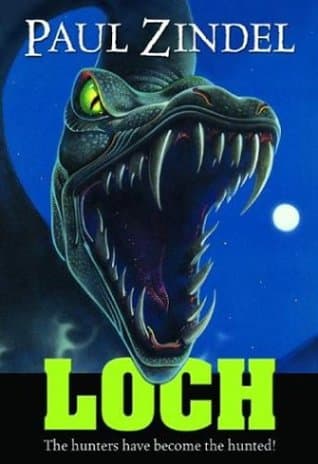
Paul Zindel (1994)
Genre
Thriller / Fantasy / Children's / Science Fiction / Young Adult
Reading Time
228 min
Key Themes
See below
Sign in to track this book
When a scientific expedition to prove lake monsters exist turns deadly, a young boy named Loch discovers the prehistoric beasts are gentle and must risk everything to protect them from a ruthless mogul.
Loch, a sensitive teenager, his younger sister, Zaidee, and their father, Dr. Thompson, arrive at a remote lake community in Vermont. They are part of a scientific expedition funded and led by Anthony Cavenger, a powerful publishing mogul obsessed with proving plesiosaurs exist. Cavenger wants to capture and exploit these creatures for fame and profit. Dr. Thompson, a marine biologist, reluctantly participates, hoping to study the creatures scientifically, but he conflicts with Cavenger's aggressive methods. The initial days are uneventful, marked by tension between Cavenger's crew and the locals, who are wary of the outsiders.
During a routine sonar sweep, the expedition makes a shocking discovery: a massive water beast, later identified as a plesiosaur, erupts from the lake's depths. The sudden appearance surprises everyone. A freelance photographer, eager for a shot, gets too close and is violently attacked and killed by the creature. This horrifying event proves the plesiosaurs exist and fuels Cavenger's determination. He sees the tragedy as a chance to intensify his efforts, mobilizing his crew with more aggressive tactics and equipment, much to Dr. Thompson's dismay. Dr. Thompson advocates for caution and understanding.
Disturbed by the violent encounter and the expedition's escalating aggression, Loch explores the lake alone. He ventures into a secluded cove, away from Cavenger's technology. He discovers a baby plesiosaur, small and seemingly lost. Instead of fear, Loch feels a connection with the creature. He observes its behavior, realizing it is not a mindless monster but a vulnerable, sentient being. This encounter shifts Loch's perspective. He questions the expedition's premise and understands that the adult plesiosaurs might only attack out of fear or to protect their young, not malice.
Loch continues to observe the baby plesiosaur and its interactions with the adult creatures. He sees several instances where the larger plesiosaurs act with clear protective instincts, especially when Cavenger's boats or crew approach too closely to their suspected nesting grounds. The attacks, while terrifying, appear to be defensive responses to perceived threats against their young or their territory, not unprovoked aggression. This reinforces Loch's conviction that the creatures are misunderstood and not the bloodthirsty monsters Cavenger portrays them to be. He tries to tell his father this, but Cavenger's influence and general fear make it difficult for his perspective to be taken seriously.
Unfazed by the dangers, Anthony Cavenger escalates his capture efforts. He brings in more sophisticated and destructive equipment, including powerful nets, tranquilizer guns, and even attempts to use explosives to flush out the creatures. His methods become reckless, risking his own crew, the locals, and his scientific staff. Dr. Thompson objects, warning of ecological damage and increased danger, but Cavenger dismisses his concerns, prioritizing his own agenda. The lake community becomes a battleground between man and nature, with the plesiosaurs becoming more agitated and reactive to the constant harassment.
Zaidee, Loch's younger sister, often wanders off, drawn by curiosity. During one of her explorations near the lake's edge, she encounters a plesiosaur. Initially terrified, she realizes the creature does not intend to harm her. It seems to observe her before retreating. This experience, though frightening, further solidifies the family's growing belief that the plesiosaurs are not evil. Zaidee's innocent perspective adds another layer to understanding that these creatures are capable of more than aggression, hinting at complex intelligence and perhaps even curiosity.
Convinced the plesiosaurs are misunderstood and facing destruction at Cavenger's hands, Loch feels he must act. He realizes that simply observing is no longer enough. He develops a daring plan to protect the creatures, aiming to lead them away from Cavenger's traps and perhaps even out of the lake. This plan involves considerable risk, not just to himself but potentially to his family and friends. He confides in his father and Zaidee, who, despite their fears, are swayed by Loch's conviction and his deep empathy for the creatures.
The climax unfolds as Cavenger prepares to deploy his most lethal capture device. Loch puts his plan into action, using his knowledge of the lake and the plesiosaurs' behavior to lure them away from danger. This involves navigating treacherous waters, evading Cavenger's boats, and directly confronting the enraged mogul. His father, Dr. Thompson, and Zaidee assist him, creating diversions and trying to sabotage Cavenger's efforts. The confrontation is intense and dangerous, with explosions and near-misses. Loch's bravery and quick thinking are tested as he tries to guide the plesiosaurs to safety, risking his life against Cavenger's ruthless pursuit.
Through sheer determination and understanding, Loch guides the plesiosaurs towards a hidden underwater passage or an alternative route out of the immediate danger zone. The escape is fraught with peril, as Cavenger's forces are relentless. An adult plesiosaur, possibly the mother of the baby Loch encountered, makes a protective maneuver, drawing attention away from the escape route, possibly sacrificing itself or sustaining injuries to ensure the safety of the others. Loch sees this act of parental devotion, reinforcing his belief in their intelligence and capacity for care.
Cavenger's expedition is thwarted, his destructive plans foiled by Loch's bravery and his family's efforts. The plesiosaurs, or at least a significant portion of them, escape the immediate threat and retreat into the deeper, undisturbed parts of the lake or perhaps migrate through an unknown passage. While not all mysteries are solved, the creatures are safe, for now. Cavenger is defeated and humiliated, his ruthless pursuit ending in failure. Loch, though exhausted, feels a sense of accomplishment and peace, having risked everything to protect a species that others sought to exploit. The family leaves the lake with a deeper understanding of nature and a bond forged through shared peril.
The Protagonist
Loch transforms from a passive observer into a courageous protector, risking his life to save the plesiosaurs and proving that empathy can overcome fear and greed.
The Supporting
He evolves from a hesitant participant to an active supporter of his son's ethical stance, prioritizing the creatures' well-being over scientific glory.
The Supporting
Zaidee maintains her innocent wonder throughout the ordeal, acting as a catalyst for understanding and a source of unwavering belief in the plesiosaurs' harmlessness.
The Antagonist
Cavenger remains steadfastly villainous, his greed and ambition leading to his ultimate downfall and the thwarting of his plans.
The Supporting
Sampson serves as a consistent voice of caution and traditional wisdom, his insights proving valuable to Loch's understanding.
The Mentioned
They are initially seen as monsters, then as vulnerable beings, and finally as a species deserving of protection, ultimately retreating to safety.
The Supporting
The baby plesiosaur remains a vulnerable symbol, its safety central to Loch's mission, and it ultimately escapes thanks to his efforts.
The Mentioned
They remain largely in the background, their initial wariness evolving into fear and concern as Cavenger's methods escalate.
This central theme explores humanity's destructive impulse to dominate and exploit nature versus nature's inherent value and resilience. Cavenger embodies exploitation, seeing plesiosaurs as objects for profit and fame, leading to reckless endangerment of both the creatures and his crew. Loch, in contrast, represents a harmonious approach, recognizing the creatures' right to exist and their capacity for sentience. The story portrays the consequences of human arrogance through escalating violence and ecological disruption caused by Cavenger's methods, culminating in Loch's struggle to save the creatures from annihilation.
“"He saw the monsters not as living beings, but as a path to glory, a headline, a fortune."”
Empathy drives the narrative. Loch's ability to empathize with the plesiosaurs is crucial. While others see terrifying monsters, Loch observes their behavior, particularly the baby plesiosaur, and realizes they are defensive, not malicious. This empathy allows him to bridge the gap between human and animal, understanding their motivations and devising a plan to save them. The contrast between Loch's compassionate understanding and Cavenger's cold, exploitative view highlights empathy's power as a moral compass and a tool for true connection and preservation.
“"They weren't just beasts; they were a family, protecting their own, just like us."”
Loch's journey is a coming-of-age story about moral courage. He begins as a passive observer, but the escalating threat to the plesiosaurs forces him to confront his fears and act. He stands up against the powerful and dangerous Anthony Cavenger, risking his own life and challenging the adults around him. This transformation from a quiet teenager to a heroic protector demonstrates his moral conviction and the strength found in defending what is right, even when faced with overwhelming opposition. His actions prove that age does not dictate the capacity for bravery and ethical leadership.
“"He knew he couldn't just stand by and watch. Some things were worth fighting for, no matter the cost."”
Anthony Cavenger embodies unchecked greed and exploitation. His relentless pursuit of the plesiosaurs is driven solely by the desire for fame and profit, without regard for the creatures' well-being, the environment, or human lives. His actions lead to violence, destruction, and near-catastrophe. The theme highlights how avarice corrupts judgment and blinds individuals to ethical considerations, ultimately leading to failure and humiliation. The story is a cautionary tale about the destructive consequences when commercial interests override moral responsibility.
“"Cavenger saw only dollar signs and headlines, not the lives he was endangering."”
Initial perception of creatures as dangerous monsters, later revealed to be complex and defensive.
This device is central to the plot, as the plesiosaurs are initially presented as terrifying, dangerous beasts, especially after the photographer's death. However, through Loch's unique perspective and observations, particularly of the baby plesiosaur, their true nature is revealed. They are not inherently evil but act defensively, protecting their young and territory from perceived threats. This subversion of the monster trope generates empathy for the creatures and underscores the theme of understanding versus fear, challenging the audience's initial assumptions.
A character (Loch, Zaidee) whose unbiased view reveals truth.
Loch, and to a lesser extent Zaidee, embody the naive/innocent witness. Unlike the adults, who are swayed by fear, scientific ambition, or greed, Loch approaches the plesiosaurs without preconceived notions. His open-mindedness allows him to observe their behavior objectively and form an empathetic connection. Zaidee's direct, non-threatening encounter further solidifies this perspective. This device highlights how innocence can cut through complexity and reveal simple truths, often providing a moral compass for the narrative and influencing the actions of other characters, like Dr. Thompson.
The unique lake environment and its hidden depths as the setting for discovery and conflict.
The secluded lake itself acts as a major plot device. Its mysterious depths harbor the ancient plesiosaurs, making it the perfect stage for discovery and conflict. The lake's isolation allows the creatures to survive undetected for so long, and its complex underwater geography provides both sanctuary for the plesiosaurs and challenges for Cavenger's expedition. The lake is not just a backdrop; it's an active element, influencing character movements, providing hidden passages, and ultimately becoming a battleground for the clash between human ambition and natural preservation.
The conflict between scientific advancement/profit and ethical responsibility.
The story presents a clear moral dilemma through Dr. Thompson's character and the overall conflict. Is it right to exploit rare species for scientific study or commercial gain, even if it endangers them? Dr. Thompson grapples with this, torn between his scientific curiosity and his growing ethical concerns about Cavenger's methods. Loch's actions resolve this dilemma by unequivocally choosing ethical responsibility and the preservation of life over exploitation, forcing the other characters and the audience to consider their own stance on humanity's relationship with the natural world.
“There are some things in this world that are best left undisturbed, even if they are beautiful.”
— Owen reflects on the mystery of the loch and its creatures.
“Fear is a funny thing. It can make you do things you never thought you'd do, both good and bad.”
— Owen grapples with his fear of the unknown creatures.
“The loch had its own secrets, and it guarded them with a silence that could make you shiver.”
— Describing the ominous atmosphere of the loch.
“Sometimes, the most amazing things are hidden right in front of your eyes.”
— Owen's initial disbelief about the creatures.
“You can't just take what you want from nature without expecting it to fight back.”
— Owen's father warns about disturbing the ecosystem.
“The water was so dark, it felt like it could swallow you whole.”
— Describing the daunting appearance of the loch.
“There's a difference between being brave and being foolish.”
— Owen's sister, Melanie, offers a pragmatic perspective.
“We're not just dealing with animals; we're dealing with something ancient.”
— The realization of the creatures' long existence.
“The whispers of the loch seemed to follow them, even when they were far away.”
— The lingering psychological impact of the loch's secrets.
“It's hard to believe in something you can't see, but sometimes, you have to.”
— Owen struggling with the reality of the unseen creatures.
“The world is full of wonders, if you just know where to look.”
— A broader philosophical statement about discovery.
“Sometimes, the most dangerous things are the ones you don't understand.”
— Reflecting on the unpredictable nature of the creatures.
“The silence of the forest at night was different from any other silence. It was alive.”
— Describing the eerie nocturnal environment.
“We were intruders in their world, and they were letting us know it.”
— The creatures' aggressive response to human presence.
Ready to see how well you understood this book? Take our interactive quiz with 10 questions.
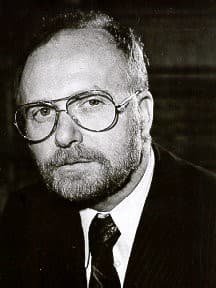
Biography coming soon.







