“I'm not a human. I'm not a lobizón. I'm a hybrid, and that means I'm both.”
— Manu's realization about her dual identity as a human and a werewolf.

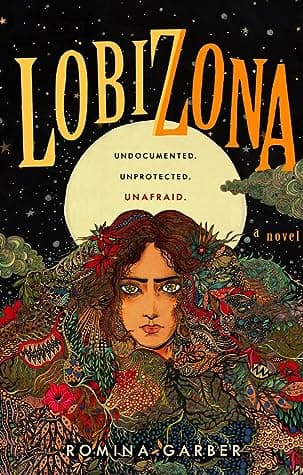
Romina Garber (2020)
Genre
Fantasy / Young Adult
Reading Time
800 min
Key Themes
See below
Sign in to track this book
An undocumented Argentinian teen, on the run from her father's criminal past, finds her true heritage in a hidden magical society. She learns she is a forbidden seventh daughter, a witch and a werewolf, making her existence an act of rebellion.
Manuela Azul lives a secret life in Miami, staying in her apartment as an undocumented immigrant with her mother, Celeste, and her grandmother, Perla. Manu has unusual silver eyes, a secret she must keep hidden. Her only link to the outside is her mother's work and rare, supervised trips. One night, their life changes when a strange man attacks Perla, badly hurting her. As Manu and Celeste take Perla to the hospital, immigration agents arrest Celeste. Manu is left alone and scared. She has a mysterious 'Z' emblem from Perla's things, her only clue to her family's secrets and the attack.
Afraid for her safety and deportation, Manu leaves the hospital, leaving Perla. She is troubled by the attack and her mother's arrest, feeling completely alone. The 'Z' emblem becomes her only focus. After a difficult trip through the city, she finds herself drawn to a building that, up close, has a hidden entrance with the same 'Z' symbol. Manu goes inside, needing answers and a sense of belonging she has never had. This marks her leaving her old life and entering a new world.
Manu enters El Laberinto, a hidden school and community for brujas (witches) and lobizones (werewolves) in the Florida Everglades. She quickly learns this world has old, strict rules from Argentine folklore: only seventh consecutive daughters are brujas, and only seventh consecutive sons are lobizones. Any difference, especially a female lobizona or a male brujo, is 'illegitimate' and punished. Manu's silver eyes, which glow when she uses magic, make her stand out. She gets a dorm and starts to learn the social rules and magic training, always afraid her true nature will be found out.
Manu struggles to fit in but finds a friend in Tiago, a kind lobizón. She also bonds with Catalina, another bruja. During training, Manu discovers she has strong, unique magic, more than a typical bruja. Her silver eyes, which she learns are a sign of her power, make her noticeable. Her unusual abilities and unknown past, though, draw the attention of the school's leaders, especially the Headmistress and the lobizones' Alpha. Manu tries to blend in, but her power makes her visible, making her consider she might be one of the 'illegitimate' beings.
Through talks, old texts, and her own feelings, Manu learns about the lobizona curse. The seventh consecutive son is a lobizón, and the seventh consecutive daughter is a bruja. However, a female lobizona is a forbidden anomaly, seen as a monster that brings bad luck. Manu starts to think her father, whom she thought was dead and a criminal, was involved in this world, and that her own life is part of this cursed family line. She realizes her 'illegality' is more than just her immigration status; it is part of her in this hidden society.
Wanting answers, Manu secretly investigates her past. She finds old letters and clues that show the truth: she is not a bruja, but a lobizona – a forbidden female werewolf. Her mother, Celeste, had hidden this, fearing for Manu's life in a society that would condemn her. Manu's father, a powerful lobizón, had broken the rules to be with Celeste, a bruja. This led to Manu's birth and their family being targeted by traditional groups in El Laberinto. This explains her unique powers and silver eyes; she is the ultimate 'illegal' being.
Manu's identity as a lobizona is found out, leading to a fight with the Headmistress and the Alpha. She is called an abomination, her existence a threat to their order. Tiago, who is close to Manu, is caught between loyalty to his pack and his feelings for her. The leaders demand Manu be given over for 're-education' or removal. Manu, now knowing the danger she is in, refuses. She sees her only choice is to fight for her right to exist and challenge the old laws that condemn her.
With Tiago's help, Manu escapes El Laberinto, leaving the only community she has known. She is now an outcast from both human and supernatural worlds. Her first goal is to save her mother from immigration and find a way to challenge El Laberinto's strict system. She realizes her unique existence is not a curse, but a way to bring change. Manu starts to gather information and look for other 'illegitimate' beings or allies who might help her break down the oppressive rules of their world, starting with the idea of 'illegality.'
Manu, now fully embracing her identity as a lobizona, faces the elders of El Laberinto. She demands her mother's release and argues for the right of all 'illegitimate' beings to exist. She challenges the old traditions that call them monsters. She uses her unique powers, mixing bruja magic with lobizón strength, to show her existence is not a flaw but a new, strong type of being. Her defiance causes a split in the community, with some starting to question the old ways. Tiago stands with her, showing a growing movement for change among the lobizones.
Manu's stand leads to a temporary agreement. While old traditions are not immediately changed, her mother is released from immigration custody, a big win. Manu and Tiago, with other allies, start to plan for a more open future in El Laberinto. Manu accepts her role as a symbol of change, knowing the fight for full acceptance and equality for all 'illegitimate' beings will be long. She is no longer hiding; she is a leader, ready to create a new path where differences are celebrated, not condemned, and where no one is called 'illegal' for existing.
The Protagonist
From a fearful, hidden girl, Manu evolves into a powerful, defiant leader who embraces her forbidden identity and challenges oppressive traditions.
The Supporting
Celeste endures capture and separation, ultimately being reunited with Manu, validating her sacrifices.
The Supporting
Tiago initially adheres to the rules but ultimately chooses loyalty to Manu and justice over tradition, evolving into a steadfast ally.
The Supporting
Perla's attack sets the plot in motion, and her recovery symbolizes the hope for a new beginning.
The Antagonist
The Headmistress remains largely static in her adherence to tradition, serving as a foil to Manu's progressive ideals.
The Antagonist
The Alpha's unwavering traditionalism makes him a consistent obstacle to Manu's quest for acceptance.
The Supporting
Catalina supports Manu as a friend, becoming more aware of the injustices within El Laberinto through Manu's journey.
The Mentioned
His past actions and forbidden love set the stage for Manu's entire conflict and identity.
Manu's life is defined by her search for identity and belonging. As an undocumented immigrant, she is 'illegal' in the human world. As a lobizona, she is 'illegal' in the supernatural world. The book explores the pain of being an outcast and finding self-acceptance. Manu's silver eyes and unique powers show her struggle to bring her different identities together and find a place where she is accepted for who she is, not defined by rules or borders. Her acceptance of her lobizona identity is a strong statement about finding belonging within herself.
“Some people ARE illegal. Lobizonas do NOT exist. Both of these statements are false.”
The book questions the idea of 'illegality' for both people and supernatural beings. Manu's status as an undocumented immigrant mirrors her status as a forbidden lobizona; in both worlds, her existence is a crime. The story criticizes the unfairness of borders—both physical country borders and the lines between acceptable and unacceptable beings—and the oppressive systems built on them. It argues that no one should be 'illegal' just for existing, showing how such labels can make people seem less human.
“It wasn't just my U.S. residency that was illegal. . . .it was my entire existence.”
El Laberinto has old, strict traditions from Argentine folklore, especially about the roles of brujas and lobizones and the condemnation of 'illegitimate' beings. Manu's existence challenges these traditions, making the community face its biases. The conflict between the Headmistress and Alpha (representing tradition) and Manu (representing progress and change) drives much of the story. The book explores how hard it is to change old beliefs and the courage needed to create a new, more open path. It suggests that real strength is in adapting and accepting, not in sticking to the past.
“The rules were ancient, carved into the very stone of El Laberinto, and they were meant to be unbreakable.”
Family and sacrifice are important themes, especially through Manu and her mother, Celeste. Celeste makes big sacrifices, living in hiding and in poverty, to protect Manu from both human authorities and the supernatural world. Perla also represents a family bond formed through shared struggles and love. The book explores how far family members will go to protect each other, especially when facing threats. It also looks at the secrets families keep, even with good intentions, and how those secrets affect trust and identity.
“My mother had built a wall of secrets around me, brick by brick, out of love and fear.”
Manu's journey is feminist. As a female lobizona, she defies a male-dominated system that tells women what they can and cannot be, calling her an 'abomination' for having powers usually for males. Her refusal to hide or be quiet, and her fight for her right to exist, is a strong statement of female power. She challenges the limits placed on women in both the human and supernatural worlds, arguing for a future where women, and all marginalized groups, can define themselves and use their own power.
“I was a monster to them, a defiance of their ancient laws. But I was also me, and I wouldn't hide anymore.”
A mysterious symbol that guides Manu to El Laberinto.
The 'Z' emblem serves as a crucial plot device, acting as a direct clue that guides Manu from her shattered life in Miami to the hidden world of El Laberinto. Initially found among Perla's belongings, it represents the first concrete link to Manu's unknown past and her father's secrets. Its recurring appearance on the entrance to El Laberinto solidifies its role as a key to unlocking the supernatural world. The emblem symbolizes destiny and the unavoidable pull of Manu's true heritage, propelling the narrative forward and initiating her journey of self-discovery.
A folklore-based system that dictates supernatural identity and 'illegality'.
This ancient folklore-based 'curse' is the foundational plot device that establishes the rules and conflicts of the supernatural world. It dictates that only seventh consecutive sons are lobizones and seventh consecutive daughters are brujas, making any deviation, especially a female lobizona like Manu, an 'illegitimate' and condemned being. This device creates the central conflict of Manu's existence, driving her persecution and her fight for acceptance. It is a powerful metaphor for societal prejudices and arbitrary classifications, directly linking Manu's 'illegality' in the human world to her 'illegality' in the magical one.
A physical manifestation of Manu's unique power and forbidden identity.
Manu's unusual silver eyes are a prominent symbol and plot device. They initially serve as a physical marker of her difference, a secret she must hide. Later, they become a visible manifestation of her unique, combined bruja and lobizón powers, glowing intensely when she uses magic. These eyes make her stand out in El Laberinto, attracting both fear and suspicion, and ultimately revealing her true, forbidden identity. The eyes are a constant reminder of her 'illegality' but also a source of her strength, representing the undeniable truth of who she is and her potential to challenge the established order.
A hidden, labyrinthine school and community for brujas and lobizones.
El Laberinto functions as both a setting and a significant plot device. It is a hidden, magical school and community that serves as Manu's entry point into the supernatural world. Its labyrinthine nature symbolizes the complex, often confusing, and restrictive rules of this society. As a sheltered, self-contained world, it allows for the intense focus on the traditions and prejudices of the bruja and lobizón community, directly contrasting with the outside human world. El Laberinto becomes the arena where Manu must confront her identity, challenge ancient laws, and fight for her right to exist.
“I'm not a human. I'm not a lobizón. I'm a hybrid, and that means I'm both.”
— Manu's realization about her dual identity as a human and a werewolf.
“In the Septibol, we don't hide who we are. We celebrate it.”
— Saysa explaining the magical world of the Septibol to Manu.
“The moon doesn't care about borders. It shines on everyone.”
— Manu reflecting on her undocumented status and universal connection.
“Fear is a cage. But courage is the key.”
— Manu's internal monologue as she faces dangers in the magical world.
“We are all stories in the end. Make yours a good one.”
— Advice given to Manu about shaping her own destiny.
“Magic isn't about power. It's about connection.”
— A lesson Manu learns about the true nature of magic in the Septibol.
“Sometimes the bravest thing you can do is ask for help.”
— Manu realizing she doesn't have to face her struggles alone.
“The world tries to put us in boxes, but we are too wild to be contained.”
— Manu's defiance against societal and magical constraints.
“Home isn't a place. It's the people who see you.”
— Manu finding belonging with friends who accept her hybrid nature.
“Every full moon is a reminder that we are part of something bigger.”
— Reflection on the lunar cycles that govern the lobizón world.
“You don't have to choose one side of yourself. You can be whole.”
— Manu embracing her hybrid identity without compromise.
“In the darkness, we find our own light.”
— Manu's resilience during challenging times in the story.
“The Septibol isn't perfect, but it's ours to change.”
— Discussion about reforming the magical society's flaws.
“Love doesn't ask for papers. It just is.”
— Manu's thoughts on love transcending legal and magical boundaries.
Ready to see how well you understood this book? Take our interactive quiz with 10 questions.







