“Victor, the television is broken.”
— Victor's parents leave him alone for a week, and the TV is the first thing to go.

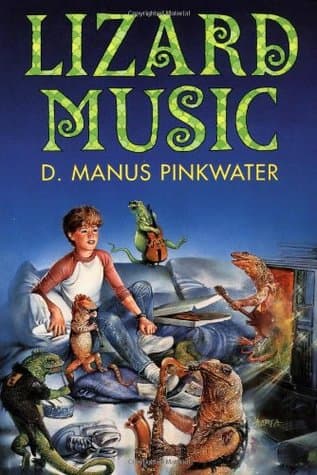
Daniel Pinkwater (1976)
Genre
Fantasy / Children's / Science Fiction / Young Adult
Reading Time
120 min
Key Themes
See below
Sign in to track this book
A bored boy's summer takes an bizarre turn when he discovers a secret society of intellectual lizards broadcasting a warning about an impending alien invasion from a remote island.
Victor, a young boy, finds himself unexpectedly alone when his parents decide to go on a two-week vacation to Florida, leaving him with an ample supply of TV dinners and instructions to fend for himself. His older sister, who was supposed to look after him, also departs for a summer camp, leaving Victor truly unsupervised. Initially, Victor enjoys the freedom, spending his days watching an excessive amount of television, particularly late-night movies and old reruns. This extended period of unmonitored screen time begins to blur the lines between reality and fiction for him, setting a strange, dreamlike tone for the adventures to come as he grapples with the sudden lack of routine and adult supervision in his life, feeling both liberated and a little lost.
One night, while channel-surfing during the late hours, Victor stumbles upon a peculiar television program. It features a band of anthropomorphic lizards playing various musical instruments and singing. These aren't ordinary animals; they appear intelligent, wear clothes, and perform with remarkable skill and human-like expression. The show seems to exist outside of any regular programming schedule, appearing sporadically and without explanation. Victor is captivated and perplexed by these lizard musicians, unsure if what he is seeing is a real broadcast, a dream, or a hallucination brought on by his sleep-deprived state and constant TV watching. He tries to find it again on subsequent nights, becoming increasingly obsessed with the strange, unidentifiable program.
After several nights of watching the mysterious lizard show, Victor experiences a strange dream or vision where one of the lizards seems to acknowledge him directly through the screen. This encounter solidifies his conviction that the lizards are real and that he must find them. Driven by an insatiable curiosity and a growing sense of loneliness, Victor decides to leave his house. He packs a few essentials, including a flashlight and some snacks, and ventures out into the night. His journey is guided by a vague sense of direction and an almost mystical pull towards where he believes the lizards might be, leading him away from the familiar confines of his suburban home and into the unknown.
Victor's travels eventually lead him to a small, seemingly deserted island in a lake, which he reaches by crossing a rickety bridge. There, he encounters an eccentric old man named Chicken Man, who lives in a small, ramshackle hut. Even more surprisingly, the old man is accompanied by a talking chicken, who communicates in a gruff, philosophical manner. The Chicken Man is a quirky, self-sufficient individual who seems to possess an unusual understanding of the world. He offers Victor shelter and food, and the two engage in strange, often nonsensical conversations. This encounter further blurs the lines of reality for Victor, as he adapts to the bizarre logic of the island and its inhabitants, moving deeper into his surreal adventure.
The Chicken Man eventually reveals to Victor that the island is home to a hidden community of intelligent, anthropomorphic lizards. These are the same lizards Victor saw on television, and they live in a secluded, organized society. Victor is finally introduced to these creatures, who are not only sentient but also cultured, engaging in intellectual discussions, art, and, of course, music. He learns that they have a sophisticated understanding of the world, far beyond what any human would expect from reptiles. Victor is welcomed into their community, albeit with some initial skepticism, and begins to learn about their unique way of life, their history, and their peculiar relationship with humanity. This discovery is a significant moment for Victor, validating his earlier, seemingly impossible television sightings.
As Victor spends more time with the lizard community, he learns about their most closely guarded secret: they are aware of an impending alien invasion from outer space. The lizards explain that they have been observing humanity for a long time and possess advanced knowledge and senses that allow them to perceive threats that humans are oblivious to. They describe the aliens as a strange, non-corporeal force that subtly influences human thought and behavior, slowly taking over the planet without overt confrontation. The lizards see themselves as guardians of earth, preparing to resist this silent invasion. This revelation shifts Victor's understanding of his adventure from a personal quest to a matter of cosmic significance, making him a reluctant confidant in their grand, bizarre mission.
The lizards elaborate on the nature of the alien 'invasion.' It's not a typical sci-fi scenario of spaceships and laser guns, but rather a subtle, pervasive mental influence. The aliens, which the lizards refer to as 'The Swarm,' operate by subtly altering human perceptions, thoughts, and desires, making them complacent, distracted, and less capable of independent thought. They explain that the constant stream of superficial entertainment and consumerism that Victor himself was immersed in before coming to the island is a symptom of this alien influence. The lizards, with their unique minds and ancient wisdom, are resistant to this psychic manipulation and are working to counteract its effects. Victor begins to see the world through their eyes, recognizing the pervasive, almost invisible, control the aliens exert.
Victor witnesses firsthand the lizards' methods of resistance. They don't fight with weapons but with culture, music, and quiet contemplation. Their musical performances, which Victor initially saw on TV, are not just entertainment but a form of psychic defense and a way to maintain their clarity of thought against the alien 'noise.' They also engage in deep philosophical discussions and encourage independent thought and creativity. The lizards believe that by encouraging genuine intellectual and artistic expression, they can create pockets of resistance against the aliens' mind-numbing influence. Victor participates in some of their activities, learning to appreciate their unique perspective and their commitment to preserving genuine thought and culture on Earth.
As the two weeks of his parents' vacation draw to a close, Victor knows he must eventually return home. The lizards and the Chicken Man understand this, and there's a quiet acknowledgment of his impending departure. While Victor doesn't actively participate in their resistance efforts in a grand way, his presence among them has been significant, and he has gained a new perspective on reality. He is no longer the same boy who was lost in endless television. He bids farewell to the lizard community and the Chicken Man, carrying with him the extraordinary experiences and the secret knowledge of the alien invasion. His journey back home marks a transition from the fantastical to the mundane, but he is forever changed by what he has witnessed and learned.
Victor returns to his house just before his parents and sister arrive home, making it seem as if he had been there all along. He tries to resume his normal life, but everything feels different. The mundane world of suburban life and television seems dull and superficial compared to the profound realities he encountered on the island. He carries the secret of the lizard community and the alien invasion, a heavy burden for a young boy. He struggles to reconcile his extraordinary experiences with the ordinary world, finding it difficult to explain or even hint at what he's been through. The book ends with Victor back in his familiar surroundings, but forever altered, with a deeper understanding of the hidden layers of reality and the quiet, ongoing battle for human consciousness.
The Protagonist
From a television-addicted child, Victor transforms into a boy with a unique, profound understanding of hidden realities and a quiet awareness of cosmic struggles.
The Supporting
He remains a consistent, wise, and enigmatic figure, serving as a catalyst for Victor's discoveries.
The Supporting
The Chicken remains a static, wise, and humorous companion, consistently offering her unique perspective.
The Supporting
As a collective, they maintain their role as wise, vigilant guardians, gradually revealing their purpose to Victor.
The Mentioned
They remain oblivious to Victor's adventure, serving as bookends to his freedom.
The Mentioned
Her absence is key to the plot's initiation; she has no personal arc.
The Antagonist
The Swarm's influence is constant and pervasive, representing an ongoing threat.
The novel constantly blurs the lines between what is real and what is imagined, particularly through Victor's initial experiences with the lizard musicians on TV. His isolation and excessive television watching make him question the nature of reality. The intelligent lizards and talking chicken challenge conventional understanding, forcing Victor (and the reader) to consider that reality might be far stranger and more complex than it appears on the surface. The 'alien invasion' itself is not physical but perceptual, showing how easily reality can be manipulated or misunderstood.
“'Sometimes the world is a little different than you think it is,' said the Chicken Man.”
Victor's initial state, lost in endless television, is a subtle critique of media overconsumption. The lizards reveal that the 'alien invasion' isn't one of spaceships but of subtle mental influence, making humans complacent and distracted by superficial entertainment and consumerism. The constant 'noise' of modern life, exemplified by Victor's TV watching, is presented as a tool of alien control. The lizards' resistance through music, art, and thoughtful discussion shows the importance of genuine culture and independent thought over passive consumption.
“'They want to make you stupid, so you won't notice them,' said one of the lizards.”
Victor's willingness to believe in the extraordinary is central to his adventure. Unlike a more skeptical child, he embraces the talking chicken and intelligent lizards without much questioning. This open-mindedness allows him to access a hidden layer of reality and understand the truths the lizards share. The book suggests that imagination isn't just childish fantasy but a tool for perceiving truths that might be invisible to those bound by conventional thinking. Victor's journey shows that sometimes, the most unbelievable things are real.
“'You have to be ready to see things that other people don't,' the Chicken Man told him.”
Left alone, Victor initially fills his time with passive entertainment, but a deeper longing for connection and meaning drives him to seek out the mysterious lizards. His journey to the island is a quest for something more substantial than what his ordinary life offers. He finds a sense of belonging and purpose within the unique community of the Chicken Man and the lizards, becoming a confidant in their secret mission. This theme explores the human need to find deeper truths and connections beyond the superficial, even if those truths are unconventional.
“'You were looking for something, weren't you?' the Chicken Man asked Victor. 'Something more than just television.'”
A strange, late-night broadcast of lizard musicians that initiates Victor's journey.
The mysterious television program featuring the lizard musicians serves as the primary inciting incident. Its sporadic appearances and fantastical content immediately blur the lines between reality and fiction for Victor. It's a device that plants the seed of the extraordinary in Victor's mundane life, compelling him to leave his home. The TV show is also a meta-commentary on media itself, hinting at hidden messages or realities within the constant stream of broadcast information, and foreshadowing the lizards' later revelations about alien influence through media.
A secluded location that acts as a sanctuary for the extraordinary characters.
The island functions as a classic literary device for creating a self-contained, fantastical world separate from the mundane. Its isolation allows for the existence of the Chicken Man, the talking chicken, and the entire community of intelligent lizards to thrive unnoticed by mainstream society. It represents a liminal space where the rules of reality are different, providing a safe haven for the book's unique characters and their secret knowledge. The journey to the island symbolizes Victor's departure from normalcy and entry into the surreal.
Intelligent, talking animals that challenge human-centric views of the world.
The intelligent, talking chicken and the entire community of anthropomorphic lizards are central to the novel's fantastical elements. These characters immediately signal that the story operates outside conventional realism. They serve to challenge Victor's (and the reader's) assumptions about intelligence and the hierarchy of species. By granting animals human-like intellect and culture, Pinkwater emphasizes the idea that there are many forms of consciousness and wisdom, and that humanity might not be as alone or as superior as it often assumes. They are the primary conveyors of the book's deeper themes.
A non-physical alien force representing societal complacency and mental manipulation.
The 'alien invasion' by The Swarm is a significant plot device because it provides a looming, existential threat without a physical presence. This abstract antagonist allows the novel to explore themes of mental manipulation, media influence, and the subtle erosion of independent thought, rather than relying on conventional action. The unseen nature of the threat makes it more insidious and highlights the difficulty of resisting forces that operate on a psychological level, reinforcing the idea that the greatest dangers might be those we cannot physically see or fight.
“Victor, the television is broken.”
— Victor's parents leave him alone for a week, and the TV is the first thing to go.
“It was just a chicken, after all. A chicken with a lot of personality, but still just a chicken.”
— Victor reflects on his initial companion, a talking chicken.
“He knew that if he wanted to find out what was going on, he'd have to go looking for it himself.”
— Victor decides to investigate the mysterious lizard music.
“The lizards were playing music, and it wasn't just any music. It was music that made you feel things.”
— Victor first encounters the musical lizards.
“Sometimes, the best way to get somewhere is to just start walking.”
— Victor embarks on his journey without a clear destination.
“He had never realized how much was out there beyond the confines of his own living room.”
— Victor's world expands significantly during his adventure.
“The world was full of strange and wonderful things, if you only knew where to look.”
— A recurring theme as Victor encounters various oddities.
“It's not every day you meet a talking chicken who gives you advice.”
— Victor often finds himself in surreal situations.
“He wasn't sure what he was looking for, but he knew he'd recognize it when he found it.”
— Victor's quest is driven by an intuitive sense of purpose.
“The lizards had a message, he was sure of it, and it was a message for him.”
— Victor feels a personal connection to the lizard's music and activities.
“Being alone wasn't so bad, not when there was so much to see and do.”
— Victor re-evaluates his initial feelings about being left by his parents.
“He learned that sometimes, the most ordinary things could lead to the most extraordinary adventures.”
— The breaking of a TV sets off a chain of fantastical events.
“The music was like a secret language, and he was finally beginning to understand it.”
— Victor's growing comprehension of the lizard's musical communication.
“He didn't need a map. He had a feeling.”
— Victor navigates his journey guided by instinct rather than conventional tools.
Ready to see how well you understood this book? Take our interactive quiz with 10 questions.

Daniel Pinkwater was an American children's book author and illustrator known for his whimsical and often surreal stories. His notable works include "Lizard Music" and "The Big Orange Splot." Pinkwater's writing frequently explored themes of individuality and imagination, making him a beloved figure in children's literature.







