“The wind sang a wild, lonely song, and the air was crisp and cold.”
— Laura's description of the prairie environment.

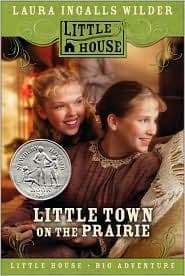
Laura Ingalls Wilder (1941)
Genre
Children's / Historical Fiction / Young Adult
Reading Time
450 min
Key Themes
See below
Sign in to track this book
As the prairie winter thaws into a season of youthful exuberance, nearly fifteen-year-old Laura balances endless hours of shirt-sewing to secure her blind sister Mary's future with the burgeoning excitement of socials, dances, and the steady, new attention of Almanzo Wilder.
After a long, harsh winter, spring arrives in De Smet, Dakota Territory. This brings renewal and excitement to the Ingalls family. Laura Ingalls, almost fifteen, feels the stirrings of youth and looks forward to social events like socials, dances, and 'Literaries'—evening gatherings for readings and debates. However, the family's money is still tight, especially with Mary needing advanced education at a college for the blind in Vinton, Iowa. Laura knows her role in the family. She works to earn money for Mary's tuition, mainly by sewing shirts for townspeople, a task that takes much time and effort.
Laura commits to sewing shirts to earn money for Mary's college education. She works tirelessly, often from morning until night, stitching shirts for various townspeople, including Mr. Boast and Mr. Edwards. The work is repetitive and physically hard, making her fingers ache and her eyes strain. But her resolve to help Mary keeps her going. Ma and Pa Ingalls are proud of Laura's dedication and sacrifice, seeing her important contribution to their family's goal. This period of intense labor shows Laura's growing maturity and sense of responsibility to her loved ones.
Laura attends her first 'Literary,' an evening social gathering at the schoolhouse where young people read, recite poetry, and debate. She is nervous but excited to join the community's social life. During the Literary, she watches how young men and women interact, learning the unspoken rules of courtship and social manners. She especially notices Almanzo Wilder, a young man known for his handsome looks and good nature who drives a team of horses. This event marks a step in Laura's transition from childhood to young womanhood, exposing her to new social experiences and possible romantic interests.
As the need for money for Mary's college fund grows, Pa suggests that Laura consider becoming a teacher. This idea first scares Laura, as she feels she lacks the right temperament and knowledge for such a demanding job. However, she realizes that teaching offers a better way to earn money than sewing. With encouragement from Ma and Pa, she starts to think about it seriously, understanding that this path could greatly speed up Mary's education. This internal struggle shows Laura's practical nature and her willingness to overcome personal doubts for her family's sake.
Determined to teach, Laura studies for the county examination needed to get a teaching certificate. She reads textbooks, often with help from Ma and Pa, reviewing subjects like arithmetic, geography, and grammar. The examination itself is stressful, held in a formal setting with other aspiring teachers. Despite her anxiety, Laura does well, showing her intelligence and hard work. Passing the examination is a big achievement, opening a new chapter in her life and bringing her closer to her goal of financially supporting Mary's education.
One evening, Almanzo Wilder, a young farmer from the area, begins to call on Laura. His visits are a formal but gentle start to courtship, a significant change in Laura's life. He often offers to drive her to socials or home from church, giving them chances to spend time together and talk. These visits excite Laura and make her a little nervous as she navigates the new feelings of romantic attention. Ma and Pa approve of these interactions, seeing Almanzo as a respectable and hardworking young man. This sets the stage for a deeper relationship between him and Laura.
The Christmas social is a much-anticipated event in De Smet, and Laura attends with Almanzo Wilder. The evening is full of music, dancing, and lively talk. Laura enjoys herself greatly, feeling a growing comfort and connection with Almanzo. Their time together at the social, where they dance and talk quietly, strengthens their bond. This event is a joyful occasion that highlights the budding romance between Laura and Almanzo, showing the social customs and simple pleasures of prairie life during the holidays. It marks an important moment in their developing relationship.
With enough money saved, Mary leaves for the college for the blind in Vinton, Iowa. The whole family feels pride, hope, and sadness. The farewell is emotional, as they understand the importance of this step for Mary and the long time they will be apart. Laura feels a deep sense of accomplishment, knowing her hard work helped make this opportunity possible. Mary's departure is a poignant moment, symbolizing the family's sacrifices and their strong commitment to each other's well-being and future. It also marks a new phase for the Ingalls family, with one member venturing into the wider world.
Laura gets her first teaching job at a country school several miles from De Smet. This new role brings both excitement and anxiety. She moves into a boarding arrangement near the school, adjusting to life away from her family for the first time. Managing the diverse students, some older and larger than herself, is challenging. Laura quickly learns a teacher's responsibilities, from keeping discipline to teaching knowledge. Her experiences in the classroom test her patience, resolve, and teaching skills, marking her official entry into the adult world of work and independent living.
During her teaching term, Laura continues her courtship with Almanzo Wilder. He often drives her home from school on weekends or visits her at her boarding house, giving her a needed connection to her social life amid her demanding work. Balancing her responsibilities as a teacher with her growing romance requires careful management of her time and energy. These interactions with Almanzo offer a break from her professional duties and reinforce their growing affection. This period shows Laura's increasing independence and her ability to handle both her career goals and her personal relationships.
As the school term ends, Laura returns to De Smet, happy to be back with her family. She thinks about her experiences as a teacher, recognizing the personal growth and challenges she overcame. She has earned a good amount of money, significantly helping with Mary's ongoing education, and has proven her capability and independence. Her time away has matured her, giving her a deeper understanding of the world and her place in it. The family celebrates her successful return and her contributions, acknowledging the young woman she has become through hard work and new responsibilities.
With her first teaching term complete, Laura looks to the future with anticipation. Her relationship with Almanzo Wilder deepens, moving beyond casual calls to a more serious courtship. The money she earned has secured Mary's place at college, fulfilling a major family goal. Laura is no longer a child but a young woman nearing adulthood, with a budding romance and the skills to support herself. The book ends with a hopeful outlook, hinting at the next stages of her life, including more teaching and an eventual commitment with Almanzo, signaling a future of challenges and personal fulfillment.
The Protagonist
Laura transforms from a spirited girl into a responsible young woman, taking on her first teaching job and navigating her first serious courtship.
The Supporting
Mary moves from being a dependent family member to embarking on an independent educational journey, symbolizing hope and progress.
The Supporting
Ma remains a consistent source of strength and wisdom, adapting to her daughters' growing independence while maintaining the family's core values.
The Supporting
Pa continues to provide strong, optimistic leadership for his family, navigating financial difficulties while fostering his daughters' independence.
The Supporting
Almanzo is introduced as a potential romantic interest, and his relationship with Laura steadily deepens throughout the book.
The Supporting
Carrie remains in childhood, largely unaffected by the major adult developments around Laura.
The Mentioned
Grace remains a very young child, representing the family's continuity.
The Supporting
Mr. Boast remains a consistent, benevolent figure in the community.
The Mentioned
Mr. Edwards makes a brief appearance, serving as a connection to the Ingalls' past and a client for Laura's work.
A central theme is Laura's growing responsibility to her family, especially her commitment to helping pay for Mary's education. Laura sacrifices personal time and does physically hard work, like sewing shirts for long hours, to contribute financially. This theme appears when Laura takes the teaching examination, overcoming her initial reluctance for Mary's future. The entire Ingalls family shows this theme through their shared effort and goal of sending Mary to college, highlighting the strong bonds and mutual support within the pioneer family.
“Laura knew that every stitch she took was helping Mary to see again, in a way that was more wonderful than eyesight.”
The novel carefully shows Laura's journey from girlhood to young womanhood. She goes from being a spirited teenager to taking on adult responsibilities, such as earning her own money, navigating social customs, and finally accepting her first teaching job. Her internal struggles, like her nervousness about teaching, and her external experiences, such as her first independent living arrangement, emphasize this change. Her developing courtship with Almanzo Wilder further confirms her entry into the adult world, where she starts to consider her own future beyond her immediate family.
“She was not a little girl any more. She was almost a young lady, and she must remember it.”
Education is a vital path to opportunity, especially for Mary, whose blindness makes formal schooling essential for her future independence. The family's joint effort to send Mary to college shows the high value placed on learning. For Laura, getting a teaching certificate is not just a job but a way to earn significant money and contribute meaningfully. The 'Literaries' also highlight the community's appreciation for intellectual engagement and self-improvement, showing how education enriches individual lives and the social fabric of the prairie town.
“It was for Mary to go to college, that was why Laura was doing it. And she was glad.”
The book clearly shows the importance of community and social gatherings in the isolated prairie. Events like 'Literaries,' socials, and dances provide crucial chances for entertainment, courtship, and connection among settlers. These gatherings not only break up the monotony of hard work but also let young people like Laura learn social graces and find companionship. The supportive network of neighbors, such as Mr. Boast, also emphasizes the community spirit and mutual help essential for survival and growth in the developing West.
“The Literaries were the best times of all. There was no dancing, but there was music and singing, and speeches and debates, and games.”
Throughout the story, the Ingalls family consistently shows hard work and perseverance. Laura's tireless sewing, her careful studying for the teaching examination, and her efforts in managing her first classroom all exemplify this theme. Pa Ingalls's constant efforts to find work and provide for his family, and Ma's steady management of the household, further reinforce the idea that sustained effort is crucial for achieving goals and overcoming challenges on the prairie. This theme highlights the pioneer spirit and the belief that rewards come through honest labor.
“Work was never done, but that was the way of life on the prairie.”
The story follows Laura's personal growth from adolescence to young adulthood.
This device focuses on Laura Ingalls's psychological and moral development as she transitions from a girl to a young woman. The narrative explores her internal conflicts, her growing understanding of responsibility, and her navigation of new social and romantic experiences. Her first job, her independent living, and her budding romance with Almanzo Wilder are all key markers of this journey, allowing readers to witness her evolving perspective and increasing maturity.
A novel focusing on the moral and psychological growth of the protagonist.
Similar to a coming-of-age narrative, 'Little Town on the Prairie' functions as a Bildungsroman, specifically charting Laura's development over a pivotal year. It delves into her education (both formal and informal), her ethical considerations, and her integration into society as a responsible adult. Her decision to teach, her dedication to Mary's education, and her first steps into courtship all contribute to her formation as an individual with a strong sense of purpose and morality.
Detailed portrayal of life in a specific historical period and setting.
The novel uses historical realism by meticulously depicting the daily life, social customs, economic challenges, and educational opportunities of pioneer settlers in the Dakota Territory during the late 19th century. Descriptions of sewing for income, 'Literaries,' country schools, and the challenges of sending a child to a specialized college provide an authentic glimpse into the era. This device grounds the personal story within a broader historical context, making the setting a character in itself.
The story is told primarily through Laura's experiences and perceptions.
Although narrated in the third person, the story is deeply rooted in Laura's perspective, reflecting her thoughts, feelings, and observations. This allows readers to intimately experience her transition into adulthood, her anxieties about teaching, her excitement at social events, and her growing affection for Almanzo. This perspective creates a strong sense of empathy and allows for a subjective portrayal of the prairie world through the eyes of a young woman coming into her own.
“The wind sang a wild, lonely song, and the air was crisp and cold.”
— Laura's description of the prairie environment.
“Every morning Laura helped Ma with the housework, sweeping and dusting and washing dishes.”
— Daily chores in the Ingalls household.
“School was a wonderful place, Laura thought. You learned so much there.”
— Laura's enthusiasm for learning at school.
“She was growing up, and life was beginning to open out before her.”
— Laura reflecting on her transition into young womanhood.
“It was a good thing to work hard and to learn to do things well.”
— Pa's advice on the value of diligence.
“The town was growing fast, and there were new faces every day.”
— Observation of the rapid development of the town.
“Laura loved to hear Pa play his fiddle. The music always made her feel happy.”
— The comfort and joy Pa's music brings to Laura.
“She remembered the words of the hymn: 'Count your blessings, name them one by one.'”
— Laura recalling a hymn, focusing on gratitude.
“The future was a big, unknown country, and she was ready to explore it.”
— Laura's hopeful and adventurous outlook on her future.
“Mary was going to college! It was almost too wonderful to believe.”
— Laura's excitement about Mary's opportunity to attend college.
“Laura felt a little pang of loneliness, but mostly she felt proud.”
— Laura's mixed emotions as Mary leaves for college.
“It was strange how quickly things changed, and yet some things never changed at all.”
— Laura's reflection on the constancy and change in life.
“She knew that whatever happened, she would always have her family.”
— Laura's deep sense of security and love for her family.
“The stars were very bright and very close, like diamonds scattered on black velvet.”
— Laura's poetic description of the night sky.
Ready to see how well you understood this book? Take our interactive quiz with 10 questions.
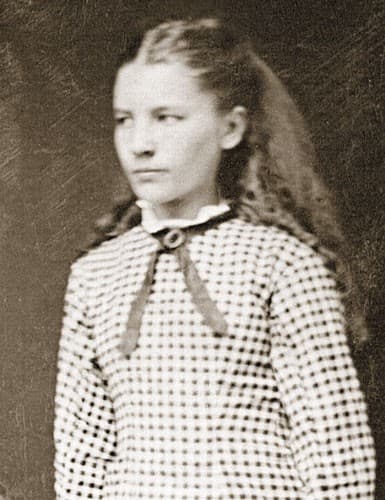
Laura Elizabeth Ingalls Wilder was an American writer. The Little House on the Prairie series of children's books, published between 1932 and 1943, were based on her childhood in a settler and pioneer family.

Dan Gemeinhart
4.5

Kate O'Hearn
4.4

Jeanne Birdsall
4.4

Jen Wang
4.4

Wendelin Van Draanen
4.3

John Marsden
4.3

Chris Van Allsburg
4.3

Jennifer A. Nielsen
4.2