“There was a war on, a big war, a war that had been going on for years. We knew that.”
— Narrator's childhood realization about the ongoing conflict.

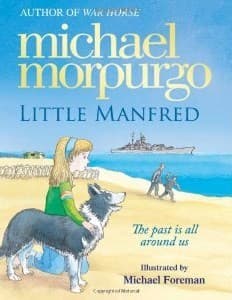
Michael Morpurgo (2011)
Genre
Children's / Historical Fiction / Young Adult
Reading Time
120 min
Key Themes
See below
Sign in to track this book
A carved wooden dachshund becomes a symbol of an unlikely friendship between a German prisoner of war and a young British girl, spanning WWII and hinting at a hopeful reunion during the 1966 World Cup.
The story begins with young Manfred and his grandfather at the Imperial War Museum in London. Manfred is bored until he sees a small, hand-carved wooden dachshund in a display case. He feels a connection to the dog, named 'Little Manfred,' and asks his grandfather about it. His grandfather, whose name is not yet known, starts telling him a story, hinting he knows the history behind the artifact. This introduction sets up the main narrative, which goes back to World War II and its aftermath, explaining how 'Little Manfred' came to be in the museum.
The story moves to World War II. Walter, a young German sailor, is on the battleship Bismarck when the British Royal Navy sinks it in the Atlantic. Walter is one of the few survivors picked up by a British destroyer. Wounded and confused, he becomes a prisoner of war. This experience changes Walter's life, taking him from the battlefield to an unknown future in an enemy country, setting up his time in Britain.
After some time in a prisoner of war camp, Walter is sent to work on a farm in rural England, a common practice during the war to help with labor shortages. He arrives at the farm of Mr. and Mrs. Miller, a British couple, and their young daughter, Grace. Walter is cautious and worried, aware of his status as an enemy soldier. The Millers are also hesitant, dealing with a German in their home. This scene shows the initial tension and awkwardness of their living together, highlighting the cultural and wartime divisions they must overcome.
Grace, a ten-year-old girl, is at first scared and suspicious of Walter, having been taught that Germans were the enemy. She avoids him and watches him with fear and curiosity. Walter, for his part, stays quiet and reserved, focusing on his work. However, Grace's natural curiosity and Walter's gentle nature slowly start to close the gap. Small, quiet interactions happen as Grace watches Walter work and notices his kindness towards the farm animals. This slow warming of their relationship is important for the story.
Walter, missing his family and needing a creative outlet, starts carving small wooden animals from wood scraps. He secretly leaves one for Grace, a small bird. Grace is happy and surprised by the gift, and this act of kindness becomes a turning point. It breaks down more barriers between them, and Grace starts seeking out Walter, watching him carve. He eventually carves a wooden dachshund, 'Little Manfred,' specifically for her. This shared activity and the carvings strengthen their friendship, overcoming the language barrier and wartime animosity.
Over time, Walter and Grace become close friends. Grace spends her days with Walter on the farm, helping him and enjoying his company. They communicate through gestures, smiles, and kindness. Walter teaches Grace about the farm animals and shares stories, even with the language barrier. Mr. and Mrs. Miller, initially cautious, accept Walter as part of their household, seeing his good influence on Grace. This period shows unexpected peace and connection during the war, highlighting human empathy.
As World War II ends, German prisoners of war must return home. Walter's departure is sad for both him and Grace. Despite the initial animosity, he has become like family. Grace is upset at losing her friend. As a final, cherished gift and a symbol of their lasting friendship, Walter gives Grace the carved wooden dachshund, 'Little Manfred.' Their goodbyes are emotional, with an unspoken promise to remember each other, leaving Grace with a reminder of their unique bond and the hope of one day meeting again.
Years pass, and Grace grows up, but she never forgets Walter or the wooden dog. 'Little Manfred' stays a treasured possession, a constant reminder of her childhood friendship and the kindness she found during wartime. She keeps Walter's memory alive, wondering about him and if he ever thought of her. This section briefly covers Grace's life, showing Walter's lasting impact on her and her hope for a reunion, setting up the story's later events.
It is 1966, and England hosts the FIFA World Cup. Grace, now an adult, watches the news and sees that the German national football team will play in England. A spark of hope ignites in her. She realizes this might be her only chance to find Walter. The idea seems unlikely, but the possibility of him being among the visitors, or at least being reachable through official channels, gives her new determination. The World Cup, a symbol of international competition, becomes a reason for a deeply personal reunion.
Grace, holding 'Little Manfred,' travels to Wembley, hoping to find Walter among the German spectators. She holds up the wooden dog, a clear identifier. A man in the crowd spots it, his eyes widening in recognition. It is Walter, now older, but still recognizable to Grace. Their reunion is emotional and moving, showing the lasting power of their friendship across decades and international divides. The wooden dog, a simple wartime carving, brings them back together, fulfilling the unspoken promise from their parting years ago.
The story returns to the present day in the Imperial War Museum. Manfred's grandfather finishes the story, revealing he is Walter. He explains that Grace eventually gave 'Little Manfred' to the museum, with his permission, as a symbol of their friendship and a message of peace. Manfred, now understanding the history behind the wooden dog, looks at his grandfather with new eyes, comprehending his past. The story ends with a message about memory, reconciliation, and the lasting impact of human connection.
The Protagonist
Walter transforms from a soldier to a symbol of peace and reconciliation, finding unexpected friendship across wartime divides and eventually reuniting with Grace.
The Protagonist
Grace grows from a cautious child to a woman who cherishes a unique wartime friendship, demonstrating the power of empathy and enduring connection.
The Supporting
Manfred gains a profound understanding of his grandfather's past and the true meaning of peace and friendship.
The Supporting
Mr. Miller moves from initial suspicion to a respectful acceptance of Walter as an individual.
The Supporting
Mrs. Miller's initial apprehension softens into maternal care and acceptance for Walter.
The main theme explores how deep human connections can form even during war and national animosity. Walter, a German POW, and Grace, a British child, overcome language barriers and anti-German feelings to build a real bond. Their friendship shows that individuals are not defined only by nationality or wartime allegiances, as Grace's initial fear of Walter turns to affection after he carves her a wooden bird and later 'Little Manfred.' Their reunion decades later reinforces the lasting nature of their connection.
“Sometimes, the biggest wars are fought in our hearts, but the greatest victories are won by kindness.”
The novel uses a framing device where Walter, as Manfred's grandfather, tells his past. This highlights the importance of remembering history, both personal and global, and passing it down. The wooden dog, 'Little Manfred,' is a physical link to the past, a silent witness to a remarkable friendship. Storytelling allows Manfred to connect with his grandfather's experiences and understand the deeper meaning behind a simple museum artifact, showing how stories keep history alive and build empathy across time.
“Every object has a story, Manfred. And some stories are worth remembering more than others.”
The story quietly supports reconciliation after conflict. The Millers, despite their country being at war with Germany, eventually open their home and hearts to Walter. Grace's innocent acceptance of Walter shows that children often see beyond political divides. The reunion between Grace and Walter, decades after the war, symbolizes the healing power of forgiveness and the possibility of renewed connection between former adversaries. 'Little Manfred' is a symbol not just of their friendship, but of the broader hope for peace and understanding between nations.
“War makes enemies, but kindness can make friends, even across the deepest divides.”
Grace's character shows the innocence of childhood, which lets her see Walter as a person, not an 'enemy.' Her lack of prejudice helps her form a bond that adults might find hard. Her curiosity and simple desire for connection cut through the complexities of wartime animosity. This theme shows how children can often lead in showing empathy and breaking down social barriers, seeing the humanity in others before judgment. Her joy in Walter's carvings and their quiet companionship are pure and untouched by the surrounding conflict.
“She saw not a uniform, but a man with kind eyes and clever hands.”
A present-day museum visit initiates a flashback to a wartime narrative.
The story begins and ends in the present day with young Manfred and his grandfather at the Imperial War Museum. Manfred's curiosity about the wooden dog, 'Little Manfred,' prompts his grandfather to narrate the events of his past during WWII. This structure allows the author to present a historical narrative through a personal lens, making the history more accessible and emotionally resonant for a younger audience. It also creates a sense of mystery and anticipation, as the reader learns the significance of the artifact alongside Manfred.
A hand-carved toy represents enduring friendship, memory, and reconciliation.
The wooden dachshund, 'Little Manfred,' is the most significant symbol in the novel. It represents the unique and enduring friendship between Walter and Grace, bridging their cultural and wartime divides. It also symbolizes memory, as Grace keeps it for decades, and reconciliation, as it ultimately brings Walter and Grace back together. Its presence in the Imperial War Museum at the story's beginning and end elevates it to a symbol of peace and the human spirit's capacity for kindness, even in the darkest of times.
The grandfather's intimate knowledge of the wooden dog hints at his connection to the story.
From the very beginning, Manfred's grandfather displays an unusually deep and personal understanding of 'Little Manfred' and its history in the museum. He doesn't just know facts; he speaks with an emotional resonance that suggests personal involvement. This subtly foreshadows the revelation at the end of the story that he is, in fact, Walter, the German prisoner of war who carved the dog. This technique builds suspense and encourages the reader to piece together clues throughout the narrative.
The bulk of the story is told as a recollection of past events.
The primary narrative mode of 'Little Manfred' is a prolonged flashback. Triggered by Manfred's question in the museum, the story transports the reader back to World War II and the immediate post-war period. This allows the author to fully immerse the reader in the historical context and the emotional journey of Walter and Grace, providing a detailed account of their friendship's development without breaking the present-day framing device too frequently.
“There was a war on, a big war, a war that had been going on for years. We knew that.”
— Narrator's childhood realization about the ongoing conflict.
“He was just a boy, a boy like me, only German.”
— The narrator reflecting on Manfred's humanity despite being an 'enemy'.
“The sea was always there, an unchanging, comforting presence.”
— Describing the constant presence of the ocean in their lives.
“Sometimes, the best stories are the ones you live.”
— A general reflection on the power of personal experience.
“We were all just trying to get by, to survive.”
— The shared struggle of people during wartime.
“The war took so much, but it couldn't take everything.”
— A poignant observation on resilience amidst loss.
“Friendship doesn't care about flags or borders.”
— Highlighting the bond formed between the children.
“He was a stranger, but he wasn't a monster.”
— The narrator's evolving perception of Manfred.
“The sand dunes were our kingdom, our secret world.”
— Describing the children's imaginative play areas.
“Even in the darkest times, there can be light.”
— A hopeful message amidst the backdrop of war.
“Sometimes, you have to be brave for others.”
— The children's acts of courage to protect Manfred.
“The sound of the waves, a constant reminder of home.”
— The comforting familiarity of the sea.
“We didn't understand the grown-ups' war, but we understood kindness.”
— The children's simple understanding of human connection.
“Every life has a story, and every story matters.”
— A universal theme about the significance of individual lives.
Ready to see how well you understood this book? Take our interactive quiz with 10 questions.

Biography coming soon.

Dan Gemeinhart
4.5

Kate O'Hearn
4.4

Jeanne Birdsall
4.4

Jen Wang
4.4

Wendelin Van Draanen
4.3

John Marsden
4.3

Chris Van Allsburg
4.3
Jennifer A. Nielsen
4.2