“It was a Sunday evening in London, gloomy, close, and stale.”
— Opening line of the novel, setting the atmospheric tone.

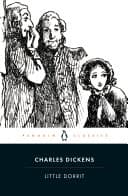
Charles Dickens (2004)
Genre
Historical Fiction / Romance
Reading Time
1200 min
Key Themes
See below
Sign in to track this book
In the shadow of London's Marshalsea prison, a quiet seamstress and a returning gentleman uncover how the invisible chains of debt and bureaucracy ensnare every level of Victorian society, from paupers to the powerful.
Arthur Clennam returns to England after twenty years in China. He is drawn into the lives of his cold mother, Mrs. Clennam, and her estranged business partner, Daniel Doyce. He meets Amy Dorrit, a young seamstress who works for his mother. Amy lives in the Marshalsea Debtors' Prison, where her father, William Dorrit, has been for over twenty years. Arthur notices Amy's quiet dignity and selfless care for her family, who have grown used to prison life. William Dorrit is known as 'the Father of the Marshalsea'.
Arthur Clennam grows more curious about a secret in his family, especially his mother's house and the late Mr. Clennam's will. Affery, Mrs. Clennam's timid servant, often hints at a secret and the 'dark house'. Arthur suspects his mother is hiding something important, perhaps about his own parents or a hidden inheritance. His mother's stern resistance only makes him more determined to find the truth, which he believes might involve the Dorrit family, though he does not yet know how.
Arthur's professional life leads him to partner with Daniel Doyce, a clever but unrecognized inventor, whose workshop is in Bleeding Heart Yard. Here, Arthur meets the diverse community, including the kind Meagles family, their adopted daughter Tattycoram, and the hardworking Plornish family. He also meets Mr. Pancks, a busy rent-collector for Mr. Casby, who is good at finding information. The Yard shows Victorian society's struggles against poverty and uncaring bureaucracy. Arthur becomes more involved in their lives.
Mr. Merdle, a seemingly successful financier, quickly rises in London society, charming everyone with his supposed wealth. His 'operations' are vague but widely admired, making him a symbol of speculative prosperity. He marries Fanny Dorrit, Amy's sister, further raising the Dorrits' social standing after their release from the Marshalsea. Merdle's influence reaches high levels of society, including the Circumlocution Office. However, his fortune is built on a huge fraud. His exposure and suicide cause a financial panic, ruining many investors and showing his reputation was empty.
Through the persistent efforts of Mr. Pancks, it is discovered that William Dorrit is the rightful heir to a large fortune. This unexpected inheritance, from a distant family connection, immediately frees him and his family from the Marshalsea. The Dorrits are thrust into wealth and high society, leaving their humble past. William tries to forget his imprisonment, but the psychological scars remain. His children, especially Fanny, embrace their new status with varying degrees of enthusiasm and social awkwardness, while Amy struggles with the superficiality of their new life.
After their release and gaining wealth, the Dorrit family travels through Europe, settling in Italy. They try to fit into aristocratic society, but their past in the Marshalsea still bothers them, especially William Dorrit, who struggles with the pretense of his new life. Amy feels more isolated and uncomfortable among their artificial new acquaintances. She remains devoted to her father, who, despite his new freedom, begins to show signs of mental decline, often acting like 'the Father of the Marshalsea' again.
Despite his wealth and freedom, William Dorrit cannot escape the psychological effects of his long imprisonment. During a grand social gathering in Italy, he has a complete mental breakdown, reverting to his identity as 'the Father of the Marshalsea' and giving a rambling speech about his life in prison. He dies shortly after, leaving Amy heartbroken but also, in a way, free from the burden of caring for him. His death shows the lasting impact of the Marshalsea on his identity, even after his physical release.
Arthur Clennam, having invested all his savings in Mr. Merdle's fraudulent scheme, finds himself financially ruined when the scandal breaks. He is arrested for debt and, ironically, confined to the Marshalsea, the very prison where Amy Dorrit and her family once lived. This turn of events places him in the same position as the man he once tried to help. During his imprisonment, he falls gravely ill, cared for by John Baptist Cavalletto and Pancks, showing his vulnerability and the harsh realities of the debtors' prison system.
While Arthur is in the Marshalsea, the long-hidden Clennam secret is finally revealed. Mrs. Clennam, in a dramatic confrontation with Miss Wade and Tattycoram, admits that Arthur is not her biological son but the child of her late husband's first wife. The true will of Arthur's biological father, which left a large legacy to Amy Dorrit, had been suppressed and destroyed by Mrs. Clennam out of bitter jealousy. Jeremiah Flintwinch, Mrs. Clennam's clerk, also played a part in the deception, further complicating the lies.
Upon learning of Arthur's misfortune and imprisonment, Amy Dorrit, now a wealthy woman, immediately returns to London. She goes to the Marshalsea, where she finds Arthur gravely ill. She nurses him back to health, showing her unwavering love and compassion. Her selfless care within the walls that defined her childhood deepens their relationship, highlighting her consistent kindness amid shifting fortunes and moral decay. Her presence brings comfort and hope to Arthur in his darkest hour.
As the Clennam family secrets are fully exposed, the old Clennam house, which symbolized the family's dark past and Mrs. Clennam's rigid nature, dramatically collapses. This happens shortly after the truth about Arthur's parentage and the suppressed will comes out, trapping Mrs. Clennam's old servant, Affery, in the rubble (though she is rescued). The house's destruction is a powerful metaphor for the crumbling of old lies and the oppressive atmosphere that had pervaded the Clennam family, making way for new beginnings.
With the truth revealed and the Clennam secrets exposed, Arthur is cleared of debt, though he loses his inheritance. Amy, having inherited the substantial legacy from Arthur's true father, is now a wealthy woman. However, she no longer cares for wealth, only for Arthur. They marry quietly, finding true happiness not in their fortunes, which have both been lost and regained, but in their mutual love, steadfastness, and shared understanding of life's struggles. Their union symbolizes the triumph of genuine affection and integrity over social artifice and financial ambition.
The Protagonist
Amy transforms from a child-like caregiver within the prison to a compassionate woman who finds true love and inner peace, unaffected by wealth or social standing.
The Protagonist
Arthur evolves from a disillusioned observer to an active participant who uncovers family secrets and finds love and contentment, despite personal losses.
The Supporting
William rises from the 'Father of the Marshalsea' to a wealthy gentleman, only to be psychologically undone by his past, dying in a state of delusion.
The Antagonist
Mrs. Clennam remains unyielding in her bitterness until the truth is forcefully extracted, leading to the symbolic collapse of her house and her own moral authority.
The Supporting
Fanny rises from poverty to wealth through marriage, but her ambition and insecurity persist, finding fleeting satisfaction in social status.
The Supporting
Pancks evolves from a seemingly minor, eccentric character into a pivotal figure who uncovers key plot points and aids the protagonists.
The Antagonist
Merdle rises to the pinnacle of society through deception, only to face a dramatic downfall and suicide, exposing the hollowness of his success.
The Supporting
Doyce, initially stifled by bureaucracy, eventually finds well-deserved success and recognition abroad, validating his true genius.
The Supporting
Flora remains largely static, a humorous and sentimental figure from Arthur's past, providing a contrast to his evolving emotional landscape.
The Supporting
Tattycoram initially rebels against her adopted family and falls under negative influence, but eventually returns, having learned to appreciate their love.
The novel explores imprisonment as both literal confinement in the Marshalsea Debtors' Prison and as a psychological and social state. William Dorrit is physically imprisoned, yet even after his release and wealth, he remains psychologically trapped by his past, dying while reliving his time as 'the Father of the Marshalsea'. Mrs. Clennam is imprisoned by her bitterness, guilt, and the decaying walls of her house. Arthur Clennam is briefly imprisoned by debt, experiencing the system firsthand. Many characters are also metaphorically imprisoned by social conventions, class structures, and unfulfilled desires, such as Daniel Doyce by bureaucracy or Amy by her family's needs.
“It was an old saying among them that the college was an unwholesome place to be born in, or to live in, or to die in.”
Dickens sharply criticizes the inefficiencies, corruption, and indifference of Victorian society and its institutions. The Circumlocution Office, with its motto of 'How not to do it,' shows the bureaucratic paralysis that stops innovation and progress, as seen in its treatment of Daniel Doyce's inventions. The Merdle fraud exposes the moral decay and speculative madness of the financial world, where appearances and reputation matter more than substance. The Marshalsea itself criticizes a legal system that punished poverty as a crime, showing the systemic injustices faced by the poor.
“The Circumlocution Office was (as everybody knew without inquiry) the most important Department under Government. No public business of any kind could possibly be done, without its agency. And from the parent Circumlocution Office, in the chief of all the Departments, branched, like all comprehensive laws, innumerable minor Circumlocution Offices, which, in their turn, begat others, and yet others, and so forth.”
The novel carefully examines how wealth and social status corrupt, contrasting it with true human worth. The Dorrits' sudden inheritance shows the superficiality of high society, where their former prison life becomes a source of shame, and their new wealth fails to bring true happiness. Characters like Mr. Merdle show how fortune can be built on fraud, while true merit, like Daniel Doyce's ingenuity, is often overlooked. Amy Dorrit, despite her poverty, has a dignity and moral richness that far surpasses the 'respectability' of the wealthy, showing that true value is in character, not riches or social standing.
“It was a troublesome thing to him to have been 'Father of the Marshalsea;' but it was a thing that, for the sake of his family, must be forgotten.”
At its heart, 'Little Dorrit' is a story of enduring love and selfless sacrifice. Amy Dorrit's life is defined by her unwavering devotion and self-sacrifice for her family, especially her father, without expecting reward. Arthur Clennam's journey is about seeking truth and justice, finding redemption and love through his connection with Amy. Their relationship develops not out of convenience or social ambition, but through shared suffering, mutual respect, and a deep understanding of each other's character. Their eventual marriage, free from the complications of wealth, symbolizes the triumph of genuine affection and moral integrity over society's corrupting influences.
“She was his Little Dorrit, always; and he knew it well.”
The narrative is driven by a complex web of secrets and deceptions. The central mystery involves the Clennam family secret, including Arthur's true parents and the hidden will, carefully guarded by Mrs. Clennam and Jeremiah Flintwinch. Mr. Merdle's public image is a deception, built on a fraudulent scheme. Miss Wade manipulates Tattycoram with veiled truths. These secrets create suspense, drive character motivations, and lead to dramatic revelations that reshape characters' lives, highlighting the destructive power of hidden truths and the moral decay they often represent.
“It was a house with a mystery in it, that was as plain as the walls and windows.”
A central setting symbolizing physical and psychological imprisonment.
The Marshalsea is more than just a setting; it is a pervasive symbol and a plot engine. It defines the Dorrit family's entire existence, shaping their characters and relationships. Its shadow extends throughout the novel, even after characters are freed, illustrating the lasting psychological impact of confinement. It serves as a stark reminder of Victorian social injustice and the arbitrary nature of fate, as Arthur Clennam later finds himself imprisoned within its walls, creating a powerful narrative irony.
A decaying, secretive house symbolizing family guilt and hidden truths.
The old, dilapidated Clennam house, where Mrs. Clennam lives in rigid seclusion, functions as a powerful symbol of the family's dark past and the secrets it holds. Its physical decay mirrors the moral decay and emotional frigidity within. The house itself seems to embody Mrs. Clennam's bitterness and the weight of her guilt. Its dramatic collapse near the novel's end serves as a cathartic and symbolic act, signifying the final exposure of the long-buried truths and the crumbling of old oppressions, paving the way for new beginnings.
A satirical representation of bureaucratic inefficiency and societal stagnation.
The Circumlocution Office is a prominent satirical device used by Dickens to critique the inefficiency, corruption, and self-serving nature of government bureaucracy. It is characterized by its sole purpose of 'how not to do it,' actively hindering progress and stifling innovation, as exemplified by its treatment of Daniel Doyce's inventions. This office functions as a symbol of the broader societal paralysis that prevents genuine merit from being recognized and perpetuates systemic problems, contributing to the overall theme of societal imprisonment and the struggle against entrenched institutions.
A financial scandal exposing societal greed and moral corruption.
The Merdle fraud serves as a major plot catalyst and a powerful social commentary. It represents the rampant speculation, moral bankruptcy, and superficiality of Victorian high society, where appearances and reputation are valued above integrity. The collapse of Merdle's scheme causes widespread financial ruin, including for Arthur Clennam, directly leading to his imprisonment. This device highlights how individual moral failings can have devastating societal consequences, underscoring Dickens's critique of a system that rewards deception and punishes the honest.
“It was a Sunday evening in London, gloomy, close, and stale.”
— Opening line of the novel, setting the atmospheric tone.
“Who could suppose, from the way in which she had been brought up, that she would ever have had any idea of being anything but a child?”
— Reflecting on Amy Dorrit's perpetual childhood within the Marshalsea.
“There was a general air of waiting about the place, as if for the arrival of something or somebody yet to come.”
— Describing the pervasive sense of stagnation and anticipation in the Marshalsea.
“He knew that the Marshalsea was the first great shock of his life, and that it was the beginning of his history.”
— Arthur Clennam's reflection on his connection to the prison.
“It is a principle of the Circumlocution Office that that there is nothing on earth so much to be avoided as the public knowledge of how a public duty is to be performed.”
— A satirical jab at bureaucratic inefficiency, describing the Circumlocution Office.
“The air was so filled with the leaden vapour of the prison, that she almost thought she could taste it.”
— Amy Dorrit's sensory experience of the oppressive prison environment.
“He was a shy man, a timid man, and a man of no initiative.”
— Description of William Dorrit, highlighting his weaknesses.
“He had a way of always falling into the right place, and of always coming up with a plausible reason for being there.”
— Describing the opportunistic nature of Rigaud (Blandois).
“The greater part of the people were in a hurry, and seemed to have no time for anything but their own affairs.”
— Observing the self-absorbed nature of London society.
“It was a miserable thing to be dependent upon the caprice of a woman, especially when that woman was Fanny Dorrit.”
— Contemplating the difficult position of someone reliant on Fanny's volatile moods.
“There are cases in which a man would rather be a beggar than a Lord, and not feel it a hardship.”
— A reflection on the different burdens of poverty and wealth.
“The shadow of the Marshalsea was upon them all.”
— Emphasizing the lasting psychological impact of the prison on the Dorrit family.
“It is a world of disappointment, and a world of change.”
— A general reflection on the nature of life and human experience.
“She took her place at his side, and she was his Little Dorrit, and his companion, and his more than life.”
— Arthur Clennam's realization of Amy's profound importance to him.
Ready to see how well you understood this book? Take our interactive quiz with 10 questions.
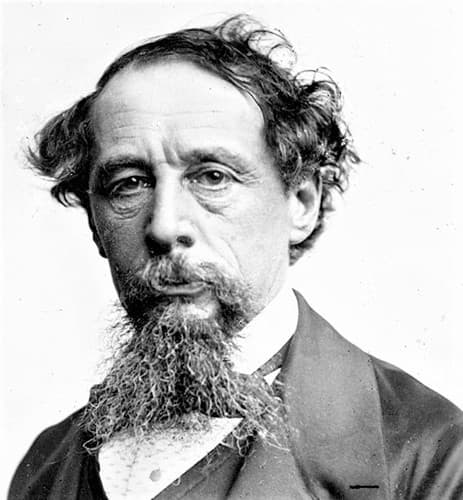
Charles John Huffam Dickens was an English writer and social critic who created some of the world's best-known fictional characters and is regarded by many as the greatest novelist of the Victorian era. His works enjoyed unprecedented popularity during his lifetime and, by the 20th century, critics and scholars had recognised him as a literary genius. His novels and short stories are widely read today.







