“We must all make a choice. To live like this, or to die.”
— Little Bee reflecting on the harsh realities and decisions faced in life, particularly for refugees.

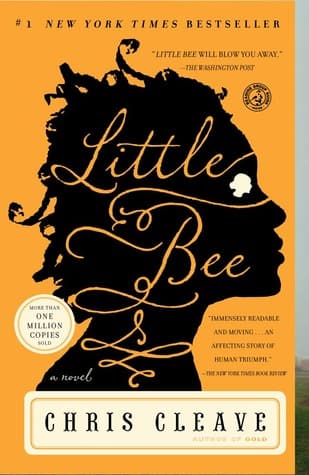
Chris Cleave (2008)
Genre
Literary Fiction / Historical Fiction
Reading Time
5-6 hours
Key Themes
See below
Sign in to track this book
After a brutal event on a Nigerian beach, a young asylum seeker and a grieving British widow find their lives connected by a shared secret and the hope of a fresh start.
The story begins with Little Bee, a sixteen-year-old Nigerian refugee, describing her arrival at an immigration detention center in the UK. Flashbacks show the main event: two years earlier, on a beach in Nigeria, Little Bee and her younger sister, Nkiruka, hide from militiamen. Sarah, a British magazine editor, and her husband, Andrew, are vacationing there. The militiamen find the sisters, and Sarah and Andrew are forced to make a terrible choice: one of the girls must be sacrificed to spare the other. Andrew, in fear, agrees to let Nkiruka be killed. This brutal event permanently connects Little Bee and Sarah, leaving both deeply scarred and setting up their future relationship.
Two years after the beach incident, Sarah attends her husband Andrew's funeral. Andrew, tormented by guilt and the trauma of the beach, has committed suicide. Sarah is numb with grief and struggles to care for her four-year-old son, Charlie, who constantly wears a Batman costume. During the funeral, Little Bee appears, having been released from the detention center. Sarah, initially shocked, recognizes Little Bee. Little Bee explains she has nowhere else to go and has come to Sarah because she remembers her kindness on the beach, despite the horror. This unexpected reunion forces Sarah to confront her past and her involvement in the tragedy.
Sarah, despite her initial hesitation and fear of legal trouble for sheltering an undocumented immigrant, lets Little Bee stay in her home in suburban London. Little Bee quickly becomes a part of their household, forming a deep bond with Charlie, who at first believes she is a princess. Little Bee helps Charlie cope with his father's death, offering him comfort and stability. She also begins to learn about British culture and language, noticing the sharp differences between her past life in Nigeria and her new, fragile existence in the UK. Sarah, meanwhile, deals with her own grief and the moral complexities of her situation.
Little Bee narrates much of the story, offering a unique and often funny view of the English language and British customs. She carefully studies a dictionary, fascinated by the nuances of words. Her observations highlight the privilege she sees in Western society, contrasting it with the harsh realities of her past. She often interprets idioms literally, leading to poignant and sometimes humorous misunderstandings. This language journey is not just about learning a new language but about trying to understand a new world and find her place, while always aware of her uncertain legal status.
Sarah continues to run her magazine, 'Suffolk Life,' but her professional life is overshadowed by her personal grief and the secret of Little Bee. She feels immense guilt over Andrew's suicide, believing it was a direct result of the beach incident and his inability to live with his actions. Little Bee's presence, a living reminder of their shared trauma, adds to this guilt. Sarah tries to protect Little Bee but also struggles with the fear of exposure and the potential consequences for herself and Charlie. Her relationship with Lawrence, Andrew's brother, becomes complicated as he tries to help her and Charlie.
As Little Bee settles into life with Sarah and Charlie, the threat of her undocumented status becomes more evident. She is constantly aware that she could be discovered and deported at any moment. Sarah, despite her fears, tries to find legal ways to help Little Bee, consulting lawyers and exploring options, but the bureaucratic challenges are huge. Little Bee's narratives often show her fear of being sent back to Nigeria, where her life would be in extreme danger because of the militiamen who killed her village and family. This constant anxiety shows how fragile her new safety is.
Lawrence, Andrew's brother, becomes more involved in Sarah's life, at first offering support to her and Charlie. He learns about Little Bee's presence and, despite his initial shock, agrees to help. They create a desperate plan: Lawrence will marry Little Bee to secure her legal status in the UK. This arrangement is purely practical, without romantic love, but it offers a glimmer of hope for Little Bee's future. The plan is risky and morally complex, showing the extreme measures people take in desperate situations. Sarah, though conflicted, sees it as Little Bee's only chance.
To finalize the marriage and prove Little Bee's identity, a birth certificate is needed, which requires a trip back to Nigeria. Sarah, driven by her commitment to Little Bee and a desire to make amends for the past, goes with her. This journey is dangerous, taking them back to the place where their lives irrevocably changed. Little Bee is terrified of returning, knowing the risks, but also feels drawn to her homeland and the memories of her family. The trip tests their bond and is a harsh confrontation with the past, forcing both women to face the trauma they've tried to escape.
Upon arriving in Nigeria, Little Bee and Sarah navigate a place still marked by violence. They eventually encounter the same militiamen responsible for the killing of Little Bee's village and her sister's death. In a desperate attempt to protect Sarah and Charlie, who is also there, Little Bee makes a courageous and selfless decision. She sacrifices herself, drawing the attention of the militiamen away from Sarah and Charlie, allowing them to escape. This act mirrors the original beach incident but with a tragic role reversal, showing Little Bee's deep love and loyalty.
Sarah and Charlie escape Nigeria, forever marked by Little Bee's ultimate sacrifice. The ending is unclear about Little Bee's exact fate, but strongly suggests her death. Sarah returns to England, facing the immense grief of losing Little Bee and the weight of her memory. The experience changes her deeply, increasing her understanding of injustice and the human cost of conflict. Charlie also carries the memory of 'Princess Little Bee.' The story ends with Sarah narrating, reflecting on Little Bee's impact on her life and the lasting legacy of her spirit and sacrifice.
The Protagonist
Little Bee transforms from a terrified survivor into a courageous young woman who ultimately sacrifices herself for those she loves, leaving a profound legacy.
The Protagonist
Sarah evolves from a woman paralyzed by grief and guilt into a strong, morally courageous individual willing to risk everything for justice and love.
The Supporting
Andrew's arc is tragic; he is unable to live with the consequences of his actions, leading to his self-destruction.
The Supporting
Charlie, through his bond with Little Bee, navigates the grief of his father's death and grows to understand love and loss.
The Supporting
Lawrence moves from a supportive brother-in-law to an active participant in a risky plan to save Little Bee, demonstrating his capacity for empathy.
The Mentioned
Nkiruka's brief appearance and tragic death serve as the catalyst for the novel's central conflict and themes of sacrifice and guilt.
The novel explores the psychological burden of guilt, especially through Sarah and Andrew. Andrew's suicide results from his inability to live with his choice on the beach. Sarah, though not directly responsible for Nkiruka's death, carries immense guilt for her inaction and for Andrew's despair. Her decision to shelter Little Bee, and later to go with her back to Nigeria, can be seen as an attempt to make amends, to balance the moral scales. Little Bee also feels survivor's guilt, questioning why she lived while her sister died. The desire for atonement drives many of the characters' most important decisions, ending with Little Bee's sacrifice.
“What is the opposite of a refugee? It is a person who has a place to go. And that is not a home, or a country. It is a place in a person's heart.”
The novel offers a clear look at the refugee experience through Little Bee's eyes. It highlights the loss of home, family, and identity, as well as the constant fear of deportation and the struggle to navigate a new, often uncaring, culture. Little Bee's identity is always changing — she is a survivor, a 'foreigner,' an 'illegal immigrant,' a 'princess' to Charlie. Her careful study of English is not just about communication but about regaining control and understanding her new world. The story makes readers confront the human cost of political conflict and the arbitrary nature of national borders, emphasizing that a person's worth is not determined by their legal status.
“We must see people as people, not as problems.”
A main theme is the nature of moral choice in extreme situations and the idea of complicity. The beach incident forces Sarah and Andrew into an impossible situation, but their choices have devastating, long-lasting consequences. Andrew's decision to sacrifice Nkiruka is a profound moral failure. Sarah's initial inaction, and her later decision to help Little Bee, explore the range of moral responsibility. The novel asks what it means to be 'good' when faced with evil, and how bystanders can become complicit through silence or inaction. It suggests that even in extreme terror, individuals still bear responsibility for their choices, or lack thereof.
“The worst thing about knowing that you're going to die is that you have to decide how you are going to live.”
Love, in its various forms — familial, platonic, and compassionate — is a powerful force in the novel, often linked with sacrifice. The deep bond between Little Bee and Charlie is an example of unconditional love. Sarah's love for Charlie and her growing affection for Little Bee drive her to take immense risks. Ultimately, Little Bee's sacrifice for Sarah and Charlie in Nigeria is the most profound expression of love in the story. This theme explores how love can empower individuals to overcome fear and self-interest, leading to extraordinary acts of selflessness, even against great odds. It shows that true love often requires sacrifice.
“This is what I know to be true. You can love me. And I will love you. And then it will be over. But we will have done it.”
The story is told from the alternating perspectives of Little Bee and Sarah.
The novel employs dual narration, with chapters alternating between Little Bee's first-person perspective and Sarah's first-person perspective. This device allows the reader to experience the story through two distinct cultural lenses and emotional states. Little Bee's narration, often characterized by her unique observations about English and her raw honesty, provides insight into the refugee experience and the trauma of her past. Sarah's narration reveals her internal struggles with grief, guilt, and the complexities of her privileged life. This juxtaposition enriches the narrative, providing a fuller, more nuanced understanding of the events and the characters' motivations.
Charlie's constant wearing of a Batman costume symbolizes his need for protection and his coping with grief.
Charlie's persistent wearing of a Batman costume serves as a powerful symbol throughout the novel. It represents his innocent attempt to cope with the trauma of his father's death, embodying a childlike desire for protection and a sense of control in a world that feels chaotic. Batman, a hero who lost his parents, resonates with Charlie's own grief. The costume also symbolizes the idea of heroism and the search for a savior, which Little Bee inadvertently fulfills for Charlie, becoming his 'princess' and protector. It underscores the fragility of childhood and the ways children process profound loss.
Little Bee's use of a dictionary to understand English and the world.
Little Bee's constant reference to a dictionary is a significant motif. It symbolizes her relentless quest for knowledge, understanding, and a new identity in a foreign land. Her literal interpretations of English idioms and her fascination with words highlight the cultural chasm between her past and present. The dictionary is not just a tool for learning a language; it's a window into a new way of thinking, a means for her to process her trauma, and a source of both humor and profound insight. It underscores the power of language in shaping perception and connecting disparate worlds.
Little Bee's opening lines hint at her eventual sacrifice.
The novel opens with Little Bee stating, 'I want to tell you about the day I met Sarah, and the day I may have to die.' This powerful opening sentence immediately establishes a sense of foreboding and foreshadows the tragic ending. It sets a somber tone, alerting the reader to the high stakes involved in Little Bee's journey and her awareness of the constant threat to her life. This early revelation primes the reader for the eventual climax, creating tension and emphasizing the theme of sacrifice even before the full story unfolds, making her ultimate act both shocking and inevitable.
“We must all make a choice. To live like this, or to die.”
— Little Bee reflecting on the harsh realities and decisions faced in life, particularly for refugees.
“The world is not a safe place. It is a beautiful place, but it is not safe.”
— Little Bee's somber but appreciative view of the world, having experienced both its beauty and its dangers.
“Sometimes I think you English are afraid of the present tense.”
— Little Bee observing the English tendency to avoid direct confrontation with current events or emotions.
“I am not a refugee. I am a human being.”
— Little Bee asserting her identity beyond the label of 'refugee', emphasizing her humanity.
“It is not a good idea to tell a child that the world is a wonderful place, because it is not.”
— Little Bee's pragmatic view on preparing children for the realities of life, rather than shielding them.
“You can never tell how much a person is suffering, until you are that person.”
— Little Bee reflecting on the inability to truly understand another's pain without experiencing it yourself.
“The truth is a terrible thing, but it is also a beautiful thing.”
— Little Bee acknowledging the dual nature of truth, its potential for pain and liberation.
“We are all immigrants from somewhere, even if we've been here for generations.”
— Sarah's perspective on the universal experience of migration and change.
“Grief is a ghost. It's always there, hovering.”
— Sarah grappling with the persistent presence of grief after a significant loss.
“Sometimes it is easier to be brave when you are afraid.”
— Little Bee's paradoxical observation about the nature of courage in the face of fear.
“The world is full of ghosts, and we are all haunted by them.”
— A broader metaphorical statement about the past and its lingering effects on individuals.
“Love is not a feeling, it is a decision.”
— A deeper philosophical take on love, suggesting it's an active choice rather than just an emotion.
“You can try to drown your sorrows, but they know how to swim.”
— A poignant metaphor about the futility of trying to escape or suppress one's pain.
“To be innocent is to be without history.”
— Little Bee's reflection on the burden of a past and how it strips away innocence.
Ready to see how well you understood this book? Take our interactive quiz with 10 questions.

Chris Cleave is a British author celebrated for his gripping novels that often explore complex social and political themes. His acclaimed works include "Little Bee," a poignant story about immigration and loss, and "Gold," a thrilling narrative set against the backdrop of the London Olympics. Cleave's writing is known for its emotional depth and sharp social commentary.







