“The wind was a living thing, whining and sighing around the hogan, carrying with it the smell of dust and sage.”
— Describing the atmosphere and setting near the beginning.


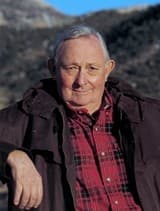
Tony Hillerman (1978)
Genre
Thriller / Mystery
Reading Time
316 min
Key Themes
See below
Sign in to track this book
Lieutenant Joe Leaphorn must navigate a blind shaman's prophecies and the brutal realities of a double murder, exploring a century of dark secrets to unmask a human monster in the Navajo Nation.
Lieutenant Joe Leaphorn arrives at a horrific crime scene: Hosteen Ashie Begay, an old man, and his granddaughter were murdered near a remote, abandoned missile silo on the Navajo Reservation. Begay was scalped and disemboweled, his body posed ritually, while the girl was shot. The scene is disturbing, suggesting more than a simple robbery. Leaphorn, a pragmatic officer, dismisses local rumors of witchcraft and restless spirits, including those from the blind shaman, Listening Woman. He begins his investigation, focusing on evidence and witness interviews, determined to find a human perpetrator for this savage act.
Listening Woman, a revered blind shaman, comes to the crime scene with Begay's family. She describes visions of 'skinwalkers' and 'chindi' (evil spirits) and warns of ancient evils. Leaphorn, rational as always, finds this frustrating. Her prophecies, however, hint at a connection to events from a hundred years ago. Soon after, the FBI, led by Agent Johnson, arrives and takes jurisdiction. Begay's truck was used in a recent bank robbery. This frustrates Leaphorn, who thinks the FBI is mistaken and the bank robbery is a diversion from the true motive. He continues his own investigation, suspicious of the federal agents' quick conclusion.
Leaphorn looks into the bank robbery, focusing on the missing money and a third robber, a 'John Doe' who disappeared after the heist. He learns that the robbers, including a man named J.D. and the mysterious John Doe, were part of a radical anti-government group. The FBI believes Begay was involved in hiding the money, leading to his death. Leaphorn, however, suspects Begay was an unwitting pawn. He traces Begay's last movements and his connection to various individuals, including a reclusive white man known as 'The Hermit,' who lives in the remote canyonlands. Leaphorn's investigation into the bank robbery begins to show a complex web of radical ideology and hidden agendas, different from the FBI's theory.
Leaphorn tracks down 'The Hermit,' a former professor named Albert Gorman, who had ties to the radical group and mentored J.D. and the missing John Doe. Gorman is uncooperative but reveals details about the group's anti-government views and plans for a 'final confrontation.' Leaphorn learns that Gorman harbored the radicals and helped them with their ideological aims, though he denies direct involvement in the bank robbery or murders. This interview confirms Leaphorn's suspicion that the killings are more complex than a simple robbery gone wrong, pointing to a larger, politically motivated conspiracy. He realizes the silo where Begay was murdered might be more than just a hiding place for money.
Leaphorn examines Begay's belongings, finding a hidden message in a traditional Navajo rug pattern and in the arrangement of ceremonial objects. He realizes Begay, a respected elder, used a Navajo code to hint at an important location. He re-examines the missile silo, understanding it is not just a storage site for stolen money, but a symbol or key location for the radical group. He deduces that the group planned to use the silo for some form of protest or attack, and that Begay's knowledge of the area and traditional ways made him a target. The 'John Doe' is a key member of the radical group, and his disappearance with the money is deliberate.
Leaphorn, convinced that John Doe is the primary suspect and planning something significant, tracks him into a remote and dangerous canyon system. He uses his deep knowledge of the Navajo land and tracking skills to follow John Doe's trail, anticipating a violent confrontation. He understands that John Doe, a fanatic, will likely be armed and desperate. Leaphorn's pursuit is solitary and dangerous as he navigates the rugged terrain, aware he is closing in on a highly motivated and dangerous individual who believes he is fighting for a cause. The canyon becomes an arena for the clash between law and radical ideology.
During his pursuit, Leaphorn pieces together John Doe's plan: he intends to detonate a bomb at the abandoned missile silo, not just as a symbolic act, but to cause a catastrophic collapse of a nearby dam, unleashing widespread destruction. The stolen bank money funded the explosives. Begay and his granddaughter were killed because Begay found John Doe's preparations and refused to cooperate, likely trying to warn authorities using his traditional methods. The 'ritualistic' nature of Begay's murder was a deliberate attempt by John Doe to mislead investigators and create a diversion, playing into Navajo superstitions.
Leaphorn finally catches up to John Doe at the silo, finding him in the final stages of preparing the explosives. A tense confrontation follows. John Doe, revealed to be a man named 'Ashurst,' is a fanatical idealist, convinced his actions are justified to expose government corruption. Leaphorn tries to reason with him, but Ashurst is beyond persuasion. A violent struggle breaks out, with Ashurst determined to complete his mission and Leaphorn equally determined to stop him. The isolated setting of the silo increases the tension, making the confrontation a life-or-death battle of wills and physical strength.
In a climactic struggle, Leaphorn uses his knowledge of the canyon's geology and human psychology to gain the upper hand. He outmaneuvers Ashurst, disarming him and securing the explosives before they can be detonated. Ashurst is apprehended, and the catastrophic dam collapse is averted. The stolen money is recovered, and the true motive behind the murders and bank robbery is exposed. Leaphorn's logical approach, combined with his deep cultural understanding, solves the complex crime, even as it tested his limits against a formidable and fanatical opponent.
Afterward, the FBI handles the remaining details of the case, but Leaphorn solved it. He reflects on the events, recognizing the accuracy of Listening Woman's initial warnings about 'evil spirits,' not as supernatural beings, but as the dark, destructive forces within human nature. While he maintains his rational worldview, he gains a deeper appreciation for the intuitive wisdom of the Navajo elders and how their traditions can reflect deeper truths. The case leaves a mark on Leaphorn, reinforcing his belief in methodical investigation while subtly broadening his understanding of the complex interplay between human nature, tradition, and crime on the reservation.
The Protagonist
Leaphorn's journey reinforces his rational approach to crime but subtly broadens his understanding of the 'evil' Listening Woman spoke of, recognizing it in human fanaticism.
The Supporting
She remains a steadfast voice of traditional wisdom, her prophecies ultimately validated by the events, though interpreted differently by Leaphorn.
The Victim
His past actions and traditional knowledge posthumously guide Leaphorn's investigation, revealing his quiet integrity.
The Antagonist
His fanatical resolve leads him to a violent confrontation and ultimate defeat at the hands of Leaphorn.
The Supporting
He remains largely static, a figure of intellectual disillusionment who indirectly contributed to the tragedy.
The Supporting
He maintains his federal authority throughout, eventually acknowledging Leaphorn's superior local knowledge and investigative skill.
The Mentioned
His death early in the plot serves to narrow the focus onto Ashurst as the primary antagonist.
The Victim
Her death serves as a catalyst for Leaphorn's relentless pursuit of justice.
This theme is central to Leaphorn's character and his investigation. Leaphorn, a man of logic and education, initially dismisses Listening Woman's prophecies as superstition. As the plot unfolds, the 'evil' she speaks of appears not as supernatural beings, but as Ashurst's destructive fanaticism. The book explores how traditional Navajo wisdom, even when expressed metaphorically, can contain truths a purely rational approach might miss. Leaphorn's success comes from applying reason to clues, but the narrative subtly suggests the value of the intuitive understanding embodied by Listening Woman, especially in understanding human nature's darker aspects.
“''Chindi,' she said again, her voice like wind through dry reeds. 'Evil spirits. They walk among us, Joe Leaphorn. They are inside men now.'”
The novel explores the nature of evil, contrasting the traditional Navajo concept of 'chindi' or 'skinwalkers' with the human evil of fanaticism and violence. Initially, the brutal murders suggest a supernatural perpetrator, playing on local fears. However, Leaphorn systematically finds that the true evil lies in Ashurst's calculated, destructive actions, driven by a warped ideology. The book suggests that the most dangerous 'spirits' are those that possess human minds, leading individuals to commit horrific acts for a perceived 'greater good.' This theme challenges simple notions of good and evil, placing responsibility on human choices.
“'The only monsters on this reservation are men, ma'am,' Leaphorn thought, 'and they don't need the dark to do their work.'”
The story highlights the ongoing clash and occasional integration of Navajo tradition with modern American society and law enforcement. Leaphorn, a Navajo man with a Western education, navigates both worlds. The FBI's initial handling of the case, based on conventional criminal motives, contrasts with Leaphorn's deeper understanding of the land and his people's customs. The use of Navajo code in Begay's rug and the traditional significance of the land are important to solving the crime, showing that an external perspective alone is insufficient. The novel illustrates how cultural details and indigenous knowledge can be vital in understanding and solving crimes within a specific cultural context.
“'You Anglos,' Leaphorn thought, 'you see a rock, you see a rock. We see a place where the Holy People walked.'”
This theme is explored through several characters, particularly Leaphorn. He grapples with his identity as a modern, educated Navajo man who is also deeply rooted in his heritage. He bridges two worlds, often feeling some detachment from both. The radical group, especially Ashurst, also struggles with a distorted sense of identity and belonging, finding purpose in extreme ideologies. The victims, Begay and his granddaughter, represent a traditional Navajo identity under threat. The novel questions what it means to belong to a place and a culture, and how those connections can be both a source of strength and vulnerability.
“He was a Navajo, but he was also a policeman, and sometimes those two roles felt like they belonged to different men.”
The vast, remote, and often unforgiving Navajo landscape is more than just a setting; it is a character and a guide for Leaphorn. His knowledge of the canyons, mesas, and desert terrain is important to his tracking and his success in apprehending Ashurst. The land holds secrets, shelters recluses like The Hermit, and is the arena for the final confrontation. It tests Leaphorn's endurance and ingenuity, and its features are often woven into the narrative as clues or obstacles. The harsh beauty of the landscape reflects the challenging nature of the investigation and the isolated lives of its inhabitants.
“The canyon was a labyrinth of rock and shadow, a place where a man could lose himself, or find what he was looking for.”
A symbolic and literal focal point for the crime and the radical plot
The abandoned missile silo serves as the primary crime scene and the ultimate target for Ashurst's destructive plan. Symbolically, it represents the intrusion of modern military technology and its potential for devastation onto sacred Navajo land. Its desolate nature makes it an ideal hiding place and a symbolic stage for Ashurst's anti-government act. For Leaphorn, it's a cold, alien structure contrasting with the natural world, yet its physical properties and its history become central to understanding the motive and mechanism of the crime.
A hidden language used by the victim to communicate vital information
Hosteen Ashie Begay's traditional Navajo rug patterns and the arrangement of his ceremonial objects function as a crucial plot device. Leaphorn's understanding of Navajo culture allows him to interpret these seemingly innocuous details as a hidden code or message. This device highlights the depth of Navajo cultural knowledge and its practical application, demonstrating how traditional ways can be used for communication and resistance against external threats, and serving as a direct counterpoint to the FBI's more conventional investigative methods.
A narrative voice offering prophetic, culturally-rooted insights
Listening Woman, the blind shaman, acts as a traditional oracle. Her prophecies, initially dismissed by Leaphorn, provide cryptic but ultimately accurate foreshadowing and thematic depth. She represents the intuitive, spiritual side of Navajo culture that contrasts with Leaphorn's rationalism. Her insights, though not direct clues, guide the reader and subtly influence Leaphorn's subconscious understanding of the 'evil' at play, moving the story beyond a simple police procedural into a deeper exploration of human nature and cultural belief.
A classic mystery trope used to build suspense and misdirection
The unknown identity of the third bank robber, referred to as 'John Doe,' is a classic mystery plot device. It creates suspense and allows for misdirection, as the FBI focuses on the stolen money while Leaphorn digs deeper into the individual's true motives and identity. Unraveling 'John Doe's' identity (Ashurst) becomes a key part of Leaphorn's investigation, revealing the fanatical ideology behind the crimes rather than a simple criminal act. This device effectively drives the narrative forward as Leaphorn peels back layers of deception.
A natural setting that becomes a testing ground for the protagonist
The intricate and dangerous canyon system serves as a physical and metaphorical labyrinth. It's where Leaphorn must use all his tracking skills and knowledge of the land to pursue Ashurst, and where the final confrontation takes place. The canyon's challenging terrain acts as an antagonist itself, testing Leaphorn's endurance and ingenuity. It symbolizes the complex and often hidden nature of the truth, and the isolation required for the intense, solitary pursuit of justice, echoing the themes of the land as a character.
“The wind was a living thing, whining and sighing around the hogan, carrying with it the smell of dust and sage.”
— Describing the atmosphere and setting near the beginning.
“There was a certain futility about trying to outguess a man who acted on no discernible pattern except his own whim.”
— Reflecting on the unpredictable nature of the antagonist.
“The desert could be a lonely place, but it was a loneliness that held a certain peace, if you knew how to listen to it.”
— Joe Leaphorn's contemplation of the Navajo landscape.
“Fear was a cold, hard knot in his stomach, but he had learned to live with it, to use it as a kind of fuel.”
— Leaphorn facing danger and his internal response.
“The old ways were not always the best ways, but they contained wisdom that the new ways had forgotten.”
— A reflection on tradition versus modernity within Navajo life.
“Silence was not empty in the desert; it was filled with the sound of everything that was not being said.”
— Another observation about the unique nature of the desert environment.
“He understood then that true evil wasn't a grand, theatrical gesture, but a quiet, methodical unraveling of what was good.”
— Leaphorn's realization about the nature of the antagonist's actions.
“The sun, when it finally broke over the horizon, wasn't a gentle awakening but a brutal, blinding assault.”
— Describing a sunrise in the harsh desert environment.
“Every lie, no matter how small, created a tiny tear in the fabric of truth, and enough tears could unravel everything.”
— A thought on the destructive power of deceit.
“He had always believed that a man's actions were the truest reflection of his soul, far more than his words.”
— Leaphorn's personal philosophy on judging character.
“The past was a weight, a burden that some carried lightly and others found crushing.”
— Reflecting on the impact of history and past events on individuals.
“There was a kind of beauty in the absolute desolation, a stark, uncompromising grandeur.”
— Appreciating the unique aesthetic of the barren landscape.
“Justice, he thought, was a concept often talked about but rarely seen in its pure, unblemished form.”
— Leaphorn's cynical view on the practical application of justice.
“The human mind, even when under duress, sought patterns, made connections, tried to impose order on chaos.”
— Observing the psychological drive to understand and rationalize during a difficult situation.
Ready to see how well you understood this book? Take our interactive quiz with 10 questions.
Biography coming soon.







