“I was born on an island. Every island is a world, and every world is a story.”
— The narrator's opening reflection on his origins and the nature of islands.

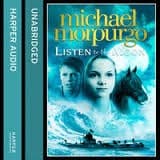
Michael Morpurgo (2015)
Genre
Children's / Historical Fiction / Young Adult
Reading Time
240 min
Key Themes
See below
Sign in to track this book
Washed ashore on a remote island during WWI with no memory but a love for music, a mysterious girl named Lucy, and the boy who found her, must navigate a world of suspicion, war, and the haunting melodies that may unlock her past.
In May 1915, during World War I, twelve-year-old Alfie and his fisherman father, Jim, check lobster pots near the uninhabited island of Sampson in the Scilly Isles. They find a young girl, about Alfie's age, severely injured, dehydrated, and with complete amnesia. She can only say 'Lucy'. Jim takes her back to their home on Bryher. Islanders are immediately suspicious, given the ongoing war and the recent sinking of the Lusitania; some fear she could be a German spy or a victim of a U-boat attack. Alfie feels a strong connection to her and wants to help her recover her memory and identity.
On Bryher, Lucy is cared for by Alfie's mother, Annie, and his Auntie May. She remains withdrawn and fearful, her memory still blank. The local doctor, Dr. Crow, examines her but suggests only rest and quiet. Alfie spends much time with Lucy, trying to comfort her. He discovers she responds strongly to music, especially when he plays records on his father's gramophone. The melodies seem to stir something in her, bringing fleeting moments of clarity and emotion, though no concrete memories. This shared love for music strengthens their bond, offering hope amid the fear and uncertainty about her origins.
As news of the mysterious girl spreads through the Scilly Isles, suspicion and fear grow. The sinking of the Lusitania earlier that month has increased anti-German sentiment, and many islanders, including Mrs. Morwenna, openly worry that Lucy could be a German spy. The local policeman, Sergeant Pengelly, gets involved, bringing in a senior officer, Inspector Jenkins, from the mainland. Jenkins, a stern man, believes Lucy is hiding something and begins a formal investigation, questioning Alfie, his family, and other islanders, pressuring them for information about Lucy's past.
The story shifts to a parallel narrative, introducing Merry, a young girl traveling with her parents, Mr. and Mrs. Evans, on the RMS Lusitania, a luxurious ocean liner. Merry is excited about the journey to America, where her father, a musician, will perform. The ship is lively with music and the anticipation of a new beginning. However, tension exists due to the war and warnings from the German embassy. Merry, a violinist, practices and enjoys the ship's amenities, unaware of the coming disaster that will change her life and connect her fate to 'Lucy' on the Scilly Isles.
The journey on the Lusitania ends abruptly when a German U-boat torpedoes the ship off the coast of Ireland. Chaos follows as passengers rush for lifeboats. Merry and her parents are caught in the confusion. Her father, Mr. Evans, secures a life jacket for Merry and puts her in a lifeboat, telling her to 'listen to the moon' if she gets lost, a comforting phrase he often used. He and Mrs. Evans cannot board a lifeboat, sacrificing their chance to save their daughter. Merry sees the ship sink quickly and the horror that follows, a traumatic event that will later cause her amnesia.
Back on Bryher, Lucy's connection to music grows. Alfie plays more records, and under the moonlight, familiar melodies seem to unlock fragmented memories. She begins to hum tunes, and certain sounds, like gulls crying or waves rushing, trigger flashes of the Lusitania. She often speaks of 'Papa' and 'Mama' and 'the music.' Alfie and his family patiently encourage her, realizing her amnesia protects her from trauma. They start to suspect she is a Lusitania survivor, a theory that gains support as more details emerge from her subconscious.
Dr. Crow, observing Lucy's progress, starts to connect the clues. He links Lucy's amnesia, age, sensitivity to sound, and the timing of her appearance to the Lusitania sinking. He explains to Alfie and his family that her mind suppressed the trauma, but music is helping her recover. He advises them to continue with music and speak gently about her past, without forcing her. This medical confirmation brings relief and renewed hope to Alfie and his family, solidifying their belief that Lucy is Merry, a survivor of the tragic sinking.
With Dr. Crow's help, Alfie's family begins the difficult task of identifying Lucy and finding her relatives. They contact authorities and humanitarian organizations, providing details about the girl, her age, and her connection to music. They check Lusitania passenger lists, hoping to find a match for a family with a young daughter and a musician father. The process is slow and frustrating, made harder by wartime chaos and many casualties. However, their persistence eventually finds a promising lead, pointing them toward the Evans family.
Through investigation, it is confirmed that 'Lucy' is Merry Evans, and her paternal grandmother, Mrs. Evans Sr., is located. The grandmother travels to the Scilly Isles, and a reunion happens. Merry, though still fragile, recognizes her grandmother, and more memories return, including the traumatic events of the Lusitania. The time comes for Merry to leave Bryher and return with her grandmother, a bittersweet moment for Alfie and his family. Alfie struggles with the separation but understands Merry needs to be with her remaining family.
Merry leaves Bryher with her grandmother, starting a new chapter in her recovery. She continues to heal from the trauma and regain more of her memory, though the scars of the Lusitania will always remain. Despite the distance, Merry and Alfie write to each other, keeping their bond strong. Alfie, who played a role in Merry's recovery, carries the experience with him, having learned about resilience, compassion, and human connection during war. The story ends with the understanding that while Merry's healing journey is long, she is no longer alone, and the music that brought her back continues to guide her.
The Protagonist
Alfie grows from a typical island boy into a more mature and understanding individual, learning about trauma, resilience, and the power of kindness.
The Protagonist
Merry recovers from severe amnesia and trauma, slowly piecing together her past and reuniting with her family, while carrying the scars of her experience.
The Supporting
Jim remains a steadfast and compassionate figure, providing stability and support for his family and Lucy.
The Supporting
Annie consistently provides maternal care and emotional support, demonstrating unwavering kindness.
The Supporting
Dr. Crow evolves from a cautious observer to a vital medical and investigative aid in Merry's recovery.
The Supporting
Mrs. Morwenna remains largely unchanged, representing the island's initial fearful reaction to the unknown.
The Supporting
Inspector Jenkins begins as a skeptical authority figure but is eventually swayed by evidence and Dr. Crow's findings.
The Mentioned
His arc is presented in flashback, showing his loving nature and tragic loss, which deeply impacts Merry's life.
The Supporting
She appears at the end of the story to provide a new home and family for Merry, offering a sense of resolution.
The novel explores the psychological impact of trauma through Merry's amnesia after the Lusitania sinking. Her inability to recall her past is a protective mechanism. Her gradual recovery, triggered by music and gentle care, shows the complex nature of memory and healing. The story shows how devastating events can shatter identity and how the mind copes, often through suppression, until a safe environment allows recovery. Alfie's patience and music are central to unlocking these suppressed memories.
“She could say only one word: Lucy. Where had she come from? Was she a mermaid, the victim of a German U-boat, or even – as some islanders suggest – a German spy…?”
A central theme is the contrast between Alfie and his family's compassionate response to the unknown girl and the fear-driven suspicion of many islanders. During war, xenophobia and paranoia increase, leading some to see 'Lucy' as a threat. Alfie's kindness and his family's willingness to shelter and care for her stand against the prejudiced reactions of characters like Mrs. Morwenna. This theme shows the importance of empathy and humanity, even during widespread fear and uncertainty.
“Some said she was a mermaid, some a victim of a U-boat, some even a German spy. But Alfie knew, just knew, that she was none of those.”
Music is a motif and a plot device in the novel. It is the primary catalyst for Merry's memory recovery, providing a non-verbal path to her suppressed past. Her father's profession as a musician and her own talent for the violin connect her deeply to sound. The gramophone, played by Alfie, becomes a therapeutic tool. Familiar melodies stir emotions and fragmented images, helping her piece together her identity. Music transcends language and trauma, acting as a universal healer and a bridge to the soul.
“It was the music, Alfie decided, that did it. The music seemed to reach into her, into the locked room of her mind, and open a door.”
The novel shows the resilience of children, both in Merry's ability to survive and slowly recover from trauma, and in Alfie's determination to help her. Their friendship is the emotional core of the story, showing how strong connections can form even in challenging circumstances. Alfie's support provides the safe and loving environment Merry needs to heal, illustrating the impact a compassionate friend can have on a child's recovery and sense of belonging.
“He would not give up on her. He had found her, and he would help her find herself again.”
While set during World War I, the novel focuses less on battlefield heroics and more on war's impact on civilians, especially children. The Lusitania sinking, a civilian ship, shows the indiscriminate nature of conflict. The fear, suspicion, and paranoia on the home front, seen in the islanders' reactions, further illustrate how war affects every aspect of life, even far from the trenches. Merry's story is about the hidden casualties and psychological scars left by global conflict.
“The Lusitania had been sunk just weeks before. Hundreds of lives lost. German U-boats were everywhere. And here was a girl, washed up, with no memory. It was unsettling.”
Alternates between 'Lucy's present and Merry's past on the Lusitania.
The novel employs a dual narrative structure, alternating between Alfie's present-day discovery and care of 'Lucy' on the Scilly Isles and Merry Evans's past experience aboard the ill-fated Lusitania. This device slowly reveals Merry's true identity and the traumatic events that led to her amnesia, building suspense and allowing the reader to piece together the mystery alongside Alfie. It effectively contrasts the quiet, healing environment of the island with the chaotic horror of the sinking ship, drawing a clear line from cause to effect in Merry's condition.
A key plot driver, creating mystery and highlighting trauma.
Amnesia serves as the central plot device, driving the mystery of 'Lucy's identity and her past. It creates immediate suspense and allows the narrative to explore themes of memory, trauma, and identity. Her blank slate forces characters like Alfie to look beyond superficial appearances and engage with deep empathy. The slow, fragmented return of her memories, often triggered by sensory experiences like music, forms the core of her character arc and the book's emotional journey, making her recovery a central goal for both characters and readers.
A symbolic and therapeutic object that unlocks memories.
The gramophone, and the music it plays, functions as a powerful symbolic and plot device. It is not merely a source of entertainment but becomes a therapeutic tool, a key to Merry's subconscious. The melodies act as a bridge to her past, triggering fragments of memory and emotion. It symbolizes the healing power of art and connection, demonstrating how non-verbal cues can bypass trauma and reach deep into the mind. Alfie's act of playing the gramophone is a consistent gesture of care and love, making the object central to their bond and Merry's recovery.
A recurring motif and a symbol of paternal comfort and guidance.
The phrase 'listen to the moon' is a recurring motif and a comforting anchor from Merry's past. Uttered by her father on the Lusitania, it serves as a tender, almost mystical instruction for her to find solace and guidance in darkness. While not a literal instruction, it represents the enduring love of her parents and the idea that even when lost, there are quiet, natural forces that can offer comfort and direction. For Merry, it becomes a deep-seated memory, a whisper from her past that helps guide her back to herself, symbolizing hope and connection amidst despair.
A remote, isolated setting that emphasizes both community and vulnerability.
The setting of the remote Scilly Isles is crucial. Its isolation makes the arrival of 'Lucy' a significant, almost alien event, highlighting both the close-knit nature of the community and their vulnerability to external fears (like German spies). The islands provide a serene, natural environment for Merry's healing, contrasting with the chaos of the war. However, their remoteness also amplifies suspicion and makes the process of identifying Lucy more challenging, underscoring the difficulties faced by those on the periphery of major global events.
“I was born on an island. Every island is a world, and every world is a story.”
— The narrator's opening reflection on his origins and the nature of islands.
“Sometimes you just have to trust that there’s a reason for everything, even if you don’t know what it is.”
— Lucy’s mother offers words of comfort and wisdom during a difficult time.
“The sea, it gives and it takes away. It always has, and it always will.”
— A local fisherman's poignant observation about the power and unpredictability of the ocean.
“She was like a ghost, a whisper from a time almost forgotten, yet she was real.”
— The islanders' initial impression of Lucy, a mysterious girl washed ashore.
“War makes strangers of us all, even those we love.”
— A character reflects on the devastating impact of war on human relationships.
“The moon listens, you see. It hears everything. And sometimes, it tells you things too.”
— An old woman shares a local superstition or belief about the moon.
“To forget is to lose a part of yourself. To remember, even the painful things, is to be whole.”
— A character's strong belief in the importance of remembering history and personal experiences.
“Hope is a fragile thing, but it’s all we have sometimes.”
— During a desperate situation, a character clings to the idea of hope.
“Every wave that breaks on the shore has traveled a long way to get there, carrying stories with it.”
— The narrator's metaphorical reflection on the journey of waves and the stories they represent.
“You can't choose where you come from, but you can choose where you're going.”
— A piece of advice given to Lucy about her future, despite her unknown past.
“Silence can be a comfort, or it can be a torment. It depends on what you're listening for.”
— A character pondering the dual nature of silence and its emotional impact.
“The past is never truly gone. It waits, like a tide, to come back and touch the present.”
— A profound statement about the enduring influence of historical events.
“Sometimes, the smallest acts of kindness are the ones that save us.”
— Reflecting on the unexpected help and compassion received from strangers.
Ready to see how well you understood this book? Take our interactive quiz with 10 questions.

Biography coming soon.

Dan Gemeinhart
4.5
Kate O'Hearn
4.4

Jeanne Birdsall
4.4

Jen Wang
4.4

Wendelin Van Draanen
4.3

John Marsden
4.3

Chris Van Allsburg
4.3
Jennifer A. Nielsen
4.2