“We were, at that moment, in possession of a happiness that was so vast and all-encompassing that it seemed to be the only thing that had ever existed.”
— A ghost reflecting on a memory of life.

George Saunders (2017)
Genre
Literary Fiction / Fantasy / Historical Fiction
Reading Time
7-8 hours
Key Themes
See below
Sign in to track this book
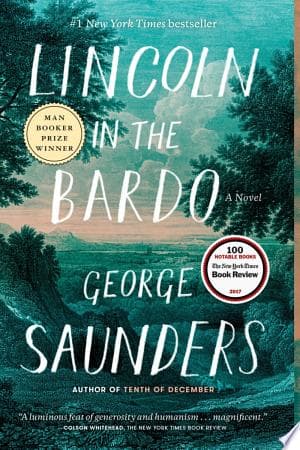
In a spectral Georgetown cemetery, a grief-stricken Abraham Lincoln visits the bardo where his deceased son, Willie, is caught in a hilarious and terrifying purgatory with a chorus of chattering ghosts, all grappling with the messy, unfinished business of life and death.
In February 1862, during the early days of the Civil War, President Abraham Lincoln's eleven-year-old son, Willie, dies from typhoid fever at the White House. He is buried in a crypt at Oak Hill Cemetery in Georgetown. Unbeknownst to the living, the cemetery is a bustling purgatorial realm, a 'bardo,' where deceased souls linger, unaware they are truly dead. They refer to their coffins as 'sick-boxes' and their spectral forms as 'sick-forms.' Three main ghosts—Hans Vollman, a printer who died just before consummating his marriage; Roger Bevins III, a young man who committed suicide after a perceived romantic slight; and the Reverend Everly Thomas, a timid minister terrified of eternal damnation—observe Willie's arrival. Willie, still a child, is confused but quickly adapts to his new, eerie surroundings.
President Lincoln, consumed by grief, makes several secret visits to Willie's crypt, often returning late at night to hold his son's body. His sorrow and the love he projects disturb the equilibrium of the bardo. The ghosts, who normally avoid contact with the living, find themselves drawn to the President's suffering. Vollman, Bevins, and Reverend Thomas are particularly affected, sensing a unique spiritual weight in Lincoln's presence. They see his raw, human pain, which briefly makes them reflect on their own lives and deaths, though their primary focus remains their 'sick-forms' and the perceived temporary nature of their stay.
As Lincoln continues his visits, the spectral residents of the cemetery grow concerned for Willie. Unlike most adult ghosts who cling to the illusion of being merely ill, Willie, being a child, is more susceptible to the bardo's true nature and the risk of becoming permanently trapped. The ghosts understand that if he remains in the cemetery, his soul could be twisted and his chance at moving on to the next life—or 'the matterlightblooming phenomenon' as they call it—would be lost. Vollman, Bevins, and Reverend Thomas, along with other spirits, feel an urgency to help Willie transition, realizing the President's visits, though born of love, are unintentionally anchoring Willie to the bardo.
The three main narrators, joined by many other spirits including the enslaved Elizebeth Croxall, the boastful Eddy Taft, and the gossipy Mrs. Francis Hodge, try various methods to communicate with Willie and prepare him for his departure. They explain their understanding of the bardo, though their individual interpretations often conflict. They recount their own life stories and deaths, hoping to impart wisdom or at least a sense of what lies beyond. Willie, a curious and intelligent child, listens, but his attachment to his father and the novelty of his surroundings make him hesitant to leave, even as he senses the underlying strangeness and potential danger.
During his final, long visit to Willie's crypt, Lincoln engages in a deep internal monologue, thinking about his son's life, his own failures as a father, the toll of the Civil War, and the question of divine justice. He holds Willie's body, his thoughts a torrent of sorrow, love, and philosophical inquiry. The ghosts, particularly Vollman, Bevins, and Reverend Thomas, are deeply moved by his suffering. They experience flashes of his memories and emotions, gaining a deeper understanding of human life and the complexities of the world they left behind. This shared experience creates a growing sense of empathy among the disparate spirits.
In a key moment, as Lincoln cradles Willie's body, his grief becomes so overwhelming that it creates an opening, a fissure between the living and the dead. The ghosts, driven by their desire to help Willie and their newfound connection to Lincoln's pain, enter his body and mind. They experience his thoughts, his memories, his sorrow, and his burden as President. This temporary possession is not malicious but an act of desperate communion, allowing them to feel the weight of his responsibilities and the depth of his love, and to subtly try to communicate with Willie through his father.
Inside Lincoln's consciousness, the ghosts continue their efforts to guide Willie. They explain that remaining in the bardo will lead to a horrific transformation into a 'matterlightblooming phenomenon,' a distorted, monstrous version of their former selves, forever trapped and suffering. Willie, seeing his father's love and the suffering of the other trapped souls, begins to understand the urgency. He struggles with the idea of leaving his father, but the collective wisdom and warnings of the ghosts, combined with his own innocence, push him towards a decision.
With a final, tender farewell to his father, which Lincoln perceives as a fleeting, comforting sensation, Willie Lincoln makes the decision to move on. He embraces the unknown, guided by the collective good wishes of the bardo's inhabitants. His departure is a beautiful, luminous event, a 'matterlightblooming phenomenon' of a different, transcendent kind. The ghosts, who had so desperately sought to help him, witness his ascension with a mixture of relief, wonder, and a renewed, albeit brief, sense of hope for their own eventual release.
After Willie's departure, Lincoln emerges from the crypt, changed. While he has no conscious memory of the ghosts or their interventions, the experience of their brief inhabitation of his mind has left a mark. He carries a heightened awareness of human suffering, a deeper understanding of the interconnectedness of life and death, and a renewed resolve for the challenges of the Civil War. His grief, though still present, is now tempered by a subtle, inexplicable sense of peace and a broader perspective on existence, influencing his future decisions and leadership.
Even after Willie's successful transition, the bardo remains for its other inhabitants. Vollman, Bevins, and Reverend Thomas, along with the other spirits, continue their existence in the cemetery, still largely clinging to their individual illusions and grievances. However, their collective experience with Willie and Lincoln has subtly altered them. They retain a lingering memory of the empathy they felt and the glimpse into the living world. While their personal journeys in the bardo are far from over, the event of Willie's departure is a powerful, if often unacknowledged, reminder of the possibility of release and the ultimate destination beyond their current state.
The Protagonist
Lincoln's grief evolves from raw, personal sorrow into a deeper, more empathetic understanding of human suffering, influencing his resolve as a leader.
The Central Figure
Willie transitions from a confused, earthbound spirit to one who bravely accepts his death and moves on to the next realm.
The Supporting
Vollman's focus shifts from his own earthly desires to a collective concern for Willie, briefly experiencing profound empathy through Lincoln.
The Supporting
Bevins's self-pity and philosophical musings expand into genuine empathy for Willie and Lincoln, glimpsing a broader understanding of love and loss.
The Supporting
Thomas's rigid religious anxieties are challenged by the bardo's reality and his shared experience with Lincoln, offering a glimpse of grace beyond dogma.
The Supporting
Croxall's desperate search for her children continues, but her interaction with Willie and Lincoln briefly refocuses her spectral energy on collective care.
The Supporting
Taft remains largely static, his spectral form reflecting his earthly vanity, serving as a foil to the more compassionate spirits.
The Supporting
Hodge's judgmental nature remains, but she is momentarily united with other ghosts in their concern for Willie.
The Antagonist/Symbolic
It remains a constant, terrifying possibility, driving the narrative's urgency.
The novel explores grief, particularly through Abraham Lincoln's raw sorrow over his son Willie's death. His repeated visits to the crypt, his internal monologues, and his physical interactions with Willie's body show the depth of parental love and the agony of its loss. The ghosts, too, are manifestations of unresolved grief and attachment to their past lives, demonstrating how loss can trap individuals in a state of limbo. The collective effort to help Willie move on signifies a communal processing of loss, extending beyond individual suffering to a shared humanity.
“He knew, in that moment, that the world was not a place of order and justice, but a place of chaos and suffering, and that the only thing that made it bearable was love.”
The central theme is the space between life and death, the 'bardo' (a Tibetan Buddhist concept of an intermediate state). The book presents death not as an end, but as a complex transition, populated by spirits who are largely unaware of their true state, clinging to earthly illusions. Through the diverse experiences and perspectives of the ghosts, Saunders explores various interpretations of the afterlife, the lingering effects of one's earthly existence, and the necessity of letting go to move towards an unknown 'matterlightblooming phenomenon.' It questions what 'life' and 'death' are and the boundaries between them.
“We were not dead, you see. We were merely…ill. Gravely ill, it was true, but not dead.”
A powerful theme is the transformative power of empathy, as the disparate ghosts find common ground in their concern for Willie and their shared experience of Lincoln's grief. Initially self-absorbed, they gradually develop a collective consciousness and a deep connection to Lincoln's suffering when they inhabit his body. This shared experience transcends their individual prejudices and neuroses, creating a temporary but powerful bond among them. It suggests that true connection and compassion can bridge even the divide between life and death, leading to acts of selflessness.
“And in that moment, he felt a great wave of love, not for himself, but for this suffering man, this struggling leader, this father who loved his son.”
The book explores various forms of freedom and imprisonment. The ghosts are literally imprisoned in the bardo by their unresolved earthly attachments, regrets, and illusions, unable to move on. Lincoln, though living, is imprisoned by his grief and the responsibilities of the presidency and the Civil War. The ultimate freedom for the ghosts is to accept their death and transition, while for Lincoln, it is finding a way to carry his grief without being consumed by it, allowing him to lead with renewed purpose. The character of Elizebeth Croxall also highlights literal imprisonment through slavery and the lingering desire for freedom even in death.
“The soul will not be at peace, until it has done what it was meant to do.”
The historical context of the Civil War and Lincoln's presidency forms a backdrop, connecting individual grief to national suffering. The many voices, historical and fictional, create a mosaic of American history, revealing the diverse perspectives and experiences of the era, from enslaved people to soldiers and socialites. Lincoln's internal struggle is not just personal but also deeply intertwined with the fate of the nation. The book suggests that history is not just a collection of facts but a living, breathing experience, and that the burdens of the past continue to shape the present.
“The great task remaining before us… that from these honored dead we take increased devotion to that cause for which they gave the last full measure of devotion.”
A multitude of distinct voices narrating the story from varying perspectives.
The novel is largely told through a 'choral' or polyphonic narrative, consisting of hundreds of distinct, often conflicting, short excerpts attributed to various historical sources (real and invented) and the many ghosts in the bardo. This creates a kaleidoscopic, fragmented, and multi-perspectival view of events, particularly Lincoln's visits and the ghosts' observations. It allows for a rich tapestry of human experience, opinion, and bias, reflecting the chaotic nature of consciousness and memory, and challenging the reader to piece together a coherent truth from disparate accounts.
A purgatorial, liminal space between life and death.
The bardo, a concept borrowed from Tibetan Buddhism, serves as the central setting and primary plot device. It is a purgatorial state where souls linger after death, unaware they are truly deceased, referring to their coffins as 'sick-boxes' and their spectral forms as 'sick-forms.' This liminal space allows for the interaction between the living (Lincoln) and the dead (Willie and the other ghosts), driving the core conflict and the ghosts' efforts to guide Willie. It's a metaphorical space for unresolved issues, clinging attachments, and the ultimate journey of letting go.
Brief, attributed snippets of historical and fictional texts.
Throughout the novel, short, attributed quotes from various historical sources (biographies, letters, newspaper articles, diaries) are interspersed with the ghostly narratives. These interjections, sometimes factual and sometimes subtly altered or invented by Saunders, provide historical context, anchor the fantastical elements in reality, and often highlight the subjective nature of historical truth. They create a layered sense of authenticity and contribute to the polyphonic structure, revealing how Lincoln and his grief were perceived by his contemporaries.
Spectral forms that reflect the ghosts' earthly attachments.
A unique plot device is the way the ghosts' spectral bodies physically manifest their unresolved earthly issues or desires. Hans Vollman's perpetually engorged penis symbolizes his unconsummated marriage, Roger Bevins III's multitude of eyes and noses reflect his heightened sensitivity and emotional turmoil, and the Reverend Thomas's 'sick-form' is often contorted by his guilt and fear of damnation. These physical manifestations serve as constant reminders of their 'unfinished business' and visually represent their psychological states, making the abstract concept of spiritual limbo tangible and often darkly humorous.
Ghosts briefly entering and experiencing the consciousness of a living person.
A crucial plot device occurs when the ghosts, particularly Vollman, Bevins, and Reverend Thomas, are able to briefly enter and experience Lincoln's consciousness. This 'inhabitation' is not malicious but born of extreme empathy and a desperate attempt to communicate with Willie through his father. It allows the ghosts to gain profound insight into the living world, Lincoln's immense suffering, and the weight of his responsibilities, while also subtly influencing Lincoln's perspective. It blurs the lines between living and dead, and mind and spirit, creating a powerful moment of shared experience and connection.
“We were, at that moment, in possession of a happiness that was so vast and all-encompassing that it seemed to be the only thing that had ever existed.”
— A ghost reflecting on a memory of life.
“The thing about the dead is they are so terribly, terribly dead.”
— A ghost lamenting the finality of death.
“We are here to love and serve each other. That is all.”
— A ghost expressing a realization about life's purpose.
“I was, in life, a man of some consequence, but here I am nothing.”
— A ghost confronting the loss of identity in the afterlife.
“The boy is not dead. He is merely sleeping.”
— Willie Lincoln's ghost denying his own death.
“We are all just stories in the end.”
— A ghost reflecting on the nature of existence.
“The world is a place of such beauty and such horror, and we are all caught in between.”
— A ghost contemplating the duality of life.
“I have done things I am not proud of, but I have also loved deeply.”
— A ghost confessing regrets and redemption.
“The living do not understand the dead, and the dead do not understand the living.”
— A ghost observing the divide between life and death.
“We are all just waiting for something to happen, but nothing ever does.”
— A ghost expressing the stagnation of the bardo.
“The love of a parent for a child is the strongest force in the universe.”
— Reflecting on Abraham Lincoln's grief for Willie.
“I am not ready to go, but I am not sure I want to stay.”
— A ghost torn between moving on and lingering.
“The past is a weight we carry, but it is also what makes us who we are.”
— A ghost reflecting on the burden and value of memory.
“In the end, all we have is each other.”
— A ghost realizing the importance of community.
Ready to see how well you understood this book? Take our interactive quiz with 10 questions.
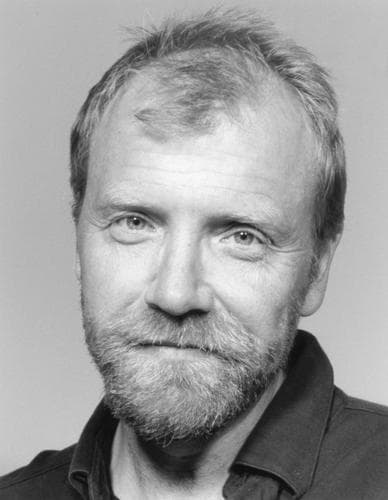
George Saunders is an American writer of short stories, essays, novellas, children's books, and novels. His writing has appeared in The New Yorker, Harper's, McSweeney's, and GQ. He also contributed a weekly column, American Psyche, to The Guardian's weekend magazine between 2006 and 2008.







