“Tita was so sensitive to onions, any time she was near one, she started to cry.”
— Describing Tita's unique sensitivity from childhood, linking her emotions to food.

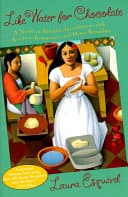
Laura Esquivel (1992)
Genre
Fantasy / Historical Fiction / Romance
Reading Time
360 min
Key Themes
See below
Sign in to track this book
Tita's forbidden love and intense emotions magically infuse her cooking, causing desires and upheaval on a Mexican ranch.
Tita De la Garza is born on the kitchen table, amid ingredients for noodle soup, during a flood of her own tears. Her mother, Mama Elena, is chopping onions, believed to have caused Tita's early labor. Tita's birth gives her a strong connection to food and the kitchen, where she feels most at home. Her tears are so many they fill a five-kilo sack of salt, which Nacha, the ranch cook and Tita's surrogate mother, collects and uses for years. From a young age, Tita is always with Nacha in the kitchen, learning culinary secrets and finding comfort in the smells and tastes that shape her life.
When Tita is sixteen, Pedro Muzquiz arrives at the De la Garza ranch and quickly falls in love with her. He asks Mama Elena for Tita's hand in marriage. However, Mama Elena follows a strict family tradition: Tita, as the youngest daughter, must care for her mother until Mama Elena's death and cannot marry. This tradition has been passed down for generations, and Mama Elena will not change her mind. Pedro is heartbroken, and Tita realizes the barrier between them caused by her mother and an old custom.
Desperate to stay near Tita, Pedro accepts Mama Elena's surprising offer: he will marry Tita's older sister, Rosaura. Tita is devastated by this, feeling betrayed. Pedro tells Tita he is only marrying Rosaura to be close to Tita, and his love for her will never change. This creates a painful love triangle, keeping Tita near her beloved but always out of reach. Wedding preparations begin, and Tita must bake the wedding cake, putting her deep sorrow into it.
Tita bakes the wedding cake for Pedro and Rosaura's ceremony, her tears mixing into the batter. During the wedding feast, guests who eat the cake are overcome with sadness, vomiting, and longing for lost loves. Even Mama Elena is affected, though she tries to hide her emotions. Nacha, who tasted Tita's sorrow in the cake, dies shortly after the wedding, unable to bear Tita's grief. This event shows Tita's powerful ability to transfer her emotions through her cooking, affecting all who eat her food.
To celebrate Rosaura and Pedro's first anniversary, Tita makes Quail in Rose Petal Sauce, using roses from Pedro. As she cooks, Tita's strong feelings for Pedro infuse the food. When the family eats the dish, a wave of intense heat and desire washes over them. Gertrudis, Tita's middle sister, feels an overwhelming desire, causing her to spontaneously combust and set the shower on fire. She then runs naked from the ranch and is carried away by a revolutionary soldier on horseback, embracing a life of freedom and passion, free from Mama Elena's control.
Rosaura gives birth to her second child, a son named Roberto. However, Rosaura cannot produce milk to nurse him, and the baby is starving. Tita, despite never having given birth, miraculously begins to lactate and nurses Roberto, forming a deep bond with him. Mama Elena, fearing the growing closeness between Tita and Pedro through their care for Roberto, sends Rosaura, Pedro, and Roberto to San Antonio, Texas. Soon after they leave, Tita hears that Roberto has died, likely from starvation, which devastates her and causes a deep depression.
Devastated by Roberto's death and Mama Elena's ongoing cruelty, Tita withdraws completely, refusing to speak and becoming catatonic. Mama Elena, unable to handle Tita's condition, sends her to a mental asylum. Dr. John Brown, a kind American doctor, cares for Tita. He patiently helps her recover, encouraging her to draw and offering compassion she never received from her family. John falls in love with Tita, seeing her unique spirit and understanding her emotional depth.
Mama Elena falls ill and dies from an overdose of a laxative. Her death gives Tita a temporary sense of freedom, but Mama Elena's ghost returns to haunt Tita, appearing as a terrifying spirit, continuing her criticism and interference in Tita's life. The ghost especially targets Tita's relationship with Pedro, trying to prevent any intimacy between them. Tita eventually confronts the ghost, using her strong emotions and a candle's light to banish her mother's spirit, finally freeing herself from her mother's control.
Gertrudis, who left the ranch years ago, returns as a celebrated general in the revolutionary army, with her husband, Juan. Her return is a joyful event, bringing a sense of freedom and a contrast to the ranch's oppressive atmosphere under Mama Elena. Gertrudis represents freedom, sensuality, and strength, having embraced her desires and found her own path. She encourages Tita to seek her own happiness and challenges the traditional limits that bound Tita, offering support and a different view on life and love.
Rosaura's health declines over the years due to severe digestive problems, a result of her inability to process her emotions and the rich foods she eats. She becomes obese and suffers from chronic flatulence. Her death finally removes the last physical barrier between Tita and Pedro. Tita feels a mix of sadness and relief, as Rosaura's passing means the end of the imposed love triangle and the true start of her potential happiness with Pedro, after decades of longing.
After Rosaura's death, Tita and Pedro are free to marry. On their wedding night, after years of suppressed desire, they make love. Their passion is so intense it creates a powerful internal fire, similar to what happened with Gertrudis and the Quail in Rose Petal Sauce. Pedro experiences a surge of heat that leads to his death in Tita's arms, overwhelmed by their shared passion. Tita, unwilling to live without him, eats candles to ignite her own internal fire, joining Pedro in an all-consuming blaze that burns down the entire ranch, leaving only a cookbook behind.
The Protagonist
Tita transforms from a submissive, heartbroken girl into a woman who defies tradition and ultimately embraces her true desires, finding freedom and love at great personal cost.
The Antagonist
Mama Elena remains largely static, a symbol of unyielding tradition and cruelty, whose death and subsequent haunting represent the struggle to overcome inherited oppression.
The Supporting
Pedro's arc is one of sustained longing and quiet rebellion, culminating in a fiery reunion with Tita that transcends life itself.
The Supporting
Rosaura's arc is one of decline, marked by physical and emotional deterioration, a consequence of her unfulfilled life and repressed emotions.
The Supporting
Gertrudis's arc is one of radical self-liberation, escaping familial oppression to find freedom, love, and a powerful identity.
The Supporting
Nacha's arc is limited but profoundly impactful, serving as Tita's loving mentor and protector, whose death reinforces the power of Tita's emotions.
The Supporting
John's arc is one of offering Tita an alternative path and unconditional love, ultimately stepping aside for her true love.
The Supporting
Chencha remains a steadfast and observant presence, a witness to Tita's struggles and triumphs.
The novel's main conflict is the stifling family tradition that says the youngest daughter must remain unmarried to care for her mother. This tradition directly conflicts with Tita's desires for love, marriage, and self-expression. Mama Elena strictly enforces this tradition, symbolizing the patriarchal and conservative societal norms of the time. Tita's struggle to break free, shown in her forbidden love for Pedro and her emotional cooking, highlights how suppressing individual will for outdated customs is destructive. Gertrudis's escape also shows a rejection of this oppression, demonstrating a different path to freedom.
““Tita was like a chile in nogada, delicious to the sight but a bit bitter to the taste, a dark mystery to all who knew her.””
Food in 'Like Water for Chocolate' is more than just sustenance; it is a magical way to express emotion, passion, and rebellion. Tita's tears, joy, anger, and longing literally go into her dishes, making those who eat her food feel the same intense emotions. The wedding cake of tears makes guests weep and vomit, while the Quail in Rose Petal Sauce ignites uncontrollable passion in Gertrudis. This magical realism shows that emotions, especially suppressed ones, have real, powerful effects. The kitchen becomes Tita's refuge and her main way to communicate and express herself, a place where she can act despite her restricted life.
““The way Tita was feeling, the best thing would have been for her to die on the spot, but she still had a duty to fulfill, to cook the wedding dinner.””
The novel explores different kinds of love, from the forbidden, passionate love between Tita and Pedro to the dutiful, yet unfulfilled, love in Rosaura's marriage. Tita and Pedro's love is marked by great longing, sacrifice, and the hope of being together. Pedro's decision to marry Rosaura, though painful, is a sacrifice made to stay near Tita. The intensity of their suppressed passion eventually becomes a destructive force, consuming them in the novel's fiery end. The story suggests that true love, when denied and repressed for too long, can appear with overwhelming power, leading to both deep joy and tragic outcomes.
““Each person has to find their own way to light their inner fire.””
The De la Garza women deal with their identities in a patriarchal society and under Mama Elena's strict rule. Tita finds her identity and voice through her cooking, subtly rebelling against her mother's authority and societal expectations. Gertrudis embodies open rebellion, leaving the ranch for a life of passion and independence, eventually becoming a general in the revolutionary army. Even Mama Elena, despite her tyranny, was shaped by her own past heartbreak, hinting at the limited choices for women of her generation. The novel explores different forms of feminine strength and resistance against oppressive forces.
““Tita knew through her own flesh how fire transforms objects, how a body that has been burned cannot be restored.””
The blending of realistic settings with fantastical elements.
Magical realism is the defining stylistic device of the novel. Everyday events on the De la Garza ranch are interwoven with fantastical occurrences, such as Tita's tears filling a sack of salt, her emotions literally infusing food to affect consumers, or Gertrudis spontaneously combusting from passion. This device allows the author to externalize Tita's intense inner emotional world, making her suppressed feelings tangible and impactful. It also gives a unique voice to the story, reflecting a cultural tradition where the mystical and the mundane coexist, enhancing the themes of passion, tradition, and repression.
Food serves as a primary vehicle for emotion, communication, and social commentary.
Beyond being a magical conduit for emotion, food functions as a powerful metaphor throughout the novel. Each chapter is named after a traditional Mexican recipe, and the preparation of these dishes often mirrors or directly influences the plot. Tita's cooking becomes her language, allowing her to express love, sorrow, anger, and desire when spoken words are forbidden or inadequate. The recipes themselves, included in the text, ground the magical elements in a tangible, cultural reality, connecting the reader to Tita's world and heritage. Food also symbolizes tradition, comfort, and the domestic sphere, which Tita both embraces and transcends.
The physical setting acts as a microcosm of societal oppression and familial conflict.
The De la Garza ranch is more than just a setting; it functions as a symbolic space. Under Mama Elena's rule, it represents a closed, oppressive world where tradition suffocates individual freedom. The kitchen, however, serves as Tita's personal sanctuary and the heart of her rebellion. The ranch's isolation mirrors the family's insular nature and their adherence to outdated customs. Its eventual fiery destruction in the climax symbolizes the complete breaking free from these constraints and the overwhelming power of Tita and Pedro's unleashed passion, paving the way for a new, unburdened existence.
A spectral presence representing the lingering power of oppression and unresolved trauma.
After her death, Mama Elena's ghost continues to haunt Tita, particularly when Tita attempts to find happiness with Pedro. This spectral presence is a powerful plot device symbolizing the deep psychological impact of Mama Elena's tyranny and the difficulty of escaping generational trauma and internalized oppression. Tita's struggle to banish the ghost represents her journey towards true liberation and self-acceptance, finally shedding the psychological shackles imposed by her mother. The ghost also reinforces the magical realism of the narrative, blending the supernatural with Tita's emotional reality.
“Tita was so sensitive to onions, any time she was near one, she started to cry.”
— Describing Tita's unique sensitivity from childhood, linking her emotions to food.
“The table was set, the food was served, but no one could eat. All they could do was cry.”
— After Tita's tears mix into the wedding cake, causing the guests to experience profound sorrow.
“She knew then that she could never marry anyone else, because Pedro was the love of her life.”
— Tita's realization about her enduring love for Pedro, despite societal obstacles.
“Tita had been born in the kitchen, on the kitchen table, precisely at the moment when the soup was ready.”
— Highlighting Tita's intrinsic connection to the kitchen and food from her very birth.
“The only thing that saved her from total despair was the thought that Pedro would at least be near her, even if he was married to Rosaura.”
— Tita's coping mechanism after Pedro marries her sister, finding solace in proximity.
“Each of the guests, on tasting a mouthful of the cake, was overcome by a wave of intense longing.”
— The magical effect of Tita's sorrow-infused wedding cake on the guests.
“She understood that the only way to get her mother to stop was to obey her.”
— Tita's early understanding of her mother's authoritarian nature and her own powerlessness.
“Tita felt a strange warmth spread through her body, a pleasant sensation that made her shiver.”
— Describing Tita's physical reaction to Pedro's gaze, indicating their mutual attraction.
“She had to prepare the food, and she had to do it with love, because that was the only way to transmit feelings.”
— Tita's philosophy on cooking, seeing it as a conduit for emotions and connection.
“This was the first time Tita had ever challenged her mother's authority, and she felt a thrill of fear and exhilaration.”
— Tita's internal reaction to her nascent rebellion against Mama Elena.
“Her body was giving off so much heat that the wooden walls of the ranch were beginning to ignite.”
— Tita's intense passion manifesting physically, causing a literal fire.
“The smells of the kitchen were always present, like a constant companion, a comforting presence.”
— Emphasizing the pervasive and comforting role of the kitchen in Tita's life.
“There are many ways to communicate, but the best way is through food.”
— A central theme of the novel, highlighting food as a primary means of expression and connection.
“She felt herself melting, slowly, deliciously, into his arms, into his kiss, into his love.”
— Tita's surrender to Pedro's love, culminating in their ultimate union.
Ready to see how well you understood this book? Take our interactive quiz with 10 questions.

Laura Beatriz Esquivel Valdés is a Mexican novelist, screenwriter and politician, serving in the LXIII Legislature of the Mexican Congress in the Chamber of Deputies for the Morena Party from 2015 to 2018. Her first novel Como agua para chocolate became a bestseller in Mexico and the United States, and was later developed into an award-winning film.







