“You will have to make your own way. This is not a place for children, and I am not a mother.”
— Mrs. Pecket's stern welcome to Silver as a child.

Jeanette Winterson (2004)
Genre
Literary Fiction / Historical Fiction
Reading Time
240 min
Key Themes
See below
Sign in to track this book
An orphaned girl, adopted by a blind lighthouse keeper, finds her way by understanding the dual life of a 19th-century clergyman—a man split between public duty and private love—whose story helps her find her own light and love.
Silver recounts her early life, named by her mother's unique style and her father's absence. Her mother, a practical but loving woman, dies in an accident involving a falling satellite dish, leaving Silver an orphan. Social services try to place Silver, but she resists. Miraculously, a blind, old man named Mr. Pew, the lighthouse keeper on the Scottish coast of Cape Wrath, appears and claims her. Silver goes to live with him in the isolated lighthouse, a place of stark beauty and the constant rhythm of the sea. Pew, a man of wisdom and a seemingly endless memory, begins to share stories with Silver, mixing them with the realities of lighthouse life.
Mr. Pew begins to narrate the mysterious life of Babel Dark, a 19th-century clergyman. Dark was born in Salts, a small, isolated town, and from an early age showed an unusual duality. He was a brilliant but troubled man, deeply involved in the religious beliefs of his time, yet secretly wanting something more. Pew describes Dark's intellectual pursuits and his early spiritual struggles, hinting at a hidden life beneath his public image. Silver, at first a passive listener, becomes captivated by Dark's story, finding in it echoes of her own feelings of displacement and search for meaning. The lighthouse becomes a sanctuary where these stories unfold, illuminating Silver's past.
Pew goes deeper into Babel Dark's life, showing the contrast between his outwardly pious life as a minister in Salts and his passionate, secret affair with Miss Stella. Stella is a free-spirited, unconventional woman who challenges Dark's rigid worldview and awakens a deep love within him. Their relationship is a secret, a source of both immense joy and conflict for Dark. He struggles with the hypocrisy of his position and the intensity of his feelings, torn between societal expectations and his heart's desires. This duality becomes a main theme, as Dark tries to reconcile his public and private selves, often failing.
As Dark's story progresses, Pew reveals the pressure Dark felt from his community and his own moral compass. His secret relationship with Stella, while fulfilling, was also a constant source of fear and guilt. Dark's sermons, though eloquent, become strained, reflecting his inner turmoil. The townspeople, especially the more devout, begin to sense a change in him, though they cannot say why. Eventually, under societal and personal pressure, Dark makes a choice, betraying Stella to try and keep his public standing and reconcile with his faith. This betrayal has lasting consequences for both Dark and Stella.
After Dark's betrayal, Stella, heartbroken, leaves Salts. Her departure plunges Dark into despair and self-reproach. He is haunted by her absence and his choices. His ministerial duties become a hollow performance, without genuine conviction. Dark's sermons grow darker, more introspective, reflecting his suffering rather than offering comfort to his congregation. He isolates himself, withdrawing from society and engaging in an intellectual and spiritual quest to understand his own duality and the nature of love and belief. Silver listens intently, recognizing the universal human struggle within Dark's torment.
After years of listening to Mr. Pew's tales, Silver feels a strong pull to the world outside the lighthouse. She has absorbed Dark's story so completely that it feels like her own. Driven by a desire to understand the origins of Dark's struggle and perhaps her own, Silver decides to leave the lighthouse and travel to Salts, the town where Dark lived. This journey is a significant step in her own development, a break from the protective, storytelling world of Pew. She seeks not just a place but an understanding of the historical and emotional setting that shaped Dark, hoping it will illuminate her own path forward.
Upon arriving in Salts, Silver begins her own investigation into Babel Dark's life. She visits the church where he preached, the streets he walked, and speaks to the descendants of those who knew him, putting together fragments of his forgotten history. She discovers that Dark's legacy is complex and often contradictory; some remember him as brilliant but troubled, others as a hypocrite. Silver learns about the societal pressures and religious fervor of the 19th century that influenced Dark's choices. This direct engagement with Dark's past deepens her understanding of his internal conflicts and the universal themes of love, loss, and faith.
Through her research and an intuitive understanding cultivated by Pew's stories, Silver uncovers the truth about Babel Dark. She realizes that Dark, despite his public failings and betrayals, was a man driven by love. His 'darkness' was not evil but a deep, intellectual struggle with the limits of his world and a deep, if often misguided, attempt to reconcile his spiritual beliefs with his human desires. Silver comes to understand that Dark's life showed the enduring power of love, even when it leads to pain and sacrifice. He was, in his own way, a lighthouse keeper of the heart, guiding himself through a turbulent inner sea.
Having fully absorbed Dark's story, Silver begins to navigate her own life with new clarity and purpose. She meets a young man, a fellow seeker, who shares her appreciation for stories and the complexities of human experience. Their relationship grows, built on mutual understanding and a shared sense of wonder. Silver realizes that the stories of the past, especially Dark's, have been a map for her own emotional journey. She learns that love, in all its forms, is a guiding light, capable of transforming darkness into understanding and connection.
After her journey and the blossoming of her own love story, Silver returns to Cape Wrath and the lighthouse. She finds Mr. Pew, still old and wise, awaiting her. Silver shares her experiences in Salts, the discoveries she made about Babel Dark, and the love she found. There is a sense of completion and continuity as Silver, now an adult with her own story, can converse with Pew as an equal. The lighthouse, once a place of childhood refuge and passive listening, now represents a shared space of storytelling and wisdom. Silver understands that the light of the lighthouse, like the stories Pew told, continues to guide and connect generations.
Silver, now an adult who has experienced love and loss, reflects on the impact of Mr. Pew's stories, especially that of Babel Dark. She understands that stories are not just entertainment but essential tools for navigating life, understanding human nature, and connecting across time. The narratives she inherited have shaped her identity and provided a framework for understanding her own experiences. Silver embraces her role as a storyteller, someone who carries the light of past lives into the present, ensuring that the lessons and emotions embedded within them continue to illuminate the path for future generations. The cycle of storytelling continues, passed from Pew to Silver, and beyond.
The Protagonist
Silver evolves from a passive, orphaned listener into an active seeker of truth and a storyteller in her own right, finding her own love story and place in the world.
The Supporting
Pew remains a constant, guiding presence, embodying the timeless nature of storytelling and mentorship.
The Central Figure (within stories)
Dark's arc, as told by Pew, moves from initial internal conflict and secret love, through betrayal and despair, to a form of tragic self-understanding.
The Supporting (within stories)
Stella's arc is one of initial joy and passion, followed by heartbreak and eventual departure, leaving a lasting impact on Dark.
The Mentioned
Her arc is limited to her life and sudden death, which initiates the protagonist's journey.
The Supporting
He appears as a catalyst for Silver's personal growth and romantic fulfillment, marking the beginning of her own happy ending.
The novel argues that stories are not just entertainment but essential for understanding life, navigating challenges, and shaping identity. Mr. Pew's narratives, especially Babel Dark's, act as a 'map' for Silver, helping her process loss and find her path to love. Telling and listening to stories creates a link between past and present, allowing characters to learn from history and find meaning in their lives. For instance, Silver's journey to Salts is directly motivated by her immersion in Dark's story, showing how narrative can compel real-world action and self-discovery.
“My mother called me Silver. I was born part precious metal, part pirate.”
Duality is central, seen most clearly in Babel Dark's life as a pious clergyman and a passionate lover. This internal conflict between public image and private desire, faith and human instinct, light and darkness, is explored deeply. Dark's struggle reflects a universal human experience of dealing with conflicting impulses and the challenges of reconciling different parts of one's identity. Silver, too, navigates her own sense of being 'part precious metal, part pirate,' finding her way through the ambiguities of her past and present. The lighthouse itself, with its beam cutting through darkness, symbolizes this constant interplay of opposing forces.
“He was a man divided, between the God he preached and the woman he loved.”
Love, in its various forms—romantic, familial, and even a love for knowledge—is a powerful, often redemptive force. Babel Dark's love for Stella, despite its tragic consequences, shows his true nature and drives his intellectual and spiritual quest. Silver's eventual discovery of her own love story is the culmination of her journey, showing the human need for connection. The lighthouse, a literal source of light and guidance, is a metaphor for love's ability to illuminate the path through life's darkest moments and provide direction.
“Love is not a place, it is a voyage.”
The novel explores the impact of isolation, both physical and emotional. Silver's childhood is marked by her mother's loss and her subsequent life in the remote lighthouse with Mr. Pew. Babel Dark's internal struggles are intensified by the isolation of his small town and the secrecy of his forbidden love. However, within this isolation, connections are formed: Silver and Pew's bond through storytelling, and Dark's intense, though secret, connection with Stella. The lighthouse, while isolated, also connects ships at sea, mirroring how human stories and relationships can bridge distances and overcome loneliness.
“We are all lighthouse keepers, tending the light of our own lives.”
The story of Babel Dark is framed within Silver's coming-of-age narrative.
The narrative structure uses Silver's life in the lighthouse as a frame for Mr. Pew's extended recounting of Babel Dark's story. This allows the past to directly inform the present, as Silver's understanding of Dark's struggles helps her interpret and navigate her own experiences of loss, identity, and love. The framing device emphasizes the intergenerational transfer of wisdom and the cyclical nature of human experience, showing how old stories remain relevant for new lives.
The lighthouse symbolizes guidance, truth, and the act of storytelling itself.
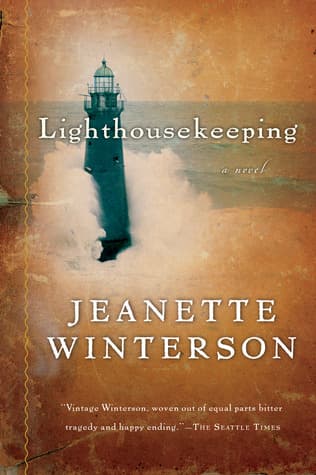
The lighthouse at Cape Wrath is a central and multifaceted metaphor. Physically, it provides light and guidance to ships, mirroring how stories (and love) illuminate the human condition. Emotionally, it represents a place of refuge, isolation, and introspection for Silver. Philosophically, the act of 'lighthousekeeping' becomes a metaphor for preserving knowledge, tending to truth, and maintaining vigilance against the encroaching darkness of ignorance or despair. It is where stories are kept alive and passed on.
References to biblical stories, myths, and other literary works enrich the narrative.
Winterson weaves numerous allusions throughout the text, particularly to biblical stories like the Tower of Babel (echoed in Babel Dark's name and his divided nature) and the concept of light and darkness. These references add layers of meaning, connecting the individual stories to universal human narratives and philosophical questions about faith, language, and the search for meaning. This device elevates the personal tale into a broader fable about humanity's enduring quest for understanding.
Shifting between Silver's first-person perspective and Mr. Pew's third-person stories.
The novel primarily features Silver's first-person narration of her own life and reflections, which then gives way to Mr. Pew's third-person recounting of Babel Dark's story. This dual perspective allows for a rich interplay between personal experience and historical narrative. Silver's voice provides immediacy and emotional depth, while Pew's allows for a broader, more detached, and often mythical exploration of Dark's life, emphasizing its archetypal qualities. The interplay highlights how stories are received and interpreted.
“You will have to make your own way. This is not a place for children, and I am not a mother.”
— Mrs. Pecket's stern welcome to Silver as a child.
“Stories are like lighthouses. We are on the sea, we are tossed by the waves, we are lost in the dark. A story is a light.”
— Silver reflecting on the power of storytelling.
“Love is not a gift. It is a theft. It is a taking.”
— Babel Dark's cynical view on love and relationships.
“The sea is a restless beast, and it eats its young.”
— A recurring motif about the dangerous and unforgiving nature of the sea.
“Every life is a story, and every story is a journey.”
— Silver contemplating the narrative structure of human existence.
“We are all trying to find our way back to the light.”
— A general reflection on human struggle and aspiration.
“What is true? What is memory? What is invention? Sometimes it is hard to tell.”
— Silver questioning the reliability of her own memories and the stories she hears.
“The past is a country we can never truly leave.”
— An observation on how past experiences shape the present.
“To be alone is not to be lonely. It is to be free.”
— Silver finding solace and strength in her solitary life at the lighthouse.
“There are always two stories. The one you tell, and the one that is true.”
— Highlighting the subjective nature of truth and narrative.
“He was a man who lived by the clock, but the clock had stopped.”
— Describing Babel Dark's rigid life and his eventual breakdown.
“The world is full of ghosts, if you know how to look.”
— A sense of the past lingering and the unseen elements of life.
“We build lighthouses not for ourselves, but for others.”
— Emphasizing the selfless nature of guidance and help.
“The future is a story yet to be written, and you are the author.”
— Encouraging agency and the power to shape one's destiny.
Ready to see how well you understood this book? Take our interactive quiz with 10 questions.

Jeanette Winterson is an English author. Her first book, Oranges Are Not the Only Fruit, was a semi-autobiographical novel about a sensitive teenage girl rebelling against convention. Other novels explore gender polarities and sexual identity and later ones the relations between humans and technology. She broadcasts and teaches creative writing. She has won a Whitbread Prize for a First Novel, a BAFTA Award for Best Drama, the John Llewellyn Rhys Prize, the E. M. Forster Award and the St. Louis Literary Award, and the Lambda Literary Award twice. She has received an Officer of the Order of the British Empire (OBE) and a Commander of the Order of the British Empire (CBE) for services to literature, and is a Fellow of the Royal Society of Literature.







