BookBrief
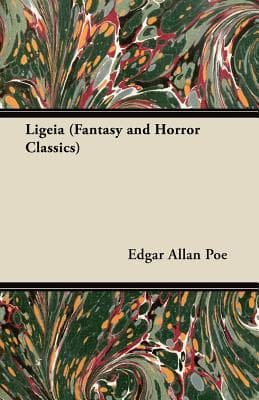
Ligeia cover
Archivist's Choice

Ligeia

Edgar Allan Poe (2004)

Genre

Fantasy / Mystery / Romance

Reading Time

26 min

Key Themes

See below

Track Your Reading

Sign in to track this book

A scholar's descent into opium-fueled madness blurs the line between his deceased wives, culminating in the chilling resurrection of the brilliant and enigmatic Ligeia.

Synopsis

An unnamed narrator becomes consumed by his fascination with Ligeia, a woman of great beauty, intellect, and knowledge, whom he marries in a decaying city near the Rhine. Their union is a period of intense intellectual exploration, as Ligeia introduces him to the mysteries of the universe. However, their happiness ends when Ligeia falls gravely ill and, despite her fierce will to live, dies, leaving the narrator in despair. Haunted by her memory, the narrator moves to an abbey in England and marries the fair-haired Lady Rowena Trevanion of Tremaine. Their marriage lacks love, and the narrator's mind remains fixed on Ligeia. Soon, Rowena also falls ill with a mysterious sickness, experiencing strange sounds and visions. As her condition worsens, the narrator sees inexplicable things in her bridal chamber. After Rowena's apparent death, during a vigil, the narrator observes faint signs of reanimation in her corpse. Through a terrifying and supernatural struggle, Rowena's body transforms, revealing the reanimated form of Ligeia herself, suggesting a powerful will that transcends death.
Reading time
26 min
Difficulty
Medium
Pacing
Slow
Mood
Atmospheric, Macabre, Obsessive, Mysterious, Melancholy
✓ Read this if...
You enjoy classic gothic horror, psychological thrillers, or tales of the supernatural with a focus on obsession and the macabre.
✗ Skip this if...
You dislike supernatural themes, ambiguous endings, or the verbose, ornate prose style typical of 19th-century literature.

Plot Summary

The Narrator's Obsession with Ligeia's Beauty

The unnamed narrator, in an opium-induced state, begins by recalling his deceased first wife, Ligeia. He struggles to remember the exact details of their meeting or her family name, but her image, he claims, is clear in his memory. He focuses on her striking, almost divine beauty, particularly her large, dark, and expressive eyes, which he sees as holding a deep, unsettling knowledge. He describes her as a woman of great intellect, with a vast command of classical and modern languages, and deep philosophical and mathematical understanding. Her beauty and intellect, however, are tinged with an inexplicable sadness, a subtle hint of something otherworldly that both fascinates and disturbs him.

Ligeia's Profound Intellect and Esoteric Knowledge

Ligeia's intellect is not just academic; she has an almost mystical understanding of the universe. She explores forbidden lore, ancient philosophies, and arcane sciences, sharing her knowledge with the narrator, who becomes her devoted student. He describes her studies as extending into the 'mysteries of the transcendentalism of the German,' and her deep grasp of languages, both living and dead, is clear. Most importantly, Ligeia often speaks of the immense power of the human will, stating its ability to conquer even death, a concept that deeply impresses and unnerves the narrator. This belief becomes a central part of their shared intellectual world, foreshadowing future events.

Ligeia's Illness and Death

Despite her strong intellect and unwavering will, Ligeia dies from an unspecified illness. Her decline shows an extraordinary mental and physical struggle against death. The narrator recounts her agonizing final days, during which her eyes seem to burn with an even more intense, unearthly light. Her last words are a quotation from Joseph Glanvill, emphasizing the power of will and the possibility of returning from the grave, if the will is strong enough. Her death leaves the narrator devastated, plunging him into deep grief and increasing his opium addiction, as he struggles to cope with the loss of his extraordinary wife.

The Narrator's Second Marriage and Despair

Overwhelmed by his grief and the haunting memory of Ligeia, the narrator tries to escape his sorrow by moving to a decaying abbey in a remote part of England. Here, driven by a desire for companionship and perhaps a desperate attempt to forget, he marries Lady Rowena Trevanion of Tremaine, who has fair hair and blue eyes. However, this marriage lacks love and genuine connection. The narrator confesses that he dislikes Rowena, seeing her as a stark contrast to the intellectual and spiritual depth of Ligeia. His new home, the abbey, is decorated in a grotesque and macabre style, reflecting his inner turmoil and continued obsession with death and the supernatural.

Lady Rowena's Mysterious Illness

Soon after their marriage, Lady Rowena begins to suffer from a mysterious and debilitating illness. Her symptoms are vague but persistent, characterized by a general malaise, weakness, and increasing anxiety. The narrator attributes her worsening health partly to the melancholic and oppressive atmosphere of the ancient abbey, which he has decorated with an almost morbid sensibility. He also mentions her fragile constitution and her inability to thrive in such a desolate and perhaps spiritually tainted environment. Despite his proclaimed indifference, he observes her decline with a detached, yet increasingly morbid, interest, as if expecting some strange development.

Supernatural Occurrences in the Bridal Chamber

As Rowena's illness progresses, the narrator, often under the influence of opium, begins to experience strange and unsettling things in her bridal chamber. He hears faint, inexplicable sounds and sees fleeting, indistinct shadows. One night, while sitting by her bedside, he believes he sees a drop of a 'ruby-colored liquid' fall into her wine glass. He dismisses it as a hallucination caused by his opium use and his heightened emotional state, but the incident deeply disturbs him. These occurrences contribute to the eerie and supernatural atmosphere surrounding Rowena's illness, suggesting a malevolent, unseen force at play within the abbey.

Rowena's Apparent Death

Lady Rowena's condition rapidly worsens, and she eventually dies. The narrator describes her death with a chilling detachment, almost as if it were an expected outcome. While he expresses no genuine grief, there is a morbid curiosity in his observation of her lifeless body. He notes the pallor of her skin and the stillness of her features, yet his mind remains fixed on Ligeia, comparing Rowena's death to his first wife's valiant struggle. He feels a strange sense of anticipation, an underlying current of the uncanny, even in the face of this second tragedy.

The Vigil and the First Signs of Reanimation

Following Rowena's death, the narrator stays by her bedside through the night, a vigil he describes as being driven by a morbid fascination rather than grief. During this time, under the increasing influence of opium, he begins to notice subtle, almost imperceptible changes in Rowena's corpse. He believes he sees a faint flush return to her cheeks, a slight quiver of her eyelashes, and a barely discernible sigh. He repeatedly tries to rationalize these observations as mere hallucinations, products of his drug-addled mind and his intense focus on death and reanimation, yet the uncanny occurrences persist, unsettling him deeply.

The Struggle for Reanimation

As the night progresses, the signs of reanimation in Rowena's body become more pronounced and terrifying. Her lips part, her eyes briefly open, and a faint warmth returns to her skin, only for these signs of life to recede, leaving her seemingly lifeless once more. This cycle of reanimation and relapse repeats multiple times, each instance more vivid and disturbing than the last. The narrator is gripped by a mixture of horror and a perverse fascination, torn between the rational explanation of delusion and the growing, undeniable evidence of something supernatural occurring before his eyes, intensifying his opium-fueled delirium.

The Climax: Ligeia's Return

In the climax, after what seems like countless cycles of death and reanimation, Rowena's body undergoes a final, complete transformation. Her features shift and contort, her hair darkens, and her eyes, previously blue, open to reveal the large, dark, and intensely expressive eyes that the narrator remembers so vividly from Ligeia. With a shriek of terror and recognition, the narrator realizes that the spirit of Ligeia has, through sheer force of will, returned to inhabit the body of his second wife. The story ends with his horrified realization, leaving the reader to ponder the implications of Ligeia's supernatural triumph over death.

Principal Figures

The Narrator

The Protagonist

Starts as a grief-stricken scholar, descends into further addiction and despair, and ends as a horrified witness to the supernatural reanimation of Ligeia.

Ligeia

The Central Figure/Antagonist (post-death)

Introduced as a living embodiment of perfection and intellect, dies a valiant struggle against death, and ultimately returns through sheer force of will.

Lady Rowena Trevanion of Tremaine

The Supporting Character/Victim

Introduced as a fragile, conventional beauty, succumbs to a mysterious illness, and is ultimately possessed by Ligeia's spirit.

Themes & Insights

The Power of the Human Will

This theme is central to 'Ligeia,' explored through Ligeia's unwavering belief and ultimate triumph over death. Ligeia often states that 'Man doth not yield him to the angels, nor unto death utterly, save only through the weakness of his feeble will.' Her struggle against her illness is shown as a fierce battle of will, and her eventual reanimation of Rowena's body is the ultimate display of this theme. The narrator's passive nature and 'feeble will' contrast sharply, highlighting Ligeia's extraordinary mental strength.

Man doth not yield him to the angels, nor unto death utterly, save only through the weakness of his feeble will.

Ligeia (quoting Joseph Glanvill)

Obsession and Idealization

The narrator's relationship with Ligeia is defined by an intense, almost pathological obsession. He idealizes her to an extreme degree, focusing on her beauty and intellect with a reverence that borders on worship. This idealization prevents him from forming any genuine connection with his second wife, Rowena, whom he sees as a pale imitation. His inability to move past Ligeia's memory fuels his grief, opium addiction, and ultimately, his descent into madness, culminating in the horrific manifestation of his obsession.

I met Ligeia in some large, old, decaying city near the Rhine. Of her family—I have surely heard her speak. Pondering by the way, I cannot now recall to mind at all the name of her family. Ah! I perceive at once the difficulty. My memory, like a half-obliterated inscription, is at fault. She had no father nor mother, brothers nor sisters. All her kindred were in her, and in her alone.

The Narrator

Death and Rebirth/Reanimation

The story directly confronts the boundaries between life and death. Ligeia's death is not an ending but a transition; her spirit lingers and ultimately returns. The macabre reanimation of Rowena's body is a horrifying 'rebirth,' not of Rowena, but of Ligeia herself. This theme explores the terrifying possibility of defying natural laws through supernatural means, blurring the lines between the living and the dead and challenging conventional understanding of mortality. The narrator's vigil over Rowena's body is a prolonged, terrifying sequence of this theme unfolding.

And now, once again, I started from my slumbering, and with a gasp, a groan, I felt that I was alone. But no! the figure had risen to its full height, and, with a low, husky, and yet familiar murmur, at once fell apart, and then, slowly, and with a shudder, as if by a sudden exertion, stood before me in the light of the lamps, and I saw that it was—Ligeia!

The Narrator

The Unreliable Narrator and Subjectivity of Reality

The entire story is filtered through the consciousness of an opium-addicted narrator, making his account highly suspect. His detailed descriptions of Ligeia's supernatural qualities, the strange occurrences in the abbey, and the final reanimation could all be interpreted as hallucinations or the ravings of a disturbed mind. Poe deliberately blurs the line between objective reality and the narrator's subjective experience, leaving the reader to question whether the events truly happened or were merely the products of a drug-fueled delusion, emphasizing the fragility of perception.

I cannot, for my soul, remember how, when, or even precisely where, I first became acquainted with the Lady Ligeia. Long years have since elapsed, and my memory is feeble through much suffering. Or, perhaps, I am at fault in endeavoring to recall to mind a period so remote, and a circumstance so trivial, as the time and place of our first meeting.

The Narrator

Plot Devices & Literary Techniques

Opium Addiction

Used to explain the narrator's unreliable perception and heighten the surreal atmosphere.

The narrator's heavy opium use serves as a crucial plot device, allowing Poe to create an atmosphere of ambiguity and unreality. It provides a plausible, if unsettling, explanation for the narrator's vivid and often grotesque visions, his wavering memory, and his heightened emotional states. This device makes the supernatural events he describes questionable, leaving the reader to wonder if Ligeia's reanimation is a genuine occult occurrence or merely a drug-induced hallucination, thereby enhancing the story's psychological horror and mystery.

Gothic Setting

The decaying abbey creates a mood of decay, dread, and supernatural potential.

The remote, dilapidated abbey where the narrator takes Rowena is a classic Gothic setting. Its 'wild and desolate' location, 'gigantic and gloomy' architecture, and 'grotesque' interior decorations (such as the enormous bridal chamber) all contribute to an atmosphere of decay, dread, and isolation. This setting mirrors the narrator's internal state of mind and acts as a catalyst for the supernatural events. The oppressive, melancholic environment is explicitly blamed for Rowena's decline, making the abbey itself a character that influences the plot and heightens the sense of foreboding.

Symbolism of Ligeia's Eyes

Ligeia's eyes symbolize her profound intellect, spiritual depth, and supernatural power.

Ligeia's eyes are repeatedly emphasized and described in extraordinary detail, serving as a powerful symbol. They are portrayed as 'large, dark, and divinely far-seeing,' holding 'the expression of a world of thought.' These eyes symbolize her immense intellect, her access to arcane knowledge, and her almost supernatural spiritual depth. They are the window to her powerful will and the vehicle through which her essence returns, becoming the most striking feature of her reanimated form. The narrator's fixation on them underscores their symbolic importance as the essence of her being.

Foreshadowing through Ligeia's Philosophy

Ligeia's philosophical pronouncements directly hint at the story's supernatural climax.

Ligeia's early discussions about the power of the human will, particularly her repeated quotation from Joseph Glanvill about not yielding to death 'save only through the weakness of his feeble will,' serve as direct foreshadowing. These philosophical musings are not mere intellectual exercises; they explicitly lay the groundwork for her eventual triumph over death. This device prepares the reader for the seemingly impossible events that unfold, giving her reanimation a thematic justification within the story's internal logic, however fantastical it may be.

Critical analysis

Notable Quotes

And the will therein lieth, which dieth not. Who knoweth the mysteries of the will, with its vigor? For God is but a great will pervading all things by nature of its intentness. Man doth yield himself to the angels, alas! only on condition that the angels themselves, becoming the ministers of God's will, shall first surrender their own to the behests of his. And a marvelous thing it is that, while the Urim and Thummim burn with a hidden fire in the breast of him who would search its knowledge, so doth the will of man, when it is most intense, glow with a like intensity.

The epigraph to the story, often attributed to Joseph Glanvill, but likely Poe's invention.

I met Ligeia in Germany, during some one or two of the many years I then passed, aimless, in that land of collegiate thought.

The narrator's opening lines, setting the scene for his encounter with Ligeia.

I can, at least, say of Ligeia that, beyond all women whom I have ever known, she was the embodiment of the idea of beauty.

The narrator's initial description of Ligeia's profound beauty.

Her eyes were, I must repeat, larger than any I had ever beheld, and full of a miraculous expression.

Detailing Ligeia's most striking feature, her eyes, which captivated the narrator.

There is no point, however, among the many bewitching graces of Ligeia, upon which, with a deeper earnestness, my memory dwells than upon her eyes.

Further emphasis on the narrator's obsession with Ligeia's eyes.

She came and departed as a shadow.

Describing Ligeia's elusive and ethereal presence in the narrator's life.

I have spoken of the learning of Ligeia: it was immense - such as I have never known in woman.

The narrator's admiration for Ligeia's vast and unusual intellect.

And Ligeia could not die. She could not, I say, die. With a sternness, however, which seemed to me little less than appalling, she spoke of the most appalling of all mysteries - Death.

Ligeia's declaration of her will to resist death and her profound contemplation of it.

I had been wedded to Ligeia. I had been wedded to Ligeia, and a love arose within my bosom of such an intensity as has been seldom known even in the passionate realms of romance.

The narrator's profound love for Ligeia, even after her death.

But the opium had long taken root in my soul, and its branches were twined about me, body and soul.

The narrator's descent into opium addiction after Ligeia's death.

That she loved me I should not have doubted; and I knew well the untiring energy of her most passionate love.

The narrator's certainty of Ligeia's deep and persistent love for him.

It was the sentiment of Ligeia that man doth not yield him to the angels, nor altogether to the irremediable death, save only through the weakness of his feeble will.

The narrator recalling Ligeia's belief in the power of will against death, echoing the epigraph.

Oh, God! Is it possible? This is not a dream!

The narrator's shocked realization at the climax, as Rowena transforms.

And now, slowly, slowly, slowly, from the robes of the figure beneath, came forth the long and raven-black tresses of Ligeia.

The climactic moment of recognition, revealing Ligeia's return.

I shrieked aloud, and fell prostrate with a shuddering terror, as I felt the living pressure of her clasping arms, and her hot breath upon my cheek, and knew that I was once again her own!

The narrator's final, terrified, yet perhaps desired, reunion with Ligeia.

Quiz

Test Your Knowledge

Ready to see how well you understood this book? Take our interactive quiz with 10 questions.

10
Questions
~5
Minutes
?
Best Score

Key Questions (FAQ)

The story follows an unnamed narrator's obsessive love for his first wife, Ligeia, an intellectually brilliant and beautiful woman. After her untimely death, he remarries, only for his second wife, Rowena, to succumb to a mysterious illness, leading to the uncanny and terrifying reappearance of Ligeia's spirit.

About the author

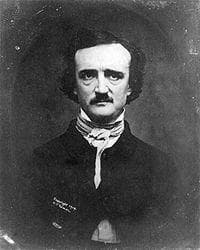
Edgar Allan Poe

Edgar Allan Poe was an American writer, poet, editor, and literary critic who is best known for his poetry and short stories, particularly his tales of mystery and the macabre. He is widely regarded as a central figure of Romanticism in the United States, and of American literature. He was one of the country's earliest practitioners of the short story, and is considered the inventor of the detective fiction genre, as well as a significant contributor to the emerging genre of science fiction. He is the first well-known American writer to earn a living through writing alone, resulting in a financially difficult life and career.