“Only when one has suffered all the sufferings in the world can one understand the suffering of others.”
— Spoken by Ximen Nao, reflecting on his various reincarnations and experiences.

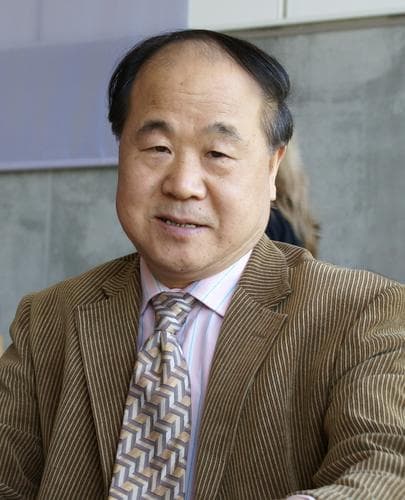
Mo Yan (2016)
Genre
Fantasy / Historical Fiction
Reading Time
1200 min
Key Themes
See below
Sign in to track this book
A kind landowner, executed during Mao's Land Reform Movement, is reborn as a donkey, ox, pig, dog, monkey, and finally a boy. He narrates fifty years of turbulent Chinese history through the eyes of the farm animals he becomes.
In 1948, during Mao's Land Reform Movement, Ximen Nao, a wealthy and kind landlord in Gaomi County, Shandong Province, is arrested and unfairly accused of being an exploiter. Despite his consistent kindness to his peasants, including his chief overseer, Lan Lian, and his refusal to flee, he is sentenced to death. At the execution grounds, Ximen Nao protests his innocence, even as he is paraded through the village and shot. His last thoughts are of his family – his concubines, his eldest son Jintong, and his loyal farmhands – and the injustice of his fate. This brutal end begins his extraordinary journey.
After his death, Ximen Nao finds himself in the underworld, facing Lord Yama, the King of Hell. Lord Yama, angry at Ximen Nao's refusal to admit guilt for his 'crimes' as a landlord, tortures him. Ximen Nao insists he was a good employer. Tired of his defiance, Lord Yama, in a fit of anger, sends him back to the human world, not as a man, but as a donkey. Ximen Nao is reborn on his former estate, now controlled by Lan Lian, his former overseer, and begins his new life observing the radical changes happening.
Reborn as a donkey named 'Blacky,' Ximen Nao is owned by his former chief overseer, Lan Lian, who is now a hard-working peasant farmer under the new collective system. Through Blacky's eyes, Ximen Nao sees the early excitement for collectivization, the difficulties of communal farming, and the slow loss of individual effort. He sees his former wives, now working in the fields, and his children struggling. Blacky endures hard labor, the tough rural life, and the changing relationships among the villagers, all while keeping his human mind and memories of his past life as Ximen Nao.
After a life of hard work, Blacky the donkey dies, and Ximen Nao is reborn as an ox, named 'Big Golden,' still on the same land and still owned by Lan Lian. This period is the Great Leap Forward. As an ox, Ximen Nao experiences the extreme demands placed on animals for farming, the unreasonable policies, and the terrible famine that sweeps the countryside. He sees widespread starvation, the desperate things people do to survive, and the tragic loss of life, including members of his own former family. The ox's view shows the human cost of political passion and bad policies.
When the ox dies, Ximen Nao is reborn as a pig, 'Pigsy,' again belonging to Lan Lian. This life places him in the middle of the Cultural Revolution. From his pigsty, Ximen Nao observes the intense ideology, the public accusations, the Red Guards' violence, and the breakdown of traditional society. He sees his former family members and other villagers caught in the political storm, some supporting the revolution, others suffering greatly. Pigsy's sharp senses and closeness to human activity allow Ximen Nao to record the absurdity and brutality of this chaotic decade, often with dark humor and sadness.
After his life as a pig, Ximen Nao is reborn as a dog, 'Little White,' still tied to the Lan family. This period is after the Cultural Revolution and the start of Deng Xiaoping's economic reforms. As a dog, Ximen Nao sees the gradual move towards individual business, the return of private property, and the growing differences in wealth. He sees Lan Lian, still believing in collective ideals, struggling against the changes, while others quickly adapt. Little White's loyalty and keen observation allow Ximen Nao to comment on the complex social changes and the lasting effects of past political movements.
Following his life as a dog, Ximen Nao is reborn as a monkey, 'King of Monkeys,' a smart and playful creature. This life happens during China's fast economic growth and the acceptance of market forces. From his high spot, the monkey observes the building booms, the arrival of consumer goods, and the growing focus on wealth. He witnesses the change of the rural landscape and the changing values of the villagers, including the younger generations. The monkey's view offers a critical, often satirical, look at the unexpected results of modernization and the loss of traditional values.
Finally, after five animal lives, Ximen Nao is reborn as a human child, Lan Qiansui, a boy with an unusually large head, born to Lan Lian's son, Lan Jiefang. As Lan Qiansui, Ximen Nao remembers all his past lives and his human consciousness. This human form allows him to interact directly with the world he has observed for fifty years. He deals with his identity, his past, and his unique ability to understand animals. His rebirth as a human child adds a new layer of complexity, allowing him to directly experience the human condition in the rapidly changing China of the late 20th century.
As Lan Qiansui, the big-headed boy, Ximen Nao experiences childhood in a rural Chinese village, now heavily influenced by market reforms. He struggles with his physical difference and the teasing of other children, but his inner wisdom from his past lives gives him a unique view. He often talks to animals, understanding their thoughts and feelings, and sometimes even speaking their languages, confusing his family. His interactions with his 'grandfather' Lan Lian, his 'father' Lan Jiefang, and other villagers are shaped by his deep historical memory and his understanding of their individual histories.
As Lan Qiansui grows up, he continues to observe and think about the past fifty years of Chinese history, from the Land Reform to the start of the new millennium. His unique perspective, having lived through these eras as both human and various animals, allows him to give a full and often critical commentary on the political upsets, economic changes, and social shifts. He deals with the lasting effects of the past, the fast pace of modernization, and the moral questions of a society in flux, all while trying to connect his identity as the reborn Ximen Nao with his current life as Lan Qiansui.
Throughout his many reincarnations, Ximen Nao's story always returns to the land and the people of Gaomi County. Whether as a donkey plowing fields, an ox enduring famine, a pig observing political struggles, a dog navigating economic reforms, a monkey seeing materialism, or finally as the human boy Lan Qiansui, his connection to the soil and the lives of the peasants is most important. He chronicles the resilience, suffering, and lasting spirit of the rural Chinese people, showing their deep bond with the land despite the dramatic changes in political and economic systems. His story is ultimately about the lasting life force of the earth and its inhabitants.
The Protagonist
From a human landlord, he undergoes a spiritual and historical journey through animal forms, gaining unparalleled insight into human nature and history, eventually returning to human form with profound wisdom and a unique connection to all life.
The Supporting
He transitions from a landless peasant to a respected collective leader and then a hardworking private farmer, maintaining his integrity despite political and economic shifts.
The Mentioned
No significant arc, he is a static, divine figure.
The Supporting
He grows up in the collective era and adapts to the economic reforms, becoming a successful farmer and family man.
The Supporting
He consistently adapts and thrives under changing political systems, often through questionable means, representing the enduring nature of human opportunism.
The Supporting
He endures a life of hardship and marginalization, reflecting the lasting impact of his family's past status.
The Supporting
She survives and adapts to the new political order, finding new love and stability despite her past.
The novel shows how strict political ideologies, especially during the Land Reform, Great Leap Forward, and Cultural Revolution, cause great suffering and absurd, often conflicting, actions. Ximen Nao's unfair execution despite his kindness, the famine caused by the Great Leap Forward's unreasonable policies, and the senseless violence of the Cultural Revolution are all shown through the detached yet deeply felt views of the animals. The constant change in 'correct' ideology and its terrible human cost is a main criticism, with characters like Lan Lian trying to stay honest amid the chaos.
“In the human world, the most frightening thing wasn't the famine, but the madness. The madness of the Great Leap Forward was like a plague, infecting every corner of the land.”
Despite the political upheavals and human suffering, the novel highlights the timeless connection between the Chinese people, especially the peasants, and their land. Ximen Nao, in all his animal forms, stays linked to his former estate, observing the continuous cycle of planting, harvesting, and survival. Characters like Lan Lian show this deep, almost spiritual, bond with the soil, working tirelessly no matter who 'owns' it. The land itself is a constant, watching all the human foolishness and resilience, suggesting that the basic rhythms of life continue beyond passing political systems.
“The land was a kind and patient mother, silently enduring all the human stupidity and cruelty.”
The novel's main idea of Ximen Nao's reincarnation explores karma and the unclear nature of justice. Ximen Nao's punishment in Hell and his later animal lives are presented as a response to his 'sins' as a landlord, though he strongly denies them. His journey becomes a search for understanding and a re-evaluation of what is 'good' and 'evil' in a quickly changing society. The story questions the fairness of his initial judgment, suggesting that true justice is complex and may take many lifetimes to appear or even to be understood.
“I was Ximen Nao, a man wronged by the world, but reborn into the world to witness its wrongs.”
Ximen Nao's continuous consciousness and memory across his many lives are a key theme. His ability to recall fifty years of history from different perspectives—human and animal—creates a unique, multi-layered story. Each animal form offers a distinct viewpoint, showing different aspects of human behavior and societal change. This continuous memory allows for a deep commentary on the passage of time, the development of society, and the subjective nature of truth. It shows how different viewpoints can reveal a more complete, though often contradictory, picture of reality.
“My memory was a vast, overflowing river, carrying the debris of fifty years of human history.”
Through Ximen Nao's animal reincarnations, the novel looks at the complex and often brutal relationship between humans and animals. It shows the animals' suffering at human hands, their exploitation, and their unique views on human matters. The story often uses animal suffering as a metaphor for human suffering under oppressive systems. When Ximen Nao is finally reborn as Lan Qiansui, his ability to talk with animals bridges this gap, arguing for more empathy and understanding between species, and suggesting that animals hold a silent wisdom about the human condition.
“Animals are often wiser than men, for they know how to live without the need for grand ideologies.”
The central narrative device, allowing the protagonist to observe fifty years of history from multiple perspectives.
Reincarnation is the primary plot device, enabling Ximen Nao to experience fifty years of modern Chinese history from unique, non-human viewpoints. This allows the author to critique societal changes, political movements, and human nature with a detached yet deeply personal lens. Each animal form provides a fresh perspective, highlighting different aspects of rural life and human folly, while Ximen Nao's continuous memory links these disparate experiences into a cohesive, epic narrative. It also serves as a metaphor for the cyclical nature of history and the enduring spirit of life.
The use of animal consciousness to narrate complex human events and emotions.
The novel employs animal narration, giving voice to Ximen Nao's consciousness within the bodies of a donkey, ox, pig, dog, and monkey. This device provides a raw, earthy, and often humorous perspective on human society. Animals, being closer to basic instincts and less swayed by ideology, offer a clear-eyed critique of human behavior, political absurdities, and the impact of modernization. Their sensory experiences and limited understanding of complex human motives create a unique blend of innocent observation and profound insight, making the narrative both engaging and deeply critical.
Using individual and animal experiences to represent broader historical and political events in China.
The entire narrative functions as a historical allegory, with Ximen Nao's journey mirroring China's tumultuous fifty years. Each reincarnation corresponds to a significant historical period—Land Reform, Great Leap Forward, Cultural Revolution, and the economic reforms. The personal struggles of Ximen Nao and the Lan family are microcosms of the national experience. This device allows Mo Yan to comment on the devastating impact of political movements on ordinary lives, the cyclical nature of history, and the enduring resilience of the Chinese people, often through satire and dark humor.
The physical land and farm serve as a constant, unchanging backdrop and a symbol of endurance.
The land, specifically Ximen Nao's former estate, acts as a powerful symbolic device. It is the constant element throughout all of Ximen Nao's reincarnations, witnessing every political upheaval and personal tragedy. The land symbolizes endurance, the source of life, and the ultimate truth that transcends human ideologies and conflicts. It represents the deep roots of Chinese culture and the indomitable spirit of the peasantry, suggesting that while governments and systems may change, the fundamental relationship between people and the earth remains eternal.
“Only when one has suffered all the sufferings in the world can one understand the suffering of others.”
— Spoken by Ximen Nao, reflecting on his various reincarnations and experiences.
“A man's life is like a dog's, full of hunger and cold, and then a good beating.”
— Ximen Nao, in one of his animal forms, observing the harsh realities of peasant life.
“The world keeps changing, and the only thing that doesn't change is change itself.”
— A philosophical observation made by Ximen Nao as he witnesses decades of societal transformation.
“To die is easy, to live is hard.”
— Ximen Nao's recurring realization across his many lives, often after facing great adversity.
“No matter how many times you are reborn, you can't escape your fate.”
— A thought that haunts Ximen Nao, especially when he finds himself in similar predicaments despite changing forms.
“The human heart is the most complicated thing in the world.”
— Ximen Nao, after observing the complex motivations and emotions of various human characters.
“History is not a straight line, but a winding path, full of twists and turns.”
— Ximen Nao's perspective on the tumultuous political and social changes in China.
“Even a dog has its dignity.”
— Ximen Nao, as a dog, asserting his own sense of self-worth despite his lowly status.
“Love is a kind of suffering, and suffering is a kind of love.”
— A reflection on the intertwined nature of affection and pain, particularly in the context of family relationships.
“The greatest joy is to be alive, no matter how hard life is.”
— A moment of profound appreciation for existence, even amidst constant struggle, from Ximen Nao.
“Power corrupts, and absolute power corrupts absolutely. But what if you have no power at all?”
— Ximen Nao, as an animal, pondering the dynamics of power and helplessness.
“The world is a stage, and all the men and women merely players.”
— A classic literary allusion used by Ximen Nao to describe the cyclical nature of human drama.
“To forget is to betray.”
— Ximen Nao's strong conviction about remembering the past, especially the injustices suffered.
“Sometimes, the most important things are invisible to the eye.”
— A subtle observation about the true value and meaning that often lies beneath the surface of appearances.
Ready to see how well you understood this book? Take our interactive quiz with 10 questions.
Biography coming soon.







