“Perhaps the truth was that life was a series of small deaths, and that every time you died, a little piece of you went with it.”
— Ursula ponders the cumulative effect of her many deaths and rebirths.

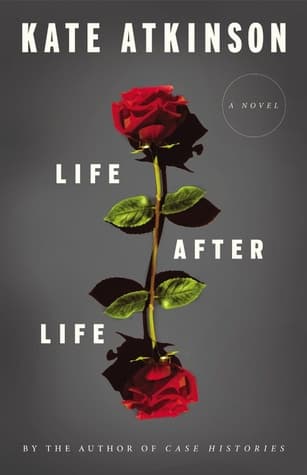
Kate Atkinson (2013)
Genre
Literary Fiction / Fantasy / Historical Fiction
Reading Time
10-12 hours
Key Themes
See below
Sign in to track this book
A woman repeatedly relives the 20th century, dying and being reborn to an altered fate each time, as she grapples with the power to avert global catastrophe.
On a snowy night in February 1910, Ursula Todd is born to Sylvie and Hugh Todd at their country estate, Fox Corner, in England. In her first iteration, she is stillborn, her umbilical cord wrapped fatally around her neck. However, the narrative immediately rewinds, and Ursula is born again, this time crying. This establishes the novel's core idea: Ursula lives multiple lives, often dying as an infant or young child, only to be reborn at the same moment. Her early deaths include drowning in a puddle, being swept away by a wave, and dying from the Spanish Flu, each time with a brief, unsettling sense of déjà vu or a faint memory of a previous demise, even as a baby.
As Ursula grows through various childhoods, she begins to develop an uncanny sense of foreboding and an ability to subtly alter events. In one life, she nearly drowns in a strong current but is saved. In another, she prevents her maid, Phyllis, from being murdered by her abusive husband, Mr. Hirst, by calling the police, an act that initially mystifies her family. These 'do-overs' often involve her experiencing the same events with slight variations, leading to different outcomes. She is particularly troubled by the coming Spanish Flu, which claims her in several lives, and the general sense that she is trying to 'get it right'.
The Spanish Flu pandemic of 1918-1919 is a recurring and significant event in Ursula's lives. In some iterations, Ursula herself dies from the illness as a child, along with her younger brother, Teddy. In other lives, she survives, but the flu still devastates her family, taking Teddy or other household members. These experiences reinforce Ursula's growing awareness of how fragile life is and the impact of historical events. Her attempts to save family members, particularly Teddy, become a driving force, though she often fails, showing the limits of her ability.
Reaching adolescence and early adulthood, Ursula's choices diverge significantly across her lives. In one life, she attends university at Oxford, a path of intellectual pursuit. In another, she marries a German man, Erich, and moves to Germany, experiencing domestic abuse and the rise of Nazism firsthand. These varied experiences shape her understanding of the world and her place in it. Her relationships with her siblings, especially Pamela and Teddy, remain central, often influencing her decisions and providing an anchor amidst her confusing existence. She frequently grapples with a sense of unease, a feeling that she has lived these moments before.
In several lives, Ursula finds herself in Germany during the 1930s. In one particularly harrowing iteration, she marries Erich and endures his cruelty and the suffocating atmosphere of pre-war Nazi Germany. She witnesses the persecution of Jews and the pervasive propaganda, which deeply disturbs her. Her attempts to escape or resist often lead to her demise, sometimes at Erich's hands, sometimes in the chaos of war. These lives are marked by despair and a growing understanding of the systemic evil she is up against, planting the seeds for her later, more deliberate interventions.
During World War II, Ursula often finds herself in London, contributing to the war effort. In one prominent life, she becomes an air raid warden, witnessing the Blitz firsthand. She experiences the destruction, death, and resilience of the city and its people. Her role exposes her to the brutality of war, but also to acts of courage and kindness. These wartime lives are characterized by a sense of purpose, even as she grapples with the constant threat of death and the knowledge that her efforts, however valiant, might be undone by another 'reset'.
Fueled by her experiences in Germany and the devastation of the war, Ursula makes a daring attempt to assassinate Adolf Hitler. In one life, she travels to Germany under the guise of an English sympathizer and manages to get close enough to Hitler to shoot him. However, the attempt fails, and she is killed. This moment reveals her growing conviction that she must use her ability to prevent the greater catastrophe of World War II, even if it means sacrificing herself. It marks a shift from merely surviving to actively trying to change history.
Even in lives where Ursula survives the war, the personal toll is immense. Her brother, Teddy, a Royal Air Force pilot, often dies during the war, leaving a void in her life. Ursula experiences deep grief and a sense of helplessness, despite her many lives. These post-war iterations explore trauma, memory, and the difficulty of finding peace after such widespread destruction. She often seeks psychological help, trying to make sense of her condition, though she can never fully explain it.
The cumulative effect of living so many lives, experiencing so much death and trauma, often leads Ursula to psychological distress. In some iterations, her attempts to explain her 'memories' or premonitions are misunderstood, leading her family to believe she is suffering from a mental breakdown. She is sometimes institutionalized, undergoing treatments that further confuse and distress her. These episodes highlight the isolation of her condition and society's inability to comprehend her reality, reinforcing her feeling of being different and alone.
Determined to succeed, Ursula orchestrates another attempt on Hitler's life. In this version, she is older, wiser, and more methodical. She manages to get close to him at a meeting, shoots him, and this time, the assassination is successful. The world is plunged into chaos, but the war as we know it is averted. The narrative then immediately jumps back to the original snowy night in 1910, with Ursula being born, implying that this successful assassination might have been the 'final' life, or at least a significant turning point, fulfilling her ultimate purpose.
Not all of Ursula's lives are marked by grand historical interventions or dramatic deaths. In some, she lives a relatively quiet life, focusing on her family and personal relationships. She might become a loving aunt, a devoted daughter, or simply a woman who experiences the joys and sorrows of everyday existence. These lives serve as a counterpoint to her more tumultuous iterations, suggesting that perhaps the 'right' life isn't always about saving the world, but about finding peace and connection, highlighting the value of ordinary moments.
Across her many lives, Ursula encounters different forms of love and companionship. She has fleeting romances, passionate affairs, and enduring friendships. Some relationships are abusive, like with Erich, while others are tender and supportive. She sometimes marries and has children, experiencing the joys and challenges of parenthood. These varied connections help her understand the complexities of human interaction and the impact people have on one another, regardless of how many times she lives, providing both solace and heartbreak.
In the lives where Ursula lives into old age, she reflects deeply on her experiences. The memories of her multiple lives, though often fragmented and dreamlike, contribute to a sense of wisdom and melancholy. She ponders the nature of time, fate, and free will. These later lives are often characterized by a quiet contemplation of her purpose and the cumulative effect of her many deaths and rebirths. She might attempt to write, or simply observe the world with an unnerving depth of understanding, forever marked by what she has seen and done.
Even with her extraordinary ability to relive and alter events, Ursula discovers that some aspects of fate seem unchangeable. The Spanish Flu, the outbreak of World War II, and the eventual death of her brother Teddy in the war are recurring tragedies she struggles to prevent in many lives. This suggests that while individual actions can be altered, larger historical forces or personal destinies might be more difficult to derail, adding a layer of philosophical depth to her journey and highlighting the limits of her power against the grand sweep of history.
The novel frequently resets to Ursula's birth in 1910, creating a cyclical structure. The very last scene returns to the initial snowy night, with Ursula being born and taking a breath, echoing the beginning. This cyclical nature, especially after the successful assassination of Hitler, leaves the reader contemplating whether Ursula has finally achieved her purpose, or if the cycle will simply continue. The ending suggests a sense of both resolution and ongoing possibility, implying that the struggle to 'get it right' might be an eternal one, or that the 'right' life is simply the one where she chooses to live.
The Protagonist
Ursula's arc moves from unwitting victim of fate to conscious manipulator of destiny, wrestling with the moral implications of her power.
The Supporting
She remains largely consistent, a symbol of maternal love and societal constraints of the era.
The Supporting
He remains a consistent figure of quiet paternal support and traditional values.
The Supporting
Often dies young, symbolizing the tragic loss of innocence and potential during wartime, driving Ursula's protective instincts.
The Supporting
Pamela generally follows a more conventional path, providing a contrast to Ursula's extraordinary life.
The Supporting
Remains a relatively static character, representing societal norms and a more traditional male role.
The Supporting
Her fate varies based on Ursula's interventions, serving as an early test of Ursula's ability to change outcomes.
The Antagonist
Remains consistently cruel and abusive, symbolizing the individual and societal darkness Ursula fights against.
The Mentioned/Antagonist
His historical presence drives Ursula's most significant acts of defiance and intervention.
The Supporting
Remains a static figure, representing the societal inability to understand Ursula's unique reality.
The novel constantly explores whether Ursula's ability to relive her life grants her true free will or if there are overarching forces of fate that she cannot escape. Despite her many attempts to alter events, certain tragedies, like the Spanish Flu or Teddy's death in the war, often recur. Her successful assassination of Hitler suggests a powerful act of free will, yet the immediate return to her birth implies a cyclical nature that might transcend individual choices. The novel questions if she is 'getting it right' or merely navigating predetermined paths, highlighting the tension between personal agency and an unyielding destiny.
“Perhaps the only thing that ever really changes is the how, and not the what.”
World War I and especially World War II, along with the Spanish Flu, are central to the narrative, showing their devastating impact on individuals and society. Ursula's lives are linked to these historical events, and her attempts to prevent the war become her ultimate purpose. Through her different experiences, from being an air raid warden in the Blitz to witnessing the rise of Nazism in Germany, the novel vividly portrays the personal cost of large-scale conflict and the trauma it inflicts, emphasizing how history shapes individual lives and choices.
“One day, she thought, she would know what she was supposed to do. She would get it right.”
Despite the fantastical premise, the emotional core of the novel is Ursula's deep love for her family, particularly her brother Teddy. Her repeated attempts to save him, and the grief she experiences when she fails, show the enduring power of family bonds. The novel explores the various forms of love—maternal, paternal, sibling, and romantic—and the inevitable pain of loss that accompanies them. Ursula's journey is not just about changing history, but about finding connection, protecting those she loves, and grappling with the universal human experience of attachment and heartbreak.
“She had saved him. For a moment there had been no war. No Blitz. Only Teddy and the sun.”
Ursula's many lives are a relentless search for meaning. Why does she keep coming back? What is she meant to accomplish? Her initial bewilderment gives way to a growing sense of purpose, culminating in her attempts to assassinate Hitler. This quest for meaning is not always clear-cut; in some lives, she finds contentment in quiet domesticity, suggesting that 'purpose' might not always be grand. The novel posits that perhaps the meaning of life isn't a single, fixed destination, but rather the sum of all experiences, choices, and the continuous effort to live well, however many times it takes.
“What if there was no 'getting it right'? What if it was just about living, for as long as possible?”
Ursula's fragmented memories of past lives shape her identity. These echoes of previous experiences, often manifesting as déjà vu or uncanny foresight, distinguish her from others and inform her decisions. The novel explores how memory, even when subconscious or incomplete, contributes to who we are. Her struggle to reconcile her multiple pasts with her present self highlights the fluid and complex nature of identity, particularly when one's life story is not linear but a blend of countless possibilities and outcomes. Her identity is not fixed but continuously re-forged with each new life.
“She had always been a little bit different, even as a child. As if she knew things she shouldn't.”
The story repeatedly returns to Ursula's birth, creating a sense of endless possibility and repetition.
The novel employs a cyclical narrative structure, with Ursula's life repeatedly resetting to her moment of birth in 1910 after each death. This device is fundamental to the story, allowing the exploration of multiple 'what if' scenarios. It emphasizes the theme of fate versus free will, as some events recur despite her interventions, while others are drastically altered. This structure also creates a sense of both hope and despair, as Ursula has endless chances but also endures countless losses, making the reader ponder the ultimate goal of her repeated existence.
Ursula experiences premonitions and vague memories of past lives.
Throughout her lives, Ursula experiences subtle forms of foreshadowing and déjà vu, which are her subconscious memories of previous iterations. These manifest as a sudden insight, a feeling of unease, or a knowledge of future events she shouldn't possess. This device serves to explain how Ursula begins to make different choices; her past 'failures' inform her current actions. It also creates dramatic tension, as the reader (and Ursula) often knows the danger ahead, but not always the exact nature or how to avoid it, highlighting the challenge of 'getting it right'.
The narrative jumps between Ursula's different lives, showcasing varied outcomes.
The novel does not present Ursula's lives in a strictly linear fashion. Instead, it frequently jumps between different iterations of her life, sometimes within the same chapter or even paragraph, providing glimpses into parallel realities. This device allows Atkinson to explore the myriad possibilities of a single life, emphasizing how small choices can lead to vastly different outcomes. It also highlights the cumulative effect of her experiences, as Ursula's character is shaped by the sum of all her lives, even if she doesn't consciously remember every detail.
Ursula's memories are fragmented and dreamlike, blurring the line between reality and possibility.
While the narrator is generally omniscient, Ursula's own perception of her past lives is often fragmented, dreamlike, and not always fully understood by her. This creates a subtle form of unreliable narration from Ursula's perspective, as she grapples with what is 'real' and what is a memory of a life that no longer exists in her current iteration. This device enhances the mystery of her condition and the psychological toll it takes, making the reader question the nature of her reality alongside her.
“Perhaps the truth was that life was a series of small deaths, and that every time you died, a little piece of you went with it.”
— Ursula ponders the cumulative effect of her many deaths and rebirths.
“The worst thing about knowing the future was that you could never really change it. You could only make a different mistake.”
— Ursula reflects on the limitations of her foresight despite her repeated lives.
“We are all of us, in some way, ghosts.”
— A philosophical observation about the past's influence on the present.
“What if you had the chance to do it again and again, until you finally got it right? Wouldn't that be a gift?”
— The central premise of the novel, an unstated question Ursula's life explores.
“Death was not an ending, but a pause, a breath before the next scene.”
— Ursula's perspective on her recurring deaths, seeing them as transitions.
“The past was a foreign country; they did things differently there. And it was always there, lurking, waiting to be rediscovered.”
— Ursula's experience of living through different historical periods.
“It wasn't a question of being brave, it was a question of not being stupid.”
— Ursula's pragmatic approach to survival in dangerous situations.
“Life, she thought, was a series of small, significant moments, strung together like beads on a necklace.”
— Ursula's contemplation of the mosaic of her many lives.
“Even the smallest act could have enormous consequences, rippling out into the future.”
— A realization Ursula has about the butterfly effect of her choices.
“Every life was a story, and some stories were longer than others, and some were more complicated.”
— A general reflection on the nature of human experience.
“How many times could a person die and still be the same person?”
— Ursula's internal struggle with her identity across multiple existences.
“The world was a messy place, full of paradoxes and contradictions, and sometimes the only thing you could do was embrace the chaos.”
— Ursula's acceptance of life's inherent unpredictability.
“To live was to risk, to love was to risk, and to die was to risk everything.”
— A general observation on the inherent risks and stakes of life.
“She was an accident waiting to happen, a glitch in the matrix of time.”
— A description of Ursula's unique condition and its impact.
Ready to see how well you understood this book? Take our interactive quiz with 10 questions.
Biography coming soon.







