“All plots tend to lead to death.”
— A recurring thought, often linked to the conspiratorial nature of the world and Oswald's fate.

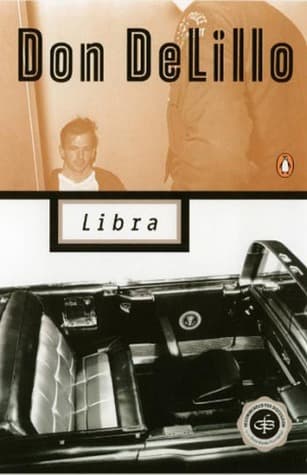
Don DeLillo (1988)
Genre
Literary Fiction / Politics / Historical Fiction
Reading Time
10-12 hours
Key Themes
See below
Sign in to track this book
Don DeLillo explores Lee Harvey Oswald's fractured mind, tracing his journey from a troubled youth to the assassination that changed 1960s America.
The story begins by showing Lee Harvey Oswald as a young boy, living in various temporary homes with his mother, Marguerite Oswald, and older brother, Robert. Lee is a solitary and often defiant child, struggling to connect with others and often getting into trouble at school. His mother, an overbearing and self-pitying person, both dotes on him and makes his life unstable. Lee's early experiences include a deep sense of not belonging and a growing dislike for authority. He develops an early interest in firearms and political ideas, especially communism, as a way to find identity and purpose in a world that seems to reject him.
Lee Harvey Oswald joins the Marine Corps, looking for structure and a sense of belonging, but his rebellious nature continues. He is punished for various rule breaks and struggles to fit in. During his service, he becomes interested in the Russian language and communist theory. After his discharge, Oswald makes the surprising decision to defect to the Soviet Union in 1959, giving up his American citizenship. He spends over two years in Minsk, working in a factory and feeling a mix of disappointment with the Soviet system and a continued belief in his own historical importance. During this time, he meets and marries Marina Prusakova.
Lee Harvey Oswald, with his Russian wife Marina and infant daughter June, returns to the United States in 1962. He struggles to find steady work, moving from job to job and growing increasingly frustrated by his lack of opportunities and recognition. His relationship with Marina is tense, marked by frequent arguments, his domestic abuse, and her growing resentment towards his erratic behavior and political fixations. Lee's sense of alienation deepens, and he begins to get involved in various political activities, distributing pro-Castro leaflets and trying to connect with left-wing groups, often with little success or real understanding of their goals.
At the same time, the story introduces Win Everett, a former CIA operative who likes elaborate, symbolic operations, and Nicholas Branch, a retired CIA analyst obsessed with the Kennedy assassination. Everett, wanting to reignite American anti-communist passion and expose perceived weaknesses in national security, begins to plan a fake assassination attempt on President John F. Kennedy. His idea is that a failed attempt, blamed on communist sympathizers, would unite the nation. He recruits a small group of unhappy individuals, including TJ Duvall and other shadowy figures, to help stage this complex and morally questionable plan, believing he is controlling a grand historical narrative.
Lee Harvey Oswald, increasingly desperate for attention and purpose, tries several actions to assert himself. He buys a rifle and handgun, and in April 1963, tries to assassinate retired Major General Edwin A. Walker, a prominent right-wing extremist, in Dallas. The shot misses, and Oswald barely escapes detection. This event shows his growing capacity for violence and his desire to make a significant political statement, however misguided. He also tries to travel to Cuba via Mexico City, wanting to join Castro's revolution, but is denied entry and sent back to the U.S., further fueling his sense of rejection and failure.
As the plot to stage a failed assassination attempt on Kennedy progresses, the conspirators, guided by Everett, begin to prepare their operation, choosing Dallas as the location. Unknown to them, Lee Harvey Oswald, through a series of coincidences, gets a job at the Texas School Book Depository, a building that offers a clear view for a sniper. The story emphasizes the accidental nature of this convergence, suggesting that Oswald's presence at the Depository on the day of the assassination is less a direct recruitment and more a fateful alignment of independent paths.
November 22, 1963, arrives. President John F. Kennedy's motorcade moves through Dealey Plaza in Dallas. The story skillfully combines the viewpoints of various characters: the conspirators watching their 'failed' plot, Oswald in the Texas School Book Depository, and the bewildered public. Shots are fired, and Kennedy is fatally wounded. The planned 'miss' becomes a fatal hit, throwing the conspirators' elaborate plan into chaos. The novel carefully details the moments of confusion, the immediate aftermath, and the panic that follows as the world deals with the sudden, shocking reality of the President's death. The lines between what was intended and what actually happened become permanently unclear.
After the assassination, Lee Harvey Oswald immediately flees the Texas School Book Depository. He goes home, has a brief, tense meeting with Marina, and then tries to escape. During his flight, Dallas Police Officer J.D. Tippit confronts him. In a moment of panic and desperation, Oswald shoots and kills Officer Tippit. This act of violence further solidifies his role as the lone assassin in the public story, even as the novel subtly suggests the complex mix of forces that led him to that moment. His flight and the subsequent murder intensify the hunt for him.
Lee Harvey Oswald is eventually caught at the Texas Theatre after a brief struggle. He is taken into custody and subjected to intense questioning by local police, federal agents, and Secret Service personnel. Throughout these interrogations, Oswald maintains his innocence, calling himself a 'patsy' and demanding legal representation. His statements are often contradictory, evasive, and filled with defiant arrogance. The interrogators struggle to understand his motives and actions, often projecting their own assumptions onto him, creating a murky and incomplete picture of the man and his part in the assassination.
Two days after the assassination, as Lee Harvey Oswald is being moved from the Dallas Police Department headquarters, Jack Ruby, a Dallas nightclub owner, shoots and kills him. Ruby's motive remains unclear, adding another layer of conspiracy to the event. Meanwhile, Win Everett and the other conspirators are left to deal with the disastrous failure of their 'failed' plot. The President is dead, and their carefully constructed scenario has gone out of control, creating a historical event far more profound and devastating than they ever intended. The novel ends with the realization that the assassination has become an unforgettable, unmanageable myth.
The Protagonist/Antagonist
From a confused, resentful youth, he evolves into a man seeking a place in history, ultimately becoming a pawn in a larger scheme and the focus of an indelible national tragedy.
The Antagonist/Supporting
He transitions from a confident puppet master orchestrating a symbolic event to a bewildered man witnessing his meticulously planned 'failure' morph into a devastating success he cannot control.
The Supporting
She endures a tumultuous marriage, moving from a hopeful bride to a victim of abuse, ultimately becoming a key witness to history and a survivor of its aftermath.
The Supporting
Her character remains largely static, consistently seeking attention and validating her own victimhood, even in the face of her son's infamy.
The Supporting/Narrative Device
He begins as an analyst trying to understand the event and evolves into a representative of the enduring human need to construct meaning from historical chaos.
The Supporting
He moves from a compliant operative to a bewildered participant, realizing the horrifying consequences of a plan gone awry.
The Mentioned/Supporting
His brief but impactful appearance serves to abruptly conclude Oswald's story and deepen the mystery surrounding the assassination.
DeLillo shows history not as a clear, straight line but as a fragmented, often manipulated story. The novel suggests that the Kennedy assassination was not a single event but a combination of individual minds, political goals, and pure accident, which then became a source for endless conspiracy theories. Win Everett's plot, meant to be a 'failed' attempt, ironically succeeds in a terrible way, showing how useless it is to try and control history. Nicholas Branch represents humanity's desperate need to find order and meaning in chaotic events, even when the truth is hard to find.
“History is the sum of all the things that are not supposed to happen.”
Lee Harvey Oswald shows deep isolation from society, family, and even himself. His constant search for identity—as a Marine, a communist, a revolutionary—is a pointless attempt to fill a void. He is an outsider who wants to be an 'agent of history' but lacks the self-awareness or social skills to do so meaningfully. This theme is highlighted by his transient childhood, his inability to form lasting relationships, and his eventual use of violence to make an impact. His isolation makes him open to grand, often misguided, ideological beliefs.
“He was an American, and he had no country. He was a man, and he had no self.”
A main tension in 'Libra' is the interaction between carefully designed plots and the pure randomness of human actions and coincidences. Win Everett's elaborate plan is meant to control an outcome, but it is Oswald's unpredictable presence and actions that ultimately lead to the President's death. The novel suggests that while people may plan, the universe often intervenes with its own chaotic logic. The 'fatal convergence' of Oswald and the plotters is presented as a series of accidents that, in hindsight, seem unavoidable, blurring the line between free will and predetermined fate.
“There is a deep narrative going on here, beneath the surface of the thing. A story that wants to be told.”
DeLillo explores how the assassination quickly became more than just an event; it became a powerful, lasting myth in the American mind. The novel shows how different people—from the conspirators to the public to Oswald himself—create and hold onto their own versions of the story. The 'truth' becomes less important than the story that resonates. The assassination becomes a test for American anxieties, political divisions, and the desire for grand explanations. The novel itself, a fictional speculation, takes part in this myth-making, showing its strong appeal.
“The past is a fiction we agree to keep telling.”
The novel subtly critiques the darker side of the American Dream through Oswald's character. His inability to find success, stability, or belonging despite his efforts reflects a disillusionment with the promise of upward mobility and individual achievement. The forces that shape him—poverty, a broken home, institutional failures—suggest a systemic neglect that can create resentment and radicalism. The conspirators, too, are driven by a distorted sense of patriotism and a desire to 'save' America through extreme means, highlighting a deep unhappiness with the nation's direction.
“He wanted to be somebody, but not just anybody. He wanted to be a figure, a force.”
Alternating perspectives between Oswald's life and the conspirators' plot.
The novel employs a dual narrative, meticulously tracing Lee Harvey Oswald's life from childhood to the assassination, while simultaneously developing the parallel story of Win Everett and his co-conspirators planning their 'failed' assassination attempt. This structure allows DeLillo to build suspense and demonstrate the fateful, almost accidental, convergence of these two separate trajectories. It highlights how seemingly disparate lives and plans can intersect with catastrophic results, creating a complex web of cause and effect that defies simple explanations.
Fictional reimagining of historical events to explore underlying truths.
'Libra' is a work of historical fiction that deliberately speculates on the motives and circumstances surrounding the Kennedy assassination. While using real historical figures and events, DeLillo invents a plausible, yet fictional, conspiracy involving disgruntled CIA operatives. This device allows him to explore the psychological and political forces at play, not just the verifiable facts, thereby delving into the 'why' and 'how' in a way that goes beyond conventional history. It challenges the reader to consider the malleability of historical truth and the power of narrative.
The central conceit of a conspiracy designed to miss, but which fatally succeeds.
The concept of a 'failed' assassination plot, orchestrated by Win Everett, is a powerful symbolic device. It represents the hubris of those who believe they can control history and manipulate events for a desired outcome. The fact that the plot, designed to merely wound and galvanize, instead results in the President's death, underscores the inherent unpredictability and chaos of reality. It symbolizes the way human intentions can be tragically twisted by unforeseen circumstances and the fatal consequences of playing God with historical forces. It highlights the uncontrollable nature of violence once unleashed.
Access to characters' inner thoughts and fragmented perceptions.
DeLillo frequently uses internal monologues and stream-of-consciousness passages, particularly for Lee Harvey Oswald and Nicholas Branch. This allows the reader deep insight into their fragmented thoughts, obsessions, and psychological states. For Oswald, it reveals his alienation, grandiosity, and confusion. For Branch, it exposes his intellectual struggle to comprehend the assassination's complexities. This device emphasizes the subjective nature of reality and how individuals construct meaning from their experiences, often highlighting the disconnect between inner life and external events.
“All plots tend to lead to death.”
— A recurring thought, often linked to the conspiratorial nature of the world and Oswald's fate.
“He was a man whose life was a series of small, almost random events, yet they all seemed to point, inexorably, to a single, terrible culmination.”
— Describing Lee Harvey Oswald's life leading up to the assassination.
“The future was a thing that happened to others.”
— Reflecting on the sense of detachment and lack of agency felt by some characters, particularly Oswald.
“History was a novel that wrote itself, with no help from the author.”
— A meta-commentary on the nature of history, conspiracy, and storytelling within the novel.
“They want to make him a patsy. It's the oldest story in the world.”
— Characters discussing the framing of Oswald after the assassination.
“He wanted to be famous, to be a figure, a name, but he didn't want to do anything to earn it.”
— A character's insight into Oswald's motivations and aspirations.
“The world was full of men who wanted to make their mark, even if it meant leaving a stain.”
— A general observation about human nature and the desire for significance.
“We are born into a world of meaning, and we spend our lives trying to make sense of it.”
— A philosophical reflection on human existence and the search for understanding.
“The rifle was his only true friend, the one thing that never lied to him.”
— Describing Oswald's relationship with his weapon, highlighting his isolation.
“This is what happens when you let the wrong people write the history books.”
— A character's cynical view on how narratives are controlled and manipulated.
“He was a man who lived in the spaces between things, in the pauses, the silences.”
— A poetic description of Oswald's detached and isolated nature.
“The conspiracy was not a thing, but a process, a way of seeing the world.”
— An exploration of the nature of conspiracy theories and their psychological impact.
“Every secret is a kind of death.”
— A reflection on the burden and destructive power of hidden truths.
“The world was a system of echoes, and he was one of the louder ones.”
— A character's assessment of Oswald's impact, however unintended.
“He felt the weight of history on his shoulders, not as a burden, but as a kind of strange, exhilarating power.”
— Describing a character's engagement with the unfolding historical events.
Ready to see how well you understood this book? Take our interactive quiz with 10 questions.
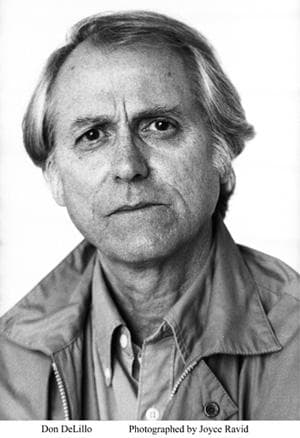
Donald Richard DeLillo is an American novelist, short story writer, playwright, screenwriter and essayist. His works have covered subjects as diverse as television, nuclear war, the complexities of language, art, mathematics, politics, economics, and baseball.







