“Words are not just words. They are weapons.”
— A core principle taught at the secretive organization that trains poets to use language to control minds.

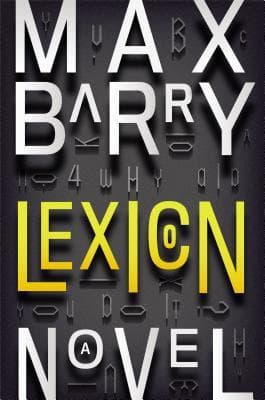
Max Barry (2013)
Genre
Thriller / Fantasy / Mystery / Science Fiction
Reading Time
8 hr 30 min
Key Themes
See below
Sign in to track this book
In a world where language is a weapon and poets manipulate minds, a street-smart orphan and an amnesiac man become unwitting pawns in a secret war that threatens to unravel the very fabric of communication.
Emily Ruff, a young, smart orphan, earns money running a three-card Monte game in San Francisco. Her ability to read people and influence them subtly gets the attention of a secret group. She is recruited and taken to a secluded school outside Arlington, Virginia, where she learns how to persuade. At this school, students get codenames of famous poets, and Emily becomes 'Emily.' She quickly becomes good at breaking down individuals into psychographic markers to control their thoughts through language. Her instructors, including Bronte, Eliot, and Lowell, see her talent but warn her against emotional attachments, as feelings are a weakness in their world of manipulation. Emily struggles with the school's strict rules, especially the removal of personal identity and emotion.
Meanwhile, in another part of the story, a man named Wil Jamieson is attacked in an airport bathroom by two men. One calls himself 'Hiro.' Wil does not remember who he is or why these men are after him. He escapes with Hiro's reluctant help but finds himself a target of a powerful, unseen group. Wil learns that his past is a blank, made up by others. Hiro, his initial attacker, becomes his reluctant protector, explaining that Wil is central to a conflict between rival groups of 'poets'—people who can control minds with specific words. Wil's only clue is a mention of a place called Broken Hill, Australia, and the mystery of his own identity.
Back at the school, Emily continues to impress her instructors and becomes the most skilled student in her class. However, she makes a mistake by falling in love with a fellow student, a boy named 'Boy.' This emotional attachment breaks the school's most important rule: poets must never show their true feelings or let themselves be controlled. When her relationship is found out, Emily is interrogated by Eliot, who tries to break her and erase her love. She is expelled from the school, her memories of Boy and her time there partly suppressed, leaving her with a strong sense of loss and confusion, but without fully understanding what happened or why.
Wil and Hiro begin a dangerous journey to Broken Hill, a remote, ruined mining town in Australia. They are chased by other poets, including Bronte, who represents a group determined to capture or kill Wil. During their travels, Hiro tells them more about the poets' abilities and the dangerous game they are playing. Wil starts to have flashes of memory and strange language triggers, suggesting a deeper connection to the poets and the town. Broken Hill is a ghost town, where a disaster involving language happened, and it holds the key to Wil's true identity and purpose.
In Broken Hill, Wil finally learns the truth about himself: he is not a regular person but a 'subvocal,' a rare individual whose internal thoughts are immune to the poets' direct language control. This makes him a unique and valuable asset, or threat, to the poet group. He learns that his memories were wiped and a false identity given to him to protect him, or perhaps to control him, by one of the groups. The 'Tower of Babel' event that destroyed Broken Hill was an attempt to create a perfect language, a 'universal word,' that would control all minds. Wil's unique brain played a role in its failure and containment.
After her expulsion, Emily lives a fragmented life, haunted by memory gaps and a strong longing. Slowly, she starts to put together parts of her past, realizing she was part of something extraordinary and dangerous. Her suppressed memories of 'Boy' return, driving her to find him and understand the betrayal she felt. She uses her remaining poet skills to find information, eventually discovering the ongoing conflict between the poet groups and her own role in the larger plan, bringing her back into the dangerous world she thought she had escaped.
Emily, now called 'Emily Ruff' again, uses her skills to get into the poet group, looking for answers and revenge. Her path eventually meets Wil Jamieson's in Broken Hill. They discover that their pasts are connected. Emily realizes that 'Boy' was Wil, before his memory wipe. The group had used their relationship as an experiment, manipulating both of them. This discovery deeply hurts Emily, increasing her determination to confront those who wronged her and uncover the full truth about the universal word and its potential for destruction.
The 'universal word' is a specific language construct, a 'word' so powerful that it can bypass the conscious mind and directly control anyone who hears it, effectively enslaving them. The experiment in Broken Hill was an attempt to perfect this word, which led to the town's destruction when it went wrong. One group of poets, led by a powerful figure named 'Wordsworth,' wants to unleash this universal word on the world, believing it will bring order. Another group, including Hiro and a changed Bronte, aims to contain or destroy it, fearing it would remove free will and cause a global disaster worse than the original Broken Hill incident.
The story's climax happens in Broken Hill, where Wordsworth and his followers try to reactivate the universal word. Emily, Wil, Hiro, and a few other rogue poets, including a repentant Bronte, work together to stop them. Emily's understanding of language and her personal connection to Wil (as 'Boy') are important. Wil, as a subvocal, is immune to the word's direct effects, making him a vital shield. The confrontation is a battle of wits and language control, with each side trying to outmaneuver the other using their knowledge of persuasion and control. Free will hangs in the balance as the universal word threatens to be unleashed.
Through Emily's strategic use of language and Wil's immunity, they disrupt Wordsworth's plan and prevent the universal word from being fully unleashed. Wordsworth is defeated, and the immediate threat is gone. However, the victory is not complete. The poet group is broken, but the knowledge of how to control minds with language still exists. Emily and Wil are left to deal with the implications of their experiences and their changed identities. The novel ends with the question of how humanity will handle the power of language and its potential for misuse, even without the universal word, ensuring that the fight for true free will continues.
The Protagonist
Emily transforms from a naive, talented student into a disillusioned and powerful individual who uses her skills to fight against the very organization that shaped her.
The Protagonist
Wil evolves from a bewildered amnesiac into a self-aware individual who understands his unique power and uses it to protect humanity from linguistic enslavement.
The Supporting
Hiro transitions from an enforcer of a poet faction to a crucial ally in the fight against the universal word.
The Supporting
Bronte moves from a loyal, albeit conflicted, member of the poet organization to someone who actively opposes its most dangerous ambition.
The Antagonist
Eliot remains a steadfast enforcer of the poets' ideology, unwavering in his belief in absolute linguistic control.
The Antagonist
Wordsworth's arc is one of escalating ambition, from seeking to perfect a dangerous tool to attempting to impose his will on all of humanity.
The Supporting
Lowell remains a consistent representation of the poet organization's standard operative.
The Mentioned
Boy's 'arc' is largely retroactively revealed, as his identity is intertwined with Wil Jamieson's past.
The main theme is about language not just as a way to communicate, but as a weapon for total control. The poets control minds by understanding psychographic markers and using specific words, showing how language can bypass conscious thought. The 'universal word' is the ultimate example of this power, able to remove free will. The destruction of Broken Hill is a warning of language's destructive potential when used without ethics, showing the thin line between persuasion and enslavement. The novel explores the idea that words shape reality and, in the wrong hands, can destroy it.
“Words are not just sounds or symbols; they are triggers, keys to the human mind.”
Both Emily and Wil go through journeys of self-discovery. Emily struggles with the removal of her personal identity at the poet school, where emotions and individuality are seen as weaknesses. Her love for 'Boy' (Wil) and her search are driven by a need to reclaim her true self. Wil's entire existence is initially blank, his memories erased and a false identity given to him. His journey to Broken Hill is about finding out who he really is and understanding his unique nature as a 'subvocal.' The novel questions what identity means when memories can be faked and personalities controlled by outside forces.
“If you can be convinced of anything, then you are nothing.”
This theme is central to the conflict between the poet groups. Wordsworth and his followers believe that the universal word will bring order and remove the chaos of human free will, seeing it as a good form of control. Emily, Wil, and their allies, conversely, fight to protect individual choice, recognizing that true freedom is being able to make one's own decisions, even if those choices lead to imperfection. The novel explores the ethics of total control, arguing that even a 'perfect' world achieved through manipulation comes at the cost of humanity. Wil's 'subvocal' immunity symbolizes a human resistance to absolute control.
“They want to build a perfect world, but they don't understand that a perfect world is a dead world.”
In the world of the poets, emotions—especially love—are seen as a dangerous weakness, a 'tell' that can be used against someone. Emily's love for 'Boy' is her greatest strength and her greatest weakness, leading to her expulsion but also driving her determination. This theme shows the human need for connection and the risk that comes with it. The poets' attempt to remove emotion from their students shows their misunderstanding of human nature. Ultimately, Emily's ability to love and her refusal to suppress it allows her to resist the ultimate language control and fight for a world where such connections are possible.
“Love is a weakness. It's an exposed nerve, a word whispered in a silent room.”
The poets' ability to break down individuals into 'psychographic markers' and target them with specific language acts as a metaphor for the modern world's focus on data collection and targeted advertising. The novel raises questions about privacy, surveillance, and the ethical use of personal information. The poets' methods, while fantastical, echo real-world concerns about algorithms and data being used to influence behavior on a large scale. It suggests that understanding someone's deepest desires and fears, even without explicit magic, gives immense and potentially dangerous power.
“Every person is a word. You just have to find the right one to speak them.”
A secretive institution for training linguistic manipulators.
The Poet School serves as both a setting and a crucial plot device. It's where Emily is trained, providing the backstory for her extraordinary abilities and the strict, emotionless culture of the poets. It establishes the rules, hierarchy, and dangers of the poet world. Its secrecy and rigorous methods underscore the power and exclusivity of the organization. The school's philosophy of suppressing emotion and identity is central to the conflict, as Emily's defiance of these rules sets her on her path. It acts as a training ground for the novel's central conflict, showing how ordinary people are transformed into powerful manipulators.
A specific linguistic construct capable of absolute mind control.
The Universal Word is the ultimate MacGuffin and the central point of contention in the novel. It is a theoretical linguistic construct, a 'word' so perfectly crafted that it can directly control any human mind that hears it, bypassing conscious thought and stripping away free will. Its attempted creation led to the destruction of Broken Hill, and its potential re-activation drives the main plot. It symbolizes the ultimate danger of unchecked linguistic power and the terrifying possibility of absolute control over humanity, serving as the primary goal for the antagonists and the ultimate threat to be averted by the protagonists.
A narrative technique used to create mystery and reveal character backstory.
Wil Jamieson's amnesia is a key plot device that drives his initial narrative and creates much of the novel's mystery. His blank slate forces him, and the reader, to uncover his true identity and past piecemeal. This device allows for gradual revelations about the poet world, his unique nature as a 'subvocal,' and his connection to Emily. It also highlights the poets' ability to manipulate not just current thoughts but entire histories, underscoring the fragility of personal identity. Emily's partially suppressed memories after her expulsion also function similarly, prompting her quest for truth.
Alternating perspectives to build suspense and reveal a converging plot.
The novel employs a dual narrative structure, alternating between Emily's story (her recruitment and training) and Wil's story (his amnesia and pursuit). This structure builds suspense by presenting two seemingly unrelated plotlines that gradually reveal connections. It allows the reader to understand the world of the poets from two different angles: the insider's perspective of Emily's training and the outsider's bewildered experience of Wil. The eventual convergence of these narratives, particularly the revelation that 'Boy' is Wil, creates a powerful emotional and plot-driven climax, bringing together the personal and the global stakes.
A system for categorizing and exploiting human psychological vulnerabilities.
Psychographic markers are the scientific underpinning of the poets' abilities. They represent a detailed system for breaking down individual personalities into core desires, fears, and linguistic triggers. By understanding these markers, poets can craft specific 'words' or phrases that bypass conscious resistance and directly influence a target's thoughts and actions. This device grounds the fantastical elements of mind control in a pseudo-scientific framework, making the poets' abilities seem plausible within the novel's world. It also serves as a metaphor for modern data analysis and targeted manipulation, raising questions about privacy and the exploitation of personal information.
“Words are not just words. They are weapons.”
— A core principle taught at the secretive organization that trains poets to use language to control minds.
“The most dangerous person in the world is the one who listens.”
— Reflecting on how poets exploit people's vulnerabilities by paying attention to their words and desires.
“You don't persuade people. You compel them.”
— Explaining the difference between ordinary persuasion and the poets' mind-control techniques.
“Every word is a key. Every person is a lock.”
— Describing how poets tailor specific words to bypass an individual's psychological defenses.
“The truth is not what you believe. The truth is what you can make others believe.”
— A cynical view from a poet on the nature of truth and reality in a world where perception can be manipulated.
“We are all just stories waiting to be rewritten.”
— Commenting on how poets can alter people's memories and identities through linguistic manipulation.
“Fear is the easiest emotion to trigger. Love is the hardest.”
— Discussing the emotional mechanics behind the poets' word-based attacks and defenses.
“You can't unhear a word. Once it's in, it's in.”
— Warning about the irreversible effects of a poet's compulsion words once they are spoken and absorbed.
“The world is made of language. If you control the language, you control the world.”
— A foundational belief of the organization that trains poets, emphasizing their ultimate goal.
“Names are the most powerful words of all. They are the keys to the soul.”
— Explaining the significance of knowing someone's true name in the poets' practice of mind control.
“Silence is the only defense against a poet.”
— Advice given to characters trying to protect themselves from linguistic manipulation.
“We are not born with personalities. We are issued them.”
— A provocative idea suggesting that identities are constructed and can be deconstructed by poets.
“The best lies are the ones people tell themselves.”
— Observing how poets exploit self-deception to make their manipulations more effective.
“Language is a virus. And we are all infected.”
— A metaphorical take on how deeply language shapes human thought and society.
Ready to see how well you understood this book? Take our interactive quiz with 10 questions.

Biography coming soon.







