“Perhaps that is what it means to be a writer: to be so open that you are always a little exposed, a little raw.”
— Elspeth reflects on the nature of writing and vulnerability.

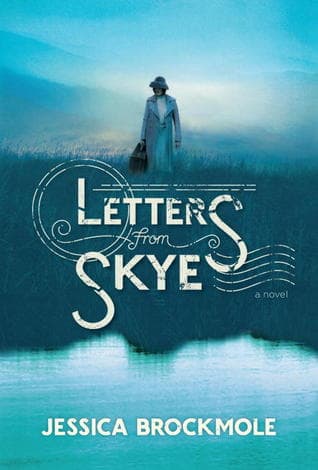
Jessica Brockmole (2013)
Genre
Historical Fiction / Romance
Reading Time
350 min
Key Themes
See below
Sign in to track this book
A daughter uncovers her poet mother's hidden wartime romance through old letters, revealing how words connect hearts across continents and generations through two World Wars.
In March 1912, Elspeth Dunn, a young poet living quietly on Scotland's Isle of Skye, receives a fan letter. It comes from David Graham, an American college student at the University of Pennsylvania, who found her poetry in a magazine. David's letter praises her work and asks about her life on Skye. Elspeth, at first unsure and not used to such attention, decides to reply. This starts a correspondence that will change both their lives. Their first letters are formal but quickly become more personal as they share thoughts and dreams.
Over the next few months, Elspeth and David write more often, their letters becoming more personal. They share details about their daily lives, favorite books, hopes, and fears. David describes his studies and lively American life, while Elspeth paints pictures of Skye's rugged beauty and isolated charm. They form a deep intellectual and emotional bond, finding comfort and understanding in each other's words across the distance. Even without meeting, their connection grows, moving from admiration to a deep friendship that hints at romance.
As 1914 arrives, growing tensions in Europe begin to affect Elspeth and David's developing romance. News of Archduke Franz Ferdinand's assassination reaches Skye, and the threat of World War I becomes clear. David, feeling he must act, decides to volunteer as an ambulance driver for the American Field Service on the Western Front, even before America enters the war. This decision fills Elspeth with fear and worry. Their letters, once a source of joy, now become a lifeline full of anxiety over David's safety amidst the war's horrors.
David's letters from France vividly describe the harsh realities of the Western Front: the mud, constant shelling, wounded soldiers, and constant presence of death. He tries to shield Elspeth from the worst, but cannot hide the war's effect on him. Elspeth, in turn, sends him news from Skye, trying to keep a sense of normal life and hope. Her poetry becomes a comfort for David. Their letters become a vital link to humanity and beauty in a world consumed by violence, but increasing delays and occasional silences between letters increase Elspeth's fears for his life.
Amidst the war's chaos, David sends Elspeth a heartfelt marriage proposal. He expresses his deep love and his wish to build a life with her after the war, imagining a future together on Skye. Elspeth is overjoyed and accepts immediately, her heart full of both happiness and worry, knowing their future depends on David's survival. This proposal solidifies their commitment, turning their romance through letters into a real promise of a shared future, despite the great physical distance and ongoing war.
After David's proposal and Elspeth's acceptance, a period of painful silence begins. David's letters, once regular, suddenly stop. Elspeth's initial worry turns to deep despair as weeks become months with no word. She writes to various authorities, desperate for information, but gets no clear answers. The war ends, but David never returns. Elspeth is left heartbroken, believing he died in action. She grieves deeply, her dreams of a life with David shattered by the brutal reality of wartime loss, leaving her with only memories and unanswered questions.
Years pass. Elspeth, though forever changed by her love for David and his presumed death, eventually moves on. She marries a local man, Alistair, and they raise a daughter named Margaret on the Isle of Skye. Elspeth continues to write poetry, though much of it carries a sense of sadness and unresolved longing. She hides her past with David, storing their letters away, trying to protect herself and her family from the pain of memory. Her life becomes a quiet example of resilience, but the shadow of her first love remains a private, unspoken part of her.
In June 1940, as World War II rages, Elspeth's daughter, Margaret, is a young woman. She falls deeply in love with a Royal Air Force pilot, Paul, experiencing a swift wartime romance. Elspeth, knowing the heartbreak war can bring, warns Margaret against committing to love during such uncertain times, a warning Margaret struggles to understand. This parallel between Margaret's wartime romance and Elspeth's past love story with David becomes a central conflict, as Margaret tries to live her own life while navigating her mother's seemingly mysterious warnings and cautious nature.
One day, a German bomb hits near Elspeth's house on Skye, causing much damage. The blast breaks open a wall, revealing hidden letters—Elspeth's correspondence with David Graham. Margaret is shocked to find these letters, realizing her mother had a secret past love. After the bombing and the discovery, Elspeth disappears, leaving only one last, cryptic letter as a clue. Margaret is left with the shocking discovery of her mother's secret history and the immediate mystery of her mother's whereabouts, pushing her to search for answers.
Armed with the newly found letters and her mother's clue, Margaret begins a determined search to understand Elspeth's past and find her. She carefully reads Elspeth and David's letters, piecing together their passionate romance and the tragic story of David's disappearance. Her journey takes her through her mother's memories, revealing a woman far more complex and heartbroken than she ever knew. Margaret's investigation is driven by a wish to understand her mother's choices, the reasons for her warnings, and David Graham's true fate, hoping it will lead her to Elspeth.
As Margaret looks deeper into the letters and makes inquiries, she uncovers the devastating truth: David Graham did not die in World War I. He was severely wounded and suffered from shell shock, leading to a long recovery and eventual return to America, believing Elspeth had moved on. Elspeth, having received no final word, also believed him lost. The final, cryptic letter from Elspeth reveals she has gone to America, finally seeking answers and perhaps a reunion with David after all these years. Margaret realizes her mother, after decades of silence, is finally facing her unresolved past.
The story returns to Elspeth's perspective in 1940. Driven by the unearthed letters and the realization David might still be alive, she makes the momentous decision to travel to America. Despite the dangers of wartime travel, she feels compelled to find closure and perhaps a final meeting with the man she loved so deeply. Her journey requires great courage and vulnerability, as she hopes to reconcile with a past love and understand the circumstances that separated them, finally giving voice to the unspoken grief and longing she had carried for decades.
Elspeth successfully travels to America and eventually finds David Graham. Their reunion is emotional and bittersweet, filled with years of unspoken words and unresolved feelings. They share their stories, explaining the misunderstandings and the cruel twists of fate that kept them apart. David explains his injuries and his belief that Elspeth had moved on, while Elspeth shares her heartbreak and eventual marriage. They find a deep sense of peace and understanding together, acknowledging the lasting love that defied time and distance, finally bringing some closure to their long-separated hearts.
The Protagonist
Elspeth transforms from an innocent, isolated poet into a heartbroken woman who rebuilds her life, only to confront her buried past in old age, seeking final closure and understanding.
The Protagonist
David evolves from an idealistic student to a war-scarred veteran, living with unresolved love, eventually finding understanding and reconciliation in old age.
The Protagonist
Margaret grows from a young woman in love to a determined investigator who unravels her family's hidden history, gaining a deeper understanding of love, loss, and her mother.
The Supporting
Alistair remains a constant, supportive figure, representing the quiet strength of enduring love and providing a stable home for Elspeth and Margaret.
The Supporting
Paul serves as a parallel to David, representing the immediate, tangible threat of wartime loss in Margaret's life.
The Supporting
Mrs. Macleod remains a steady, supportive presence in Elspeth's life, representing community and friendship.
Letters are the core of this novel, allowing a deep connection between Elspeth and David across continents and through war. Their entire romance develops through correspondence, showing how words build intimacy, convey deep emotions, and sustain hope. In the second timeline, the physical letters themselves unlock Elspeth's hidden past for Margaret, showing their lasting power as historical items and emotional links. Writing and receiving letters is shown as a deeply personal and life-changing experience.
“A letter is a small, quiet miracle, a way to hold a person in your hands.”
The novel explores how love endures over distance and decades. Elspeth and David's love grows purely through their shared words, showing an emotional and intellectual bond that defies physical separation. Even after years of misunderstanding and separate lives, their original connection remains, suggesting that true love can last and even be rekindled. Margaret's own wartime romance with Paul reflects this theme, showing how love can thrive even in uncertain times, emphasizing its timeless and universal nature.
“Perhaps love is not a place, but a journey. A journey of two souls, always seeking, always finding each other.”
Both World War I and World War II shape the characters' lives. WWI directly separates Elspeth and David, leading to their long misunderstanding and heartbreak. David's experiences on the Western Front traumatize him, while Elspeth's life is forever changed by his presumed death. WWII brings the threat of loss to Margaret's generation and leads to the discovery of Elspeth's past. The novel shows how global conflicts affect individual lives, causing great personal suffering, forcing hard choices, and leaving lasting emotional scars that span generations.
“War takes everything, even the things it leaves behind.”
A main theme is the weight of secrets and the pain of unspoken truths. Elspeth keeps her passionate romance with David hidden for decades, burying the letters and her grief, which creates an emotional distance from her daughter, Margaret. This secret shapes Elspeth's cautious nature and Margaret's lack of understanding about her mother's past. The letters' revelation forces a confrontation, showing how hidden histories affect family dynamics and how facing these truths, however painful, can lead to healing and deeper connection.
“Some secrets are like stones in a river. They may be hidden, but the current still flows around them.”
The novel is full of memory and a feeling of longing, especially for a lost past and a love that never fully happened. Elspeth often revisits her memories of David through his letters, keeping his image alive. Margaret finding these letters is an act of uncovering buried memory, both personal and historical. The story's structure, moving between past and present, shows how memories influence present actions and emotions, and how longing, though sometimes painful, can also drive a search for closure and understanding.
“Sometimes, the past is not a place you leave, but a place you carry with you.”
The primary narrative is told through letters, shaping character and plot.
The novel's core is its epistolary format, primarily showcasing the letters between Elspeth and David. This device allows for intimate character development, as readers gain direct access to their thoughts, feelings, and evolving relationship. It also creates dramatic tension, as information is delayed, incomplete, or open to misinterpretation. The physical letters themselves become crucial plot devices in the second timeline, serving as the catalyst for Margaret's investigation and the revelation of her mother's past.
The story unfolds across two distinct time periods: WWI and WWII.
The novel employs a dual timeline, alternating between Elspeth and David's correspondence during WWI and Margaret's investigation during WWII. This structure allows the author to build suspense around the mystery of David's fate and Elspeth's disappearance. It also highlights the cyclical nature of history and love in wartime, drawing parallels between mother and daughter's experiences and demonstrating the long-term consequences of past events on present lives.
A physical cache of letters serves as the central mystery and plot catalyst.
The discovery of Elspeth's hidden letters after a bomb strikes her house is the pivotal plot device that propels the second timeline. These physical objects are not just historical documents but tangible links to a buried past. They provide Margaret with the clues needed to understand her mother's secret life and embark on her quest. The letters symbolize the lingering power of memory and unspoken truths, acting as a direct bridge between the two timelines and the central characters.
The reader often knows more than the characters, particularly regarding David's fate.
Dramatic irony is present as the reader, especially in the later stages of the first timeline, might suspect or know more about David's true fate than Elspeth does. This creates a sense of pathos and heightened emotional tension as Elspeth grieves for a man who is not truly dead, while David similarly believes Elspeth has moved on without him. This device underscores the tragedy of misunderstanding and the cruel hand of fate during wartime.
“Perhaps that is what it means to be a writer: to be so open that you are always a little exposed, a little raw.”
— Elspeth reflects on the nature of writing and vulnerability.
“Some stories are not for telling, but for living. And some stories are for telling, but only to the right ears.”
— Elspeth considers the secrecy surrounding certain narratives.
“Love is not a decision, it is a discovery. You don't decide to love someone, you find that you do.”
— One character offers a perspective on the nature of love.
“The world is full of things that cannot be explained, and yet they exist. Why should love be any different?”
— A character muses on the inexplicable nature of deep affection.
“There are some things that, once you have seen them, you can never unsee. And once you have felt them, you can never unfeel.”
— A reflection on profound experiences and their lasting impact.
“Letters are like fragments of a person, scattered across the miles. They carry a whisper of the voice, a shadow of the touch.”
— Elspeth contemplates the power and intimacy of written correspondence.
“War strips away everything but the essential. It shows you what you are made of, and what you truly value.”
— A character reflects on the profound impact of wartime.
“Sometimes, the only way to endure is to believe that something beautiful will come out of the ashes.”
— A hopeful sentiment amidst difficult circumstances.
“To be understood is a rare and precious thing, especially when you feel that no one else truly sees you.”
— A character expresses the deep human desire for understanding.
“The past is never truly gone. It simply waits for the right moment to return, sometimes in a whisper, sometimes in a shout.”
— A reflection on the enduring presence of history and past events.
“Writing is a way of holding onto things you don't want to lose, and letting go of things you can no longer keep.”
— Elspeth describes the dual nature of writing as preservation and release.
“There is a courage in loving, a wild, reckless bravery that defies logic and reason.”
— A character describes the courageous aspect of falling in love.
“We build walls not to keep others out, but to see who cares enough to break them down.”
— A poignant observation on the defensive mechanisms people employ.
“The greatest stories are not those we invent, but those we discover within ourselves and in the lives of others.”
— Elspeth reflects on the source of compelling narratives.
Ready to see how well you understood this book? Take our interactive quiz with 10 questions.







