“Oskar felt like a dog, a dog that had been kicked, and he had to go home to his master to be petted.”
— Oskar's feeling of vulnerability and need for comfort after a difficult encounter.

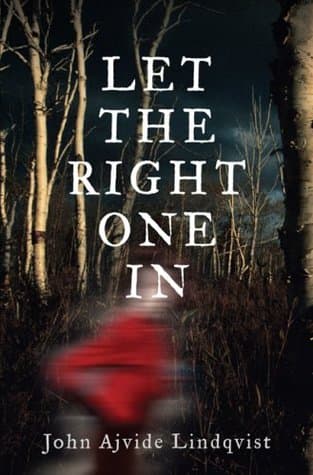
John Ajvide Lindqvist (2004)
Genre
Thriller / Fantasy / Mystery
Reading Time
900 min
Key Themes
See below
Sign in to track this book
In a bleak 1980s Swedish suburb, a lonely, bullied boy finds an unlikely and dangerous friendship with the mysterious, ageless girl next door, whose arrival coincides with a string of gruesome, blood-drained murders.
Twelve-year-old Oskar, a lonely and bullied boy in Blackeberg, Stockholm, in 1981, spends his nights fantasizing about revenge against his tormentors, often practicing with a knife. He notices a new neighbor move in—a pale, thin child named Eli, who seems his age but has an unsettling presence. Eli only comes out at night, wears old clothes, and smells strange. At the same time, the community is scared because Jocke, a local man, is found in a park, completely drained of blood. Police suspect a ritual killing, but the public does not know the true nature of the crime.
Oskar, drawn to Eli, begins to talk to them through their shared wall, using Morse code. Eli's knowledge seems to be much older than their apparent twelve years. Their talks move to late-night meetings in the snowy courtyard, where Eli, despite claiming to be cold, never shivers. Eli tells Oskar to fight his bullies, giving him a new sense of strength. Meanwhile, other victims are found, including Jocke, whose body is drained of blood. Eli is the one doing it, relying on their caretaker Håkan to get blood, a task Håkan is failing at.
Håkan, Eli's elderly human helper, cannot get Eli the blood they need. Driven by Eli's hunger and his own poor health, Håkan tries to kidnap a young man from a public bathhouse. His plan goes wrong; two teenagers find him, and in a panic, he spills the collected blood. While escaping, he is badly hurt when acid meant for his victim splashes on his face, disfiguring him and stopping him from helping Eli. This incident puts Eli in a difficult spot, forcing them to hunt alone, a task they hate.
With Håkan hurt, Eli's hunger becomes too much. They stalk a local man, Jocke, known for his cats. Eli ambushes him in the dark, brutally attacking and draining his blood. This is a desperate act for Eli, who prefers not to kill directly. The discovery of Jocke's body increases fear in Blackeberg, leading to a police investigation that cannot explain the killings. Oskar, meanwhile, becomes more confident, inspired by Eli, and finally stands up to his main bully, Conny, hitting him with a pole.
Oskar's friendship with Eli grows, filled with shared secrets and late-night adventures. One night, while Oskar is in the woods, he finds Eli feeding on a cat. The horrific sight confirms his growing suspicions: Eli is a vampire. Despite the shock, Oskar's feelings for Eli remain strong. He feels a deep connection to Eli, seeing their vampirism not as monstrous but as part of their unique and vulnerable life. This event strengthens Oskar's desire to protect Eli.
Eli, sensing Oskar's acceptance, tells him more. They reveal they are not a girl, but were castrated centuries ago, explaining their unclear gender and the deep pain from it. Eli shares parts of their long, lonely life, talking about constant hunger and the burden of living forever. This confession binds Oskar to Eli even more, as he sees past the monstrous appearance to the deep suffering and loneliness in Eli's life. Oskar, in turn, finds comfort in Eli understanding his own pain and isolation.
Virginia, a local woman and Jocke's girlfriend, finds Eli feeding from her cat and is violently attacked by Eli, who drains her blood. Virginia survives but is badly hurt and hospitalized, slowly becoming a vampire. The attack leaves Eli weak, having drunk tainted blood from Virginia, who had been drinking alcohol. Oskar visits Virginia in the hospital, seeing her worsening condition and her strange dislike of light and human food, which helps him understand Eli's world and the terrible results of their life.
Virginia's condition gets worse in the hospital. She becomes very sensitive to light, craves blood, and dislikes normal food, showing she is becoming a vampire. Unable to handle the horrifying changes and the instinct to be violent, Virginia makes a desperate choice. She exposes herself to direct sunlight, which kills a vampire, choosing to burn to death rather than become a monster. Her painful death is seen by her heartbroken boyfriend, Lacke, who is devastated by her suffering and loss.
Lacke, heartbroken and seeking answers after Virginia's death, tracks Eli to their apartment building. He finds Eli sleeping in their bathtub and, realizing they are responsible for Virginia's fate, tries to kill them with a knife. Oskar, who has become very protective of Eli, intervenes just in time, shouting a warning that distracts Lacke. Eli, awake, quickly disarms and kills Lacke, drinking his blood. This event further shows Oskar's commitment to Eli, as he actively helps protect them, even if it means aiding in a murder.
With Lacke's death and more police attention, Eli's continued presence in Blackeberg becomes too risky. They realize they must leave to protect themselves and Oskar. Eli says a tearful goodbye to Oskar, promising to return for him. Oskar is again alone, but he carries the deep impact of his relationship with Eli, changed forever by their bond and the dark secrets he now shares. He returns to his solitary life, but with new strength and lingering hope.
Oskar's bullies, led by Jille, trap him at the local swimming pool, intending to drown him as a final act of torment. Oskar is pushed underwater and held down. Just as he is about to pass out, Eli, who has unexpectedly returned, attacks. Eli tears apart Jille and the other bullies, dismembering them in a horrific show of vampire power. Oskar is saved, and the remaining bullies are traumatized. Eli's return is a terrifying act of protection, strengthening their bond with Oskar.
After the pool massacre, Oskar goes to a children's home. The police investigation into the brutal killings at the pool continues, but no one can explain the supernatural violence. Oskar, however, knows the truth. One night, Eli appears at the children's home, having followed Oskar. The two leave Blackeberg together, with Eli hidden in a trunk, traveling by train to an unknown place. Their future is uncertain, but they are together, bound by their unique and strong bond, ready to face the world as a pair.
The Protagonist
Oskar transforms from a passive victim into a more assertive individual capable of defending himself and, more importantly, protecting his unique bond with Eli.
The Deuteragonist/Vampire
Eli, initially reliant on Håkan and resigned to their solitary existence, finds a renewed purpose and connection through their relationship with Oskar.
The Supporting/Familiar
Håkan's arc is one of tragic decline, as his loyalty to Eli leads to his own destruction.
The Supporting/Victim
Virginia's arc is a tragic descent from normalcy into vampiric horror, culminating in her self-destruction.
The Supporting/Avenger
Lacke's arc is one of grief-fueled revenge, ending in his death.
The Supporting/Antagonist
Conny's arc is limited, serving primarily as a catalyst for Oskar's development and eventually becoming a victim of Eli's protection.
The Supporting/Antagonist
Jille's arc is brief, serving as the ultimate antagonist who meets a violent end at Eli's hands.
The Mentioned/Victim
Jocke's role is primarily to establish the central conflict and the gruesome nature of Eli's needs.
Both Oskar and Eli are isolated. Oskar is an outcast at school, ignored by his parents, and struggles to connect with others. Eli, as an ancient vampire, is always alone, unable to form lasting human connections and burdened by their secret. Their shared loneliness brings them together, creating a unique bond where they find comfort and understanding. This theme appears in Oskar's solitary knife practice and Eli's quiet, nocturnal life before they meet.
“''Be me, for a while,' Eli said. 'Be me and feel what it's like. Just for a while.'”
The novel blurs the lines between good and evil. Eli, a creature that kills to survive, is shown with vulnerability and even innocence, especially in their friendship with Oskar. In contrast, Oskar's human bullies, though children, commit disturbing acts of cruelty. The story makes the reader feel for a 'monster' while questioning the goodness of 'normal' humans. This is clear when Oskar accepts Eli's vampirism, finding it less monstrous than the human cruelty he faces.
“''I'm not a girl,' Eli said. 'I'm not a boy. I'm a thing.'”
At its core, the story is a dark love story about unconditional acceptance. Oskar accepts Eli for who they are, despite their vampirism and past. He sees past the monstrous appearance to the lonely being underneath, offering a friendship Eli has likely never known. Eli, in turn, protects Oskar and gives him a sense of belonging. Their bond goes against societal norms and moral judgments, representing a powerful, if unusual, form of love and mutual reliance. Their final departure together shows this deep acceptance.
“''You're not bad,' Oskar said. 'You're just... different.'”
The novel explores the harsh realities of childhood trauma, especially through Oskar's experience with constant bullying. His violent fantasies are a coping mechanism, and his friendship with Eli helps him survive. Eli's own 'childhood' is one of eternal trauma, marked by their transformation and castration. Both characters are survivors, finding strength and resilience in their bond to navigate their violent and isolating worlds. Oskar's decision to fight back against Conny, inspired by Eli, shows this theme.
“''Squeal,' Conny said. 'You're a pig. Oink, oink.'”
Eli's vampirism symbolizes profound alienation and difference.
Eli's vampirism functions not just as a supernatural element but as a powerful metaphor for being an outsider. Their need for blood, their nocturnal existence, and their ancient age set them apart from humanity, mirroring Oskar's own feelings of being different and ostracized. This device allows the author to explore themes of identity, otherness, and acceptance through a fantastical lens, making Eli's struggles relatable to anyone who has felt alienated.
Oskar's distant parents create a void that Eli fills.
Oskar's parents are largely absent or emotionally detached. His mother is often preoccupied, and his father lives separately. This parental void creates a profound loneliness in Oskar, making him vulnerable and receptive to Eli's friendship. This device highlights Oskar's isolation and underscores the intensity of his bond with Eli, who becomes a surrogate family figure, offering protection and understanding that his biological parents fail to provide.
A drab, suburban setting contrasts sharply with the supernatural horror.
The mundane, slightly decaying Stockholm suburb of Blackeberg in the early 1980s serves as a stark contrast to the horrific and supernatural events unfolding within it. This contrast heightens the sense of dread and unease, making the fantastical elements feel more jarring and real. The ordinary setting emphasizes that horror can exist anywhere, even in the most unremarkable places, mirroring the idea that monstrousness can hide in plain sight or within seemingly innocent figures.
A unique method of communication that symbolizes their secret world.
Oskar and Eli initially communicate through Morse code by tapping on their shared apartment wall. This device symbolizes their secret, isolated world and the unique bond they forge away from the scrutiny of others. It represents their inability to openly connect with the 'normal' world and underscores the intimacy and trust developing between them, as they share their thoughts in a language only they understand.
“Oskar felt like a dog, a dog that had been kicked, and he had to go home to his master to be petted.”
— Oskar's feeling of vulnerability and need for comfort after a difficult encounter.
“She was like a cat, an alley cat, and he was a dog, a pampered house dog.”
— Oskar's perception of Eli's wildness and his own sheltered existence.
“To be able to live, you have to be able to kill.”
— Eli's stark philosophy on survival, reflecting the harsh realities of their existence.
“He knew that he loved her. He knew that he was afraid of her.”
— Oskar's conflicted feelings towards Eli, encompassing both affection and fear.
“The world was a dark place, and he was just a small, insignificant part of it.”
— Oskar's sense of insignificance and the overwhelming nature of his surroundings.
“She was always hungry. She was always cold. She was always alone.”
— A poignant summary of Eli's perpetual state of being, highlighting her suffering.
“He imagined what it would be like to be strong, to be able to defend himself, to be able to fight back.”
— Oskar's longing for strength and agency in a world where he often feels powerless.
“Blood was life. Blood was death.”
— A central theme of the novel, reflecting the dual nature of blood for Eli.
“The darkness was not empty. It was full of things that moved, things that watched.”
— The unsettling atmosphere of the dark, hinting at hidden dangers and presences.
“He had found a friend in the darkness, a friend who was as lonely and strange as he was.”
— Oskar's realization of his profound connection with Eli.
“Sometimes it felt good to be afraid. It meant you were alive.”
— A character's reflection on the visceral feeling of fear as a sign of existence.
“The snow fell, silent and relentless, covering everything in a white shroud.”
— The pervasive setting of the Swedish winter, often mirroring the mood of the story.
“She was a monster, but she was his monster.”
— Oskar's possessive and accepting view of Eli, despite her true nature.
“He wanted to be like her. He wanted to be strong. He wanted to be free.”
— Oskar's yearning to embody the qualities he perceives in Eli.
Ready to see how well you understood this book? Take our interactive quiz with 10 questions.

Biography coming soon.







