“I'm not a good person. I'm not a bad person. I'm just a person.”
— Clay reflecting on his identity and the moral ambiguity of his life.

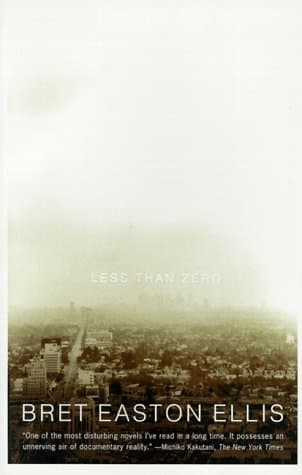
Bret Easton Ellis (1985)
Genre
Literary Fiction / Thriller
Reading Time
200 min
Key Themes
See below
Sign in to track this book
A college student returns home for Christmas to 1980s Los Angeles and falls into a world of moral apathy, drug abuse, and the dark side of his wealthy social circle.
Clay, a college student, returns to Los Angeles for Christmas vacation. His ex-girlfriend, Blair, and friend, Trent, pick him up at the airport. He notices the superficial changes and the widespread boredom among his friends. He quickly falls back into his old routine, attending parties and meeting friends who live a life of drugs, sex, and apathy. This sets the tone for his disorienting holiday.
Clay meets his childhood best friend, Julian, who is struggling. Julian admits he is addicted to heroin and has become a male prostitute to pay drug debts to a dealer named Rip. Clay is disturbed by Julian's physical decline and hopeless situation, but he cannot offer real help. This encounter shows Clay's passivity and the dysfunction in their social group, where even serious problems are met with indifference. Julian's struggles become a recurring, haunting part of Clay's vacation.
During his vacation, Clay attends many parties at mansions and clubs across Los Angeles. These gatherings involve excessive drug use (mainly cocaine), casual sex, and a widespread sense of boredom among attendees. Clay observes his friends engaging in these behaviors with a detached indifference. He notes the lack of real connection, even as people pursue fleeting pleasures. These scenes emphasize the nihilism and moral decay of their privileged lives, with Clay often feeling like an observer.
Clay and Blair try to navigate their past relationship. They spend time together, often with friends, but their interactions lack intimacy and emotional connection. They have sex, but it feels mechanical. Blair wants something more meaningful, but Clay is emotionally distant. Their attempts at reconciliation fail because of their shared environment of apathy, drug use, and the unspoken understanding that neither can truly engage emotionally. Their relationship mirrors the larger emotional void in their lives.
Clay has several disturbing encounters with Rip, Julian's drug dealer and pimp. Rip is a threatening figure who represents the predatory nature beneath the city's glamour. In one unsettling scene, Rip forces Julian to perform a sexual act in front of Clay, showing Julian's complete submission and Clay's horrified, paralyzed reaction. These interactions force Clay to confront the brutal realities of Julian's life and the dangers of their world. Rip represents the extreme consequences of their hedonistic lifestyle and the moral compromises made by those caught in it.
Clay, Blair, Trent, and others go to Palm Springs, hoping for a change of scenery. However, the desert offers no escape from their boredom. The trip quickly becomes more of the same: drug use, casual sex, and aimless conversations. Clay sees the same behavior patterns against a different background. The change in location only highlights the characters' internal emptiness, proving their problems are internal. The desert, often linked to spiritual quests, here symbolizes barrenness and a lack of real revelation.
As the vacation continues, Julian's heroin addiction and financial problems worsen. He becomes more desperate, making erratic decisions and further immersing himself in prostitution to meet Rip's demands. Clay sees Julian's physical and mental decline firsthand, feeling pity, disgust, and helplessness. Julian's pleas for help are mostly ignored or met with superficial sympathy, showing Clay and his friends' inability to intervene. Julian's downward spiral serves as a stark warning and a tragic contrast to the other characters' more 'controlled' nihilism.
Clay's observations become more disturbing as he notices predatory behavior and moral decay among his friends. He sees younger girls exploited, hears casual discussions of sexual assault, and witnesses a general disregard for human dignity. These moments are often presented with a chilling detachment, reflecting Clay's own numbness, but they also signal growing unease within him. He recognizes the casual cruelty and normalization of exploitation in their world, solidifying his sense of alienation and his perception of the moral void. The line between consensual and exploitative behavior disappears.
Despite his passivity, Clay has brief moments of self-awareness. He questions his role in the detached world he lives in and wonders about his future. He recognizes the hollowness of his relationships and the destructive nature of his environment. These moments are brief and rarely lead to action, but they suggest an internal struggle. He considers whether he can escape this lifestyle when he returns to college, or if it has shaped him permanently. This internal monologue provides a rare insight into Clay's character beyond his observational facade.
At the end of his vacation, Clay prepares to return to college. His final interactions with Blair and Julian are as unresolved and emotionally detached as their first ones. He leaves Los Angeles with a sense of relief, but also with the unsettling knowledge that his experiences have left a lasting mark. The city, and its lifestyle, remains a haunting presence. As he boards the plane, he reflects on the 'less than zero' feeling—a pervasive emptiness that he carries with him, unsure if he has truly escaped or merely postponed his involvement.
The Protagonist
Clay begins as a detached observer and ends still largely detached, but with a heightened, albeit unresolved, awareness of the moral void and his own complicity.
The Supporting
Blair remains largely static, unable to break free from the superficiality and emotional void of her environment.
The Supporting
Julian experiences a devastating downward spiral, becoming increasingly addicted and exploited, with no clear path to recovery.
The Antagonist
Rip remains a consistent force of exploitation and menace throughout, showing no development.
The Supporting
Trent remains a static character, consistently participating in the hedonistic lifestyle without significant change.
The Supporting
Muriel's arc is one of sustained exploitation, with no visible escape or development.
The Mentioned
Daniel is already deep into his decline when introduced, serving as a static example of the destructive lifestyle.
The novel shows widespread nihilism and apathy among its wealthy characters. They engage in excessive drug use, casual sex, and other hedonistic activities, not out of joy, but from boredom and a lack of meaning. Clay, as the main observer, embodies this detachment, often narrating events with a flat, emotionless tone. The characters rarely show genuine emotion, even in the face of tragedy like Julian's addiction. This theme appears in every party scene, every empty conversation, and especially in Clay's own struggle with feeling 'less than zero.'
“People are afraid to merge. They're afraid to have sex, they're afraid to get close to anybody.”
Underneath the wealth and glamour, the novel reveals deep moral decay and exploitation. This is most clear through Julian's forced prostitution under Rip's control, but it also extends to the casual exploitation of younger girls like Muriel, and a general disregard for human dignity. Clay's observations show a world without ethics, where people are treated as disposable objects for pleasure or profit. Clay's and other characters' lack of intervention in the face of such acts highlights the widespread moral bankruptcy of their society.
“I really don't want to know what's going on. It's none of my business.”
Despite being constantly surrounded by people, the characters in 'Less Than Zero' experience deep disconnection and alienation. Clay feels like an outsider even within his own social circle, observing rather than truly participating. Relationships, like his with Blair, lack genuine intimacy or emotional depth. The characters cannot form meaningful bonds, communicating mostly through superficial talk and shared drug use. This theme highlights the emptiness of their lives, where physical closeness does not mean emotional closeness, leaving everyone isolated.
“I felt myself getting lost in the crowd, just another face, and I didn't care.”
The novel shows how immense wealth and privilege, without moral guidance, can lead to destructive outcomes. The characters have unlimited access to drugs, parties, and material comforts, but this only fuels their boredom and accelerates their self-destruction. Their parents are largely absent or indifferent, providing money but no emotional support. This theme suggests that privilege, in this context, is a curse, creating a void filled with addiction, exploitation, and a profound 'less than zero' feeling. Their wealth allows them to indulge every destructive impulse without immediate consequences.
“People are afraid to merge. They're afraid to have sex, they're afraid to get close to anybody.”
Clay's emotionless, observational point of view.
The entire novel is narrated from Clay's first-person perspective, characterized by a strikingly detached and emotionless tone. Clay reports events, conversations, and observations with minimal personal reflection or emotional reaction. This narrative style mirrors Clay's own apathy and alienation, making the reader experience the world through his numb gaze. It amplifies the sense of nihilism and moral decay by presenting horrific events as mundane, drawing the reader into the characters' desensitized reality and highlighting the profound lack of feeling that pervades their lives. The detachment itself becomes a powerful statement about the characters' inability to connect or care.
The cyclical nature of parties, drugs, and aimless interactions.
The novel employs a highly repetitive structure, with Clay moving from one party to another, one drug-fueled encounter to the next, often with the same people and similar conversations. This cyclical pattern emphasizes the aimlessness and lack of progression in the characters' lives. It underscores their inability to break free from their destructive routines and highlights the pervasive boredom and lack of purpose. The repetition creates a claustrophobic atmosphere, trapping the reader within the characters' unchanging, self-destructive world, and reinforcing the idea that no real escape or redemption is possible within this cycle.
Many plotlines and character fates are left ambiguous.
Many of the novel's plotlines, particularly concerning Julian's fate and Clay's own future, are left open-ended and unresolved. Clay's departure from Los Angeles offers no clear resolution or redemption; he simply leaves, carrying the weight of his experiences. This device reflects the pervasive nihilism and lack of hope within the narrative. It suggests that there are no easy answers or happy endings in this world, and that the cycle of destruction will likely continue. The ambiguity forces the reader to confront the unsettling reality that some problems have no solutions, and some characters are beyond saving, mirroring the 'less than zero' feeling.
The city as a character reflecting glamour, decay, and emptiness.
Los Angeles itself functions as a major symbolic character in the novel. It is portrayed as a glittering, superficial landscape of wealth and glamour, but beneath this facade lies profound moral decay, emptiness, and exploitation. The city's sprawling, disconnected nature mirrors the characters' internal states. Iconic locations like the Beverly Center and the Whisky a Go Go become backdrops for moral rot. The constant sunshine and palm trees juxtaposed with the dark actions and despair create a stark contrast, emphasizing the illusory nature of their privileged existence and the pervasive corruption that defines their environment.
“I'm not a good person. I'm not a bad person. I'm just a person.”
— Clay reflecting on his identity and the moral ambiguity of his life.
“People are afraid to merge. They're afraid to have too much in common and they're afraid to have nothing in common.”
— Clay observing the superficiality and fear in the relationships around him.
“There are no new feelings. Whatever it is, someone else has felt it before.”
— Clay's cynical outlook on human emotion and experience.
“The city was a place of endless possibilities, but also endless despair.”
— Clay's ambivalent feelings about Los Angeles.
“I was starting to lose track of what was real and what wasn't.”
— Clay's increasing detachment and confusion amidst the hedonism.
“Everybody's looking for something. Even if they don't know what it is.”
— Clay's observation about the underlying desires and emptiness in people.
“It was like everyone was living in a movie, and I was just an extra.”
— Clay feeling alienated and disconnected from the lives of his peers.
“The past was a place I couldn't go back to, and the future was a place I didn't want to go.”
— Clay's sense of being trapped between his past and an undesirable future.
“We were all so young and so lost, and we didn't even know it.”
— Clay reflecting on the naivety and self-destruction of his generation.
“I kept waiting for something to happen, but nothing ever did.”
— Clay's pervasive sense of ennui and the lack of meaningful events in his life.
“Sometimes you just have to give up and let things happen.”
— Clay's passive acceptance of the chaotic and destructive events around him.
“The air was thick with unspoken words and unfulfilled desires.”
— Clay sensing the tension and underlying emotions in a social setting.
“It's not that I don't care. It's just that I don't know how to.”
— Clay's struggle with emotional numbness and his inability to connect.
“We're all just trying to get by, aren't we?”
— Clay's simple, yet profound, observation on the human condition.
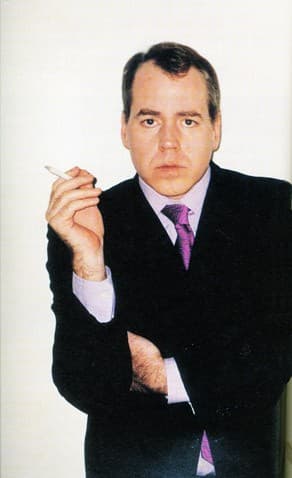
Ready to see how well you understood this book? Take our interactive quiz with 10 questions.
Bret Easton Ellis is a provocative American novelist known for his unflinching explorations of consumerism, celebrity, and violence in contemporary culture. His most famous works include "Less Than Zero" and the controversial bestseller "American Psycho," which was adapted into a film. Ellis's writing is characterized by its sharp social commentary and often transgressive subject matter.







