BookBrief
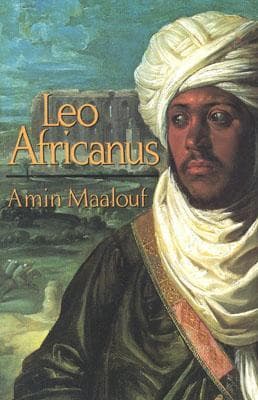
Leo Africanus cover
Archivist's Choice

Leo Africanus

Amin Maalouf

Genre

Historical Fiction

Reading Time

730 min

Key Themes

See below

Track Your Reading

Sign in to track this book

From the fall of Granada to the Renaissance courts of Rome, a scholar's life unfolds with forced migrations, daring adventures, and the search for identity across three continents.

Synopsis

Hasan al-Wazzan, born in Granada in 1488, starts his life when his family flees the Spanish Inquisition, settling in Fez. As a young man, he travels across North Africa, the Middle East, and Arabia as a merchant and diplomat for the Sultan of Fez. He sees the fall of empires, the splendor of diverse cultures, and the interplay of trade and politics, all while observing and documenting the world around him. His journey takes an unexpected turn when Christian corsairs capture him and present him to Pope Leo X in Rome. There, he is baptized as Johannes Leo, a moment that forces him to reconcile his Muslim heritage with his new Christian identity. Under the Pope's patronage, he writes his 'Description of Africa' and a trilingual dictionary, becoming a bridge between two worlds. The Sack of Rome forces his escape, leading him back to North Africa where he navigates his dual identity, shaped by his experiences and his role as 'Leo Africanus,' a man belonging to no single land but to the vastness of human experience.
Reading time
730 min
Difficulty
Medium
Pacing
Moderate
Mood
Epic, Reflective, Educational, Melancholy, Adventurous
✓ Read this if...
You enjoy richly detailed historical narratives that explore cultural identity, religious conflict, and the collision of East and West during a pivotal historical period.
✗ Skip this if...
You prefer fast-paced action or a plot with a single, clear narrative arc rather than a sprawling, episodic life story.

Plot Summary

The Fall of Granada and Exile to Fez

The story begins with Hasan al-Wazzan's birth in Granada in 1488, a city on the brink of Christian conquest. His early childhood is marked by the multiculturalism of the Nasrid kingdom, but this peace is shattered by the forces of Ferdinand and Isabella. As the siege tightens, Hasan's father, Muhammad the weigh-master, decides to abandon their home. The family, including Hasan, his mother, and his sister, makes a journey across the Strait of Gibraltar to Fez, a commercial center in North Africa. This forced exile shapes Hasan's identity, instilling in him a sense of displacement and a curiosity about the world beyond his immediate surroundings, setting the stage for his future travels and the complex interplay of cultures that will define his life.

Adolescence and Education in Fez

In Fez, Hasan's family rebuilds their lives, and Hasan thrives in the city's intellectual environment. He attends the Qarawiyyin University, where he studies Islamic law, Arabic language, literature, and various sciences. His intelligence and thirst for knowledge quickly become apparent. He forms close bonds with his mentors and peers, absorbing the diverse perspectives of scholars and merchants from across the Islamic world. Fez becomes his intellectual center, shaping his worldview and equipping him with the skills necessary for his future role as a diplomat and scholar. This period establishes Hasan's deep connection to Islamic culture and learning, even as he begins to glimpse the broader world through the tales of travelers and merchants.

First Diplomatic Missions and Early Travels

After completing his education, Hasan's talents are recognized by the Sultan of Fez, Muhammad al-Burkashi, who sends him on diplomatic missions. These early travels take him across North Africa, from the markets of Timbuktu to the ancient cities of Egypt. He learns about trade, negotiation, and cross-cultural communication. These experiences broaden his horizons, exposing him to different peoples, customs, and landscapes. He observes and records everything he encounters, developing the ethnographic eye that will later define his written works. These journeys prepare him for even more extensive explorations.

Journey to Cairo and the Mamluk Sultanate

Hasan's travels eventually lead him to Cairo, the capital of the Mamluk Sultanate. He is captivated by the city's grandeur, its libraries, mosques, and markets. He interacts with scholars, merchants, and common people, gaining a deeper understanding of the political and social dynamics of the region. However, he also sees the shadow of the Ottoman Empire, recognizing the vulnerability of the Mamluk regime. His time in Cairo is a period of intense observation and intellectual growth, solidifying his understanding of the interconnectedness of the Muslim world and its challenges. He sees firsthand the clash of empires and the shifting sands of power, which will become a recurring theme in his life.

Pilgrimage to Mecca and Encounters in Arabia

Following his time in Cairo, Hasan fulfills one of the most important duties for a Muslim, the pilgrimage to Mecca. This spiritual journey takes him through the Arabian Peninsula, where he witnesses the ancient rituals of the Hajj and connects with pilgrims from all corners of the Islamic world. He experiences spiritual reflection and gains a renewed sense of belonging to the global Muslim community. Beyond the religious rites, he continues his observations, documenting the unique cultures and landscapes of Arabia. This pilgrimage is not just a spiritual awakening but also another opportunity for geographical and cultural exploration, enriching his understanding of the vastness and diversity of the world.

Capture by Christian Corsairs

After years of travel throughout Africa and the Middle East, Hasan begins his return journey. However, his voyage takes an unexpected turn when Christian corsairs intercept his ship in the Mediterranean Sea. The notorious Sicilian pirate, Pietro Bovadiglia, captures him near the island of Djerba. This sudden disruption marks an end to his life as a free Muslim scholar and merchant. Stripped of his possessions and his freedom, Hasan is taken captive, destined for a fate far removed from the familiar world he has known. This event alters the trajectory of his life, transporting him to a new, alien world.

Arrival in Rome and Pope Leo X

Hasan is brought to Rome as a valuable prize and presented to Pope Leo X, the head of the Catholic Church. The Pope, a patron of arts and learning, is intrigued by the captive's intelligence and knowledge of the Islamic world. Instead of imprisonment, Hasan is kept under the Pope's protection within the Vatican. This period is a culture shock for Hasan, as he navigates the opulent and religiously distinct world of Renaissance Rome. He is given the name Johannes Leo, and though his freedom is curtailed, he is encouraged to share his knowledge, particularly about Africa. This moment signifies his forced assimilation into European Christian society, a stark contrast to his Muslim upbringing.

Baptism and Life as Johannes Leo

Under the patronage of Pope Leo X, Hasan, now Johannes Leo, undergoes a spiritual and intellectual transformation. He converts to Christianity, a decision born of pragmatism and intellectual curiosity, though it causes him internal conflict and a sense of betrayal to his past. The Pope himself baptizes him, solidifying his new identity within the Christian world. During this time, he dedicates himself to scholarship, learning Latin and Italian, and begins to compile his work, 'Description of Africa,' based on his travels and observations. He also works on a trilingual dictionary, showing his linguistic prowess. This period represents his most productive intellectual output, albeit under the shadow of his forced conversion.

The Writing of 'Description of Africa'

In Rome, Johannes Leo pours his knowledge and memories into his 'Description of Africa.' This work is an unprecedented and detailed account of the geography, peoples, cultures, and economies of North Africa, the Sahara, and the Sudan. He recalls the cities, rivers, mountains, and customs he encountered during his travels. This book becomes the primary source of European knowledge about Africa for centuries. While writing, he grapples with the complexities of his dual identity, presenting Africa to a European audience while retaining an internal connection to his origins. The act of writing is both a mark of his intellect and a means of preserving the world he knew before his capture.

The Sack of Rome and Escape

The political landscape of Europe shifts dramatically with the death of Pope Leo X and the subsequent turbulent papacies. In 1527, mutinous troops of Charles V sack Rome. Amidst the chaos, violence, and destruction, Johannes Leo sees an opportunity to escape his gilded cage. He flees the ravaged city, leaving behind his life as a Christian scholar in the Vatican. This event marks another turning point, allowing him to reclaim a measure of his autonomy and begin a new chapter, albeit one filled with uncertainty. The Sack of Rome symbolizes the fragility of power and the unpredictable nature of his existence.

Return to North Africa and Reclaiming Identity

After escaping Rome, Johannes Leo makes his way back to North Africa, likely to Tunis or Fez, though the exact details of his final years are historically ambiguous. This return is a quest for reconciliation and to reclaim his original identity. He grapples with the profound changes he has undergone, the baptism, the adoption of a new name, and the intellectual immersion in European culture. He is no longer simply Hasan al-Wazzan, nor fully Johannes Leo, but a complex individual who embodies both worlds. His final years are spent reflecting on his journey and attempting to find peace amidst his fragmented self, a mark of the enduring impact of his unique experiences.

Principal Figures

Hasan al-Wazzan (Leo Africanus)

The Protagonist

From a Muslim scholar and merchant, he transforms into a Christian geographer, grappling with a fragmented identity before seeking reconciliation in his later years.

Muhammad al-Wazzan

The Supporting

He provides early stability and a moral compass for Hasan, representing the roots from which Hasan later deviates and returns.

Sultan Muhammad al-Burkashi

The Supporting

He serves as an early catalyst for Hasan's travels and intellectual development, giving him purpose and direction.

Pope Leo X

The Supporting/Antagonist (contextual)

He transforms Hasan's life through capture and forced conversion, becoming both a benefactor and a symbol of cultural imposition.

Pietro Bovadiglia

The Mentioned

He serves as the instrument of Hasan's capture, directly initiating his transformation into Johannes Leo.

Nur

The Supporting

She remains a symbol of home and family for Hasan, representing the continuity of his Muslim heritage.

The Librarian of Fez

The Supporting

He instills in Hasan a profound love for knowledge and intellectual inquiry, which drives his life's work.

Themes & Insights

Identity and Belonging

The novel explores the fluid and fragmented nature of identity, particularly for individuals caught between cultures and religions. Hasan's journey from Hasan al-Wazzan to Johannes Leo, circumcised and baptized, shows this struggle. He is 'the African, but not from Africa, nor from Europe, nor from Arabia.' His constant displacement—from Granada, to Fez, across Africa, and finally to Rome—prevents him from fully belonging to any single place or group. He grapples with the loss of his original self and the forced adoption of a new one, constantly seeking to reconcile these disparate parts. This theme is central when he reflects on his baptism, a moment that simultaneously grants him new opportunities and severs him from his past, leaving him in a perpetual state of 'son of the road.'

I am also called the Granadan, the Fassi, the Zayyati, but I come from no country, from no city, no tribe. I am the son of the road, my country is the caravan, my life the most unexpected of voyages.

Hasan al-Wazzan

Cultural Exchange and Conflict

The narrative portrays the interplay and often violent clashes between the Islamic and Christian worlds during the Renaissance. Hasan's life is a bridge between these two civilizations. He experiences the intellectual flourishing of Fez and Cairo, then the artistic and political power of Rome. The book highlights the mutual curiosity and suspicion, the trade and warfare, that characterized this era. His 'Description of Africa' is an act of cultural translation, presenting one world to another. The fall of Granada, his capture by corsairs, and his forced conversion all exemplify the destructive aspects of this conflict, while his scholarly work in Rome represents a rare moment of constructive exchange.

I, Hasan the son of Muhammad the weigh-master, I, Jean-Leon de Medici, circumcised at the hand of a barber and baptized at the hand of a pope...

Hasan al-Wazzan

The Quest for Knowledge and Observation

Hasan is driven by a thirst for knowledge and a capacity for observation. From his early education in Fez to his travels as a merchant and diplomat, he records details of geography, customs, languages, and political structures. This drive culminates in his 'Description of Africa,' which is a mark of his intellectual rigor and ethnographic precision. Even in captivity in Rome, he continues to learn and synthesize, mastering new languages and presenting his knowledge to a European audience. His life is a continuous process of learning and documenting, highlighting the power of human curiosity to transcend boundaries and preserve understanding.

My life has been a succession of departures, of returns, of discoveries, of abandonments. I have lived in many lands, and learned many tongues, but I have always remained a man of words, a man of books.

Hasan al-Wazzan (paraphrased)

Fate vs. Free Will

The novel explores the tension between predetermined fate and individual agency. Hasan's life is punctuated by events beyond his control: the fall of Granada, his capture by pirates, and his forced conversion. These moments alter his path, suggesting a powerful hand of destiny. Yet, within these constraints, Hasan consistently exercises his free will through his choices: his dedication to learning, his adaptability in new environments, and his decision to write his work. He navigates a world where external forces often dictate his circumstances, but his internal spirit and intellectual pursuits demonstrate a capacity for self-determination. His escape from Rome during the Sack further shows his active role in shaping his destiny.

My life the most unexpected of voyages.

Hasan al-Wazzan

Plot Devices & Literary Techniques

First-Person Narrative (Imagined Autobiography)

The story is told retrospectively by Hasan al-Wazzan himself, looking back on his life.

The entire novel is framed as Hasan al-Wazzan's imagined autobiography, written in the first person. This device allows for deep immersion into the protagonist's internal world, revealing his thoughts, feelings, and the profound internal conflicts he experiences as he navigates multiple identities. It provides an intimate and subjective account of historical events, filtering them through Hasan's unique perspective. This narrative choice also lends credibility and authenticity to his extraordinary life, making his journey of cultural transformation and intellectual endeavor more personal and relatable to the reader, despite its historical sweep.

Travelogue/Epistolary Structure

The narrative unfolds as a series of journeys and observations, akin to a travelogue.

The novel's structure mirrors a travelogue, with each significant journey or stay in a new city forming a distinct chapter in Hasan's life. This device emphasizes his role as an observer and chronicler, preparing the reader for his eventual authorship of 'Description of Africa.' It allows the author to present a panoramic view of the 16th-century world, moving seamlessly between diverse cultures and geographies. This episodic nature highlights the fragmented and itinerant quality of Hasan's existence, reinforcing the theme of his 'son of the road' identity and his constant search for belonging amidst perpetual movement and discovery.

Historical Figures and Events

The narrative intricately weaves Hasan's personal story with real historical figures and major events.

Maalouf grounds Hasan's fictionalized autobiography within a meticulously researched historical context. Real figures like Pope Leo X, the Sultan of Fez, and events like the Fall of Granada, the Ottoman expansion, and the Sack of Rome serve as anchors for the plot. This device lends verisimilitude to the story, making Hasan's extraordinary experiences feel plausible and resonant. By placing a fictionalized protagonist at the heart of genuine historical upheavals, the novel explores how grand historical forces impact individual lives and identities, transforming Hasan into a microcosm of the turbulent 16th century, caught between empires and ideologies.

Critical analysis

Notable Quotes

I am Leo Africanus, but I am not an African. My name is al-Hasan ibn Muhammad al-Wazzan al-Fasi, but I am not a Muslim. My name is Giovanni Leone, but I am not a Christian. I am the son of a thousand cities, the brother of a thousand peoples.

The narrator's opening self-introduction, highlighting his multiple identities and nomadic existence.

Every man carries his own city with him, and I carry many.

Reflecting on his travels and how each place he lived became a part of him.

The world is one, but men have divided it into a thousand pieces.

Observing the conflicts and divisions between different cultures and religions.

Ignorance is not an empty space, it is a filled one, filled with prejudice and fear.

Contemplating the roots of intolerance and misunderstanding between different peoples.

To be born in a land is not to belong to it. To belong to a land is to love it, to carry it in your heart, no matter where you go.

Discussing his evolving sense of home and belonging, especially after being exiled.

A book is a world in itself, and to travel through its pages is to travel through time and space.

Expressing his passion for knowledge and the power of books during his time in Rome.

No one can escape his destiny, but everyone can choose the path he takes to meet it.

Reflecting on free will versus fate, a recurring theme in his life's journey.

The most dangerous walls are not those made of stone, but those built in the minds of men.

Observing the intellectual and emotional barriers separating different cultures and religions.

The truth is a river that flows in many directions, and few men are willing to follow it to all its sources.

Pondering the subjective nature of truth and the difficulty of achieving a full understanding.

To be a stranger everywhere is to be at home nowhere, but it is also to be free.

Embracing his rootless existence and the freedom that comes with not being tied to one place or identity.

Every journey is a circle, and one always returns to the point of departure, but never the same person.

Reflecting on his life's travels and the profound personal changes he underwent.

The greatest treasure a man can possess is not gold or jewels, but the stories he carries within him.

Valuing his experiences and memories above material wealth, as he recounts his life.

One day, perhaps, men will learn to live together without the need for walls, either visible or invisible.

A hopeful vision for the future, imagining a world free from division and conflict.

The most beautiful melody is the one that no one has heard before, and the most beautiful story is the one that no one has told.

Expressing his desire to discover and share new knowledge and perspectives.

Quiz

Test Your Knowledge

Ready to see how well you understood this book? Take our interactive quiz with 10 questions.

10
Questions
~5
Minutes
?
Best Score

Key Questions (FAQ)

The novel is an imaginary autobiography of Hasan al-Wazzan, later known as Leo Africanus, a historical figure born in Granada in 1488. It chronicles his extraordinary life as his family flees the Inquisition, his extensive travels as a merchant across Africa and the Middle East, his capture by pirates, and his eventual life in Rome under Pope Leo X, where he writes his famous 'Description of Africa'.

About the author

Amin Maalouf

Amin Maalouf is a Lebanese-French author known for his historical novels that explore cultural identity and the intersection of civilizations. His notable works include 'The Gardens of Light,' 'Leo Africanus,' and 'The Crusades Through Arab Eyes,' which offer profound insights into historical events and diverse perspectives. Maalouf's writing is celebrated for its lyrical prose and deep engagement with complex themes.