“Every story has four parts: the beginning, the middle, the almost-ending, and the true ending.”
— Narrator reflecting on storytelling structure

Stephanie Garber (2018)
Genre
Fantasy / Mystery / Young Adult / Romance
Reading Time
9-10 hours
Key Themes
See below
Sign in to track this book
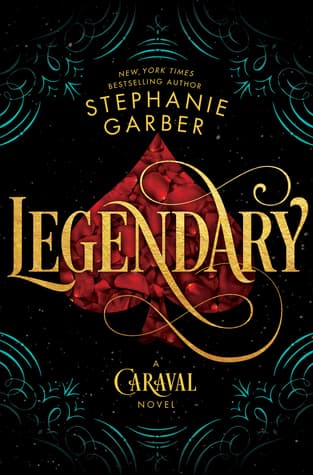
To learn the Caraval Master's identity and save her life, Tella goes back into the deadly game, but she gets caught in a royal murder plot, a forbidden romance, and a web of secrets that could destroy everything she cares about.
Donatella 'Tella' Dragna is bothered by a deal she made with a criminal called 'The Deck of Many Fates' during the last Caraval. To save her mother, Paloma, from a magical prison, Tella promised to find the real name of Caraval Master Legend. With the new Caraval starting, Tella feels great pressure, knowing failure means her mother's death. She gets a letter from the criminal, reminding her of the risks and telling her to go to the new Caraval, which is in Valenda for Empress Elantine’s seventieth birthday. Tella wants to win the game and find Legend's secret, despite the dangers and having no idea how to start.
Tella and her sister, Scarlett, arrive in Valenda, a city excited for the Empress's birthday and Caraval. Tella, in disguise, immediately starts looking for clues. She meets a charming boy named Dante, who seems to know more about Caraval and Legend than he shows. He warns her that this Caraval is different, more dangerous, and connected to the Fates. The game's goal is to find seven clues about Empress Elantine's life story hidden in Valenda to unlock her greatest secret. Tella knows this is her only chance to get close to Legend and complete her deadly bargain.
Tella enters the game, following the first clue to a magical tavern where she meets Jacks, the Prince of Hearts, an immortal Fate. Jacks immediately senses Tella’s connection to the Fates and warns her about the dangers of finding Legend's real name. Tella keeps working with Dante, whose flirtatious nature and changing loyalties make him both helpful and a risk. She learns that the game is not just about clues but about Caraval's magic, the city's politics, and the old, powerful Fates who are waking up and affecting the game.
As Tella plays, each clue reveals a part of Empress Elantine's past, including her connection to the Fates and her efforts to control their power. Tella discovers that Elantine had a forbidden love and made a deal, which led to the Caraval games as a way to control the Fates. Valenda itself becomes a player, with hidden passages, magic, and secret groups. Tella learns that Legend is not just the Master of Caraval but also protects the world from the Fates, and revealing his real name could have bad results.
Jacks, the Prince of Hearts, becomes a more important part of Tella's journey, giving cryptic advice and making demands. He says he knows about her bargain and often appears at key moments, sometimes helping, sometimes hindering. Tella is caught between needing to find Legend's name and her growing worry about Jacks's true intentions. Meanwhile, Scarlett, also in Valenda, notices Tella's secretive behavior and her dangerous involvement in the game. Scarlett worries about Tella's safety and tries to find out what her sister is hiding, causing tension between them.
Tella discovers that 'The Deck of Many Fates' is not just a criminal but a powerful, ancient Fate—the original owner of the cards Tella carries. This powerful Fate is using Tella to reawaken all the Fates and cause chaos. Tella realizes the game is more than entertainment; it is a battle for control over the Fates and the world's future. She learns that Legend's real name is not just a secret identity but a way to either empower or defeat the Fates, depending on who uses it.
As Tella gets closer to the last clue, her relationship with Dante grows, with both passion and suspicion. Dante then reveals he is Legend, the Master of Caraval. He says he planned her involvement in the game to find a greater threat to Caraval and the world. Tella is heartbroken and feels betrayed, realizing their whole relationship was a trick. This revelation breaks her trust and complicates her mission, as she must decide whether to expose the man she cares for, or protect him from the bargain she made.
The last clue leads Tella to the game's center, where the criminal, the Fate who holds her mother, is revealed as the powerful Fate of Hearts. This Fate plans to use Legend's real name to fully reawaken all the Fates and take control. Legend (Dante) confronts the Fate of Hearts. To stop his real name from being used to cause chaos, Legend appears to sacrifice himself, falling from a high place after a struggle. Tella is left stunned, believing she has lost him forever and that her mother is truly lost.
After Legend's apparent death, Tella is devastated. She believes she failed her mother and lost Legend. However, she discovers that the game's final secret is not just about Legend but about Empress Elantine. Elantine, it turns out, was not just a player but a powerful figure who tried to imprison the Fates to protect humanity. Her 'secret' was her connection to the Fates and her desperate actions to keep them contained. Tella realizes the game was a test, a way for Legend to find a successor or ally able to continue the fight against the Fates.
As Tella deals with what happened, Legend reappears, saying his 'death' was another illusion, part of the game to test her and trick the Fates. He explains that Caraval is not just a game but a magical prison for the Fates, and his job is to maintain it. He also reveals that her mother, Paloma, is not truly imprisoned by a Fate but is one of the Fates herself, who went into hiding. Tella realizes her bargain was a trick to draw her into the larger conflict. She now understands she has a unique magic, a connection to the Fates, making her an important player in the ongoing battle to keep them contained.
The Protagonist
From a reckless adventurer driven by a bargain to a more mature character understanding her own magical potential and a larger role in protecting the world from the Fates.
The Antagonist/Love Interest/Protagonist
From a seemingly simple Caraval performer to the revealed Master of Caraval, showcasing his complex motivations and the sacrifices he makes.
The Antagonist/Supporting
Maintains his role as a powerful, unpredictable Fate, his interest in Tella deepens, setting up future conflicts.
The Supporting
Continues to be a protective older sister, growing more independent and questioning her own past.
The Supporting
Remains a loyal and supportive figure for Scarlett and Tella, his love for Scarlett deepening.
The Mentioned/Supporting
Her past actions and secrets are gradually revealed, shaping the context of the game.
The Mentioned/Supporting
From a missing, endangered mother to a powerful, hidden Fate, revealing her true nature.
The Antagonist
Remains a powerful and manipulative antagonist, his true identity and motives are revealed, setting up a direct confrontation.
Identity is central to Tella's journey. She starts defined by her bargain and her quest to save her mother, but as the game continues, she finds parts of her own identity, including a hidden magic and a connection to the Fates. Legend's hidden identity (Dante) also plays a role, making Tella question who she can trust and what defines a person beyond their looks or role. The revelations about Paloma's true identity as a Fate further complicate Tella's understanding of herself and her family.
““Every story has a villain. Every story has a hero. Every story has a monster. And every story has a secret.””
Trust is difficult in Caraval, and Tella experiences betrayal. Her bargain with 'The Deck of Many Fates' is based on manipulation, and her relationship with Dante breaks when his true identity as Legend is revealed. This makes Tella constantly question everyone's reasons, sometimes even her sister's. The theme explores how hard it is to tell truth from illusion in a world built on lies, and the emotional cost of betrayal, even when it is part of a larger, seemingly good game.
““Not all stories are meant to be believed.””
Love, in different forms, drives much of the plot. Tella's love for her mother, Paloma, makes her make a dangerous bargain and risk her life. Her growing romantic feelings for Dante are tested by his betrayal and apparent sacrifice. The game itself shows Empress Elantine's sacrifices for love and protection. This theme explores how far characters will go for those they care about, and the difficult choices they make, often involving personal loss or giving up everything.
““Every good story needs a villain. But the best villains are the ones you secretly like.””
Caraval itself is a game, but Tella's personal quest forms another, more dangerous layer.
The primary plot device is Caraval itself, a magical, immersive game. However, 'Legendary' introduces a 'game within a game' where Tella's personal mission to find Legend's true name and save her mother is layered onto the official Caraval storyline (Empress Elantine's secrets). This creates a dual narrative, where Tella must play the public game while simultaneously pursuing her clandestine, high-stakes objective, often using the official clues to further her own hidden agenda. This device heightens suspense and complicates Tella's choices.
Ancient, powerful beings whose reawakening drives the central conflict.
The Fates are ancient, powerful, and often malevolent beings who once ruled the world. Their reawakening is the central conflict of the story. The 'Deck of Many Fates,' a magical deck of cards, serves as a symbolic and literal link to these beings. Each card represents a different Fate, and Tella's possession of the deck, along with her bargain, intertwines her destiny with theirs. This device introduces a higher level of magical threat and a rich mythology, expanding the world beyond the initial Caraval games.
The constant blurring of what is real and what is part of Caraval's magic.
A pervasive plot device in Caraval is the constant blurring of illusion and reality. Players are repeatedly told that 'it's only a game,' yet the consequences are often real. This device creates an atmosphere of pervasive uncertainty, forcing Tella (and the reader) to question every character's motives, every event, and every revelation. Betrayals, apparent deaths, and magical transformations all contribute to this theme, making it difficult to discern truth until the very end and highlighting the deceptive nature of Caraval's magic.
A magical weakness and source of power, sought by Tella and the Fates.
The concept of a 'true name' is a magical plot device, signifying immense power and vulnerability. Knowing Legend's true name would give Tella leverage over him, and allow 'The Deck of Many Fates' to control him and unleash the Fates. This device establishes the ultimate stakes of Tella's quest, making the name a highly coveted and dangerous secret. It ties into ancient folklore where knowing a being's true name grants power over them, adding a classic fantasy element to the narrative.
“Every story has four parts: the beginning, the middle, the almost-ending, and the true ending.”
— Narrator reflecting on storytelling structure
“I think I'd rather die than be boring.”
— Scarlett Dragna expressing her desire for adventure
“Hope is a powerful thing. Some say it's a different breed of magic altogether.”
— Character discussing the nature of hope
“Love is a risk. But it's a risk worth taking.”
— Romantic moment between characters
“Sometimes the most dangerous lies are the ones we tell ourselves.”
— Reflection on self-deception
“The heart is an arrow. It demands aim to land true.”
— Metaphor about love and intention
“Not all prisons have bars. Some are built with secrets.”
— Comment on emotional confinement
“Magic doesn't create miracles. It reveals them.”
— Philosophical observation about magic
“A legend isn't just a story. It's a truth that's been to hell and back.”
— Defining what makes a legend
“The greatest adventures often begin with the smallest choices.”
— Narrative insight about decision-making
“Fear is a poison that can be cured with courage.”
— Encouraging bravery in face of danger
“Some doors aren't meant to be opened. But that doesn't mean we shouldn't try.”
— Character contemplating curiosity vs. caution
“In a world of illusions, the real magic is seeing what's truly there.”
— Observation about perception and reality
“Destiny isn't written in stone. It's written in choices.”
— Philosophical statement about fate
Ready to see how well you understood this book? Take our interactive quiz with 10 questions.
Biography coming soon.







