“Sometimes the best way to find something is to stop looking for it.”
— Tom reflects on his journey while exploring the caves.


N.D. Wilson (2007)
Genre
Children's / Mystery / Young Adult
Reading Time
180 min
Key Themes
See below
Sign in to track this book
After a hasty escape on a foam raft, young Tom Hammond finds himself lost beneath Leepike Ridge, where a subterranean world of castaways, ancient tombs, and buried treasure will reveal secrets that forever alter his understanding of home.
Ten-year-old Thomas Hammond is unsettled by his mother's suitor, Mr. Nicely, a schoolteacher who has come to dinner and is proposing marriage. Feeling overlooked and restless, Thomas slips out of his house and onto a nearby stream on a large slab of packing foam. He drifts downstream, lulled to sleep by the night. When he awakens, he finds himself at the base of Leepike Ridge, where the stream plunges into a dark, underground cavern. Unable to stop, Thomas is pulled into the subterranean world, enduring a wild ride through rapids and chasms before finally being thrown onto a rocky shore, bruised but alive, his foam raft destroyed.
After his harrowing journey, Thomas explores his immediate surroundings. He finds evidence of human habitation: a small, well-maintained cave dwelling complete with furniture, books, and even a working generator. He soon encounters Roderick, an elderly, eccentric man who has been living underground for many years, seemingly content in his isolation. Roderick is initially startled but quickly warms to Thomas, sharing his meager supplies and explaining his long-term residence in the caves. Thomas learns that Roderick has been cut off from the outside world for so long that he has lost track of time and the specific events that led to his entrapment.
As Thomas spends more time with Roderick, he learns fragments of the old man's past. Roderick speaks of a woman named Clara, his great love, who he believes is still alive somewhere. While exploring a different chamber, Thomas discovers a locket containing a photograph of a young woman – Clara. He realizes that Roderick's memories are fractured and that Clara's fate is a significant part of the cave's history. The locket becomes a tangible link to the past, fueling Thomas's desire to understand the full story and help Roderick find closure, or even escape.
Following Roderick's vague recollections and Thomas's own curiosity, they begin to search for clues about Clara and Roderick's past. Their exploration leads them to a deeper, more hidden part of the cave system. There, they uncover a buried treasure chest filled with gold coins, jewels, and other valuable artifacts. More importantly, they find a journal. This discovery is important, as Thomas hopes the journal will provide concrete answers to the mysteries surrounding Roderick's long isolation and Clara's disappearance, offering a clear narrative of the events that transpired decades ago.
Thomas reads Clara's journal, which meticulously details her and Roderick's adventures and eventual entrapment within the caves. The journal explains that they were exploring the caves when a rockfall sealed the entrance. Clara, being more resourceful and determined, eventually found an alternate, dangerous way out, while Roderick, injured and disoriented, remained behind, losing his memory and sense of time. Clara's entries express her love for Roderick and her desperate attempts to find help, only to be unsuccessful in her rescue efforts. The journal reveals that Clara did escape and lived a full life, but never forgot Roderick.
The journal, combined with other clues and Roderick's fragmented recollections, reveals the full, poignant truth: Clara did escape the caves and lived a long, fulfilling life in the outside world. However, she was never able to find her way back to Roderick or convince anyone of his existence beneath Leepike Ridge. Roderick, suffering from memory loss and the passage of time, continued to believe she was still trapped or would return. The locket Thomas found was a memento Clara had left behind, perhaps hoping Roderick would one day find it and understand her love and her struggle to save him. Thomas now carries the burden of this knowledge.
Initially, Roderick struggles to accept the revelations from Clara's journal, clinging to his distorted memories. However, Thomas's patient explanations and the undeniable evidence from the journal slowly bring Roderick to terms with the truth of Clara's escape and his own long isolation. A sense of peace, mixed with sadness, settles over Roderick. With the past clarified, their focus shifts to the present: finding a way out of the vast, labyrinthine cave system. Thomas, with his youthful energy and modern perspective, becomes the primary navigator, while Roderick offers his knowledge of the known passages.
Their search leads them to a previously unexplored section of the caves, culminating in the discovery of a treacherous, almost vertical shaft. This shaft appears to be a potential escape route, but its sheer height and unstable nature present a significant challenge. Thomas, being lighter and more agile, takes the lead in attempting the climb, using old ropes and handholds left by previous, long-forgotten explorers or perhaps even Clara herself. The ascent is harrowing, filled with danger, and tests Thomas's courage and physical endurance. Roderick, though unable to climb, offers encouragement and guidance from below.
After a grueling and dangerous climb, Thomas finally reaches the top of the shaft, emerging into the daylight. He then works to secure a way for Roderick to follow, using the ropes and his ingenuity. Roderick, weak but determined, is slowly pulled to the surface, blinking in the unfamiliar sunlight after decades underground. They find themselves on a less-traveled part of Leepike Ridge, disoriented but free. The outside world is vastly different from Roderick's last memory, a stark contrast to the timeless darkness of the caves. Thomas feels immense relief and a sense of accomplishment.
Thomas and Roderick make their way back towards civilization. Thomas eventually reunites with his worried family, who are relieved to find him alive. He shares his incredible story, and Roderick is introduced to the modern world, a man out of time. The treasure they found ensures Roderick's financial security and provides for Thomas's future. Roderick finds a measure of peace, finally understanding Clara's fate and cherishing their shared history. Thomas, changed by his adventure, gains a new perspective on life, family, and the hidden wonders of the world, carrying the legacy of Leepike Ridge with him.
The Protagonist
Thomas begins as a boy feeling lost and overlooked, but his adventure forces him to grow, becoming courageous, empathetic, and ultimately finding a deeper connection with his own life.
The Supporting
Roderick begins in a state of confused isolation, gradually regaining his memories and accepting the truth of his past, finding peace and a new beginning in the outside world.
The Supporting/Mentioned
Clara's arc is entirely in the past, showing her journey from adventurous explorer to a survivor who had to make the difficult choice to leave her love behind, but never forgot him.
The Supporting
Her arc involves moving from a period of personal transition (considering remarriage) to experiencing profound worry and then immense relief and understanding for her son.
The Supporting
Mr. Nicely's minor arc sees him as a catalyst for Thomas's adventure and a supportive figure for Thomas's mother.
The Supporting
The dog's arc is one of consistent loyalty, enduring isolation, and finally experiencing the outside world again alongside Roderick.
Thomas's journey into Leepike Ridge is a quest for self-discovery. Feeling out of place and overlooked at home, he literally plunges into an unknown world, forcing him to rely on his own wits and courage. His experiences with Roderick and the revelations from Clara's journal broaden his understanding of life, love, and loss. By the end of his adventure, Thomas returns home with a stronger sense of who he is and his place in the world, no longer a restless child but a young man changed by his extraordinary ordeal.
“He had ridden his foam raft all the way to the ridge, where the stream dives underground. Flung over rapids and tossed through chasms, Tom finally hit shore, sore but alive.”
The novel explores how time can warp and distort memory, particularly through Roderick's character. His decades of isolation have caused him to lose track of time and misremember crucial events, believing Clara is still trapped or will return. Clara's journal provides a counterpoint, offering a precise, written record of events. The contrast between Roderick's fragmented, emotional memories and Clara's factual account highlights the subjective nature of memory and how it can be shaped by trauma, hope, and the passage of years. Thomas acts as the bridge, helping to reconcile these differing perceptions of the past.
“For Roderick, Clara was still trapped, still hoping for rescue, still waiting. For Clara, Roderick was a ghost she could not save.”
The enduring love between Roderick and Clara is a central theme, even if tragic. Roderick's decades-long devotion to Clara, despite his fragmented memories, shows the power of love. Clara's journal reveals her own deep love for Roderick and the loss she felt after being forced to leave him behind. Her continued attempts to find him, even after escaping, speak to her unwavering affection. The story ultimately brings a bittersweet resolution to their love story, allowing Roderick to finally understand and grieve, while Thomas gains a deeper appreciation for the complexities of human connection.
“'She found a way out, Tom,' Roderick whispered, his voice thick with a sorrow that was decades overdue. 'She made it out. And she loved me still.'”
Both Thomas and Roderick demonstrate remarkable resilience. Thomas, a young boy, survives a terrifying journey through underground rapids and adapts quickly to a harsh environment. He learns to navigate, forage, and maintain hope. Roderick, on the other hand, has survived decades of complete isolation, maintaining a basic existence and a semblance of sanity through sheer will and the companionship of his dog. Clara's story also shows survival, as she found a way out of the sealed cave and built a new life. The book celebrates the human spirit's capacity to endure and overcome extreme challenges.
“He was a boy who had fallen into the earth, but he was not a boy who would stay there.”
A literal and metaphorical labyrinth representing isolation and discovery.
The vast, complex network of caves beneath Leepike Ridge serves as the primary setting and a powerful plot device. It is both a physical trap for Roderick and a place of extraordinary discovery for Thomas. The caves represent the unknown, the hidden depths of the world, and the secrets of the past. Its challenging environment forces Thomas to develop resilience and resourcefulness, while its timeless darkness has preserved Roderick's past in a suspended state. The journey through the caves is a symbolic descent into the subconscious and a journey of revelation.
A crucial exposition device revealing the past and resolving central mysteries.
Clara's journal is a pivotal plot device. It functions as a direct link to the past, providing the reader and Thomas with the accurate, detailed account of Roderick and Clara's entrapment and Clara's eventual escape. Without the journal, Roderick's fragmented memories would remain unresolved, and the full tragic beauty of their story would be lost. It serves to correct misunderstandings, provide exposition, and drive the emotional core of the narrative, allowing for Roderick's eventual acceptance and healing. It is the key to unlocking the true history of Leepike Ridge.
A symbolic and practical discovery that offers both historical context and future security.
The treasure chest, filled with gold and jewels, initially serves as a classic adventure trope, hinting at wealth and mystery. However, its true significance lies not just in its monetary value but in its contents, particularly Clara's journal, which is found alongside it. The treasure symbolizes the hidden riches — both material and historical — that lie beneath the surface. Practically, it ensures Roderick's comfortable reintegration into society and provides for Thomas, offering a tangible reward for their perilous journey and a legacy of their shared adventure.
The initial catalyst for Thomas's adventure, symbolizing his impulsive escape and vulnerability.
The simple slab of packing foam serves as the initial, seemingly innocuous, plot device that propels Thomas into his extraordinary adventure. It represents his impulsive desire for escape and freedom from his mundane life and family anxieties. Its fragility and lack of control highlight Thomas's initial vulnerability and the accidental nature of his journey into the unknown. The raft's destruction upon entering the caves symbolizes his point of no return and the end of his ordinary life, forcing him to face the challenges ahead without an easy escape.
“Sometimes the best way to find something is to stop looking for it.”
— Tom reflects on his journey while exploring the caves.
“The world is full of hidden doors, and most of them are inside us.”
— Tom contemplates the mysteries he encounters.
“Adventure is just trouble with a better reputation.”
— Tom's realization about his predicament.
“A map is only as good as the person reading it.”
— Tom learns to navigate the caves.
“Courage isn't the absence of fear, but the decision that something else is more important.”
— Tom faces a dangerous situation in the caves.
“The past is a river, and we're all just trying to keep our heads above water.”
— Reflection on history and legacy in the story.
“Home isn't a place, it's the people who miss you when you're gone.”
— Tom thinks about his family while lost.
“Truth has a way of bubbling up, no matter how deep you bury it.”
— Uncovering secrets in the caves.
“Sometimes you have to get lost to find yourself.”
— Tom's personal growth during his adventure.
“The darkest caves often hide the brightest treasures.”
— Finding hope in difficult circumstances.
“A story isn't just what happens, it's what we remember.”
— Reflection on storytelling and memory.
“You can't change the wind, but you can adjust your sails.”
— Tom adapts to challenges in the caves.
“The most dangerous monsters are the ones we create in our minds.”
— Tom confronts his fears underground.
“Every ending is just a new beginning in disguise.”
— The conclusion of Tom's adventure.
Ready to see how well you understood this book? Take our interactive quiz with 10 questions.

Biography coming soon.

Dan Gemeinhart
4.5

Kate O'Hearn
4.4

Jeanne Birdsall
4.4

Jen Wang
4.4

Wendelin Van Draanen
4.3

John Marsden
4.3

Chris Van Allsburg
4.3
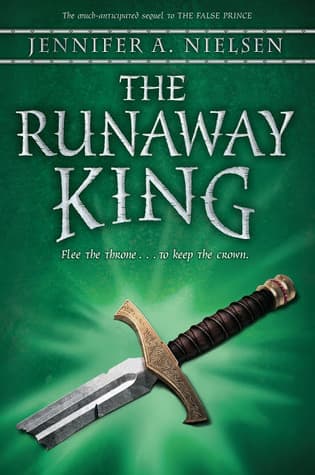
Jennifer A. Nielsen
4.2