“I had been planning to write a long poem. I had even, in a moment of delusional fervor, announced that it would be an epic.”
— The narrator, Adam Gordon, reflecting on his initial ambitions upon arriving in Madrid.

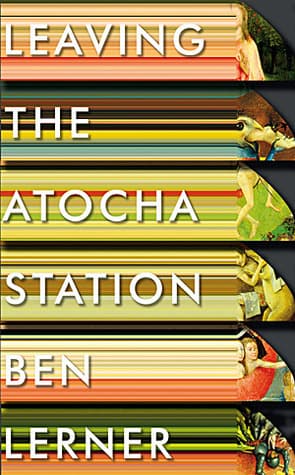
Ben Lerner (2011)
Genre
Literary Fiction / Lifestyle
Reading Time
180 min
Key Themes
See below
Sign in to track this book
A young American poet in Madrid questions his art, relationships, and existence in a world of irony, drugs, and mediated experience, all while dealing with the aftermath of a terrorist attack.
Adam Gordon, a young American poet, arrives in Madrid on a poetry fellowship. He immediately feels alienated and doubts himself, largely because of his anxiety about his poetry and the perceived fakery of his own experiences. He struggles with Spanish, relies heavily on Google Translate, and often pretends to understand conversations. Adam also uses various medications, including antidepressants and cannabis, which further blur his view of reality. He sees his fellowship requirements, which involve researching a Spanish poet, as a performance, preferring instead to observe his own internal state and interactions, however unreliable they are.
Adam visits the Prado Museum to see Velázquez's 'Las Meninas,' a painting he has a complicated relationship with. His thoughts during this visit are a mix of art theory, self-deprecating humor, and anxiety about the authenticity of his emotional responses to art. He wonders if his appreciation is real or just a learned response. At the museum, he meets Teresa, a young Spanish woman. Their first interaction is brief and marked by Adam's awkwardness and his tendency to misinterpret or over-analyze her words and intentions, a pattern that will define many of his relationships.
Adam starts spending more time with Teresa. Their relationship is a complex dance of attraction and Adam's constant self-doubt. He often invents details about his past, his family, and even his health to seem more interesting or sympathetic to her. He often recounts these fabrications in his thoughts, analyzing their possible impact and his reasons for telling them. Teresa seems to accept his stories, or at least does not openly challenge them, leaving Adam to constantly wonder if she sees through his performance or genuinely believes him. These interactions show his struggle with authenticity in personal connections.
While still involved with Teresa, Adam meets Isabel, another young Spanish woman, at a literary event or café. He is immediately drawn to her and begins to pursue a relationship with her as well, without fully ending things with Teresa. This creates a stressful internal problem for Adam, as he struggles to maintain two separate, somewhat made-up personas for each woman. His interactions with Isabel are similarly marked by his performative tendencies, his anxieties about his poetry, and his constant questioning of whether he is genuinely connecting with her or just projecting an idealized version of himself. This love triangle worsens his feelings of being a fraud.
Adam is invited to give a poetry reading, an important event for his fellowship. Leading up to it, he feels intense anxiety, questioning the value of his own poetry and the sincerity of his audience's potential reactions. During the reading, he is very aware of his own performance, his accent, and the perceived responses of the listeners. He struggles with the theatrical nature of public poetry, feeling that it further hides any real connection between himself, his words, and the audience. This experience shows his central problem: the gap between the private act of creation and the public, often artificial, act of presentation.
On March 11, 2004, Adam is in Madrid when terrorist bombings occur on commuter trains, including one near Atocha Station. He is not directly hurt but experiences the shock and confusion that grips the city. He observes the public reaction, the news coverage, and the somber atmosphere. This real-world tragedy affects Adam deeply, forcing him to confront the limits of his self-absorption and the inability of language or art to fully capture or respond to such immense suffering. He feels guilty and detached, questioning his role as an observer and whether he can truly be part of history.
After the bombings, Adam's internal thoughts intensify, focusing on how personal experience and collective trauma intersect. He questions the relevance of poetry and art in such a context, wondering if his artistic pursuits are trivial in the face of real-world suffering. He observes how people respond, how stories are formed, and how the media frames the event. This period is marked by a heightened sense of existential dread and a renewed, yet still frustrated, search for genuine meaning and connection, both in his art and in his relationships, which now feel even more fragile and artificial.
As Adam's fellowship nears its end, his relationships with Teresa and Isabel reach a series of vague confrontations. There is no dramatic ending to his deceptions; rather, the relationships seem to fade or change, leaving Adam to interpret their meaning. He continues to project his own anxieties onto their reactions, never fully sure if they saw through his fabrications or if their departures were unrelated to his pretense. He thinks about the loneliness of his self-imposed isolation and the difficulty of truly knowing another person, or even himself, when constantly performing.
Adam faces the difficult task of writing his fellowship report, meant to detail his research into a Spanish poet. Instead, he finds himself trying to create a story that justifies his often-unconventional and self-absorbed 'research' into authenticity, his relationships, and the Madrid bombings. He struggles to reconcile the official requirements with his actual, highly subjective experiences. This process becomes another act of performance, as he tries to frame his anxieties, his use of medication, and his fabricated stories as legitimate artistic inquiry, further blurring the lines between reality and his artistic construction of it.
Adam's time in Madrid concludes, and he prepares to leave the city. His departure is not marked by a grand realization or a clear solution to his internal struggles. Instead, he carries with him the lingering questions about authenticity in art and life, the validity of his own experiences, and the meaning of his relationships. He thinks about the moments of genuine connection and deep alienation he felt, acknowledging that the answers remain unclear. The story ends with Adam still very much in process, leaving the reader to consider the implications of his journey and the complex interplay of reality and perception.
The Protagonist
Adam's arc is less about clear resolution and more about a deepening, though unresolved, engagement with his central questions of authenticity and self-perception, leaving him still searching at the end.
The Supporting
Teresa's arc is largely defined by her presence in Adam's internal world; she remains somewhat enigmatic, her reactions filtered through his unreliable narration.
The Supporting
Isabel's arc, like Teresa's, is primarily defined by her role in Adam's internal struggle with honesty and romantic relationships.
The Mentioned
N/A (not a character in the traditional sense, but a narrative device for Adam's internal conflict).
The Mentioned
N/A (her role is primarily as a tool for Adam's self-deception).
This is the novel's main theme, exploring the constant tension between genuine experience and the performative aspects of self, art, and communication. Adam fears that his experiences, emotions, and poetry are not authentic but merely projections or imitations. He often makes up stories about his life and illness for Teresa and Isabel, carefully analyzing his own deceptions. This theme is clear in his struggles with writing poetry, his reliance on Google Translate to fake understanding, and his deep anxiety about whether his art has any 'real' value in a world full of mediated experiences. The Madrid bombings force him to confront the limits of his self-absorption and the inadequacy of his performative self in the face of real tragedy.
“What if I could just relax into the fraudulence of my own experience?”
The novel deeply questions the purpose, value, and reception of poetry and art today. Adam, as a poet, constantly doubts his own work and the sincerity of artistic expression. He struggles with the idea that poetry might just be a screen for the reader's projections, rather than a way to convey genuine emotion or truth. His visits to the Prado Museum, especially his engagement with 'Las Meninas,' show his complex relationship with art history and the challenge of authentic artistic creation. The public poetry reading increases his anxieties about performance and the gap between the artist's intention and the audience's interpretation. The Madrid bombings further complicate this, making him consider poetry's relevance in the face of real-world suffering.
“I was trying to write poems that were not poems, if you know what I mean. I was trying to write poems that could fail.”
The story is set in a time when technology and pharmaceuticals heavily mediate experience. Adam often uses Google Translate to navigate conversations, which creates a barrier to genuine linguistic and cultural immersion. His use of antidepressants and cannabis further blurs his perception of reality, making him question the authenticity of his own emotional states and memories. This theme explores how technology and medication can both help and hinder human connection and self-understanding, contributing to Adam's detachment and the difficulty of knowing what is 'real.' The constant interplay between his internal thoughts and his external, technologically-assisted interactions emphasizes this mediation.
“I was always on the verge of crying or laughing, or both, which was, I think, the point of the medication.”
Adam's journey is a quest to understand his own identity, though he constantly undermines it through self-doubt and fabrication. He struggles with who he is as an American in Spain, as a poet, and as an individual in relationships. His tendency to invent stories about himself and to analyze his own performances reflects a fragmented sense of self. The novel suggests that identity is not fixed but a fluid, often contradictory, construction shaped by internal anxieties, external perceptions, and the stories we tell ourselves and others. His internal monologue is a constant negotiation of these conflicting self-perceptions, leaving him perpetually uncertain.
“I was a fraud, and I knew it, and that was the only authentic thing about me.”
Adam Gordon's subjective, anxious, and often fabricating perspective shapes the entire narrative.
The entire novel is filtered through Adam Gordon's first-person perspective, which is deeply unreliable. Adam frequently fabricates stories about his life, family, and health to impress or manipulate others. He also constantly questions his own perceptions, memories, and motivations, often admitting to his own dishonesty or self-deception. This unreliability creates a pervasive sense of ambiguity, making it difficult for the reader to discern what is 'true' within the story and mirroring Adam's own struggle with authenticity. The narrative's strength lies in this very unreliability, forcing the reader to engage critically with Adam's internal world.
The narrative primarily consists of Adam's unfiltered thoughts, anxieties, and philosophical musings.
The vast majority of the novel takes place within Adam's mind, presented as a continuous, rambling internal monologue or stream of consciousness. This device allows for deep exploration of his anxieties, philosophical questions about art and authenticity, and his detailed, often self-deprecating, analysis of his own social interactions. It provides immediate access to his intellectual and emotional landscape, blurring the lines between thought, memory, and immediate experience. This unfiltered access to Adam's mind is crucial for understanding his character and the novel's central themes, even if it makes him an unreliable guide to external events.
The novel self-consciously comments on its own construction and the nature of storytelling.
Leaving the Atocha Station frequently employs metafiction, with Adam often commenting on the act of narration itself, the creation of stories (both his own and those he invents for others), and the relationship between literature and reality. He explicitly discusses his fellowship report as a literary construction, and his internal reflections on poetry often extend to the novel's own form. This device highlights the artificiality of narrative and questions the possibility of capturing genuine experience through language, reinforcing the novel's central themes of authenticity and performance by making the reader aware of the story's own constructed nature.
Adam's use of various substances influences his mental state and perception of reality.
Adam's regular consumption of antidepressants and a cannabis tincture is not just a character detail but a significant plot device. These substances directly impact his mental state, making him question the authenticity of his emotions and memories, and blurring his perception of events. The medication acts as a literal and metaphorical filter through which he experiences the world, contributing to his unreliability as a narrator. It underscores the theme of mediated experience and raises questions about what constitutes 'true' feeling or observation when one's neurochemistry is being actively altered, further complicating his search for authenticity.
“I had been planning to write a long poem. I had even, in a moment of delusional fervor, announced that it would be an epic.”
— The narrator, Adam Gordon, reflecting on his initial ambitions upon arriving in Madrid.
“What I wanted was to be able to participate in the artistic life of my time, but I hadn't yet figured out how to do it without lying.”
— Adam grappling with his perceived inauthenticity and desire to engage with art.
“It was difficult to tell if I was faking it or if faking it was simply what it felt like to be me.”
— A key existential dilemma for Adam, central to his character.
“The only thing I was really interested in was the gap between what I said and what I meant.”
— Adam's focus on the nuances and failures of language.
“I was performing a version of myself, a self that was, in turn, performing a version of itself.”
— Further exploration of Adam's layered self-consciousness and performance.
“Maybe it's the nature of poetry to be misunderstood, or maybe it's the nature of me.”
— Adam contemplating the reception of his work and his own nature.
“I believed that I had to be a certain kind of person to be a poet, and then I had to be a different kind of person to write about being that kind of person.”
— Adam's recursive thinking about the persona of a poet.
“The problem with my relationship to poetry was that it was also my relationship to myself.”
— Adam realizing the deep personal connection and conflict he has with poetry.
“I wanted to be a real poet, but I also wanted to be a real person, and I wasn't sure those two things were compatible.”
— Adam's struggle to reconcile his artistic aspirations with his desire for an authentic life.
“All I could ever do was approximate an experience, describe its edges, never quite get to its core.”
— Adam's frustration with the limitations of language and representation.
“I felt that I was always arriving too late, or too early, for the important events of my own life.”
— A sense of being out of sync with his own timeline and experiences.
“The greatest poets, I thought, were the ones who could make you feel like you were participating in the creation of the poem itself.”
— Adam's ideal of poetic engagement and reader participation.
“I was always waiting for something to happen, and when it did, I was usually too busy narrating it to myself to actually experience it.”
— Adam's pervasive self-consciousness interfering with his ability to live in the moment.
“It was impossible to write a poem about something without also writing a poem about the impossibility of writing a poem about something.”
— Adam's meta-poetic perspective and the self-referential nature of his art.
Ready to see how well you understood this book? Take our interactive quiz with 10 questions.

Ben Lerner is an American novelist, poet, and essayist. His critically acclaimed debut novel, "Leaving the Atocha Station" (2011), explores themes of art, identity, and authenticity. Lerner's work is often characterized by its autofictional elements and intellectual depth, drawing from his background in poetry and literary criticism. He has received fellowships from the Creative Writing Council and the National Endowment for the Arts.







