“It was a good life. I lived it with you.”
— Gideon's reflection on his life with Molly and Johnny.

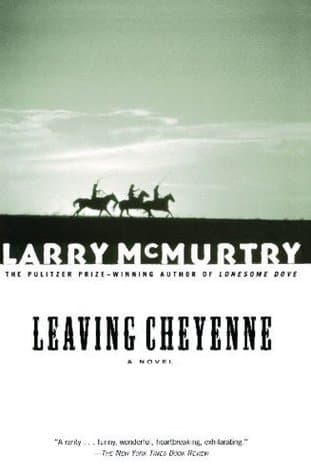
Larry McMurtry (1962)
Genre
Literary Fiction / Historical Fiction
Reading Time
300 min
Key Themes
See below
Sign in to track this book
In West Texas, a serious rancher and a free-spirited cowboy, lifelong friends, both love the same woman, whose heart and sons they divide between them over sixty years as the American West changes.
The novel begins in the 1920s in West Texas, introducing young Gideon Fry, a serious rancher-to-be, and Johnny McCloud, a free-spirited cowhand. They are inseparable friends, growing up on the Fry ranch. Their bond is complicated by their mutual love for Molly Taylor, a spirited girl from a neighboring ranch. The three spend their youth riding horses, working cattle, and sharing dreams, with Molly often mediating between the grounded Gideon and the wilder Johnny. These early interactions set up the complex emotional triangle that will define their lives, marked by youthful innocence and a growing awareness of their deep connections to each other and the land.
As they become adults, Molly marries Gideon Fry. Their marriage is one of deep affection and shared purpose, focused on the ranch and their growing family. Johnny, though heartbroken, remains a constant presence in their lives, often working on the Fry ranch and staying close friends with Molly and Gideon. Molly soon has a son, Billy, who represents the Fry legacy and their bond. Despite this stability, Johnny's unspoken love for Molly and her pull towards him continues, a silent tension in their shared lives.
Johnny, unable to fully accept Molly's marriage to Gideon, leaves the ranch for a time, working various cowboy jobs. However, his love for Molly and the land eventually brings him back. During one of Gideon's absences, Molly and Johnny's long-suppressed passion ignites, leading to an affair. Molly becomes pregnant with Johnny's child. She gives birth to another son, Jimmy, whose paternity is a secret known only to Molly and Johnny, and subtly, perhaps, to Gideon, who never directly acknowledges it but treats both boys as his own. This event deepens their already complex relationships.
Billy and Jimmy grow up together on the Fry ranch, believing they are full brothers. Billy, Gideon's son, is more serious and grounded, showing an early interest in ranching, like his father. Jimmy, Johnny's son, inherits some of his biological father's restless spirit, though he also loves the land. Both boys are deeply loved by Molly, Gideon, and Johnny, who remains a fixture in their lives, acting as an uncle or older brother figure. The unspoken truth of Jimmy's parentage hangs over the household, a silent pact between the three adults that shapes their interactions and the boys' upbringing.
As the world enters World War II, both Billy and Jimmy, now young men, enlist and go off to fight. The war casts a long shadow over the Fry ranch and the lives of Gideon, Molly, and Johnny. News eventually arrives that Billy, Gideon's son, has been killed in action. This devastating loss deeply impacts all three adults, especially Gideon, who had placed many hopes for the ranch's future on Billy. The tragedy further solidifies their bond in grief, and the unspoken secret of Jimmy's paternity becomes even more poignant, as he is now the sole remaining son, carrying the weight of their hopes and losses.
Jimmy eventually returns from the war, but he is not the same. He carries the invisible wounds of combat and struggles to reintegrate into civilian life on the ranch. The war has left him disillusioned and restless, making it hard for him to settle into the ranching life Gideon and Molly had envisioned for him. His experiences highlight the generational shift and the changing American landscape, where the traditional cowboy life is slowly fading. Molly and Gideon try to support him, but Jimmy's internal struggles are deep and isolating.
Years pass, and Gideon Fry, the steady foundation of the ranch and family, begins to decline. He ages, his health deteriorates, and he eventually becomes ill. His death marks a significant turning point for Molly and Johnny. Gideon's death leaves Molly a widow and the sole inheritor of the ranch, now a symbol of her enduring love and commitment. It also removes the central figure who had, in his quiet way, held the complex family dynamic together, leaving Molly and Johnny to confront their long-standing relationship more directly than ever before.
After Gideon's death, Molly and Johnny, now older, finally acknowledge the deep love that has existed between them for decades. Johnny moves in with Molly on the Fry ranch, and they live out their remaining years together. Their relationship is one of quiet companionship, shared memories, and a deep understanding born from a lifetime of intertwined experiences, joys, and sorrows. They reflect on their past, their choices, and the two sons they shared, one openly, one secretly. Their union, though belated, brings a sense of peace and completion to their long and complicated love story.
Jimmy, after his return from the war, continues to struggle to find his place. He drifts between jobs and relationships, never quite settling down. His restlessness echoes his biological father, Johnny. Despite his wanderings, the ranch and his mother, Molly, remain a constant pull. He eventually returns to the Fry ranch, drawn back to the only home he has ever truly known, and to the woman who raised him. His return, though challenging, shows a reluctant acceptance of his roots and a desire for connection in his later life.
The novel ends with Molly, Johnny, and Jimmy living out their remaining days on the Fry ranch. The story shifts between their individual perspectives, offering reflections on the passage of time, the power of love, the weight of loss, and the changing West Texas landscape. The ranch, once a busy place, now shows their lives, their choices, and the deep, complex bonds that held them together for sixty years. The story ends not with a dramatic resolution, but with a quiet look at life's cycles, the bittersweet nature of memory, and the lasting legacy of their intertwined destinies.
The Protagonist
Molly evolves from a spirited young woman making difficult choices to a wise matriarch who finds peace in the enduring love she shares with Johnny.
The Protagonist
Gideon remains steadfast throughout his life, facing betrayal and loss with quiet strength, ultimately dying with grace and leaving a lasting legacy of love and the land.
The Protagonist
Johnny matures from a wild young man to a more settled, reflective figure, ultimately finding a place of belonging and enduring love with Molly.
The Supporting
Billy's arc is tragically cut short by war, his death serving as a pivotal moment of grief and change for the main characters.
The Supporting
Jimmy struggles with the aftermath of war and his own identity, eventually finding a reluctant peace and connection to his family and the land.
The novel explores the nature of love and loyalty over six decades. The central trio—Molly, Gideon, and Johnny—are bound by an unbreakable, if unconventional, love. Molly's love for both men, Gideon's steadfast devotion to Molly despite knowing Jimmy's paternity, and Johnny's lifelong commitment to Molly show how love endures. Johnny's return to live with Molly after Gideon's death fulfills a silent promise made decades earlier. Their loyalty extends beyond romantic love to a deep, familial bond that withstands societal norms, war, and personal tragedy, showing love as a complex, evolving force.
“What they had was too big for them, too big for a single love.”
McMurtry uses the sixty-year span to show the passage of time and its impact on individuals and the West Texas landscape. The story shows the transition from the cowboy era of the 1920s through the world wars and into the mid-20th century, highlighting how the characters age, their dreams shift, and their world transforms. The changing nature of ranching, the advent of war, and the slow decline of the traditional cowboy lifestyle are all seen through the characters' eyes. This theme emphasizes the bittersweet nature of memory and the inevitability of change, even in seemingly timeless landscapes.
“Time was like the river, it flowed on whether you were in it or not.”
Loss is a consistent theme, shaping the characters' lives and deepening their bonds. The most significant loss is Billy's death in World War II, a tragedy that deeply impacts Molly, Gideon, and Johnny, leaving a permanent void. Other losses include the fading of youthful dreams, the slow decline of traditional ways of life, and the eventual deaths of loved ones. The characters' responses to grief, often stoic and internalized, reflect the cultural norms of their time and place. This theme highlights life's fragility and sorrow's lasting imprint, but also the human capacity to endure and find comfort in shared experience.
“Grief came in waves, some small, some so large they nearly drowned you.”
The West Texas landscape is more than just a setting; it is a character, deeply intertwined with Gideon, Johnny, and Molly's identities. For Gideon, the ranch is his life's purpose and legacy. For Johnny, the open range represents freedom. For Molly, it is home and the foundation of her family. The land shapes their values, their work, and their sense of belonging. As the landscape changes with modernization, so too do the characters grapple with their identities, showing how deeply people are connected to their environment and how that connection can provide both stability and challenge. The land endures, even as human lives pass.
“The land was stronger than any of them, it would hold them all in the end.”
The story is told through the shifting viewpoints of Molly, Gideon, and Johnny.
McMurtry employs alternating first-person narration, allowing the reader to experience events and emotions from Molly's, Gideon's, and Johnny's individual perspectives. This device provides a comprehensive and nuanced understanding of their complex relationships, motivations, and internal struggles. It highlights the subjective nature of memory and truth, as each character recounts shared experiences through their own lens, often revealing unspoken thoughts and feelings that would otherwise remain hidden. This technique deepens the emotional impact and allows for a rich exploration of their intertwined destinies over sixty years.
The narrative often jumps back and forth in time, particularly through memories.
While the novel generally progresses chronologically over six decades, it frequently incorporates flashbacks and character reminiscences. These non-linear elements allow the characters to reflect on past events, choices, and their consequences, providing context and emotional depth to their present circumstances. This device emphasizes the lasting impact of memory and the way the past continually shapes the present, reinforcing the themes of enduring love and the passage of time. It also allows McMurtry to reveal critical plot points and character motivations gradually, adding layers to the narrative.
The West Texas ranch and the surrounding land symbolize stability, legacy, and freedom.
The Fry ranch and the vast West Texas landscape serve as powerful symbols throughout the novel. The ranch represents stability, tradition, and the enduring legacy of the Fry family, especially for Gideon and Molly. It is a place of belonging and hard work. Conversely, the open range and the act of 'leaving Cheyenne' (a metaphor for wandering) symbolize freedom, restlessness, and Johnny's independent spirit. The land itself, with its harsh beauty and cyclical nature, mirrors the characters' lives—their resilience, their struggles, and their eventual return to the earth. It is a constant backdrop against which human dramas unfold and fade.
Key truths, particularly Jimmy's paternity, are known but never openly discussed.
A significant plot device is the presence of unspoken knowledge and secrets, most notably the truth of Jimmy's paternity. Molly and Johnny share this secret, and it's heavily implied that Gideon also knows, or at least strongly suspects, but chooses never to confront it directly. This silent understanding creates a palpable tension and emotional depth, shaping the characters' interactions and their internal lives. It highlights themes of forgiveness, acceptance, and the complexities of familial love, where some truths are too painful or disruptive to articulate, yet profoundly influence relationships.
“It was a good life. I lived it with you.”
— Gideon's reflection on his life with Molly and Johnny.
“The wind was always blowing in Texas, and it blew the dust and the heat and the loneliness around.”
— Narrator's description of the Texas landscape and its impact.
“A man don't have but so much time to get things right.”
— Johnny's internal thought about his unresolved feelings and actions.
“She loved them both, in different ways, and that was the truth of it.”
— Molly's understanding of her complex affections for Gideon and Johnny.
“The past was a country you could never really leave, no matter how far you rode.”
— A recurring theme about the inescapable influence of history and memory.
“Some things, once broken, can never be put back together the same way.”
— Reflecting on the changes and irreversible events in their lives.
“It was just the way things were, and you had to make your peace with it.”
— The characters' resignation to certain life circumstances.
“He knew what he was, and he knew what he wasn't, and that was enough.”
— Gideon's simple self-awareness and contentment.
“Love was a complicated business, full of turns and surprises.”
— Observation on the unpredictable nature of love and relationships.
“The land was bigger than any of them, and it would be there long after they were gone.”
— A reminder of the enduring power of nature compared to human lives.
“There was a kind of peace in just letting things be.”
— A character finding solace in non-interference and acceptance.
“Life just kept moving, whether you were ready or not.”
— The relentless passage of time and events.
“He carried a lot of silence inside him, like a deep well.”
— Description of a character's reserved and contemplative nature.
“They were tied together, not by rope, but by years and living.”
— The deep, unspoken bond between the main characters.
Ready to see how well you understood this book? Take our interactive quiz with 10 questions.

Larry Jeff McMurtry was an American novelist, essayist, prominent book collector, bookseller and screenwriter whose work was predominantly set in either the Old West or contemporary Texas. His novels included Horseman, Pass By (1962), The Last Picture Show (1966), and Terms of Endearment (1975), which were adapted into films. Films adapted from McMurtry's works earned 34 Oscar nominations.







