“The wind whispers stories to those who listen with their hearts.”
— A young sprout first feeling the breeze and understanding its purpose.

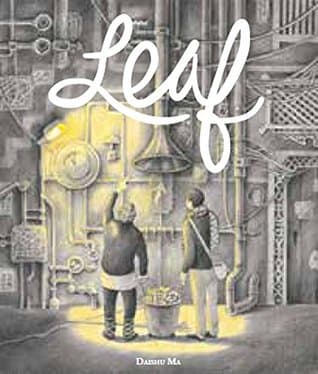
Daishu Ma (2015)
Genre
Fantasy / Creativity / Young Adult
Reading Time
30 min
Key Themes
See below
Sign in to track this book
In a colorless city, a boy follows a glowing leaf on a silent journey to uncover hidden truths and reignite life.
The story begins with a young, unnamed boy in a stark, barren world. The landscape is shown in muted grays and blues, without natural color or life. While exploring this desolate place, the boy finds a single, bright green leaf. This leaf glows softly, a strong contrast to its surroundings. Curious, and holding the glowing leaf, the boy heads back towards a large, detailed city, also rendered in the same somber colors, suggesting a world where nature is long forgotten. The leaf represents hope and a mystery to be solved in the lifeless city.
Carrying the glowing leaf, the boy enters the large city. The city is a marvel of complex architecture and machinery, yet it feels cold and sterile, dominated by tall buildings and no natural elements. People move about, seemingly unaware of the bright object the boy holds. He navigates the winding streets and elevated walkways, the glowing leaf a beacon of warmth and color in the otherwise monochrome environment. His journey through the city highlights its lack of life and the stark contrast with the natural beauty he has found, setting the stage for his quest to understand its origin and meaning.
While exploring the city, the boy meets an older man working near grates and pipes, maintaining the city's hidden infrastructure. The man, seeing the glowing leaf, gestures for the boy to follow him. He leads the boy into the winding ducts beneath the city, showing a network of pipes and machines that support the metropolis. Here, the man shows the boy how the city's vital resources are managed, hinting at a deeper, unseen system. This meeting is the first step in the boy's understanding that the city's sterile surface hides a complex, and possibly problematic, reality.
Inside the ducts, the man, an engineer or maintenance worker, uses diagrams and gestures to explain the city's systems. He reveals that the city is self-sufficient, relying on machines to recycle and purify water and air, and to generate energy. He communicates, without words, how much the natural world has been replaced by artificial constructs. The glowing leaf in the boy's hand becomes even more important as the man shows the city's detachment from organic life, suggesting that the natural world outside is almost entirely depleted, forcing humanity to rely only on technology for survival.
Continuing his search, the boy follows a subtle clue or feeling, leading him to a hidden part of the city. There, he finds a secluded sanctuary within a building, filled with carefully preserved and categorized plant specimens. He meets a woman, a botanist, who dedicates her life to studying these obsolete plants. Her workspace is a small, well-kept oasis of what once was, a strong contrast to the barren city. The glowing leaf immediately catches her attention, as it is a living example of what she only knows through dried and cataloged remnants, sparking a shared sense of wonder and urgency.
The botanist, through her extensive collection and silent communication, reveals the truth about the world's environment. She shows the boy ancient texts and images depicting a green past, contrasted with the dried, lifeless specimens she now studies. She communicates that most plant life has vanished, and the city relies on its artificial systems because the outside world is ecologically devastated. Her life's work is an act of preservation and a desperate hope that knowledge of nature will not be lost. The glowing leaf is not just a rarity but a miracle, a potential key to understanding or even reversing the environmental collapse.
The boy and the botanist share a moment of understanding. The glowing leaf, initially just a curious find, is now seen as a symbol of dwindling life and a potential source of renewal. The botanist examines the leaf with awe and scientific curiosity, recognizing its unique vitality. The boy, having now seen both the city's artificiality and the remnants of nature, begins to grasp the urgency of their situation. Together, they form an unspoken alliance, united by the glowing leaf and the shared desire to understand its origin and what it might mean for their desolate world, setting the stage for a collaborative effort.
As the boy and botanist observe the glowing leaf, it changes. The light it emits grows stronger, and it begins to show signs of budding or forming a seed. This suggests that the leaf is not just a relic but a living, generative entity, capable of propagation. This transformation elevates the leaf from a mere symbol to a tangible source of hope for reintroducing life into the barren world. The botanist, with her knowledge of plant life, recognizes the immense potential of this development, realizing that they hold the key to a possible ecological revival.
Inspired by the leaf's transformation, the boy and the botanist begin to plan. They work together, the botanist using her scientific expertise and the boy providing the drive and perhaps a connection to the outside world. Their goal is to cultivate the nascent life from the glowing leaf and eventually reintroduce it into the environment, both within and outside the city. The engineer, met earlier, might also help, perhaps by understanding how the city's systems could be adapted or bypassed to allow for natural growth. This marks a shift from discovery and understanding to active intervention and hope for the future.
With their plan in motion, the boy and the botanist, possibly aided by the engineer, begin to spread the new life. They carefully cultivate the seeds or plantlets from the glowing leaf. The process is painstaking, but gradually, small patches of green appear in the sterile city. These new plants, initially small and vulnerable, are the first steps towards ecological restoration. The sight of these new growths, even small ones, offers a strong visual contrast to the city's previous monochrome existence, symbolizing a gradual return to vibrancy and a challenge to the established artificial order.
As the new plant life slowly takes root and expands, the city's people begin to notice the change. Initially, there may be confusion or indifference, but as more green appears, a sense of wonder and curiosity spreads. The bright colors and organic forms are a strong departure from their familiar, sterile environment. People pause, observe, and some even begin to interact with the new plants. This awakening among the populace signifies a shift in collective consciousness, as the beauty and importance of nature, long forgotten, begin to reassert themselves in the lives of the city dwellers, fostering a new appreciation for the natural world.
The story ends with a vision of a transformed city. While still maintaining its architecture and infrastructure, the city is now interwoven with thriving plant life. Greenery spills from balconies, climbs walls, and fills previously barren spaces. The somber grays and blues are now punctuated by vibrant greens and other natural colors. The boy, botanist, and engineer observe the flourishing city, their mission accomplished. This new reality suggests a balance between human innovation and natural ecosystems, offering a hopeful message that even with environmental devastation, renewal is possible through discovery, collaboration, and a renewed appreciation for life.
The Protagonist
From an isolated discoverer, he becomes the primary agent of change, inspiring others and actively participating in the ecological restoration of his world.
The Supporting
From a solitary preserver of the past, she becomes an active participant in creating a greener future, sharing her knowledge and expertise.
The Supporting
Initially a silent observer of the city's artificiality, he potentially shifts to aiding the reintroduction of nature, adapting his technical skills for ecological purposes.
The Mentioned
From passive, unaware inhabitants, they gradually become receptive to and appreciative of the re-emerging natural world.
The main theme is the clear depiction of a world damaged by environmental degradation, contrasted with the fragile hope for renewal. The desolate landscape and the sterile, grey city show the consequences of neglecting nature. The glowing leaf symbolizes this hope, representing life's potential to re-emerge even in the worst conditions. Scenes like the Botanist's collection of obsolete plants highlight the extent of loss, while the city's eventual re-greening offers a strong message that ecological restoration is possible through collective effort and a renewed appreciation for the natural world.
“A world where the vibrant green is a forgotten memory, until a single leaf ignites a flicker of hope.”
The book explores the delicate and often dangerous balance between technology and nature. The city is a marvel of engineering, self-sufficient but without organic life, showing the potential problems of relying too much on technology. The Engineer's role in revealing the city's complex, life-sustaining systems emphasizes humanity's dependence on technology. However, the story ultimately promotes a harmonious integration, where technology can support and coexist with nature, rather than replace it. The city's transformation, with greenery intertwining with its structures, visually represents this desired balance.
“The city breathed through pipes and wires, oblivious to the silence of the soil beneath.”
The protagonist's journey is driven by a strong sense of discovery and curiosity. His first encounter with the glowing leaf sparks a quest for understanding, leading him to uncover his world's hidden truths. This theme shows the importance of individual initiative and how wonder can drive meaningful change. The silent communication between characters, relying on visual cues and shared observations, further emphasizes how discovery can bridge gaps and build connections, leading to a collective effort to restore life.
“In a world of muted colors, a single spark of green ignited an unquenchable curiosity.”
While the protagonist starts his journey alone, the story quickly becomes a strong example of the power of collaboration. The protagonist's discovery gains meaning and momentum through his interactions with the Engineer and, more importantly, the Botanist. Each character brings unique knowledge and skills – the protagonist's discovery, the Engineer's understanding of the city's mechanisms, and the Botanist's scientific expertise in plants. Their combined efforts are essential not only for understanding the leaf's importance but also for developing and executing the plan to reintroduce life, showing that collective action is vital for overcoming huge challenges.
“One leaf, one discovery, but a shared vision to paint the world anew.”
A singular, vibrant object symbolizing life and hope.
The glowing leaf is the central plot device, acting as a MacGuffin that drives the entire narrative. Its vibrant color and radiant light immediately distinguish it from the desolate world, making it a powerful symbol of life, hope, and the forgotten natural world. It sparks the protagonist's curiosity, leads him to encounter other key characters (the Engineer and the Botanist), and ultimately becomes the catalyst for the city's ecological renewal. Its transformation into a seed further solidifies its role as the physical manifestation of hope and the means for restoration.
Storytelling conveyed entirely through illustrations.
The book's wordless narrative is a crucial plot device that enhances its universal appeal and emotional impact. By relying solely on detailed illustrations, the story transcends language barriers, allowing readers of all ages and backgrounds to interpret and connect with the themes. This visual storytelling forces the reader to pay close attention to character expressions, environmental details, and symbolic imagery, fostering a deeper, more immersive experience. It also emphasizes the power of visual communication and shared understanding between characters and with the audience.
The use of vibrant green against muted grays and blues.
The stark contrast between the vibrant green of the leaf and the prevailing muted grays and blues of the city and barren landscape is a powerful visual plot device. This color scheme immediately establishes the central conflict between lifelessness and vitality, and highlights the environmental degradation. The gradual introduction of green as life returns to the city serves as a visual indicator of progress and hope, allowing the reader to immediately grasp the narrative's emotional and thematic shifts without the need for dialogue or extensive exposition. It makes the 'greening' of the city a tangible, visually impactful resolution.
A complex, artificial metropolis symbolizing humanity's detachment from nature.
The meticulously wrought metropolis, with its towering structures, intricate ducts, and absence of natural elements, functions as a significant plot device. It represents humanity's complete reliance on artificial systems and its detachment from nature. Its labyrinthine quality emphasizes the protagonist's journey of discovery and the hidden truths within its depths (like the Engineer's domain and the Botanist's sanctuary). The city's eventual transformation, with nature interwoven into its architecture, visually embodies the narrative's hopeful message of a balanced future, where technology and nature can coexist.
“The wind whispers stories to those who listen with their hearts.”
— A young sprout first feeling the breeze and understanding its purpose.
“To create is to breathe life into the unseen, to give form to a dream.”
— Leaf reflecting on the process of growing and changing.
“Even the smallest leaf can cast a shadow of hope.”
— When a tiny leaf provides a moment of shade for a struggling creature.
“Fear is a frost that nips at the edges of courage, but courage is the sun that melts it away.”
— Leaf facing a difficult decision about branching out.
“Every color tells a different tale, every shade a different emotion.”
— Observing the changing colors of the forest through the seasons.
“Growth is not always upward; sometimes it is about spreading wider, deeper, stronger.”
— Understanding the importance of roots and lateral branches.
“The most beautiful art is often found in the simplest forms.”
— Admiring a dewdrop on a single blade of grass.
“To truly see, you must look beyond the surface, into the heart of things.”
— Leaf trying to understand the essence of a mysterious stone.
“We are all connected, like threads in a vast, living tapestry.”
— Realizing the interconnectedness of the forest ecosystem.
“Imagination is the soil where new worlds bloom.”
— Encouraging a young creature to envision possibilities.
“Sometimes, the greatest journey is the one within.”
— Leaf's internal struggle and self-discovery.
“Don't just exist; unfurl your unique pattern into the light.”
— A mentor figure advising Leaf to embrace individuality.
“The quiet moments are often when the loudest truths are revealed.”
— During a peaceful dawn, contemplating a profound realization.
Ready to see how well you understood this book? Take our interactive quiz with 10 questions.







