“I am a ghost. I have been a ghost for two thousand eight hundred years.”
— Lavinia's opening statement, establishing her spectral narrative voice.

Ursula K. Le Guin (2008)
Genre
Fantasy / Historical Fiction / Romance
Reading Time
360 min
Key Themes
See below
Sign in to track this book
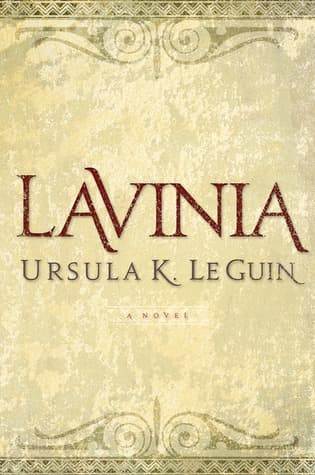
Princess Lavinia of Latium, silent in Virgil's epic, tells her own story: her life shaped by prophecy, the war she caused, and her love for Aeneas.
Lavinia, King Latinus's daughter, introduces herself as a character from Virgil's Aeneid. She knows that in that poem, she says nothing. She feels a deep bond with the land around Laurentum, her father's city. She spends her youth exploring the woods and fields, learning much about nature and the sacred springs. She feels different, separate from her family's everyday life, and understands that her destiny is not fully her own. She thinks about her kind father, her passionate mother, and her cousin Turnus, who is her likely suitor, though she has no romantic feelings for him. Her story begins to fill in the gaps left by Virgil.
As Lavinia nears marriage age, a swarm of bees lands on the laurel tree in the palace courtyard, and her hair catches fire without burning. Priests, especially the old priest Faunus, interpret these as signs that Lavinia will marry a foreigner who will bring war but also fame. Queen Amata strongly opposes these ideas, wanting Lavinia to marry Turnus. King Latinus, though worried, respects the omens. Lavinia feels a strange sense of waiting, seeing these events as the start of the fate Virgil set out for her, even as she experiences them in her own life.
Turnus, the Rutulian king, arrives in Laurentum, sure he will marry Lavinia, encouraged by Queen Amata. He is handsome and a good warrior, but Lavinia finds him arrogant and unappealing. Amata, focused on Turnus and against foreign involvement, tries to get around the prophecies. She pressures Latinus and tries to convince Lavinia, but Lavinia quietly holds firm, guided by the omens and her own growing will. The tension between Amata's wishes and the predictions, as Latinus and Faunus understand them, grows, setting the stage for conflict.
One day, foreign ships sail up the Tiber River and land near Laurentum. These are the Trojans, led by Aeneas, who have traveled from Troy after its fall, meant to build a new city. King Latinus, remembering the prophecy, immediately sees Aeneas as Lavinia's destined foreign husband. He welcomes the Trojans, offering them hospitality and suggesting marriage as an alliance. Lavinia watches Aeneas from a distance, noticing his calm manner and tiredness. She feels a deep, almost fated, connection to him, a sense of knowing him that goes beyond simple attraction. She understands this is the man for whom she is destined, and with whom she will play her quiet part in the epic.
King Latinus formally offers Lavinia to Aeneas, sealing the betrothal with rituals and gifts. Aeneas, though focused on his destiny to found a new Troy, accepts the marriage, seeing it as part of his divine task. Queen Amata, however, becomes frantic with sadness and anger. She believes Latinus has betrayed his people and his daughter, and her loyalty to Turnus becomes an obsession. She calls on the Latin women, turning them against the Trojans and the proposed marriage. This makes her a cause for the war that follows, fulfilling another part of the prophecy: that Lavinia would cause a bitter conflict.
Moved by Queen Amata's desperate pleas and the actions of the Fury Allecto (though Lavinia sees this as Amata's madness), Turnus is furious that Aeneas will take his intended bride. He gathers his Rutulian forces and forms alliances with other Italian tribes, preparing for war against the Trojans. The peace of Latium ends. Lavinia sees the war preparations with growing fear, understanding that the conflict is directly about her, yet feeling unable to stop it, merely an object in the story unfolding around her.
As the war continues, Lavinia stays mostly in the palace, though she sometimes goes to the woods she knows well. This time alone lets her think deeply about her situation. She continues talking with Virgil's 'voice,' dealing with her existence as both a living woman and a character in an old text. She realizes that while her fate is set by the epic, her inner life, thoughts, and feelings are her own. She finds strength in her link to the land and old spirits, gaining a quiet toughness and a stronger sense of herself, even as war takes over her world.
During short breaks from battle, Aeneas visits the palace, and he and Lavinia spend time together. Their connection is not one of strong romance, but of quiet understanding, mutual respect, and a shared sense of destiny. Lavinia understands Aeneas's responsibility as Rome's founder, and he, in turn, sees her quiet strength and intelligence, valuing her beyond her role as a prize. Their love is a deep, almost spiritual, bond that goes beyond the war's chaos, solidifying their roles as the founding couple of a new empire, even as the prophecy of Aeneas's short life approaches.
As the war turns in favor of the Trojans, and Turnus faces defeat, Queen Amata's mind breaks. Unable to accept Turnus's loss and her daughter's marriage to Aeneas, she falls into deep sadness. In a tragic act, she hangs herself, fulfilling the dark parts of earlier prophecies and adding more sorrow to the war. Lavinia deeply mourns her mother, understanding her strong feelings, even as she sees how destructive Amata's resistance to fate was. This event affects Lavinia deeply, strengthening her resolve to accept her destiny.
The final battle happens, ending with Aeneas and Turnus fighting alone. Aeneas, though at first not wanting to kill Turnus, eventually does, avenging Pallas and securing the Trojan victory. However, as predicted, Aeneas himself dies shortly after the war ends, not from an enemy, but from an infection from an old wound or a fever—a quiet end rather than a hero's death. Lavinia is with him in his last days, caring for him, and their quiet love deepens in his final moments. His death fulfills the prophecy that her husband would not live long, leaving her a young widow and the mother of his heir.
After Aeneas's death, Lavinia, now Queen, helps guide Aeneas's son, Ascanius (also called Iulus), in the early days of their new settlement. They move from Laurentum and establish a new city, Alba Longa, which will lead to Rome. Lavinia, despite being young, shows great wisdom and leadership, using her knowledge of the land and its people. She raises her own son with Aeneas, Silvius, ensuring their family line continues. She quietly influences Ascanius, making sure Trojan traditions mix with Latin ones, setting the stage for the future Roman Empire.
Lavinia lives a long and good life, ruling wisely alongside Ascanius and then through her son, Silvius. She becomes a respected figure, the mother of the Roman line, though her story is mostly untold in the traditional epic. She continues her quiet talks with Virgil, eventually forgiving him for not including her more. She claims her own reality, feelings, and purpose, even within his poem. Her story ends with a sense of peace and achievement, having fulfilled her destiny not as a quiet object, but as a aware, loving, and important figure in Rome's founding, her voice finally heard.
The Protagonist
From a silent, fated princess, she grows into a wise queen, a loving wife, and an influential mother of Rome, asserting her own narrative and identity.
The Supporting
He fulfills his divine destiny by leading his people to Latium, marrying Lavinia, and founding a new nation, before his fated, quiet death.
The Supporting
He faithfully follows the divine will, leading to the war but ultimately facilitating the foundation of a new nation.
The Antagonist
Her passionate resistance to fate leads her from a loving mother to a despairing, war-inciting figure, culminating in her tragic suicide.
The Antagonist
His pride and possessiveness lead him to challenge fate and Aeneas, resulting in his defeat and death.
The Supporting
He matures into a capable leader, guided by Lavinia, to found Alba Longa and continue the Trojan legacy.
The Supporting
He serves as a conduit for divine will, guiding Latinus and confirming Lavinia's fated path.
The Mentioned
As an abstract concept, Virgil's 'presence' allows Lavinia to challenge and ultimately transcend her predetermined narrative.
The main idea is Lavinia's search to define herself not just as a character in a poem, but as a living woman with feelings. She deals with the conflict between her set fate and her inner life, showing her own thoughts, desires, and purpose. Her journey is about understanding herself, as she finds her voice and goal beyond the silence Virgil gave her. She learns to accept her destiny while creating her own identity.
“What do I know of 'destiny'? I only know what I know. What my eyes see, my hands touch. What my heart feels. That is enough.”
Le Guin's novel explores who gets to tell a story and whose voices are heard (or not heard) in history. By giving Lavinia a voice, the book questions the traditional epic story, showing the importance of untold views, especially those of women. Lavinia's internal talks with Virgil directly address the limits and biases of historical accounts, stating that even a 'silent' character has a rich inner world and a story worth telling.
“You left me speechless, Virgil. But I am not voiceless. I have my own story to tell.”
Lavinia constantly handles the conflict between the set events of her life, as told in 'The Aeneid,' and her own choices and feelings. While she accepts the main parts of her destiny (marrying Aeneas, causing a war, his early death), she finds freedom within those limits. She chooses to love Aeneas, to be wise in her leadership, and to claim her own reality. The novel suggests that even within a fated life, there is room for personal choice and for shaping one's inner world.
“I was to be the prize, the cause of war, the mother of a line. All that was given. But how I was these things, that was mine.”
Lavinia has a deep, almost spiritual, connection to the natural world of ancient Latium — its forests, springs, and spirits. This connection gives her comfort, wisdom, and a sense of belonging, keeping her grounded amidst the war's chaos and her literary existence. The sacred springs bring omens and old knowledge, showing that the land itself holds deep truths and affects destiny.
“The springs spoke to me. Not in words, but in the deep language of the earth, the way water tells its own story.”
The novel looks at different kinds of love — Queen Amata's strong but harmful love for Turnus, Aeneas's dutiful love for his people, and Lavinia's quiet, respectful, and deep love for Aeneas. Each character deals with the sacrifices their duties and relationships require. Lavinia and Aeneas's love, while not openly romantic, is a deep partnership born from shared destiny and mutual respect, needing personal sacrifice for the greater good of founding Rome.
“Our love was not a fire, but a deep river. It flowed under the ground, hidden, nourishing everything.”
Lavinia narrates her entire life story from a point in the distant future, after all events have transpired.
The entire novel is told from Lavinia's perspective, looking back on her life. This retrospective viewpoint allows her to reflect on events with wisdom and understanding, knowing their ultimate outcomes. It also enables her to address the reader and Virgil directly, commenting on her own narrative and the choices made by the epic poet. This device is crucial for her to assert her voice and provide context and emotional depth that was absent in the original source material.
Lavinia is aware she is a character in Virgil's 'Aeneid' and directly addresses him and the reader.
Lavinia frequently acknowledges her existence as a literary character, referring to 'Virgil' as the author who left her silent. She questions his choices, fills in the gaps of his narrative, and asserts her own reality beyond the confines of his poem. This metafictional element challenges the reader to consider the nature of storytelling, historical accounts, and the agency of characters within a narrative, blurring the lines between fiction and reality within the book's world.
Supernatural signs and predictions guide the characters and foreshadow major plot points.
Throughout the story, various omens (e.g., bees, Lavinia's burning hair) and prophecies (from Faunus and the sacred springs) signal upcoming events, particularly Lavinia's marriage to a foreigner, the ensuing war, and Aeneas's early death. These devices reinforce the theme of fate, showing how characters are guided or constrained by divine will. They also build suspense and provide a framework for Lavinia's understanding of her predetermined role in history.
A symbolic location representing ancient wisdom, prophecy, and Lavinia's connection to the land.
The sacred springs near Laurentum are more than just a physical location; they are a powerful symbol of ancient, intuitive knowledge and the deep connection between humanity and the natural world. Lavinia frequently visits them, finding solace and receiving subtle guidance or prophecies. They represent a source of truth that transcends human politics and desires, embodying the deep-seated wisdom of the land and the ancestors, and reinforcing Lavinia's unique spiritual sensitivity.
“I am a ghost. I have been a ghost for two thousand eight hundred years.”
— Lavinia's opening statement, establishing her spectral narrative voice.
“It is not for me to choose. It is for me to be chosen.”
— Lavinia reflecting on the limited agency of women in her era, particularly regarding marriage.
“There are two kinds of war, the war of the strong and the war of the weak. The strong fight to win. The weak fight not to lose.”
— Lavinia observing the different motivations and strategies of the Latins and the Trojans.
“Love does not make you soft, Aeneas. It makes you strong.”
— Lavinia encouraging Aeneas, counteracting his stoic view of leadership.
“The gods do not care what we do. They only care that we do it with proper respect.”
— Lavinia's pragmatic view of the divine, contrasting with more pious characters.
“To be a queen, you must learn to be alone. To be a king, you must learn to be alone.”
— Lavinia contemplating the isolation inherent in royal power.
“I was not a prize. I was a person. And I was not to be given.”
— Lavinia asserting her individuality and resistance to being treated as property.
“The future is always a ghost, even when it becomes the past.”
— Lavinia reflecting on the elusive nature of time and destiny.
“There is no end to the telling, if you tell it right.”
— Lavinia discussing the power and endurance of storytelling, especially her own narrative.
“A man's greatness is measured not by how many he conquers, but by how many he protects.”
— Lavinia's evolving understanding of true leadership and heroism, influenced by Aeneas.
“Peace is not the absence of war, but the presence of justice.”
— Lavinia's philosophical insight into the true meaning of lasting peace.
“The greatest journey is not across land or sea, but into the heart of another.”
— Lavinia's romantic and empathetic perspective on human connection.
“I lived. I loved. I bore children. I ruled. I died. And I told my story.”
— Lavinia's summary of her existence, emphasizing her agency in narrating her life.
Ready to see how well you understood this book? Take our interactive quiz with 10 questions.
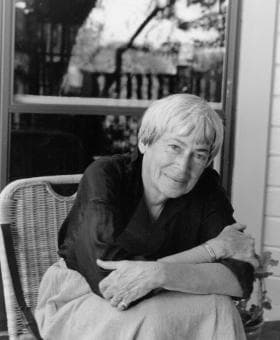
Ursula Kroeber Le Guin was an American author best known for her works of speculative fiction, including science fiction works set in her Hainish universe, and the Earthsea fantasy series. She was first published in 1959, and her literary career spanned nearly sixty years, producing more than twenty novels and over a hundred short stories, in addition to poetry, literary criticism, translations, and children's books. Frequently described as an author of science fiction, Le Guin has also been called a "major voice in American Letters". Le Guin said she would prefer to be known as an "American novelist".







