“There is a time for all things, and a time for all men to die.”
— Early in the story, as Joe is reflecting on his situation and the dangers he faces.

Louis L'Amour (1986)
Genre
Thriller / Historical Fiction
Reading Time
8-10 hours (based on 371 pages)
Key Themes
See below
Sign in to track this book
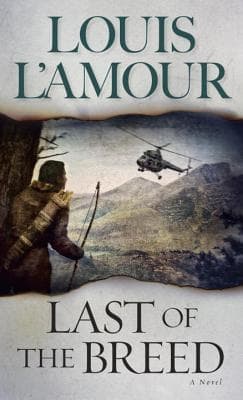
Stranded in the vast Siberian wilderness after escaping a Soviet prison, U.S. Air Force Major Joe Mack must use his Sioux ancestors' survival skills to outwit a legendary Yakut tracker and journey to freedom across the Bering Strait.
U.S. Air Force Major Joe Mack, a Sioux descendant and skilled pilot, is on a secret reconnaissance mission over the Bering Sea in an experimental aircraft. A mechanical failure forces him to eject over Soviet territory, deep within the Chukotka Autonomous Okrug. Soviet soldiers quickly capture him and take him to a remote prison camp. His captors, especially Colonel Volkov, are curious about his calm manner and unusual abilities, seeing he is not an ordinary American airman. Mack endures interrogations, refusing to break, while he assesses his surroundings and plans an escape, using his ancestral Sioux training to stay strong.
After weeks of confinement, Joe Mack escapes the Soviet prison camp during a blizzard. Using his knowledge of the camp's routines, he incapacitates a guard, gets a rifle, and slips into the vast, snow-covered Siberian wilderness. His first goal is to get as far as possible from the camp. He immediately uses his understanding of survival, tracking, and evasion, moving silently and efficiently through the harsh land, despite the extreme cold and lack of proper gear. He is driven by a desire for freedom and to return home.
When Volkov discovers Mack's escape, he is angry but also intrigued, recognizing the extraordinary nature of his quarry. He understands that typical military tactics will not work against a man with Mack's unique skills. Volkov calls upon the legendary Yakut hunter and tracker, Alekhin, known for his ability to track anything across the Siberian wastes. Alekhin, a man of traditional knowledge and cunning, accepts the challenge, seeing it as a test against a worthy opponent. He immediately begins to analyze Mack's escape route, preparing for a long and difficult pursuit.
Joe Mack goes deeper into the wilderness, facing blizzards, sub-zero temperatures, and the constant threat of starvation. He builds makeshift shelters, hunts small game with improvised tools, and navigates by the stars and natural signs. His Sioux heritage helps him remember and use lessons passed down through generations—how to read the land, find water, make fire, and move without leaving a trace. He encounters local tribes, carefully avoiding contact while observing their ways, learning about the terrain, and gathering information that might help his journey toward the Bering Strait and the distant promise of America.
Alekhin, with a small team of soldiers, relentlessly pursues Mack. He reads every subtle sign: a broken twig, a disturbed rock, animal tracks that show human presence. Alekhin's methods are careful and intuitive; he does not just follow tracks, he anticipates Mack's movements, thinking like his quarry. He recognizes the sophistication of Mack's evasion techniques, acknowledging him as a formidable opponent. The chase becomes a mental and physical chess game, with Alekhin slowly closing the distance, understanding that he must not only track a man but also understand the mind of a hunter.
The pursuit stretches over vast distances and weeks, pushing both Mack and Alekhin to their limits. Mack endures frostbite, hunger, and exhaustion, constantly moving and fighting to stay alive. Alekhin and his men face similar hardships, but the tracker's determination remains strong. The landscape itself is a character, an adversary that tests the resolve of both hunter and hunted. Mack uses his spiritual connection to the land and his ancestors, while Alekhin relies on his lifelong experience in the taiga and tundra, each man a master of his environment.
During an intense period of the chase, Mack and Alekhin come close to direct confrontation. Mack sets a trap, and Alekhin, sensing danger, narrowly avoids it. This brief, almost silent exchange confirms to both men the skill of their adversary. Alekhin leaves a subtle sign, a message of respect from one hunter to another, acknowledging Mack's skill. Mack understands the gesture and responds, recognizing Alekhin's mastery. This moment makes the pursuit more than a simple capture mission, turning it into a contest between two extraordinary individuals.
After a difficult journey spanning hundreds of miles and countless dangers, Joe Mack finally reaches the shores of the Bering Strait. The sight of the icy water, with the distant promise of America on the other side, renews his resolve. He knows this is the most dangerous part of his journey, requiring ingenuity and courage to cross. The strait is a treacherous expanse of ice floes and frigid water, patrolled by Soviet vessels. He begins to scout for a way across, knowing that Alekhin is not far behind and that time is running out.
Alekhin catches up to Mack at the Bering Strait. The two men, exhausted but determined, finally face each other in a direct confrontation on the treacherous ice. This is not a battle of brute force, but a test of wits, skill, and endurance. Mack, using his knowledge of the ice and his surroundings, tries to outmaneuver Alekhin. Alekhin, equally cunning, tries to anticipate Mack's every move. The climax involves a tense chase and a desperate struggle, with both men showing incredible resourcefulness, each understanding that only one can win in this game of survival.
In a daring maneuver, Joe Mack outwits Alekhin and the pursuing Soviet forces. Using a small, improvised craft or by navigating the shifting ice floes, he makes his crossing of the Bering Strait. The journey is full of danger, but his determination to reach American soil pushes him forward. He avoids patrols and battles the elements, finally reaching the Alaskan shore. Though exhausted and battered, Mack has achieved the impossible, returning to his homeland, a testament to his spirit and the ancestral skills that saved him.
The Protagonist
Mack transforms from a modern military pilot into a primal survivor, rediscovering and fully embracing his ancestral skills to overcome an impossible challenge.
The Antagonist
Alekhin, initially a detached hunter, gains a deep respect for his quarry, transforming the pursuit into a personal, almost spiritual, contest.
The Supporting
Volkov's initial underestimation of Mack gives way to a growing frustration and grudging acknowledgment of Mack's exceptional abilities.
The Mentioned
The wilderness remains a constant, unchanging force, serving as the ultimate arbiter of who survives.
The novel explores survival, especially the triumph of instinct and old knowledge over modern technology. Joe Mack, a modern pilot, relies solely on his Sioux heritage. His ability to hunt, track, build shelter, and navigate by natural signs in the brutal Siberian wilderness is central to his survival, contrasting with the technological advantages of his Soviet pursuers. This theme is clear in every scene where Mack improvises tools, finds food, or evades capture, showing humanity's capacity to endure.
“He was a man stripped down to his essentials, and in those essentials, he found a strength he had almost forgotten.”
The story presents a clash between traditional ways of life (represented by Mack's Sioux heritage and Alekhin's Yakut knowledge) and the modern, technological, and ideological might of the Soviet state. Colonel Volkov and his soldiers rely on maps, radios, and military training, while Mack and Alekhin navigate by intuition, ancestral wisdom, and an understanding of the land. This conflict goes beyond tracking, symbolizing a deeper tension between different worldviews, where the 'primitive' often proves better in a natural environment.
“They chased a modern man with modern tools, but they pursued a ghost from an ancient world.”
Despite being on opposing sides, Joe Mack and Alekhin develop an unspoken respect for each other. This mutual admiration comes from their shared mastery of the wilderness and their similar approaches to the hunt. Alekhin recognizes Mack's skills, often leaving subtle signs of acknowledgment, and Mack, in turn, understands Alekhin's methods. This theme makes the pursuit more than a simple capture mission, turning it into a contest between two skilled individuals who, in another context, might have been allies. Their respect goes beyond national and ideological boundaries.
“He knew this man, the one who tracked him, understood the language of the wild as he did. There was no hatred, only the grim respect of one hunter for another.”
A strong driving force for Joe Mack is his desire to return home to America and reclaim his freedom. This longing is not just for a place but for a sense of belonging and self-determination. The promise of home fuels his endurance through impossible odds, acting as a constant beacon. Every step he takes, every hardship he endures, is motivated by this deep yearning for the land where he belongs and where he can be truly free, emphasizing the human need for autonomy and connection to one's roots.
“America. The word was a prayer, a promise, a fire in his belly against the Siberian cold.”
The harsh Siberian wilderness as the primary antagonist.
The vast, unforgiving Siberian wilderness serves as the most potent antagonist in the story. It constantly tests Joe Mack's physical and mental limits, forcing him to adapt or perish. The extreme cold, treacherous terrain, lack of food, and predatory animals are omnipresent threats. This device highlights Mack's incredible survival skills and the power of human resilience when pitted against the raw forces of nature, making his journey an epic struggle for existence.
Alekhin's almost supernatural tracking abilities.
Alekhin embodies the 'uncanny tracker' trope, possessing skills that verge on the supernatural. His ability to read the most subtle signs, anticipate Mack's movements, and understand the psychology of his quarry makes him a formidable and almost mythical antagonist. This device elevates the pursuit from a simple chase to a high-stakes game of intellect and intuition, creating intense suspense as Alekhin continually closes the gap, always one step behind Mack, sensing his presence rather than just following tracks.
Joe Mack's reliance on his Sioux heritage for survival.
This device is central to Mack's character and the plot. His survival is directly attributed to the ancient knowledge passed down through his Sioux ancestors – skills in tracking, hunting, shelter building, and spiritual resilience. It provides a unique justification for his extraordinary abilities, contrasting with his modern military training. This device emphasizes the power and relevance of indigenous wisdom, suggesting that some 'primitive' skills are ultimately more effective in raw survival than modern technology.
“There is a time for all things, and a time for all men to die.”
— Early in the story, as Joe is reflecting on his situation and the dangers he faces.
“A man learns to live by his wits, or he dies by them.”
— Joe reflecting on his upbringing and the skills he possesses that allow him to survive.
“The wilderness was his school, and fear was his teacher.”
— Describing Joe's early life and how he developed his extraordinary abilities.
“He knew the land, and the land knew him.”
— Highlighting Joe's deep connection and understanding of his environment, essential for his escape.
“Every trail has an end, but sometimes the end is just a new beginning.”
— Joe contemplating his journey and the continuous challenges he faces.
“The hunt was on, and he was both the hunter and the hunted.”
— Describing the central conflict of the story as Joe is pursued across the vast landscape.
“To surrender was to die, not just physically, but spiritually.”
— Joe's inner resolve and his refusal to give up, even in the face of overwhelming odds.
“He moved like a shadow, a whisper in the wind.”
— Illustrating Joe's stealth and his mastery of movement through the terrain.
“The past was a road he could not return to, but it was also the map he lived by.”
— Joe's reliance on his ancestral knowledge and past experiences to navigate his present predicament.
“Only the strong survive, but only the wise truly live.”
— A philosophical reflection on the nature of survival and the importance of wisdom.
“The wind carried tales, if only you knew how to listen.”
— Joe's ability to interpret subtle signs from nature, a key to his survival.
“There was no such thing as a fair fight, only a fight you won.”
— Joe's pragmatic approach to combat and survival, where the outcome is all that matters.
“He was the last of his kind, but his spirit was as old as the mountains.”
— Emphasizing Joe's unique heritage and his enduring spirit against modern adversaries.
“Freedom was not given; it was taken, fought for, and held onto with every breath.”
— Joe's ultimate understanding of freedom as something actively preserved, not passively received.
Ready to see how well you understood this book? Take our interactive quiz with 10 questions.
Biography coming soon.







