“The past is a ghost, the future a dream, and all we ever have is now.”
— A recurring philosophical sentiment in the novel.

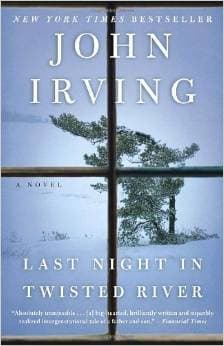
John Irving (2009)
Genre
Literary Fiction / Historical Fiction
Reading Time
12-15 hours
Key Themes
See below
Sign in to track this book
After a boy mistakes a constable's girlfriend for a bear, he and his father flee across half a century of American life, forever pursued by an unyielding hatred born in the logging camps of New Hampshire.
In 1954, in the logging settlement of Twisted River, New Hampshire, twelve-year-old Danny Baciagalupo works in the cookhouse with his father, Dominic. One night, Danny hears a noise outside. Mistaking Rosie, the local constable Carl's girlfriend, for a bear, he accidentally kills her with a cast-iron skillet. Dominic, realizing the gravity of the situation and fearing Carl's violent nature, immediately takes Danny and flees. Ketchum, a tough, independent logger and river driver, helps them escape into the wilderness, beginning their life as fugitives from Constable Carl.
Dominic and Danny arrive in Boston, where Dominic, an experienced cook, finds work in an Italian restaurant. They adopt new identities, with Dominic becoming 'Danny Sr.' and young Danny taking on the name 'Daniel.' Despite their efforts to blend in, the shadow of Constable Carl looms. Danny struggles with the guilt of Rosie's death and the constant fear of discovery. Their time in Boston is marked by a precarious sense of safety, always aware that their past could catch up to them, forcing them to remain vigilant and ready to move again.
Years later, Dominic and Danny have established a life in southern Vermont. Dominic opens his own restaurant and falls in love with Angel, a local woman. Danny, now a young man, begins to pursue his ambition of becoming a writer, drawing inspiration from his past. He starts writing stories, often incorporating elements of his experiences as a fugitive. Despite their relative stability, the threat of Constable Carl remains. Dominic’s happiness with Angel is tinged with the anxiety of potential exposure, forcing them to live with a perpetual sense of unease.
Constable Carl, driven by a deep desire for revenge for Rosie's death, relentlessly tracks Dominic and Danny across state lines. His pursuit is not just professional but personal and obsessive. He surfaces periodically, creating moments of intense fear and forcing the Baciagalupos to uproot their lives once more. Carl's presence is a terrifying reminder that they can never truly escape their past. His determination underscores the novel's theme of inescapable fate and the long shadow of past mistakes, ensuring their lives are always on the run.
Danny eventually moves to Toronto, Canada, seeking anonymity and a place where he can fully dedicate himself to his writing. He finds success as an author, often drawing on his unique life experiences, including his time on the run and the characters he encountered. He forms new relationships, including a significant one with a Canadian woman, and begins to build a life independent of his father, though their bond remains strong. Despite his success, the specter of his past and the constant threat of Carl's pursuit continue to influence his work and his sense of self.
Ketchum, the rugged and independent logger, remains a steadfast protector for Dominic and Danny throughout their lives. He appears at critical junctures, offering practical help, advice, and even physically intervening to shield them from Constable Carl. His loyalty stems from a deep sense of justice and a distrust of authority. Ketchum represents a moral compass in their chaotic lives, embodying a form of justice outside the law. His consistent presence underscores the theme of chosen family and the power of loyalty in the face of adversity, providing a rare constant in their lives.
Dominic's exceptional cooking skills are not just a means of livelihood but a part of his identity. From the cookhouse in Twisted River to his own successful restaurants in Boston and Vermont, his culinary talent provides stability, community, and a way to express himself. His food becomes legendary in the places they settle, attracting loyal customers and providing a cover for their true identities. This talent allows them to rebuild their lives repeatedly, offering a sense of normalcy and purpose amidst the constant threat of discovery and the turmoil of being fugitives.
The life of a fugitive takes a toll on Dominic and Danny. They are forced to abandon relationships, change identities, and live with perpetual fear and anxiety. The emotional burden of Rosie's death and Carl's relentless pursuit shapes their characters and their perceptions of the world. They experience moments of joy and connection, but these are always shadowed by the impermanence of their situation. The constant need to be vigilant and the inability to fully settle down highlight the personal cost of their flight from justice, impacting their sense of home and belonging.
Bears appear as a recurring motif throughout the novel, often symbolizing danger, wildness, and unpredictability. The initial tragedy in Twisted River is a result of a mistaken identity involving a perceived bear. Later, Danny has other encounters with bears, both real and symbolic, that challenge his understanding of fear and survival. These encounters reinforce the idea that life is full of unexpected threats and that the wild, untamed aspects of nature often mirror the untamed, violent aspects of human nature, particularly in the unforgiving world of Coos County.
After decades of relentless pursuit, Constable Carl finally catches up to Dominic and Danny. The confrontation is violent and decisive, bringing the long-standing vendetta to a close. The exact circumstances of the final encounter are harrowing, but it ultimately resolves the central conflict of the chase. This climax underscores the novel's themes of fate, revenge, and the inescapable consequences of past actions. The resolution, while costly, finally frees Dominic and Danny from the constant fear that has defined their lives, allowing them to finally find a measure of peace.
In the later years of his life, Danny Baciagalupo, now a successful and acclaimed author, continues to write about his experiences, particularly the events of Twisted River and his life on the run with his father. His novels often feature characters and situations directly inspired by his past, including the cookhouse incident, the relentless constable, and the protective logger. Through his writing, Danny processes his trauma, honors his father's memory, and gives voice to the unique world he inhabited. His literary success allows him to achieve a form of immortality for his family's story.
In the novel's concluding chapters, Danny reflects deeply on family, the people who have shaped his life, and the unpredictable hand of fate. He muses on how people enter and exit our lives, often without warning, much like the suddenness of Rosie's death or the unexpected loyalty of Ketchum. He comes to terms with the sacrifices made and the impact of his past on his identity as a writer and a man. These reflections offer a poignant and philosophical ending, tying together the overarching themes of the narrative and providing a sense of closure to his tumultuous journey.
The Protagonist
Transforms from a traumatized, guilt-ridden child into a successful author who processes his past through his art, ultimately finding a measure of peace and understanding.
The Protagonist
Begins as a loving father forced into a life of constant flight, evolving into a man who finds temporary happiness but remains defined by his commitment to his son's safety, ultimately facing his pursuer.
The Antagonist
Remains largely static in his vengeful obsession, serving as the relentless force driving the protagonists' flight, until his final, violent confrontation.
The Supporting
Remains a consistent, loyal, and morally grounded protector, never wavering in his support for Dominic and Danny.
The Supporting
Provides Dominic with a period of happiness and stability, her presence underscoring the challenges of a fugitive life.
The Mentioned
Her death is the inciting incident, her memory fueling Carl's revenge and the Baciagalupos' guilt.
The Mentioned
Serves as an ominous opening, a symbolic victim setting the tone for the violence to come.
The novel explores how a single, accidental act can irrevocably alter lives. Danny's mistaken killing of Rosie in the cookhouse not only forces him and Dominic into a life of constant flight but also burdens Danny with lifelong guilt. This guilt shapes his identity, influencing his relationships and driving his need to write. The narrative frequently returns to the idea that even unintentional actions can have devastating, far-reaching consequences that define an entire existence. One can never truly escape the past, even if the initial act was an accident.
““We don’t always have a choice how we get to know one another. Sometimes, people fall into our lives cleanly–as if out of the sky, or as if there were a direct flight from Heaven to Earth–the same sudden way we lose people, who once seemed they would always be part of our lives.””
At its heart, the novel is about the enduring bond between a father and son. Dominic's unwavering commitment to protecting Danny, even at the cost of his own freedom and happiness, is a central part of the story. Beyond blood ties, the theme extends to chosen family, exemplified by Ketchum's loyalty and recurring assistance. These relationships provide critical emotional support and practical aid in the face of relentless adversity. Family, however it's formed, is a source of strength and survival against an unforgiving world, as seen in Ketchum's consistent appearances.
““There are no good fathers and good sons, there are only fathers and sons.””
Constable Carl's decades-long, relentless pursuit of Dominic and Danny is the primary driver of the plot and an exploration of the destructive nature of revenge. Fueled by grief and a sense of personal injustice over Rosie's death, Carl's obsession consumes his life, turning him into an implacable force. His single-minded pursuit highlights how vengeance can distort one's purpose and dominate an existence, ultimately leading to a violent and tragic conclusion. This theme underscores the idea that hatred, once unleashed, can run its course with lethal determination, mirroring the 'lethal hatreds' described in the book's description.
““Coos County, where lethal hatreds were generally permitted to run their course.””
Danny's journey from accidental killer to acclaimed author is central to this theme. Writing becomes his way of processing trauma, understanding his past, and finding meaning in his tumultuous life. He transforms his experiences as a fugitive, the characters he meets, and the violence he witnesses into compelling narratives. This demonstrates the therapeutic and transformative power of art. Through storytelling, one can confront, reconcile, and even transcend the most painful aspects of reality. His books become a means of immortality for his family's story and a way to control his own narrative.
““A writer’s memory is not a good thing. A writer’s imagination is everything.””
From the very first sentence, the novel grapples with how much characters control their destinies versus being subject to predetermined events or chance. The initial accident involving Rosie sets a chain of events in motion that seems almost fated, despite the characters' attempts to escape. While Dominic and Danny make choices to flee and rebuild, they are constantly pulled back by Carl's relentless pursuit, suggesting an inescapable destiny. The recurring motif of bears and other unpredictable elements of nature further emphasizes the idea that life is often governed by forces beyond human control.
““The young Canadian, who could not have been more than fifteen, had hesitated too long.””
The central plot involves characters constantly fleeing from a relentless pursuer.
The entire novel is structured around the decades-long flight of Dominic and Danny Baciagalupo from Constable Carl. This device creates constant tension, forces the characters into new identities and locations, and highlights themes of survival, identity, and the inescapable past. The episodic nature of their various refuges (Boston, Vermont, Toronto) allows for a broad exploration of different settings and the evolution of the characters over time, while the ever-present threat of Carl provides a continuous narrative drive.
The repeated appearance of bears symbolizes danger, wildness, and unpredictability.
Bears appear frequently throughout the narrative, beginning with the central misunderstanding that triggers the plot. They serve as a powerful symbol of the untamed, dangerous aspects of both nature and human existence. Danny's subsequent encounters with bears, both real and imagined, reinforce his personal trauma and the constant threat lurking beneath the surface of his life. This motif underscores the themes of fate, survival, and the primal fears that drive human behavior, connecting the literal wilderness to the metaphorical wilderness of their fugitive lives.
The protagonist becomes a writer whose work mirrors his own life story.
Danny Baciagalupo's eventual career as a successful author, whose novels often draw directly from his experiences as a fugitive and the characters he encounters, forms a metafictional layer within the narrative. This device allows for a reflection on the act of storytelling itself, how personal trauma is processed through art, and the unreliable nature of memory. It blurs the line between the author's voice and the character's voice, adding depth to Danny's character arc and reinforcing the novel's thematic exploration of the power of narrative.
The story moves through various geographical locations over five decades.
The narrative spans multiple distinct geographical locations—Twisted River, Boston, Southern Vermont, Toronto—over a period of fifty years. This device serves to illustrate the passage of time, the characters' attempts to escape their past, and the pervasive reach of Constable Carl's vengeance. Each new setting brings new challenges, new relationships, and temporary periods of stability, highlighting the transient nature of the Baciagalupos' lives and the constant need to adapt and rebuild, while also showcasing the diverse landscapes of their journey.
“The past is a ghost, the future a dream, and all we ever have is now.”
— A recurring philosophical sentiment in the novel.
“There are some things you can't outrun, no matter how fast you are.”
— Often related to the characters' attempts to escape their past actions or identities.
“A man's got to be careful what he says and does, because it all comes back to haunt him.”
— Reflecting on the long-term impact of choices and words.
“You can never go home again, not really. Because home isn't a place, it's a feeling.”
— A character's reflection on the impossibility of truly returning to an earlier state or place.
“Every life is a story, and every story has its share of tragedy.”
— A somber observation about the human experience.
“Sometimes the only way to move forward is to let go of what's holding you back.”
— A character contemplating the necessity of releasing past burdens.
“The truth is a funny thing. It can set you free, or it can destroy you.”
— Exploring the dual nature of truth and its consequences.
“What you don't know can't hurt you, until it does.”
— A cynical take on ignorance and its eventual pitfalls.
“Love is a complicated business, full of joy and pain.”
— A general reflection on the complexities of romantic relationships.
“Some secrets are meant to stay buried, no matter the cost.”
— Characters often grapple with the weight of hidden truths.
“A writer's job is to tell the truth, even when it hurts.”
— A meta-commentary on the role of storytelling and authorship, given the protagonist's profession.
“The world keeps turning, no matter what troubles you face.”
— A reminder of life's relentless progression despite personal hardship.
“It's not what happens to you, but how you react to it, that defines you.”
— A classic theme of character development and response to adversity.
“Memory is a tricky thing. It can be a comfort, or a curse.”
— Reflecting on the dual nature of remembering past events.
Ready to see how well you understood this book? Take our interactive quiz with 10 questions.

John Winslow Irving is an American-Canadian novelist, short story writer, and screenwriter.