“The wind was blowing off the Gulf, smelling of brine and diesel fuel and something else, something ancient and primordial, like the breath of the leviathan.”
— Dave Robicheaux's sensory description of the Louisiana landscape.

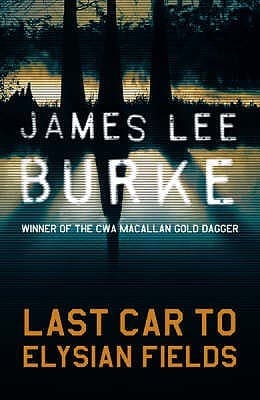
James Lee Burke (2003)
Genre
Thriller / Mystery
Reading Time
6-7 hours
Key Themes
See below
Sign in to track this book
In the sweltering bayou, detective Dave Robicheaux confronts a malevolent blast from his past, interwoven with a present-day murder, forcing him to navigate family secrets, betrayal, and the brutal poetry of New Orleans' criminal underworld.
Detective Dave Robicheaux, now living in New Iberia, Louisiana, becomes involved in a decades-old cold case: the disappearance of a wealthy New Orleans couple, Weldon and Betty Jean Welch, and their young daughter, Annie, from their summer home in the Atchafalaya Basin. The case has haunted the local community for years, with rumors and speculation swirling around their sudden vanishing. Robicheaux, initially brought in by his old friend and former boss, Cletus Purcel, feels a personal connection to the tragedy, especially the missing child. His investigation begins with re-interviewing original witnesses and sifting through dusty files. He quickly realizes that the official narrative of a simple disappearance is far from the truth, and powerful, dangerous forces were at play.
Cletus Purcel, always operating on the fringes of the law, reveals his own long-standing obsession with the Welch case. He believes the Welches were murdered by a powerful criminal organization tied to a local land dispute and a hidden fortune. Purcel has a plan, involving an elaborate sting operation to draw out the perpetrators, but it requires Robicheaux's official standing and moral compass to lend it credibility. Robicheaux is wary of Purcel's methods, which often skirt the line of legality and put them both in danger, but his desire for justice for the Welch family, particularly Annie, outweighs his reservations, drawing him deeper into Purcel's dangerous game.
As Robicheaux and Purcel search deeper, they uncover evidence linking the Welch family's disappearance to a Mafia family, the Giancanas, who were attempting to seize control of valuable land in the Atchafalaya Basin. The Welches, who owned significant tracts, had resisted selling. Robicheaux learns that the Giancanas were notorious for their brutal tactics and had a history of eliminating anyone who stood in their way. This discovery elevates the stakes of the investigation, transforming it from a cold case into a confrontation with organized crime, putting Robicheaux and his loved ones in direct peril as he inches closer to the truth behind the land grab and the Welches' fate.
During his investigation, Robicheaux encounters Antoinette Giancana, the beautiful and enigmatic daughter of the Giancana crime boss. Antoinette is a complex character, seemingly trapped by her family's legacy but also possessing a dangerous allure. She provides Robicheaux with cryptic clues and warnings, often blurring the line between assistance and manipulation. Robicheaux finds himself both attracted to and repelled by her, recognizing the danger she represents while also seeing a glimmer of humanity. Their interactions add psychological tension to the narrative, as Robicheaux tries to decipher her true intentions and navigate the treacherous world of the Giancana family.
Robicheaux seeks out Father Jimmie, a defrocked priest with a checkered past and a deep knowledge of the local underworld. Father Jimmie, haunted by his own demons and connections to the Giancana family, holds key pieces of information about the Welch disappearance. He speaks in riddles and parables, often fueled by alcohol, making it difficult for Robicheaux to extract concrete facts. However, his fragmented truths and moral struggles provide crucial insights into the corrupt network that allowed the crime to remain unsolved for so long, and the complicity of various community members in the cover-up, even if indirectly.
The brutal nature of the Welch case, particularly the thought of young Annie's fate, deeply affects Robicheaux. His sobriety is constantly tested as he battles his own personal demons, including his past struggles with alcoholism and the lingering trauma from previous cases and his experiences in Vietnam. The evil he uncovers threatens to pull him back into destructive patterns. His wife, Molly, and his adopted daughter, Alafair, are his anchors, but the darkness of the investigation often isolates him, forcing him to confront his inner turmoil while simultaneously pursuing justice for the victims.
Driven by a gut feeling and the fragmented clues he gathers, Robicheaux becomes convinced that the bodies of the Welch family were never removed from their property but buried somewhere on their vast estate in the Atchafalaya Basin. He dedicates himself to searching the remote and swampy grounds, enduring the harsh Louisiana environment and the constant threat of those who wish to keep the truth buried. This physical search becomes a metaphor for his relentless pursuit of justice, as he battles the elements and the lingering shadows of the past, hoping to provide closure for the victims and their memory.
The investigation culminates in a tense and violent confrontation at the old Welch property. Robicheaux and Purcel, having pieced together enough evidence, return to the estate, knowing they are walking into a trap. They are met by Giancana enforcers, leading to a brutal shootout in the desolate Louisiana swamp. Robicheaux, with Purcel's unpredictable but effective assistance, fights for his life and for the truth, determined to expose the Giancana family's crimes and find the remains of the Welches. The scene is chaotic and deadly, pushing both men to their physical and moral limits.
Amidst the chaos and violence, Robicheaux finally uncovers the graves of the Welch family on their property, confirming his long-held suspicion. The discovery is a somber but significant breakthrough. Following the confrontation, a key figure, either one of the Giancana enforcers or an accomplice, is apprehended or cornered. Under pressure, this individual provides a detailed confession, revealing the full extent of the Giancana family's involvement in the murders, the land grab scheme, and the decades-long cover-up. The confession fills in the missing pieces, exposing the brutality and ruthlessness of the crime.
With the discovery of the bodies and the confession, some measure of justice is finally achieved for the Welch family. The Giancana crime family suffers a significant blow, and their power is diminished. However, the resolution is not entirely clean. Robicheaux is left with the psychological scars of the case, the violence he endured, and the moral compromises he made. The experience reinforces his deep understanding of human depravity but also his unwavering commitment to justice. The novel concludes with a sense of closure, but also with the lingering understanding that evil is never fully eradicated, and Robicheaux's battle against it is a perpetual one.
The Protagonist
Robicheaux confronts his past demons while navigating a complex case, reaffirming his commitment to justice despite the personal cost.
The Supporting
Purcel remains true to his chaotic nature, proving his loyalty to Robicheaux while navigating the criminal underworld.
The Antagonist/Supporting
Antoinette's allegiances remain ambiguous, highlighting the internal conflict between family loyalty and a potential desire for redemption.
The Supporting
Molly remains a steadfast source of support for Dave, providing stability amidst his dangerous work.
The Supporting
Alafair remains an innocent and loving presence, symbolizing the hope Dave fights to protect.
The Supporting
Father Jimmie provides crucial, albeit fragmented, information, revealing his internal struggle with guilt and his past complicity.
The Mentioned
Their story is revealed posthumously, bringing closure to a long-unsolved crime.
The Mentioned
Her tragic fate is revealed, offering a measure of peace through discovery and justice.
The Antagonist
The Giancana boss's criminal empire is challenged and partially dismantled by Robicheaux's investigation.
The novel explores how evil, once committed, leaves lasting scars and how the pursuit of justice, even decades later, is a moral imperative. The Welch family's disappearance, a crime from the past, continues to haunt the present, demonstrating that some wrongs cannot be forgotten. Robicheaux's relentless investigation, despite the personal danger and the passage of time, highlights the human need to confront and account for past atrocities. The Giancana family's continued influence shows how deeply rooted corruption can be, making the fight for justice a constant, arduous battle. This theme is central to Robicheaux's character, as he constantly battles the darkness he uncovers.
“Evil does not die. It sleeps, sometimes for decades, and then it rises to claim its due.”
The story portrays how unchecked power and greed can lead to horrific acts and widespread corruption. The Giancana family's desire for the Welch's land drives them to murder and a decades-long cover-up, demonstrating how material wealth can eclipse human life. This theme extends beyond the direct perpetrators, touching upon the complicity of various community members and institutions that either looked away or were intimidated by the Giancanas' influence. Robicheaux battles not just individual criminals but the systemic corruption that allows such power to flourish, highlighting the moral compromises made by those caught in its web, such as Father Jimmie.
“Money was a god in this country, and some men would sacrifice anything to its altar.”
Robicheaux's personal struggle with alcoholism and past traumas runs parallel to his investigation. The quest for justice is also a journey of self-redemption. The case, particularly the thought of Annie Welch, pushes him to the brink, threatening his sobriety and mental well-being. His commitment to his family, Molly and Alafair, is his anchor, reminding him of the good he is fighting for. This theme emphasizes that true heroism often involves an internal battle as much as an external one, and that confronting one's own flaws is crucial to maintaining moral integrity in a corrupt world. Father Jimmie's character further explores this struggle, albeit with a more tragic outcome.
“Every man carried his own cross, and mine was a thirst that never truly died.”
The Atchafalaya Basin and the surrounding Louisiana landscape are not merely a setting but an active character in the novel. Its bayous, swamps, and dense wilderness reflect both the alluring beauty and the hidden dangers of the region. The oppressive heat, the lurking creatures, and the challenging terrain mirror the moral swamps Robicheaux navigates. The landscape provides both refuge and a place for secrets to be buried, making it an integral part of the mystery and the atmosphere. The final confrontation in the swamp highlights how this environment can be both majestic and terrifying, concealing truths for decades.
“The bayou held its secrets close, its green heart beating with ancient rhythms and untold tragedies.”
A decades-old unsolved mystery drives the plot.
The core of the narrative is Robicheaux's investigation into the Welch family's disappearance from decades ago. This allows for the gradual uncovering of long-buried secrets, interviews with aging witnesses, and the exploration of how past events continue to affect the present. The cold case aspect creates a sense of historical weight and lingering injustice, making the eventual discovery of the truth more impactful. It also highlights the persistence of memory and guilt within a community.
Characters with compromised morality provide fragmented, dangerous truths.
Characters like Father Jimmie and Antoinette Giancana serve as unreliable sources of information. Father Jimmie's alcoholism and guilt lead to cryptic, fragmented confessions, while Antoinette's familial ties and manipulative nature make her motives ambiguous. This device creates suspense and forces Robicheaux to sift through half-truths and deceptions, adding layers of complexity to the investigation and challenging his judgment. It underscores the morally gray areas of the criminal underworld.
A character whose contrasting methods highlight the protagonist's moral code.
Cletus Purcel acts as a foil to Robicheaux. While both seek justice, Purcel's methods are brutal, extralegal, and often violent, contrasting sharply with Robicheaux's more principled, albeit often tested, approach. This dynamic creates tension, moral dilemmas, and moments of dark humor, while also allowing the story to explore the effectiveness and ethical implications of different approaches to crime-solving. Purcel's presence often pushes Robicheaux into morally ambiguous situations, highlighting his internal struggles.
The Louisiana landscape mirrors the story's themes and characters' internal states.
The Atchafalaya Basin and the broader Louisiana setting are not just a backdrop but a symbolic element. The swampy, dense, and often oppressive environment reflects the murkiness of the crimes, the secrets buried deep, and the moral struggles of the characters. Its beauty and danger parallel the seductive yet destructive forces at play in the human heart. The landscape enhances the gothic atmosphere and underscores the primal nature of the conflicts.
“The wind was blowing off the Gulf, smelling of brine and diesel fuel and something else, something ancient and primordial, like the breath of the leviathan.”
— Dave Robicheaux's sensory description of the Louisiana landscape.
“There are some wounds that never heal, not really. They just scab over, and you learn to live with the scar tissue.”
— Robicheaux reflecting on past traumas and their lasting impact.
“Evil isn't just a concept, not just a word in the Bible. It walks among us, sometimes wearing a human face.”
— Robicheaux contemplating the nature of the antagonists he encounters.
“The past is never dead. It's not even past. It's right here, breathing down your neck, waiting for you to make the same mistakes again.”
— Robicheaux's internal monologue about how history repeats itself.
“Sometimes you have to do the wrong thing for the right reasons, and sometimes you just have to do what's necessary, no matter how ugly it gets.”
— Robicheaux grappling with difficult moral choices in his pursuit of justice.
“The truth is a hard currency, and most people prefer to pay in lies.”
— Robicheaux's cynical view on human honesty and deception.
“There’s a thin line between courage and stupidity, and I seem to be tap-dancing on it most of the time.”
— Robicheaux's self-deprecating humor about his own risky behavior.
“The smell of rain on hot asphalt, mixed with the sweet, cloying odor of night-blooming jasmine, was the perfume of my childhood.”
— A nostalgic sensory memory from Robicheaux's past.
“Every man has a devil inside him, waiting for the right moment to come out and play.”
— Robicheaux's observation on the inherent darkness within individuals.
“Grief is a heavy coat, and sometimes you just can't take it off, no matter how hot it gets.”
— Robicheaux reflecting on the persistent burden of loss.
“Money doesn't just corrupt; it magnifies what's already there, good or bad.”
— Robicheaux's thoughts on the influence of wealth on character.
“The bayou holds its secrets close, but sometimes, if you listen hard enough, you can hear them whisper.”
— Robicheaux's mystical connection to the Louisiana landscape and its hidden truths.
“Justice isn't always about the law. Sometimes it's about balance, about setting things right, even if you have to bend the rules to do it.”
— Robicheaux's personal philosophy on achieving true justice beyond legal constraints.
Ready to see how well you understood this book? Take our interactive quiz with 10 questions.







